
“`html
Understanding Emotional Intelligence in Education
Emotional intelligence (EI) refers to the ability to recognize, understand, and manage our own emotions as well as those of others. In the realm of education, EI has become increasingly vital. It can significantly influence student success, relationships, and overall well-being. As teachers, fostering emotional intelligence in students is not merely beneficial—it’s essential for cultivating a nurturing learning environment.
Conflict resolution is an integral part of promoting emotional intelligence in education. Conflicts are commonplace in classrooms, whether they stem from differences in opinion, competition, or interpersonal misunderstandings. How teachers address these conflicts can either stifle or enhance the emotional development of their students.
The Importance of Emotional Intelligence in Education
Why should educators prioritize emotional intelligence in their teaching methods? Research has consistently shown that students with higher emotional intelligence tend to perform better academically and socially. They exhibit stronger leadership qualities, enhanced problem-solving skills, and improved relationships with peers and teachers.
Moreover, emotional intelligence can lead to greater resilience in the face of challenges. Students equipped with strong emotional skills are better prepared to handle stress, navigate social complexities, and adapt to change. The classroom serves as a microcosm of society, and teaching these skills prepares students for future encounters beyond school walls.
According to a report by the National Education Association, students with high emotional intelligence are 10 times more likely to become leaders in their communities. This statistic underscores the long-term benefits of cultivating EI in education, making it an essential component of modern teaching methodologies.
Recognizing Conflicts as Opportunities
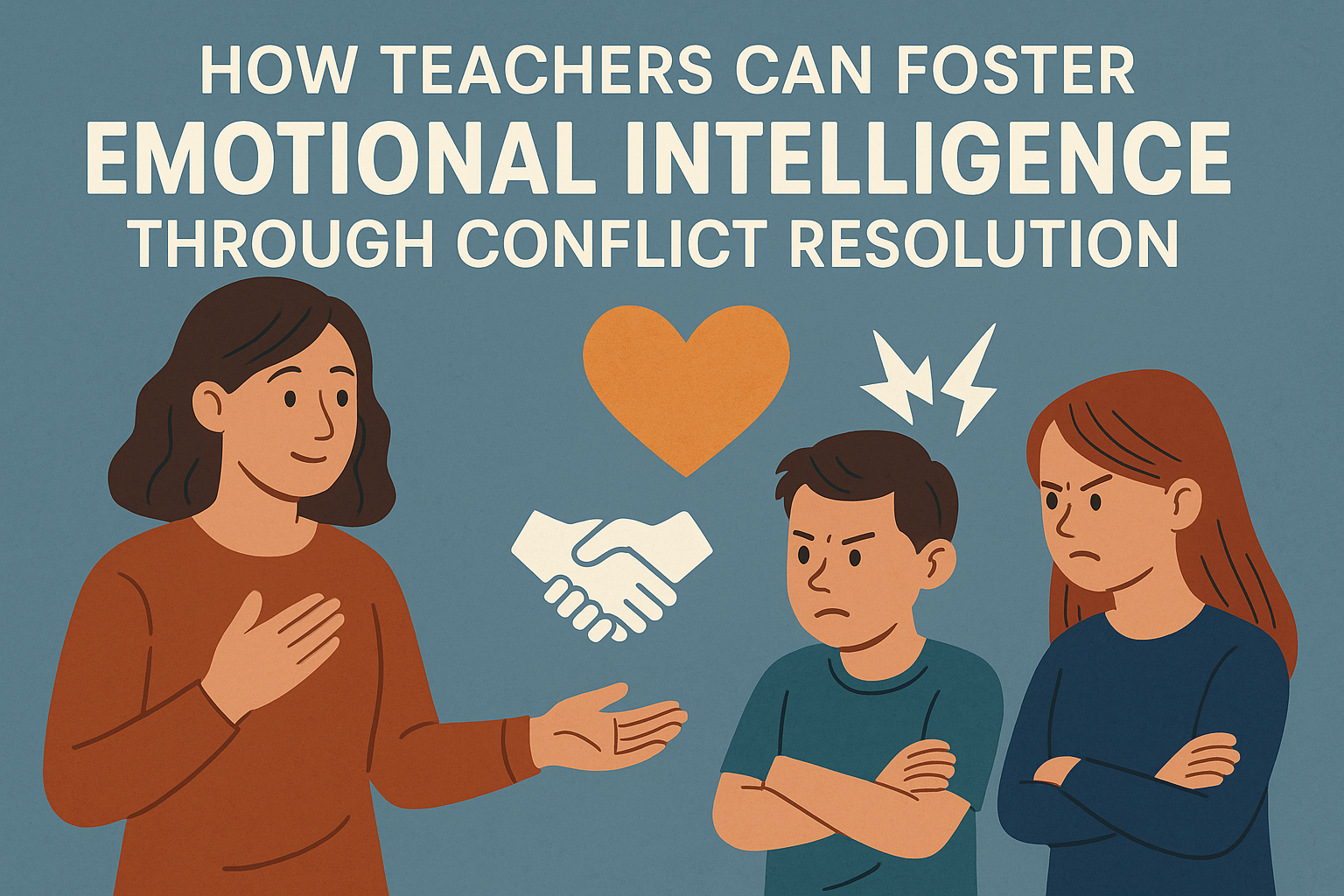
Every conflict presents an opportunity for growth and learning. Teachers can reframe conflicts not as disruptive forces but as chances to promote emotional intelligence. When students engage in conflict, they often experience heightened emotions that can cloud their judgment. Herein lies the teacher’s role: guiding them to channel these emotions productively.
By fostering a mindset that views conflict as a chance to learn about oneself and others, teachers can help students practice empathy and self-regulation. Instead of suppressing conflicts or merely trying to resolve them, educators can encourage students to explore the underlying emotions at play, thereby enhancing their emotional intelligence.
For instance, a disagreement over a group project can become a learning moment. Instead of dismissing the conflict, a teacher can guide students through the hurt feelings and frustration, helping them articulate their emotions and work toward a solution together. This approach not only resolves the immediate issue but also equips students with skills they will use throughout their lives.
Strategies for Teachers to Foster Emotional Intelligence
Teachers can adopt several practical strategies to enhance emotional intelligence through conflict resolution in their classrooms:
1. Model Emotional Intelligence
Teachers should exemplify emotional intelligence in their behavior. This includes recognizing their own emotions, demonstrating empathy towards students, and responding to conflicts with calmness and understanding. When educators display these traits, students are more likely to mirror them. (See: Emotional and Mental Health in Youth.)
2. Create a Safe Environment
A supportive classroom atmosphere is crucial for students to express their feelings and opinions without fear of judgment. By cultivating a safe space, teachers encourage open communication. This can be achieved through establishing ground rules for discussions and modeling respectful discourse during conflicts.
Creating this environment might involve setting aside time for community-building activities, such as circle time or icebreakers, which help foster trust among students. The more students feel comfortable with one another, the easier it becomes for them to engage in constructive conflict resolution.
3. Teach Conflict Resolution Skills
Explicitly teaching conflict resolution strategies is fundamental. This involves guiding students through techniques such as active listening, assertive communication, and collaborative problem-solving. For example, role-playing exercises can help students practice these skills in a controlled setting, making them more confident in real-life situations.
Providing students with scenarios where they can practice these skills in pairs or small groups encourages them to think critically about their emotions and actions. Teachers can introduce tools like “I statements” to help students articulate their feelings without placing blame, fostering clearer communication.
4. Encourage Empathy
Empathy is a cornerstone of emotional intelligence. Teachers can encourage students to put themselves in others’ shoes by discussing various perspectives during conflicts. Activities like empathy mapping or storytelling can facilitate this process, allowing students to appreciate different viewpoints and feelings.
Empathy can also be developed through literature. Assigning books that showcase diverse perspectives allows students to explore emotions and situations outside their own experience, enhancing their capacity for understanding others.
5. Facilitate Reflection
After a conflict is resolved, it’s essential for students to reflect on the experience. Teachers can guide discussions about what emotions were felt, what strategies worked, and what could have been done differently. This reflection reinforces learning and helps students develop a deeper understanding of their emotional responses.
For example, journal writing can be an effective tool for reflection. Students can express their thoughts and feelings about conflicts and resolutions privately and later share insights during class discussions, promoting collective learning.
6. Incorporate Mindfulness Practices
Mindfulness practices can significantly enhance emotional regulation and awareness. Teachers can introduce short mindfulness exercises—such as deep breathing or guided visualization—before discussions or conflict resolution. These practices help calm heightened emotions and prepare students to engage thoughtfully.
Additionally, integrating mindfulness into the daily routine can have lasting benefits. Simple practices like starting the day with a few minutes of quiet reflection or ending with gratitude sessions can uplift the overall emotional climate of the classroom.
Current Relevance of Emotional Intelligence in Education
In recent years, the focus on emotional intelligence in education has surged, particularly due to the challenges posed by the COVID-19 pandemic. Students have faced unprecedented stressors, making the need for emotional support and conflict resolution even more crucial. Schools are increasingly recognizing that nurturing emotional intelligence is not just an add-on but a foundational aspect of learning.
Research from the Collaborative for Academic, Social, and Emotional Learning (CASEL) indicates that social-emotional learning (SEL) programs significantly boost students’ emotional intelligence and academic performance. Schools that prioritize SEL are witnessing improved relationships, reduced behavioral issues, and enhanced academic success.
Statistics reveal that students in SEL programs show an average increase of 11 percentile points in academic performance when compared to students who do not participate in such programs. This illustrates the profound impact that emotional intelligence can have on academic success.
Expert Perspectives on Emotional Intelligence in Education
Educators and psychologists emphasize the significance of EI in a child’s development. Dr. Daniel Goleman, a pioneer in the field of emotional intelligence, notes that emotional skills are crucial for success in various aspects of life. According to Goleman, emotional intelligence is often more important than IQ in determining success in work and life.
Furthermore, educational leaders suggest incorporating emotional intelligence training into teacher professional development. Training programs that focus on building educators’ own emotional intelligence can lead to a more empathetic teaching approach, ultimately benefiting students and the classroom environment.
Applying Emotional Intelligence Beyond the Classroom
While the focus on emotional intelligence is critical within the classroom, it’s essential to recognize its applicability beyond school walls. Students equipped with these skills are more likely to foster healthy relationships in their personal lives, work collaboratively in professional settings, and contribute positively to their communities.
For instance, when students learn to understand and regulate their emotions, they can approach conflicts with friends and family more effectively. They are likely to employ the skills learned in class, such as empathy and reflection, to enhance their interpersonal relationships. This creates a ripple effect that can lead to healthier social dynamics, both in school and in their personal lives.
Challenges in Implementing Emotional Intelligence Programs
Despite the clear benefits of fostering emotional intelligence in education, there are challenges in implementation. One major hurdle is the varying levels of teacher training and preparedness. Not all educators feel confident in their emotional intelligence or may lack the necessary resources to effectively teach these skills.
Additionally, there may be resistance from parents or school administrations who might prioritize traditional academic skills over emotional learning. Convincing stakeholders of the long-term benefits of emotional intelligence and SEL can sometimes be a difficult sell.
There’s also the challenge of measuring emotional intelligence effectively. Unlike standardized testing for academic achievement, the assessment of emotional skills is less straightforward. Schools need to develop reliable methods for evaluating emotional intelligence to demonstrate its impact on student outcomes convincingly.
Frequently Asked Questions (FAQ)
What are the key components of emotional intelligence?
The key components of emotional intelligence are self-awareness, self-regulation, social awareness, empathy, and relationship management. These skills work together to help individuals understand and manage their emotions while also navigating social interactions effectively.
How can emotional intelligence be assessed in students?
Emotional intelligence can be assessed through various methods, including self-report questionnaires, peer assessments, and behavioral observations. Educators can also use reflective journals to gauge students’ emotional insights and their ability to recognize and articulate their feelings.
Is emotional intelligence the same as social intelligence?
While emotional intelligence and social intelligence are related, they are not the same. Emotional intelligence focuses on understanding and managing emotions, whereas social intelligence encompasses the ability to navigate social situations and relationships effectively. Both are important for overall interpersonal effectiveness.
How can parents support emotional intelligence development at home?
Parents can support emotional intelligence development by encouraging open discussions about feelings, modeling emotional awareness, and teaching empathy through everyday situations. Engaging in activities that promote emotional learning, such as family storytelling or role-playing scenarios, can enhance children’s emotional understanding.
What role does emotional intelligence play in a student’s future career?
Emotional intelligence plays a crucial role in a student’s future career. Employers increasingly value soft skills alongside technical capabilities. High EI can lead to better teamwork, improved communication, and enhanced leadership abilities, making individuals with strong emotional intelligence more desirable candidates for jobs and career advancements.
The Path Forward
Fostering emotional intelligence through conflict resolution is a critical endeavor for educators. By embracing strategies that emphasize empathy, self-regulation, and constructive communication, teachers can guide students in navigating their emotions and social interactions more effectively.
In a world where communication often takes place through screens, the ability to manage emotions and engage with others empathetically is invaluable. As teachers lead the way in developing these skills, they not only prepare their students for academic challenges but for life itself. The impact on students, classrooms, and communities can be profound—creating a ripple effect that extends far beyond the schoolyard.
“`
Trending Now
Frequently Asked Questions
How can teachers promote emotional intelligence in the classroom?
Teachers can promote emotional intelligence by integrating conflict resolution strategies into their teaching. This involves recognizing conflicts as opportunities for emotional growth, facilitating open discussions, and modeling empathetic behavior. By guiding students through conflicts, teachers help them develop crucial emotional skills that contribute to their overall well-being and social success.
What is the importance of emotional intelligence in education?
Emotional intelligence is vital in education as it enhances student performance academically and socially. Students with high EI show improved leadership abilities, problem-solving skills, and better relationships with peers and teachers, making it essential for creating a nurturing learning environment.
How does conflict resolution relate to emotional intelligence?
Conflict resolution is closely tied to emotional intelligence as it provides students with opportunities to understand and manage their emotions and those of others. Successfully navigating conflicts helps students develop empathy, resilience, and effective communication skills, which are key components of emotional intelligence.
Why should educators focus on emotional intelligence?
Educators should focus on emotional intelligence because it significantly impacts student success and well-being. Research indicates that students with higher EI are better equipped to handle stress, adapt to change, and build strong relationships, ultimately leading to greater resilience and leadership potential.
What are the benefits of teaching emotional intelligence to students?
Teaching emotional intelligence equips students with essential life skills, including better emotional regulation, improved conflict resolution, and enhanced social interactions. These skills not only contribute to academic success but also prepare students for future challenges in their personal and professional lives.
Agree or disagree? Drop a comment and tell us what you think.