
“`html
In recent years, the educational landscape has increasingly recognized the importance of executive function skills in fostering a student’s ability to learn, adapt, and thrive. Executive functions include a set of cognitive processes that help individuals plan, focus attention, remember instructions, and juggle multiple tasks successfully. Many educators and psychologists advocate for using scaffolding techniques to support executive function development, ensuring that students not only grasp concepts but also develop critical life skills that transcend academic settings.
Understanding Executive Function Skills
Before delving into the intricacies of scaffolding, it’s essential to define what executive function skills are and why they matter. Executive functions are often categorized into three main components: working memory, cognitive flexibility, and inhibitory control. Each of these plays a vital role in how we approach tasks and challenges:
- Working Memory: This ability allows individuals to hold and manipulate information in their minds over short periods, which is crucial for problem-solving and decision-making.
- Cognitive Flexibility: This refers to the capacity to adapt one’s thinking in response to changing circumstances or new information, enabling individuals to shift strategies effectively.
- Inhibitory Control: This skill involves the ability to suppress impulsive responses, helping individuals focus on long-term goals rather than immediate distractions.
Research has shown that the development of these skills is critical for academic success and personal well-being. Children with strong executive function abilities are better equipped to handle stress and navigate complex social situations, making them more resilient in various aspects of life.
The Role of Scaffolding in Education
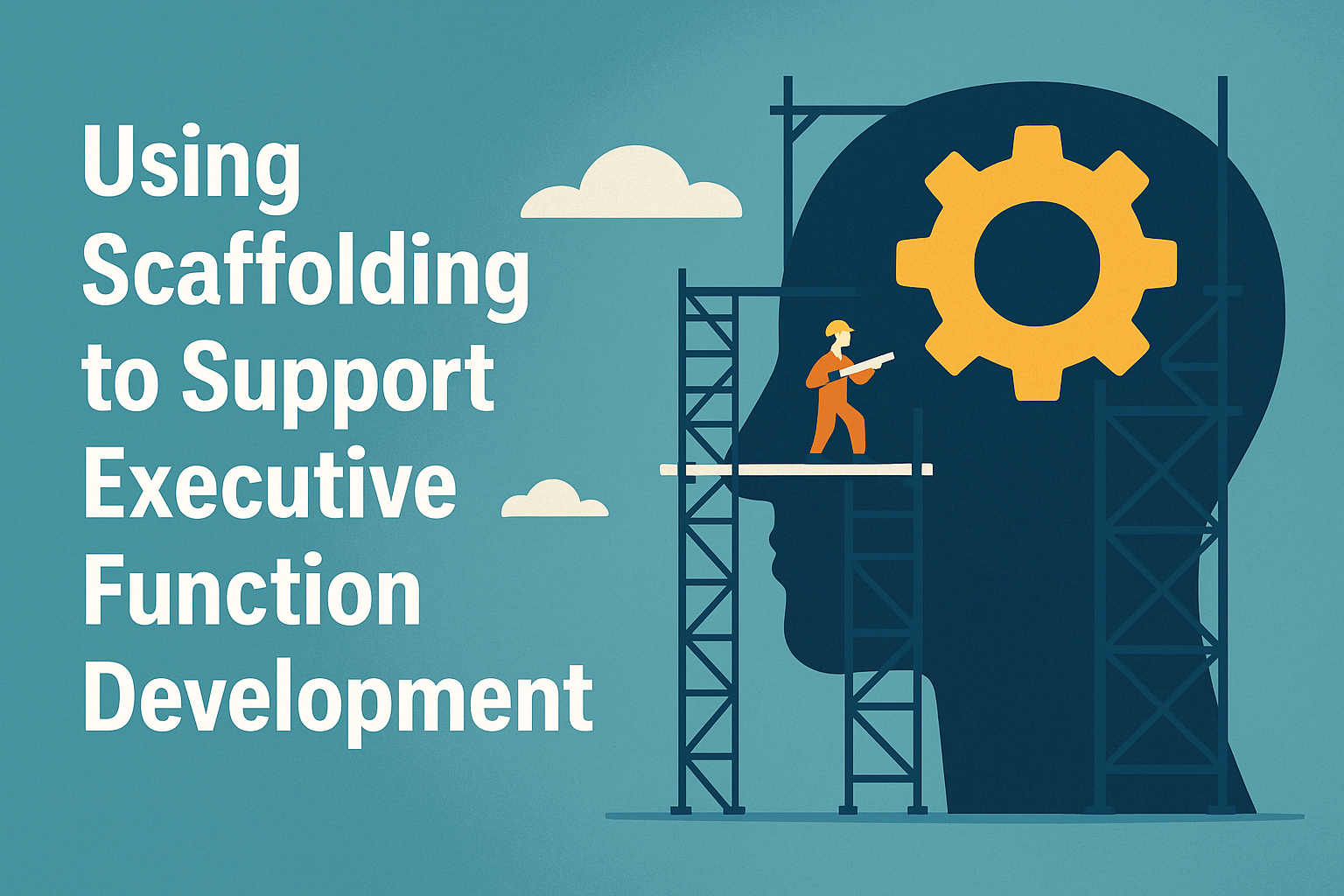
Scaffolding refers to a teaching method that involves providing support to students as they learn new skills or concepts. The idea is to build a temporary framework that helps students achieve tasks they cannot complete independently. This technique is particularly relevant in the context of executive function development. Educators can implement scaffolding in various ways, including:
- Modeling: Demonstrating a task or strategy before asking students to attempt it themselves.
- Chunking: Breaking down complex tasks into smaller, manageable parts to reduce overwhelm.
- Providing feedback: Offering constructive input that helps students recognize their progress and areas for improvement.
- Encouraging self-regulation: Teaching students to set goals, monitor their progress, and adjust strategies as needed.
By using these techniques, educators create an environment where students feel supported in their learning journeys. This, in turn, promotes the development of executive function skills as students practice problem-solving, decision-making, and self-regulation.
Practical Insights for Implementing Scaffolding
While the concept of scaffolding is widely recognized, its practical implementation can vary significantly. Here are some actionable insights for educators and parents looking to support scaffolding executive function development:
1. Set Clear Goals
For effective scaffolding, it’s essential to establish clear, attainable goals. These should be specific to the skills you aim to develop in students. For instance, if the goal is to enhance working memory, activities can include memory games or tasks that require recalling information. Setting a clear objective allows both educators and students to track progress and celebrate successes.
2. Use Visual Aids
Visual aids can play a vital role in scaffolding executive function development. Charts, diagrams, and graphic organizers help students visualize information, making it easier to understand complex concepts. For example, a flowchart illustrating a multi-step process can clarify how to approach a problem, allowing students to follow along more easily. (See: Executive function and academic success.)
3. Foster a Growth Mindset
Encouraging a growth mindset can significantly impact a student’s willingness to tackle challenges. When students believe that their abilities can improve through effort, they’re more likely to engage in tasks that strengthen their executive function skills. Educators should emphasize the importance of effort and resilience, framing setbacks as opportunities for growth rather than failures.
4. Encourage Collaboration
Group activities can facilitate the development of executive function skills, as they often require students to communicate, delegate tasks, and problem-solve collaboratively. By scaffolding group work, educators can help students learn how to share ideas, respect differing opinions, and work towards a common goal. These experiences are invaluable for cultivating social skills and executive functioning in real-world contexts.
Current Relevance of Scaffolding Techniques
As we look at the current educational landscape, the relevance of scaffolding techniques in executive function development is more pronounced than ever. The COVID-19 pandemic disrupted traditional learning environments, forcing educators to adapt and find innovative ways to support students. Many teachers embraced online learning platforms, which provided a unique opportunity to implement various scaffolding strategies:
- Asynchronous Learning: Many online platforms allowed students to learn at their own pace, giving them the chance to revisit materials and practice skills in a way that suits their individual learning styles.
- Interactive Tools: Digital tools like online quizzes, discussion forums, and collaborative documents have created engaging ways for students to practice executive function skills while receiving immediate feedback.
- Home-School Partnerships: The shift to remote learning emphasized the importance of collaboration between educators and parents, allowing them to work together to scaffold executive function development at home.
These adaptations have highlighted the need for flexible, responsive teaching strategies that accommodate diverse learners’ needs. As educators continue to integrate technology into their practices, understanding how to scaffold effectively will remain crucial.
Research Supporting Scaffolding Executive Function Development
Numerous studies affirm the effectiveness of scaffolding in promoting executive function development. For instance, research conducted by Dr. Adele Diamond, a leading expert on executive functions, emphasizes the significance of active learning. Her findings suggest that children who engage in activities that require them to practice executive function skills—such as storytelling, role-playing, and games that require strategic thinking—show marked improvement in these areas.
Additionally, a longitudinal study published by the Journal of Educational Psychology demonstrated that children who received targeted scaffolding interventions showed greater improvements in executive function compared to those who did not. These findings reinforce the idea that deliberate, structured support can yield significant benefits in cognitive development.
Challenges and Considerations
While scaffolding offers numerous benefits, it is not without its challenges. For instance, the effectiveness of scaffolding largely hinges on an educator’s ability to assess the individual needs of their students. This requires a deep understanding of each student’s strengths and weaknesses, which can be time-consuming and demanding.
Additionally, not all students respond to scaffolding in the same way. Some may require more intensive support, while others might thrive with minimal guidance. Therefore, educators must remain flexible and willing to adjust their approaches based on the ongoing assessment of student needs.
Final Thoughts on Scaffolding Executive Function Development
As we continue to explore methods to enhance learning and development, scaffolding executive function development stands out as a powerful strategy. By providing structured support, educators can empower students to cultivate essential cognitive skills that benefit their academic performance and personal lives.
Whether through classroom techniques or fostering partnerships with parents, the potential for scaffolding to transform educational experiences is immense. As research continues to illuminate the relationship between executive functions and overall success, the emphasis on scaffolding methods will undoubtedly grow, paving the way for future generations to harness their full potential.
Understanding the Impact of Executive Function on Daily Life
Executive function skills extend beyond the classroom and play a crucial role in daily life activities. For instance, strong executive function is linked to better outcomes in various life domains, including health, finance, and interpersonal relationships. Individuals with developed executive function skills tend to manage their time more effectively, set and achieve personal goals, and navigate social situations with greater ease.
Statistics reveal the far-reaching implications of executive function on adult life. A study published in the journal Child Development found that children with strong executive function skills were more likely to finish college and maintain stable employment in adulthood. The correlation between executive functioning and success across multiple life areas underscores the importance of fostering these skills early on.
Common Misconceptions About Executive Function
Despite the growing awareness of executive function, several misconceptions still exist. One prevalent myth is that executive function skills are fixed traits that cannot be changed. In reality, evidence from developmental psychology suggests that these skills can be cultivated through practice and targeted interventions. This is where scaffolding becomes instrumental, offering structured pathways for growth.
Another misconception is that executive function is only relevant in academic settings. While strong executive function skills are undeniably beneficial for academic success, they also play a vital role in everyday decision-making and problem-solving. Understanding that these skills are transferable to real-world situations helps educators emphasize their importance across curricula.
Strategies for Parents to Support Executive Function Development
Parents play a pivotal role in scaffolding executive function development at home. Here are some effective strategies that can be easily integrated into daily routines:
- Establish Routines: Creating consistent daily routines helps children develop self-regulation skills. By having set times for homework, chores, and leisure activities, children learn to manage their time and priorities.
- Encourage Planning: Involve your child in planning family activities or homework schedules. This practice teaches them how to set goals, anticipate challenges, and strategize accordingly.
- Model Problem-Solving: When faced with challenges, narrate your thought process aloud. This modeling helps children understand the steps involved in tackling a problem, from identifying it to exploring potential solutions.
- Use Games and Puzzles: Games that require strategy and thought, like chess or puzzles, can effectively strengthen executive function skills. These activities promote critical thinking and require players to use working memory and cognitive flexibility.
FAQs About Scaffolding Executive Function Development
1. What age should I begin focusing on executive function development?
Executive function skills begin developing in early childhood, making it essential to start fostering these skills as soon as possible. Activities that encourage memory, attention, and self-regulation can be introduced at a young age.
2. Can executive function skills be improved in adults?
Absolutely! While these skills are more malleable in children, adults can also benefit from targeted practice. Engaging in activities that require planning, problem-solving, and self-regulation can lead to improvements over time.
3. How can technology support executive function development?
Technology can be a valuable tool for scaffolding executive function development. Apps and platforms designed for organization, time management, and even gamified learning can help students practice these skills in engaging and interactive ways.
4. What are some signs my child may need extra support with executive function?
Signs can include difficulty following instructions, trouble managing time or tasks, frequent forgetfulness, or impulsive behavior. If you notice these challenges, consider reaching out to educators or specialists for guidance.
5. Is scaffolding only applicable in the classroom?
Not at all! While scaffolding is widely used in educational settings, it can also be applied in home environments and social interactions. Parents and guardians can utilize scaffolding techniques to enhance learning and skill development in various contexts.
“`
Trending Now
- Join Nooro as an iOS Developer:…
- this guide on 12 engaging emotional intelligence activities for kids to foster growth
- 7 Essential Emotional Intelligence Skills Every High School Student Needs Before College
- read the full story
- 7 Effective Emotional Intelligence Activities for Kindergarten Kids That Really Work
Frequently Asked Questions
What are executive function skills?
Executive function skills are cognitive processes that enable individuals to plan, focus attention, remember instructions, and manage multiple tasks. They are categorized into three main components: working memory, cognitive flexibility, and inhibitory control, all of which are crucial for effective learning and problem-solving.
How does scaffolding support learning?
Scaffolding supports learning by providing structured guidance to students as they acquire new skills or concepts. This teaching method helps build students' confidence and independence, allowing them to gradually take on more complex tasks while receiving the necessary support to succeed.
Why are executive function skills important?
Executive function skills are vital for academic success and personal well-being. They enable individuals to handle stress, navigate social situations, and achieve long-term goals, making them essential for resilience and adaptability in various life contexts.
What are the components of executive function?
The components of executive function include working memory, which allows for holding and manipulating information; cognitive flexibility, which enables adaptation to new information; and inhibitory control, which helps suppress impulsive responses and focus on long-term objectives.
How can teachers use scaffolding techniques?
Teachers can use scaffolding techniques by providing tailored support, such as breaking tasks into smaller steps, offering prompts or cues, and gradually reducing assistance as students gain confidence and competence in their skills, thereby enhancing their executive function development.
What did we miss? Let us know in the comments and join the conversation.