

“`html
Understanding Fine Motor Skills in Children
Fine motor skills are crucial for a child’s development, significantly impacting their ability to perform everyday tasks such as writing, buttoning shirts, and using utensils. These skills involve the intricate coordination of small muscles in the hands and fingers. In elementary students, effective fine motor skills can lead to greater independence and confidence in their academic and social environments.
For many children, especially those with disabilities or developmental delays, fine motor skills may not develop as expected. This is where an Individualized Education Program (IEP) comes into play. These programs are tailored to meet the specific educational needs of students, and incorporating goals for fine motor skills is essential for fostering growth and development.
Why IEP Goals for Fine Motor Skills Matter
IEP goals for fine motor skills are not just bureaucratic requirements; they are vital for helping children reach their full potential. When a child struggles with fine motor skills, it can affect their performance across various subjects, particularly those that require writing and manipulation of materials, such as art or science projects.
Moreover, fine motor skills are linked to academic performance. A child who can write legibly is more likely to complete assignments successfully, participate in class activities, and express ideas effectively. Setting clear IEP goals for fine motor skills can lead to significant improvements, making the educational experience more fruitful and enjoyable for students.
Crafting Effective IEP Goals for Fine Motor Skills
Creating effective IEP goals for fine motor skills requires collaboration among educators, parents, and therapists. The goals should be specific, measurable, achievable, relevant, and time-bound (SMART). Here are some strategies to consider:
- Assessment: Begin with a thorough assessment of the child’s current fine motor skills. Tools such as observation checklists or standardized assessments can help identify specific areas of need.
- Individualization: Each goal should be tailored to the child’s unique strengths and weaknesses. For example, a child may excel in gross motor skills but struggle with grasping small objects.
- Focus on Progress: Set goals that emphasize incremental progress. Instead of aiming for perfection, focus on improvement over time, which can help boost the child’s self-esteem.
- Incorporate Interests: Integrate activities that align with the child’s interests. For instance, if a child loves animals, using animal-themed crafts can make the practice more engaging.
Examples of IEP Goals for Fine Motor Skills
Here are several examples of well-structured IEP goals focused on fine motor skills that can be adapted for various students:
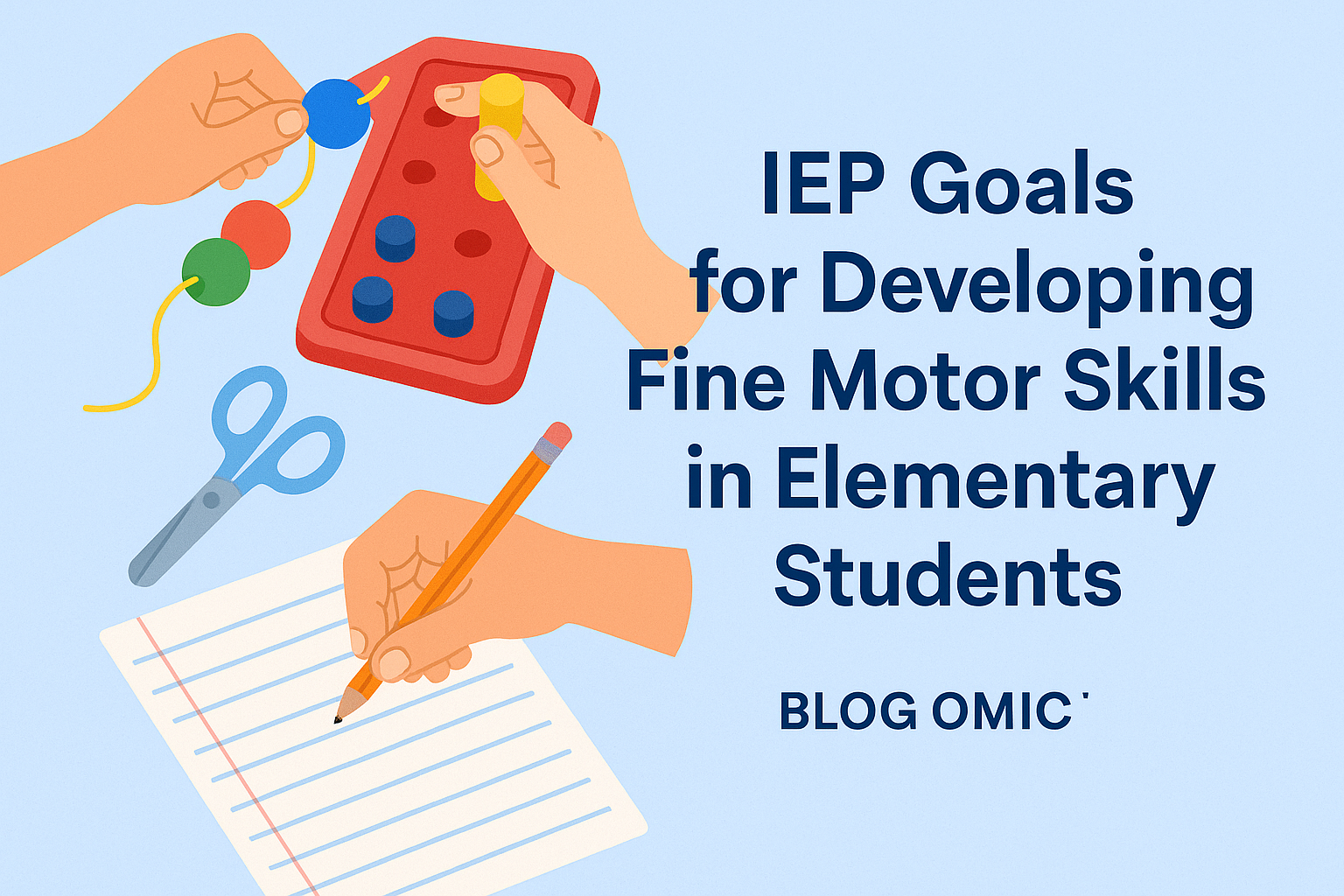
- Goal 1: By the end of the school year, the student will demonstrate improved pencil grip by independently holding a pencil with a tripod grip for at least 10 minutes during writing tasks on 4 out of 5 occasions.
- Goal 2: The student will be able to complete a simple puzzle with 12-15 pieces independently, demonstrating the ability to manipulate and fit pieces together accurately on 4 out of 5 trials.
- Goal 3: By the end of the semester, the student will use scissors to cut along a straight line with 80% accuracy in 4 out of 5 trials.
- Goal 4: The child will string beads to create a necklace with at least 15 beads, demonstrating appropriate hand-eye coordination and dexterity during the task, achieving this on 4 out of 5 attempts by the end of the academic year.
Implementing Fine Motor Skills Goals in the Classroom
Merely setting IEP goals isn’t enough; teachers and support staff must implement activities that encourage the development of fine motor skills effectively. Here are some practical strategies for classroom implementation: (See: CDC on IEP and developmental disabilities.)
- Incorporate Play: Play-based activities can enhance fine motor skills while making learning enjoyable. Activities like building with blocks, playing with playdough, or using tweezers to move small objects can all be beneficial.
- Daily Practice: Encourage daily practice of fine motor tasks. This could involve short, focused activities that fit into the day’s routine, such as writing, cutting, or drawing.
- Use Visual Aids: Visual aids can help students understand tasks better. For instance, using illustrated step-by-step guides for cutting or folding can make these tasks less intimidating.
- Multi-Sensory Approaches: Engage multiple senses to reinforce fine motor skills. Using textured materials can enhance the sensory experience and encourage children to explore through touch.
The Role of Parents and Caregivers in Supporting Fine Motor Skill Development
Parents and caregivers play a critical role in supporting their children’s development of fine motor skills. Their involvement can complement what students learn in school. Here are some ways they can contribute:
- Encouragement at Home: Parents can create opportunities for fine motor skill practice at home. Simple tasks like cooking, gardening, or crafting can enhance hand-eye coordination while providing valuable bonding time.
- Communication with Educators: Maintaining open lines of communication with teachers can ensure that parents stay informed about their child’s progress and are aware of specific goals and strategies being implemented in class.
- Utilizing Community Resources: Many communities offer programs or resources designed to help children improve their fine motor skills. Parents should explore local libraries, community centers, or therapy clinics for additional support.
Monitoring Progress and Adjusting Goals
Regular monitoring of a child’s progress towards their IEP goals is crucial. Progress should be documented consistently, allowing educators and parents to see what’s working and what’s not. Adjustments to goals may be necessary based on this ongoing evaluation. For instance, if a student meets a goal early, it may be appropriate to set a new, more challenging goal. There’s a fuller look at importance of fine motor skills.
In addition, celebrating achievements, no matter how small, is vital for motivation. Recognizing milestones can help children see their growth and build confidence in their abilities.
Current Trends and Research in Fine Motor Skills Development
Recent research highlights the significance of fine motor skills in overall development. Studies have shown that fine motor skill proficiency is linked to academic performance, particularly in early education settings. Researchers emphasize the importance of early intervention, suggesting that the sooner fine motor skills are addressed, the better the long-term outcomes for children.
Additionally, with the rise of technology in education, there’s a growing focus on balancing digital and hands-on learning. While technology offers numerous benefits, it’s crucial not to overlook traditional methods that encourage the development of fine motor skills, such as writing and crafting.
As educational practices evolve, the emphasis on creating inclusive environments continues to grow. Schools are increasingly adopting multi-disciplinary approaches, integrating occupational therapy into the classroom to support students’ fine motor development.
Innovative Tools and Resources for Fine Motor Skills Development
Many tools and resources are available today that can help enhance fine motor skills in children. Incorporating these into both classroom and home settings can provide additional support for achieving IEP goals:
- Therapy Putty: This versatile tool allows children to strengthen their hand muscles while engaging in fun activities like squeezing, rolling, and pinching. It’s excellent for improving grip and dexterity.
- Adaptive Utensils: Using specially designed scissors, pencils, and other tools can make it easier for children with fine motor challenges to engage in tasks. These adaptive tools can be used both at home and in school settings.
- Interactive Apps: Various educational apps are designed to enhance fine motor skills through games and activities that require precise movements, like tracing letters or assembling objects.
Comparing Traditional and Modern Approaches to Fine Motor Skill Development
When it comes to fine motor skill development, there are traditional methods and more modern strategies that educators and parents can utilize. Understanding the strengths of each can help create a well-rounded approach: (See: NIH on IEPs and learning.)
Traditional Approaches
These methods emphasize hands-on activities and face-to-face interactions. Examples include:
- Crafting: Hands-on projects like drawing, painting, and beadwork promote fine motor skills while allowing for creativity.
- Manipulative Games: Classic games involving blocks, puzzles, or matching cards encourage dexterity and hand-eye coordination.
Modern Approaches
In today’s digital age, technology is playing a significant role in skill development:
- Digital Learning Tools: Interactive platforms and apps that focus on fine motor skills can be quite engaging. They allow for repeated practice in a fun way.
- Virtual Therapy Sessions: Many occupational therapists now offer virtual sessions that incorporate e-tools tailored to developing fine motor skills.
Frequently Asked Questions about IEP Goals and Fine Motor Skills
What are fine motor skills?
Fine motor skills involve the small muscles in the hands and fingers that enable tasks such as writing, buttoning shirts, and playing with small objects. These skills are essential for daily functioning and academic success.
How can IEP goals for fine motor skills be measured?
Measuring progress can involve various methods, such as observational checklists, standardized tests, and tracking the frequency of successful task completion. Teachers can document improvements over time to provide clear evidence of progress.
How often should progress towards IEP goals be reviewed?
Regular reviews should occur at least once a semester, but more frequent evaluations (monthly or bimonthly) can provide better insight into a child’s growth and allow for timely adjustments to goals.
Can fine motor skills be improved at home?
Absolutely! Parents can engage children in activities like arts and crafts, cooking, or even simple tasks like buttoning clothes to enhance their fine motor skills. These activities not only support their developmental goals but also provide quality bonding time. (See: WHO on developmental disabilities.)
What should I do if my child is not progressing towards their IEP goals?
If progress is lacking, it’s essential to communicate with educators and therapists. They can reassess the strategies being used and possibly modify the goals or activities to better suit the child’s needs.
What role do sensory experiences play in developing fine motor skills?
Sensory experiences are crucial for fine motor development. Engaging with different textures and materials—such as sand, water, or clay—can improve tactile sensitivity and coordination. Activities that provide sensory feedback can make fine motor tasks more enjoyable and less daunting for children, helping them to engage more fully in the learning process.
How can schools support children with fine motor skill difficulties?
Schools can provide targeted interventions, implement assistive technologies, and offer occupational therapy services. Additionally, teachers can modify classroom tasks to reduce barriers, such as using larger writing instruments or providing alternative ways for students to demonstrate their knowledge without relying on fine motor skills alone.
The Path Forward for Fine Motor Skills Development
Setting IEP goals for fine motor skills is a vital aspect of fostering growth in elementary students. These goals lay the groundwork for improved academic performance and greater independence. By collaborating effectively, customizing goals, implementing engaging activities, and involving families, we can create a robust support system for children struggling with fine motor skills.
In the end, the successful development of fine motor skills isn’t just about meeting educational standards; it’s about empowering children to navigate their world with confidence and ease. As educators and parents work together, they can help children not only meet their IEP goals but also unlock their full potential.
“`
Trending Now
Frequently Asked Questions
What are fine motor skills in children?
Fine motor skills in children refer to the coordination of small muscles in the hands and fingers, essential for tasks like writing, buttoning shirts, and using utensils. These skills are crucial for a child's development, impacting their independence and confidence in both academic and social settings. This builds on fine motor skills and handwriting.
Why are IEP goals important for fine motor skills?
IEP goals for fine motor skills are vital because they help children with disabilities or developmental delays achieve their full potential. These goals support academic performance by improving skills necessary for tasks like writing and participating in hands-on activities, leading to a more enjoyable educational experience.
How can IEP goals for fine motor skills be crafted?
Effective IEP goals for fine motor skills should be specific, measurable, achievable, relevant, and time-bound (SMART). Crafting these goals involves collaboration among educators, parents, and therapists, starting with a thorough assessment of the child's current fine motor abilities.
What impact do fine motor skills have on academic performance?
Fine motor skills significantly impact academic performance, particularly in tasks that involve writing and manipulation of materials. A child with developed fine motor skills is more likely to complete assignments successfully, participate in class activities, and express their ideas effectively.
How can parents support fine motor skill development at home?
Parents can support fine motor skill development at home by engaging children in activities that promote hand-eye coordination, such as drawing, cutting with scissors, or playing with building blocks. Encouraging daily tasks like buttoning shirts or using utensils can also help enhance these essential skills.
What did we miss? Let us know in the comments and join the conversation.



