

“`html
Advanced Placement (AP) classes have become a hallmark of high school academics, promising students the opportunity to earn college credits while still in high school. However, the question on many students’ minds is: what GPA do you need for advanced placement classes? Understanding this can help you chart a more strategic approach to your high school education, maximize your college applications, and prepare for future academic challenges.
What Are Advanced Placement Classes?
Advanced Placement classes, offered by the College Board, are college-level courses available in high schools. They cover a range of subjects including math, science, history, and languages, allowing students to delve deeper into specific content areas. The beauty of AP classes lies not only in the rigorous curriculum but also in the chance to earn college credits. If a student scores a 3 or higher on the end-of-course AP exam, many colleges and universities grant college credit, which can save considerable time and money.
Understanding GPA and Its Importance
Your Grade Point Average (GPA) is a critical measure of your academic performance, calculated by assigning numerical values to your letter grades. Typically, an A is worth 4.0, a B is 3.0, and so on, with weighted GPAs taking into account the rigor of courses, such as AP classes, where an A might be worth 5.0. A strong GPA is essential not only for college admissions but also for securing scholarships and other academic opportunities.
What GPA Is Required for Advanced Placement Classes?
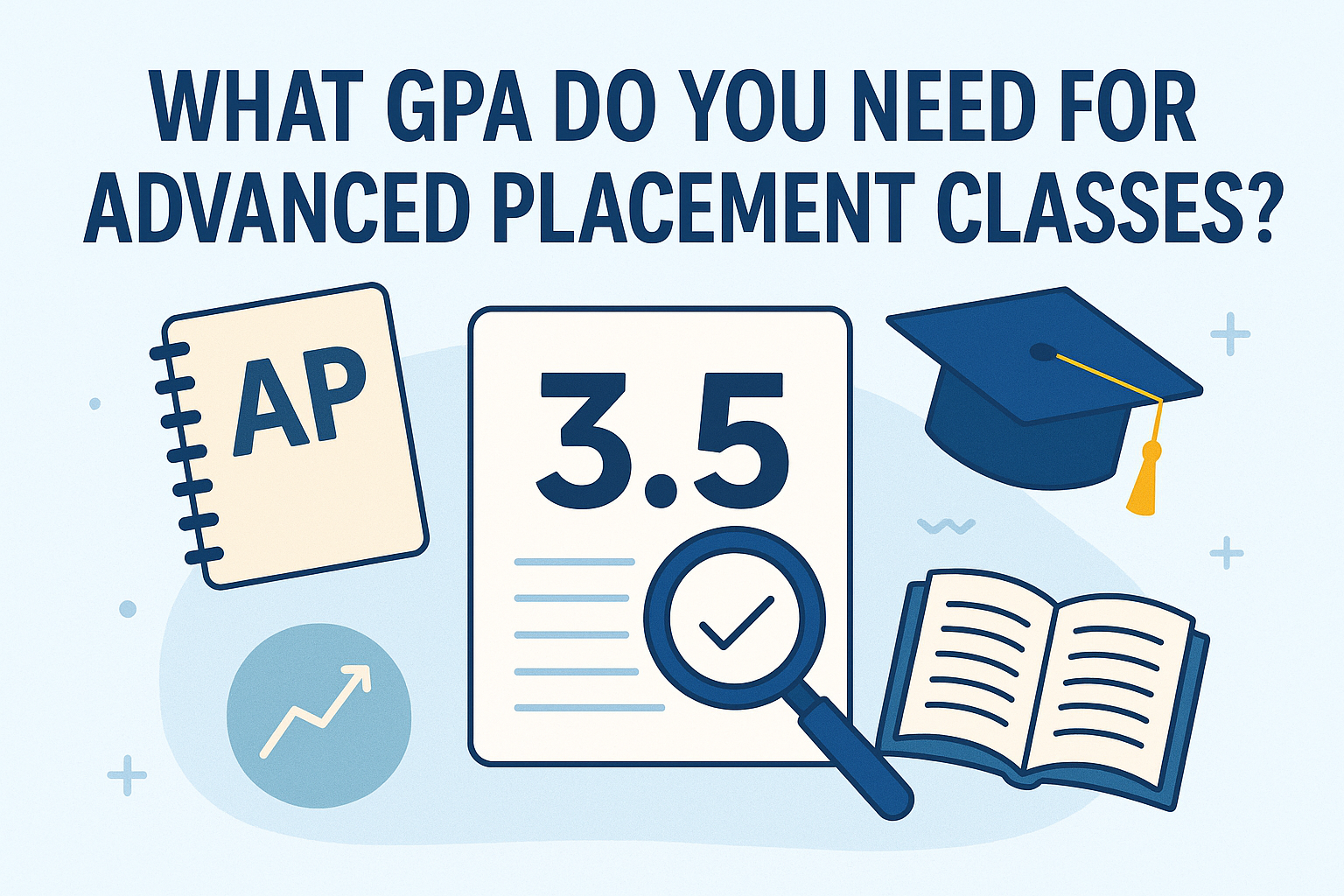
While there isn’t a strict GPA requirement universally for enrolling in AP classes, most high schools recommend maintaining a GPA of at least 3.0 on a 4.0 scale. This benchmark reflects a solid understanding of coursework and readiness for the increased intensity of AP classes. However, some schools might set higher thresholds, particularly for highly demanding subjects like AP Calculus or AP Chemistry, where a GPA of 3.5 or above could be recommended.
It’s also important to note that admission to AP courses can depend on classroom performance in prerequisite courses. For example, excelling in Algebra I might be essential before taking AP Calculus. Teachers may also provide recommendations based on a student’s performance, engagement, and potential.
Benefits of Taking AP Classes
Beyond the possibility of earning college credits, enrolling in AP classes offers several advantages. Firstly, these classes enhance your transcript, showcasing your commitment to academic rigor, which is attractive to college admissions committees. A strong GPA for advanced placement classes signals to colleges that you’re serious about your education and capable of handling challenging material.
Additionally, AP courses develop critical thinking and time management skills. The workload can be significantly higher than standard classes, requiring students to manage their time effectively and prioritize their responsibilities. This skill set is invaluable in college, where self-discipline is often the key to success. Furthermore, AP classes encourage collaboration with peers and engagement with complex topics, fostering a deeper understanding of the subject matter. (See: U.S. Department of Education.)
How to Prepare for AP Classes
If you’re aiming for a strong GPA for advanced placement classes, preparation is key. Here are a few strategies to consider:
- Early Engagement: Start preparing in your earlier high school years. Focus on achieving a solid GPA in your foundational courses, as these will set the stage for AP classes.
- Seek Guidance: Talk to your teachers and school counselors about AP course options and expectations. They can provide insights into the workload and help you choose the right classes that align with your interests and strengths.
- Develop Study Habits: Cultivating effective study habits early on will pay off when you enter AP classes. Experiment with different techniques to find what works best for you, whether it’s group study sessions or individual review sessions.
- Practice Tests: Utilize practice exams and resources provided by the College Board to familiarize yourself with the AP exam format and identify areas where you may need additional focus.
The Role of Extracurricular Activities
While GPA is undoubtedly crucial, extracurricular activities also play a significant role in a college application. Engaging in clubs, sports, volunteer work, or part-time jobs not only enriches your high school experience but also demonstrates to colleges that you are a well-rounded individual. Colleges appreciate candidates who can balance academics with other interests.
Moreover, certain extracurricular activities can enhance your understanding of course content. For instance, joining a science club might deepen your appreciation and knowledge in AP Biology, while participating in debate can refine your analytical skills pertinent to AP History classes. Therefore, a balanced approach to academics and extracurriculars is often the best strategy to prepare for AP classes and maintain a strong GPA.
Common Misconceptions About GPA and AP Classes
Many students harbor misconceptions about the GPA needed for AP classes. One common myth is that only the highest achievers can succeed in these courses. In reality, students with a commitment to learning and a strong work ethic often thrive, regardless of their previous GPA. AP classes are designed to challenge all students willing to engage deeply with the material.
Another misconception is that a perfect GPA guarantees success in AP classes. While a high GPA is advantageous, it doesn’t equate to preparedness for the rigor of AP coursework. Factors like study habits, support systems, and passion for the subject matter can play a more significant role in a student’s success than past grades alone.
Strategies for Maintaining a High GPA in AP Classes
Once you’ve enrolled in AP classes, maintaining a high GPA requires dedication and effective strategies. Here are some tips to help you stay on track:
- Regular Review: Schedule weekly reviews of your notes and assignments. This not only reinforces what you’ve learned but also helps reduce stress as exam time approaches.
- Group Study Sessions: Form study groups with classmates. Discussing material with peers can provide new perspectives and clarify difficult concepts.
- Time Management: Create a detailed study schedule that allows you to allocate time for each subject. Break larger projects into manageable tasks to avoid last-minute cramming.
- Communicate with Teachers: Don’t hesitate to ask your teachers for help or clarification on tough subjects. They can provide invaluable insights and additional resources.
The Impact of AP Classes on College Admissions
Admissions committees often look favorably upon students who have taken AP classes, particularly when the GPA for advanced placement classes is strong. This is because AP courses demonstrate a willingness to challenge oneself and push academic boundaries. According to a survey by the National Association for College Admission Counseling, students who take AP courses are more likely to enroll in college and perform better in their college courses.
Additionally, some colleges have specific policies regarding AP credits. For instance, institutions like Harvard or Stanford not only value the GPA but also the rigor of the courses taken. Therefore, AP courses can be a decisive factor when colleges assess your readiness for their academic environment.
Frequently Asked Questions
What is the difference between weighted and unweighted GPA?
A weighted GPA takes into account the difficulty of the courses you take. For example, an A in an AP class may be worth 5.0, whereas an A in a regular class is worth 4.0. An unweighted GPA does not consider course difficulty and simply averages the grades. This builds on tips for college credits.
How do AP classes affect my overall GPA?
Taking AP classes can boost your overall GPA if you perform well in them. The weighted GPA system rewards students for taking more challenging courses. However, if you struggle in AP classes, it could negatively impact your GPA, especially if you’re not prepared for the workload.
Are there any downsides to taking AP classes?
While AP classes are beneficial, they can also be quite demanding. The workload can lead to increased stress and anxiety for some students. It’s important to assess your capacity for handling advanced coursework alongside your other commitments.
Can I still take AP classes if my GPA is below 3.0?
Yes, you can still take AP classes if your GPA is below 3.0, but it may require additional steps. Some schools may allow students to petition for enrollment based on teacher recommendations or standardized test scores. It’s essential to check with your school’s specific policies.
What should I do if I struggle in an AP class?
If you find yourself struggling in an AP class, it’s important to take action quickly. Start by reaching out to your teacher for help—they can provide additional resources or clarify difficult concepts. Additionally, consider joining a study group or finding a tutor. Don’t hesitate to communicate with your school counselor for support and guidance. Remember, it’s crucial to stay proactive in seeking help to improve your understanding and performance.
How important are AP exam scores for college admissions?
AP exam scores can play a significant role in college admissions, depending on the institution. While a score of 3 is often considered the minimum for earning college credit, many competitive colleges look for scores of 4 or 5 to better assess a student’s mastery of the subject. However, it’s worth noting that colleges also consider the whole application, including GPA, extracurricular activities, and personal statements.
Should I take AP classes if I’m interested in a specific college major?
Absolutely! If you have a clear idea of your intended college major, taking relevant AP classes can demonstrate your readiness for that field of study. For instance, if you’re interested in pursuing engineering, taking AP Calculus and AP Physics can provide a strong foundation and make your college application stand out.
Conclusion: Your Path Forward
Ultimately, the GPA for advanced placement classes is an essential metric for students aiming for academic excellence. While a GPA of 3.0 is often the minimum for enrollment, striving for a higher GPA can significantly enhance your chances of succeeding in AP courses and impressing college admissions officers. By preparing early, maintaining a balanced approach to academics and extracurriculars, and cultivating effective study habits, you can not only meet but exceed the expectations set before you.
The journey through AP classes is challenging but rewarding, leading to a more profound understanding of subjects you’re passionate about and potentially paving the way for future academic success. So, whether you’re currently in middle school contemplating your high school path or a rising sophomore deciding whether to take that first AP class, keep your GPA in mind as a guiding light in your educational journey. See also calculate your high school GPA.
“`
Trending Now
Frequently Asked Questions
What GPA do you need to take AP classes?
Most high schools recommend maintaining a GPA of at least 3.0 on a 4.0 scale to enroll in Advanced Placement (AP) classes. This benchmark indicates a solid understanding of coursework and readiness for the challenges of AP courses.
Are there GPA requirements for AP classes?
While there is no universal GPA requirement for AP classes, many schools suggest a minimum GPA of 3.0. Some schools may require higher GPAs, especially for rigorous subjects like AP Calculus or AP Chemistry.
How is GPA calculated for AP classes?
GPA for AP classes is typically calculated by assigning numerical values to letter grades, with A grades often weighted more heavily. For example, an A in an AP class might be worth 5.0 instead of the standard 4.0, reflecting the increased rigor.
What are the benefits of taking AP classes?
Taking AP classes allows students to earn college credits while still in high school, potentially saving time and money in their college education. Scoring a 3 or higher on the AP exam can lead to college credit at many institutions.
Can you take AP classes with a low GPA?
While some students with lower GPAs may still be able to enroll in AP classes, it is generally recommended to have at least a 3.0 GPA to ensure readiness for the increased academic demands and rigor of these courses.
What’s your take on this? Share your thoughts in the comments below — we read every one.



