

“`html
Understanding the difference between weighted vs unweighted GPA is crucial for students navigating their academic journey. Whether you’re a high school student aiming for college admissions or a parent trying to support your child, grasping these concepts can make a significant impact on educational decisions and opportunities.
1. What is GPA?
Grade Point Average (GPA) is a standard metric used to evaluate a student’s academic performance. It provides a numerical representation of a student’s grades, which often helps colleges and universities gauge an applicant’s readiness for higher education. Most schools use a 4.0 scale, where an A typically equals 4.0 points, a B equals 3.0, a C equals 2.0, and so forth. However, the calculation method can vary significantly depending on whether a school uses a weighted or unweighted scale.
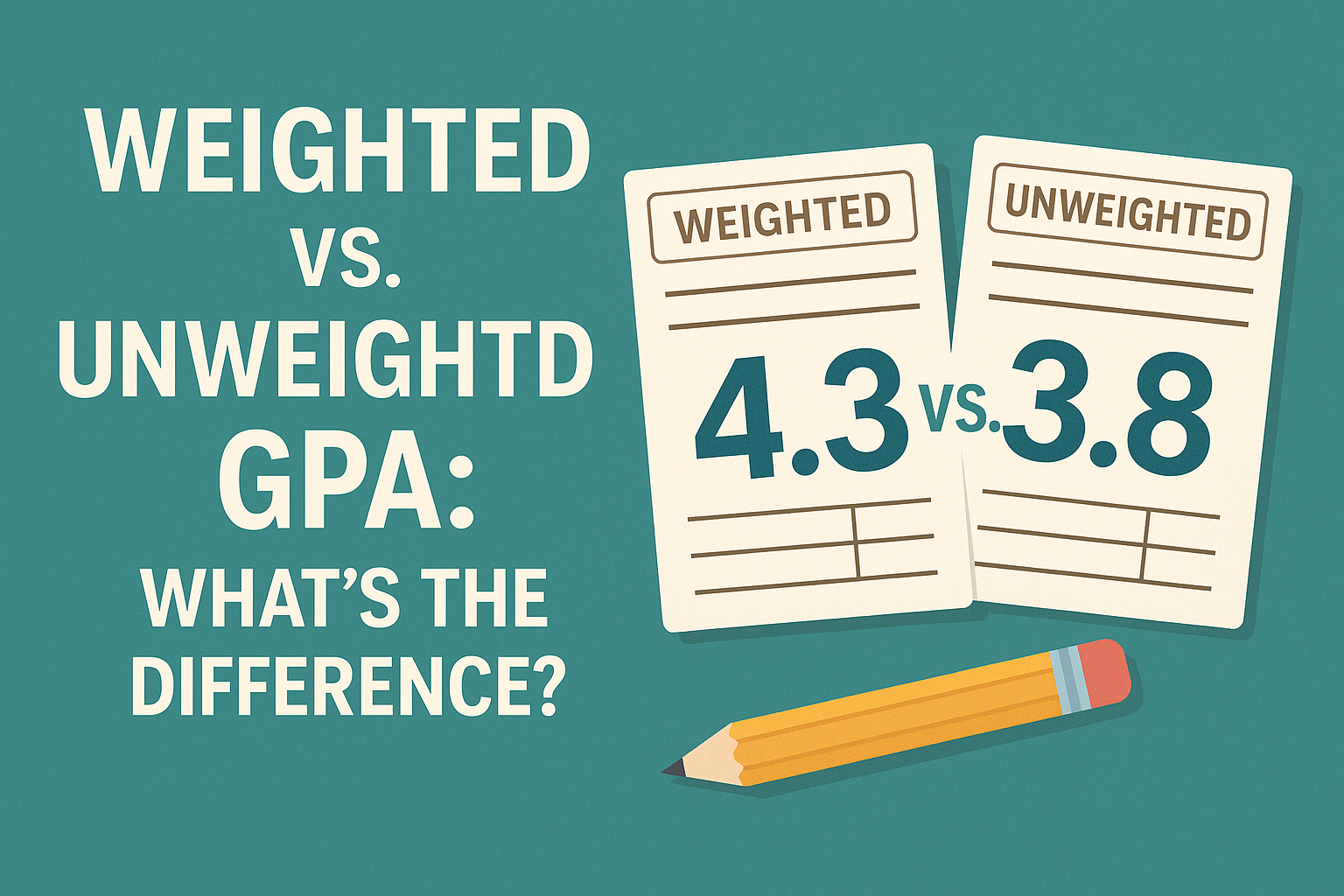
An unweighted GPA treats all classes equally, meaning an A in a standard class is valued the same as an A in an advanced placement (AP) or honors class. Conversely, a weighted GPA assigns different values to grades based on course difficulty, generally giving extra points for advanced courses. Understanding these definitions helps elucidate the implications of each system on your academic record.
2. Unweighted GPA Explained
The unweighted GPA is, for many, the simplest metric to understand. On this scale, all grades are measured against the same standard. The maximum possible GPA is typically 4.0, with no distinctions made between challenging and standard classes. For instance, a student’s GPA will be calculated using grades from all classes regardless of their difficulty.
This system is straightforward: if you receive four A’s (4.0 each) in regular classes, your GPA will be a perfect 4.0. While it can simplify comparisons between students, this uniformity can be a disadvantage for those taking rigorous courses, as their GPA might not reflect the additional effort required.
3. Weighted GPA Explained
In contrast, the weighted GPA system addresses the complexity of course difficulty. In this scale, students receive additional points for advanced courses, such as AP or honors classes. For example, an A in an AP class might be worth 5.0 points instead of the standard 4.0. This means that a student who earns an A in a challenging course can achieve a GPA higher than 4.0.
As a result, students are often incentivized to challenge themselves with harder courses. For instance, if a student takes three AP classes and earns A’s in all of them, their GPA could rise to 4.5, reflecting both their achievement and the difficulty of their coursework. This can give a more comprehensive picture of a student’s abilities and work ethic, making it appealing to colleges.
4. The Impact on College Admissions
When it comes to college admissions, understanding the differences between weighted and unweighted GPA is vital. Colleges often look beyond just GPA; they consider the courses taken, trends in grades, and overall rigor of a student’s academic profile. A high weighted GPA can indicate a student’s willingness to take on challenges, which many institutions view favorably.
However, some colleges focus primarily on unweighted GPA, believing it provides a fairer measure of student achievement without the influence of course difficulty. This can create tension for students aiming to present themselves in the best light possible. They might find that while they have a high weighted GPA, their unweighted score could be comparatively lower, which may not reflect their capabilities accurately. (See: Grade Point Average explained.)
5. Calculating Weighted vs Unweighted GPA
The calculation of both weighted and unweighted GPAs follows a systematic approach. For an unweighted GPA, you simply average the numerical values of the letter grades. For instance, suppose a student received the following grades: A, B, A, and C. To calculate the unweighted GPA, you would add the grade points (4 + 3 + 4 + 2 = 13) and divide by the number of classes (4), yielding a GPA of 3.25.
In contrast, for a weighted GPA, the process includes assigning values based on the course difficulty. For the same student, if their grades included two regular A’s, one regular C, and one A in an AP course, the calculation would look like this: A (4) + A (4) + C (2) + A (5) = 15. Dividing by 4 gives a weighted GPA of 3.75. This method highlights the significance of academic rigor in assessing student performance.
6. Pros and Cons of Each System
Each system has its own advantages and disadvantages. The unweighted GPA is straightforward and easy to calculate, making it accessible for students and parents alike. However, it often fails to reward students who challenge themselves with rigorous coursework, potentially disadvantaging them in competitive college admissions environments.
On the other hand, a weighted GPA acknowledges the importance of academic rigor, potentially offering a more comprehensive view of a student’s capabilities. Yet, it can also lead to inconsistencies across schools and districts, where the definitions of honors or AP classes can vary. This can create confusion for college admissions officers trying to evaluate candidates from different educational backgrounds.
7. Current Relevance in Education
As education continues to evolve, the debate surrounding weighted vs unweighted GPA remains pertinent. With increasing numbers of students enrolling in advanced courses, such as AP or IB programs, educational institutions are grappling with how to fairly assess student performance. Some schools are even moving towards alternative grading systems or adopting different weightings to better represent student achievements.
Additionally, the pandemic has brought about discussions on the fairness of grading. With many students facing disruptions in their education, some high schools have opted to implement pass/fail grading systems, further complicating the dialogue around GPA calculation. As colleges adjust their admissions processes to accommodate these changes, understanding GPA systems remains critical for students.
8. Choosing the Right Path for You
Ultimately, the choice between pursuing a weighted or unweighted GPA hinges on individual student goals and circumstances. If you’re a student considering college, evaluate your willingness to tackle challenging coursework against the potential impact on your GPA. Taking advanced classes can provide a sense of accomplishment and enhance your college profile, but it’s essential to balance this with your overall academic performance and well-being.
Students should also consider how their school calculates GPA and what colleges they are interested in applying to. Researching the admissions requirements and preferences of prospective colleges can help make informed decisions about course selections. Remember, your GPA is just one aspect of your application. Strong extracurriculars, personal statements, and recommendations also play a vital role in your acceptance into a college.
9. Weighted vs Unweighted GPA: A Closer Look
Understanding the differences between weighted and unweighted GPAs is essential for students and parents alike. One key aspect to consider is how various schools implement these systems. In some cases, an unweighted GPA might be used to create a level playing field, while other institutions may adopt a weighted GPA to motivate students to pursue more challenging courses. (See: CDC Youth Risk Behavior Survey.) See also GPA calculator tool.
For example, according to a survey conducted by the National Association for College Admission Counseling, about 61% of colleges consider weighted GPA as part of their admissions process. This statistic underscores the importance of taking challenging courses and how those decisions can impact a student’s overall profile.
10. Real-World Examples
To illustrate the differences in weighted vs unweighted GPA, consider two students. Student A takes four regular classes and receives straight A’s, resulting in an unweighted GPA of 4.0. Student B takes two AP classes and two regular classes, earning an A in one AP class, a B in the other AP class, and A’s in the regular classes. Here’s how their GPAs would differ:
- Student A’s GPA: 4.0 (unweighted)
- Student B’s GPA: (4.0 + 5.0 + 3.0 + 4.0) / 4 = 4.0 (weighted, assuming A=5 in AP)
Although both students have the same unweighted GPA, Student B’s weighted GPA may offer a more favorable picture of their academic risk-taking, potentially appealing to college admissions boards. This example highlights the significance of understanding not just your GPA, but how the courses you choose to take can define your academic journey.
11. Frequently Asked Questions (FAQ)
What is a weighted GPA?
A weighted GPA takes into account the difficulty of the courses a student has taken. Advanced classes like AP or honors courses carry more weight, allowing students to achieve GPAs above 4.0.
What is an unweighted GPA?
An unweighted GPA is calculated without regard for course difficulty. The maximum GPA is typically 4.0, regardless of whether the courses were standard, honors, or advanced.
Which GPA is preferred by colleges?
Preferences can vary by college. Some institutions prefer weighted GPAs because they show a student’s willingness to challenge themselves. Other colleges might lean towards unweighted GPAs for a more standardized measure of student performance.
Can a student have both a weighted and unweighted GPA?
Yes, it is common for students to have both a weighted and unweighted GPA, as many schools calculate both metrics to provide a comprehensive view of academic performance. Related reading: IB vs AP comparison.
How does taking AP or honors classes affect my GPA?
Taking AP or honors classes can positively impact your weighted GPA by adding extra points for higher grades. However, if you don’t perform well in these classes, it can also negatively impact your unweighted GPA. (See: New York Times on college admissions and GPA.)
Is there a standardized way to calculate weighted GPA across schools?
No, there is no universal standard for calculating weighted GPA; different schools may have different systems for assigning weight to various courses, which can lead to discrepancies in how GPAs are reported.
How important is GPA in the college admissions process?
GPA is a critical factor in college admissions, but it is not the only consideration. Admissions committees also look at standardized test scores, extracurricular activities, personal statements, and letters of recommendation.
12. Comparing Weighted and Unweighted GPA Across Different States
The approach to calculating GPAs can vary significantly by state and even by individual school districts. For instance, in California, many high schools employ a weighted GPA system, particularly in districts with a high number of students enrolled in AP classes. Conversely, some schools in Texas might use an unweighted GPA system to simplify the admissions process for local universities.
Statistics show that a weighted GPA can help students stand out in competitive states. In New York, for example, where applicants often have high GPAs, a weighted GPA can make a significant difference in how a student is viewed by admissions officers. In fact, a recent study found that students with a weighted GPA above 4.0 had a 20% higher acceptance rate to Ivy League schools compared to their unweighted counterparts.
13. Expert Opinions on GPA Systems
Experts in educational psychology and admissions often weigh in on the GPA debate. Dr. Emily Johnson, an educational psychologist, notes that “the GPA system can sometimes fail to capture the true potential of a student. An unweighted GPA might undervalue those who are ambitious and willing to take risks.” This perspective highlights the importance of considering both weighted and unweighted GPAs when evaluating a student’s capabilities.
On the admissions side, college counselors emphasize that while GPA is essential, it is only one part of a holistic review process. “We look at the context in which a student has performed,” explains Mark Turner, a college admissions officer. “A high weighted GPA is impressive, but we also want to see how students managed their course load and whether they challenged themselves appropriately.” This shows that both GPA types have their value in the admissions process, depending on the broader context of a student’s academic journey.
“`
Trending Now
Frequently Asked Questions
What is the difference between weighted and unweighted GPA?
The main difference lies in how grades are calculated. An unweighted GPA treats all classes equally, with a maximum of 4.0, while a weighted GPA gives extra points for advanced classes, potentially exceeding 4.0. This means a student in rigorous courses can achieve a higher weighted GPA than someone taking only standard classes.
How is unweighted GPA calculated?
An unweighted GPA is calculated by averaging the grades from all classes on a standard 4.0 scale, where an A equals 4.0, a B equals 3.0, and so forth. It does not differentiate between regular and advanced courses, making it straightforward but potentially less reflective of a student's effort in challenging subjects.
What does a weighted GPA mean?
A weighted GPA accounts for the difficulty of courses by assigning additional points for advanced classes, such as honors or AP courses. For example, an A in an AP class might be worth 5.0 instead of 4.0, allowing students who take more challenging courses to achieve a higher GPA.
Which GPA is better for college admissions?
It depends on the college's evaluation criteria. Some colleges prefer weighted GPAs as they reflect a student's willingness to take rigorous courses, while others may focus on unweighted GPAs for a clearer comparison of academic performance across different students. It's best to understand the specific requirements of each institution.
Can a weighted GPA be higher than 4.0?
Yes, a weighted GPA can exceed 4.0 if a student takes multiple advanced courses that offer extra points. For instance, if an A in an advanced class is worth 5.0, a student with several A's in such courses can have a GPA higher than the traditional maximum of 4.0.
Have you experienced this yourself? We’d love to hear your story in the comments.



