

“`html
In a world where early childhood education emphasizes academic advancement, the importance of proprioception often gets overlooked. Proprioception, our body’s ability to sense its position and movement, plays a crucial role in how children interact with their environment. It involves the use of sensory receptors in our muscles, joints, and inner ear, providing feedback to the brain about body position and movement. This feedback is essential for developing coordination, balance, and overall motor skills. In this article, we’ll explore various proprioception activities for kids, especially tailored for preschool and elementary students, aiming to enhance their sensory development. (understanding proprioception and vestibular senses)
Understanding Proprioception
Before diving into activities, it’s crucial to grasp what proprioception is and why it matters. Proprioception helps kids understand where their bodies are in space, which is vital for everyday tasks—like walking, jumping, or even sitting still. Children with strong proprioceptive skills can perform tasks with more confidence, while those lacking these skills may struggle with coordination, resulting in challenges in physical activities or even social interactions.
Proprioceptive input can come from various sources, including pushing, pulling, lifting, and jumping. These movements not only help develop physical abilities but also support cognitive functions and emotional regulation. Therefore, integrating proprioception activities for kids into their daily routines can be significantly beneficial.
10 Effective Proprioception Activities for Kids
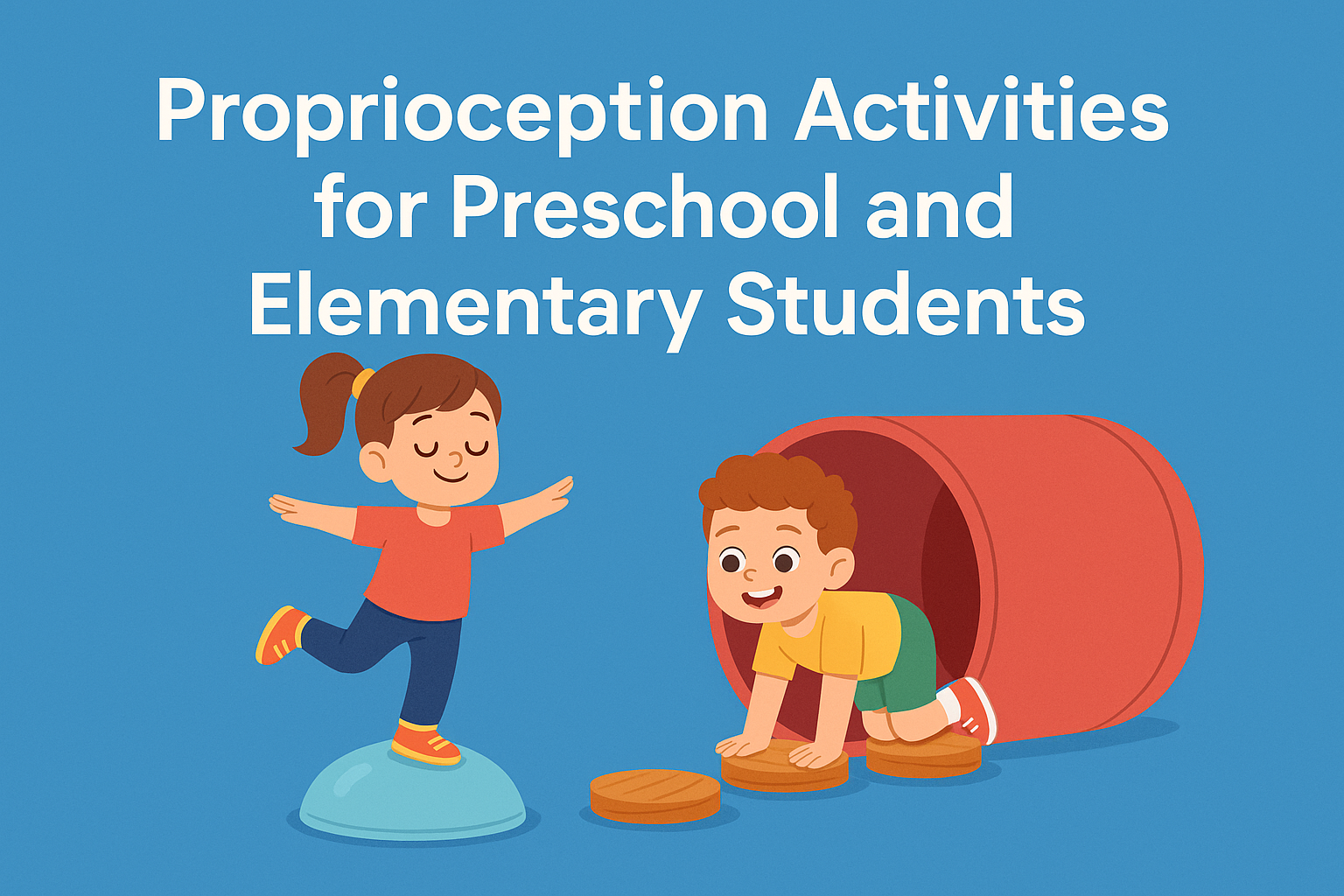
Here are ten practical and fun proprioception activities for preschool and elementary students designed to enhance their sensory processing skills.
1. Animal Walks
Animal walks mimic different animal movements, providing great proprioceptive input. For instance, have children walk like a bear, crawl like a crab, or hop like a frog. These activities engage large muscle groups and help improve body awareness.
- Bear Walk: Kids crawl on hands and feet, moving forward while keeping their knees off the ground.
- Crab Walk: Students sit on the ground with hands behind them, lifting their hips and walking backward.
- Frog Hop: Encourage kids to squat down and jump forward like frogs.
2. Obstacle Courses
Setting up an obstacle course using items like cones, hula hoops, and tunnels can provide various proprioceptive challenges. Children can crawl under tables, jump over cushions, and balance on beams. This activity enhances motor planning and body awareness while being incredibly fun.
Structure the course to incorporate different movements—like rolling, jumping, or balancing. Encourage children to create their own courses and invite their peers to try them out.
3. Weighted Vests or Backpacks
Using weighted vests or backpacks filled with soft items can offer calming proprioceptive input. The added weight helps children become more aware of their bodies and can enhance focus during activities. Just ensure the weight is appropriate for the child’s size and abilities.
Consider incorporating these items during quiet activities like reading or drawing to provide extra sensory feedback. Always monitor children while they wear weights to ensure safety and comfort.
4. Deep Pressure Activities
Deep pressure activities can significantly benefit children who struggle with proprioception. Activities like squeezing a stress ball, rolling a ball against a wall, or engaging in bear hugs can help provide that necessary input.
- Squeeze Play: Kids can use therapy putty or playdough to squeeze and mold, promoting hand strength and proprioceptive feedback.
- Weighted Blankets: Use a weighted blanket during quiet time to provide deep pressure, helping children feel grounded.
5. Jumping Activities
Jumping is a natural way for kids to gain proprioceptive input. Simple activities like jumping on a trampoline, jumping rope, or hopping from one foot to another can be both exhilarating and beneficial. (See: Importance of proprioception in development.)
Encourage group jumping games, where children can count their jumps or compete in friendly challenges. This not only develops their proprioceptive skills but also promotes social interaction.
6. Balance Games
Balance games are critical for developing proprioceptive skills. Activities like standing on one foot, walking on a balance beam, or using balance boards can be incredibly effective. These activities help improve stability and body awareness.
Make balance games more exciting by incorporating challenges, such as balancing while tossing a ball or moving to music. Children can also practice different poses in yoga to enhance their balance and proprioceptive awareness.
7. Swinging and Spinning
Many children enjoy swinging and spinning, and both activities provide excellent proprioceptive input. Swinging helps children identify their body’s position and improves spatial awareness. Spinning, whether on playground equipment or a simple office chair, can give a quick boost of sensory input.
Use swings in various ways—backward swinging, side-to-side, or even standing while swinging— to challenge their proprioceptive skills. Just ensure safety guidelines are followed during these activities.
8. Climbing Activities
Climbing structures, whether inside or outside, allow children to use their muscles in various ways. Climbing helps develop strength, coordination, and body awareness. Activities like climbing trees, monkey bars, or even cushions at home are excellent for enhancing proprioception.
Encourage children to explore climbing in different environments, ensuring that safety precautions are taken to prevent falls or injuries. Provide supervision and support as they navigate climbing challenges.
9. Dance and Movement
Dance activities are a fantastic way to engage children’s bodies while enhancing proprioceptive skills. Encourage them to dance to music, utilize ribbons, or follow along with dance videos. Movement styles, from ballet to hip hop, can aid in developing body awareness and coordination.
Consider hosting dance parties or group activities where children can express themselves, learn new moves, and enjoy the social aspect of dancing. This combination of movement and creativity helps reinforce proprioceptive development.
10. Nature Walks
Taking nature walks not only provides sensory input but also promotes exploration and adventure. Walking on different terrains—like sand, grass, or gravel—offers various proprioceptive challenges. Encourage children to walk barefoot occasionally to enhance sensory feedback.
Turn walks into scavenger hunts, asking children to find specific items or observe particular elements in nature. This element of playfulness makes the experience more engaging while providing critical proprioceptive benefits.
The Importance of Routine
Integrating proprioception activities for kids into their daily routines is essential. Regularly practicing these activities can help children develop stronger motor skills, improve focus, and promote emotional regulation. It’s beneficial to create a balanced routine that includes various sensory inputs throughout the day. (See: Proprioception and therapy for children.)
Incorporate these activities into playtime, classroom settings, or even during homework breaks. By consistently providing proprioceptive experiences, you’ll help children thrive in both their academic and personal lives.
Understanding Individual Needs
Every child is unique, and their proprioceptive needs may vary. Some children may require more intense proprioceptive input, while others may prefer gentler activities. It’s essential to observe each child’s responses to different activities and adjust accordingly.
For children who are more sensitive to sensory input, start with milder activities and gradually increase intensity as they become comfortable. Conversely, children who seek out intense sensory experiences may thrive with more challenging proprioceptive tasks. Tailoring activities to fit each child’s preferences and needs ensures they gain the most benefit.
Expert Perspectives on Proprioception
To further understand the significance of proprioception, we reached out to occupational therapists who specialize in sensory integration. According to Dr. Sarah Miller, a pediatric occupational therapist, “Proprioception is one of the foundational senses that help children build confidence in their physical abilities. Activities that enhance proprioception not only support physical development but also contribute to emotional and social well-being.”
Research indicates that children with better proprioceptive skills have improved academic performance because they can concentrate better and manage their emotions. Engaging in proprioception activities can act as a conduit to achieving these developmental milestones.
Statistics on Proprioception Development
Several studies highlight the link between proprioception and child development. For instance, a study published in the Journal of Physical Therapy found that children who participated in proprioceptive activities showed an improvement of up to 30% in coordination and balance over a six-week period.
Additionally, the American Academy of Pediatrics suggests that integrating sensory activities into daily routines can significantly reduce behavioral issues in children with sensory processing difficulties. These statistics underscore the importance of prioritizing proprioceptive activities in educational and home environments.
Comparative Analysis: Proprioception vs. Other Sensory Inputs
While proprioception is one of the eight senses, it’s essential to recognize how it interacts with other sensory systems, such as vestibular (balance) and tactile (touch) systems. Proprioceptive activities often overlap with vestibular activities—like swinging or spinning—enhancing overall sensory processing.
For example, when a child swings, they receive proprioceptive input from their muscles as they push against the swing and vestibular input from the motion of swinging. This combination can lead to a more enriched sensory experience, enhancing body awareness and coordination effectively.
Engaging in a variety of sensory activities that target multiple senses can further amplify the benefits of proprioception activities, making them even more effective in supporting child development.
Frequently Asked Questions (FAQ)
What are proprioception activities?
Proprioception activities are exercises or games designed to enhance a child’s awareness of their body position and movement in space. These activities often include movements that involve pushing, pulling, lifting, or jumping.
Why is proprioception important for children?
Proprioception is vital for children as it helps them develop coordination, balance, and motor skills. It also plays a role in emotional regulation and cognitive development.
How often should children engage in proprioception activities?
It’s beneficial for children to engage in proprioception activities daily. Incorporating a variety of these activities into their routine can significantly enhance their sensory processing and overall development.
Can proprioception activities help children with sensory processing issues?
Yes, proprioception activities can be particularly helpful for children with sensory processing issues. These activities provide essential sensory input that can help improve their body awareness and confidence in moving through their environment.
Are there specific proprioception activities for children with special needs?
Absolutely! Activities can be adapted based on individual needs and preferences. For some children, simpler movements like gentle stretching may be ideal, while others may benefit from engaging in more dynamic exercises like jumping or climbing. Working with an occupational therapist can provide tailored strategies.
Conclusion: Fostering Growth Through Proprioception
Incorporating proprioception activities for kids into their lives is a powerful strategy for supporting their development. As children learn to navigate their world with greater awareness of their bodies, they build essential skills that will serve them throughout their lives. These activities not only enhance physical abilities but also improve confidence, focus, and emotional regulation.
So, whether you’re a parent, teacher, or caregiver, make it a priority to introduce proprioceptive activities in fun and engaging ways. By doing this, you’ll foster an environment where children can explore, learn, and grow, ultimately unlocking their full potential.
“`
Trending Now For more on this, see activities for enhancing hand-eye coordination.
Frequently Asked Questions
What is proprioception and why is it important for children?
Proprioception is the body's ability to sense its position and movement. It's crucial for children as it helps them understand where their bodies are in space, which is essential for coordination, balance, and performing everyday tasks like walking and jumping.
What are some activities to improve proprioception in preschoolers?
Activities like animal walks, pushing or pulling heavy objects, and jumping on a trampoline can effectively improve proprioception in preschoolers. These activities engage large muscle groups and provide essential sensory input.
How does proprioceptive input affect children's development?
Proprioceptive input supports children's physical development by enhancing motor skills, coordination, and balance. It also plays a role in cognitive functions and emotional regulation, helping children interact more effectively with their environment.
Can proprioception activities help children with coordination issues?
Yes, proprioception activities can significantly benefit children with coordination issues. Engaging in these activities helps improve their body awareness, leading to better control over movements and enhanced physical abilities.
What are some fun proprioception activities for elementary students?
Fun proprioception activities for elementary students include obstacle courses, yoga poses, and team sports. These activities not only promote physical fitness but also enhance sensory processing and social interactions among peers.
Agree or disagree? Drop a comment and tell us what you think.



