
“`html
In today’s diverse classroom environments, educators are constantly on the lookout for effective strategies to meet the varied learning needs of their students. Among the most valuable frameworks available is Bloom’s Taxonomy, which provides a structured way to create differentiated instruction. Understanding how to use Bloom’s Taxonomy for differentiated instruction can help educators ensure that each student is engaged, challenged, and supported in their learning journey.
1. Understanding Bloom’s Taxonomy
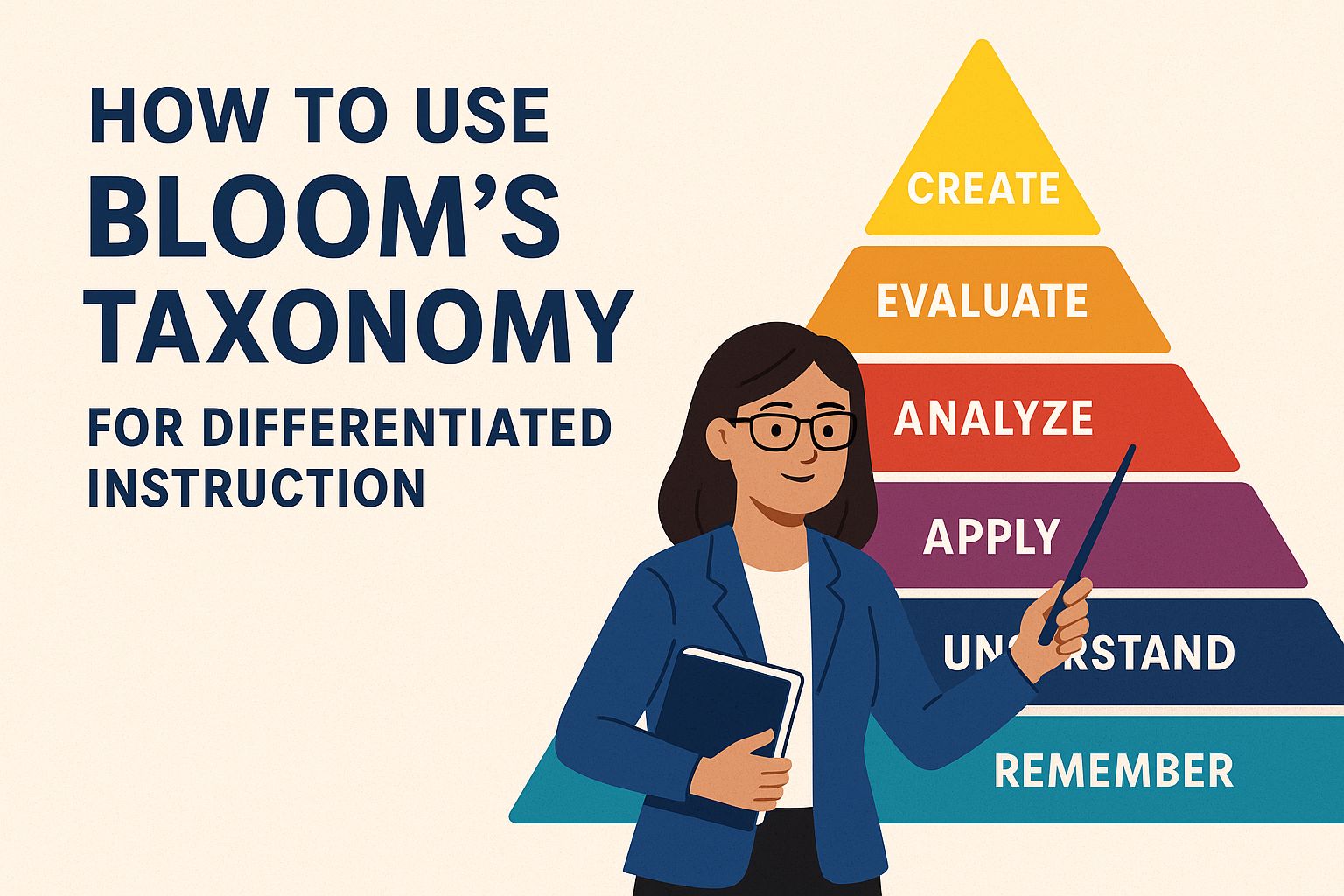
Bloom’s Taxonomy was first introduced by Benjamin Bloom in 1956 and has undergone revisions since then, including a significant update in 2001 spearheaded by a group of cognitive psychologists. The taxonomy categorizes educational objectives into a hierarchy of thinking skills, which can be especially useful in developing appropriate assessments and instructional strategies.
The original framework divided cognitive skills into six major categories: Knowledge, Comprehension, Application, Analysis, Synthesis, and Evaluation. The revised version, often referred to as Bloom’s Revised Taxonomy, reorganizes these categories into Remembering, Understanding, Applying, Analyzing, Evaluating, and Creating. This change not only reflects a more contemporary understanding of learning but also emphasizes the importance of higher-order thinking skills.
2. The Importance of Differentiated Instruction
Differentiated instruction is a teaching approach that tailors instruction to meet the individual needs of students. It recognizes that learners come with diverse backgrounds, learning styles, and readiness levels. By incorporating differentiated instruction based on Bloom’s Taxonomy, educators can better support students’ unique learning trajectories.
The significance of differentiated instruction lies in its ability to promote equitable learning opportunities. Rather than using a one-size-fits-all approach, teachers can design lessons that cater to various skill levels and learning preferences. This method not only enhances student engagement but also fosters a deeper understanding of the material.
For example, in a classroom learning about ancient civilizations, teachers might provide advanced readers with in-depth texts analyzing the political systems of these civilizations, while less advanced readers could work with simplified texts focused on key facts. This tailored approach helps ensure that all students can participate meaningfully in discussions about the topic.
3. Applying Bloom’s Taxonomy for Differentiated Instruction
To effectively use Bloom’s Taxonomy in differentiated instruction, educators can follow a series of strategic steps. First, it’s crucial to assess students’ prior knowledge and skills. This foundation allows teachers to identify the appropriate starting point for instruction. Once the baseline is established, educators can create learning objectives that correspond to different levels of Bloom’s Taxonomy.
For instance, a teacher might design a unit on ecosystems. At the Remembering level, students could be asked to list types of ecosystems. Moving up the taxonomy, the Understanding level might involve explaining the relationships between organisms within an ecosystem. At the Applying level, students could create a mini-project illustrating an ecosystem. By crafting objectives that span Bloom’s levels, educators can engage students at varying degrees of complexity.
Additionally, it’s important to incorporate a variety of materials and resources that cater to different learning preferences. Visual learners may benefit from infographics, while kinesthetic learners might engage better with hands-on activities. This variety not only enriches the learning experience but also supports the diverse ways in which students process information. (See: Bloom's Taxonomy overview.)
4. Creating Varied Tasks Based on Learning Objectives
Once learning objectives are set, the next step is to design a range of tasks that reflect those objectives. To effectively implement Bloom’s Taxonomy Differentiated Instruction, educators should offer multiple avenues for students to demonstrate their understanding.
- Group Work: Students can collaborate in small groups to tackle a complex problem, encouraging peer feedback and shared learning.
- Independent Projects: Allowing students to pursue individual projects based on their interests can lead to deeper engagement and ownership of their learning.
- Tiered Assignments: Tasks can be designed with varying levels of difficulty. For example, some students may work on basic comprehension questions while others analyze case studies.
By providing varied task options, teachers respect each student’s learning pace and style. This flexibility is a central tenet of effective differentiated instruction.
Real-world applications of this approach can be seen in project-based learning. For instance, in a history class, students might be tasked with creating a presentation, a video documentary, or an artistic representation of a particular historical event, thus allowing them to choose how best to express their understanding while meeting the same learning objectives.
5. Assessment Strategies Aligned with Bloom’s Taxonomy
Effective assessments are critical for understanding student progress and informing future instruction. When using Bloom’s Taxonomy, assessments should also be varied, reflecting the different cognitive levels established in the taxonomy. For example, formative assessments can be employed to gauge students’ understanding during the learning process.
Consider using techniques such as:
- Quizzes: Simple quizzes can assess knowledge and comprehension.
- Peer Reviews: Engaging students in peer assessment fosters deeper understanding and critical thinking.
- Presentations: Students can present their projects, showcasing their understanding while developing public speaking skills.
These varied assessment strategies not only support the differentiation process but also provide teachers with insights into student learning, allowing for timely adjustments in instruction. For instance, if a significant number of students struggle with a specific concept, the teacher can re-teach that material using different instructional strategies to reinforce learning.
6. Utilizing Technology for Differentiated Instruction
Technology can be a powerful ally in promoting differentiated instruction through Bloom’s Taxonomy. Digital tools and resources offer unique opportunities to accommodate different learning styles and paces. For instance, online platforms enable students to explore content at their own speed, which can be particularly beneficial for learners needing more time.
Additionally, educators can utilize multimedia resources to present information in various formats. For example, videos can help visualize complex concepts, while interactive simulations can allow students to apply their knowledge in real-world contexts. Tools like Google Classroom or learning management systems (LMS) can facilitate personalized learning paths, making it easier to track progress and adjust instruction as needed.
Moreover, online collaboration tools such as discussion boards or shared documents can enhance group work, allowing students to communicate and work together outside of the classroom. This can foster a sense of community and collaboration, essential components of effective learning environments.
7. Fostering a Growth Mindset
Incorporating Bloom’s Taxonomy into differentiated instruction also encourages a growth mindset among students. When learners recognize that intellectual abilities can be developed through effort and perseverance, they are more likely to take on challenges and engage deeply with the content. (See: Differentiated Instruction in Education.)
Educators can promote a growth mindset by providing constructive feedback, celebrating effort, and encouraging students to take risks in their learning. This approach not only enhances academic performance but also instills resilience and a love for learning.
For example, teachers might highlight instances where students have improved over time, reinforcing the idea that learning is a process. They can incorporate goal-setting practices, where students identify specific skills they want to develop, thus taking ownership of their learning journey.
8. Challenges in Implementing Bloom’s Taxonomy for Differentiated Instruction
While integrating Bloom’s Taxonomy into differentiated instruction offers many benefits, educators may face challenges. One of the most common hurdles is the need for adequate training and understanding of the taxonomy itself. Without a solid grasp of the levels of thinking and how they translate into instructional practice, teachers may struggle to implement them effectively.
Time constraints can also be a significant barrier. Planning differentiated lessons requires a considerable investment of time, which can be difficult in busy educational settings. Additionally, managing a classroom with diverse learning needs can be overwhelming for teachers without the right support systems in place.
Another common challenge is resistance from students who may be accustomed to traditional teaching methods. Some students might feel uncomfortable with the more self-directed, explorative tasks that differentiated instruction often entails. Teachers need to actively engage students in understanding the value of these approaches and how they empower their learning.
9. The Future of Bloom’s Taxonomy in Education
As education continues to evolve, the relevance of Bloom’s Taxonomy for differentiated instruction remains strong. With an increasing emphasis on personalized learning and the integration of technology, the potential for using this framework to meet diverse learner needs is greater than ever.
Educators are encouraged to continue developing their understanding of how to apply Bloom’s Taxonomy in innovative ways, keeping student engagement and success at the forefront. By embracing this systematic approach, teachers can create a dynamic classroom environment conducive to learning for every student, ultimately leading to improved outcomes and a more equitable educational landscape.
10. Practical Examples of Bloom’s Taxonomy in Differentiated Instruction
Understanding how to apply Bloom’s Taxonomy in real classroom scenarios can help teachers visualize its effectiveness in differentiated instruction. Here are practical examples across various subjects:
- Math: In a unit on fractions, a teacher might ask students at the Remembering level to identify fractions from a set of pictures, while students at the Analyzing level could compare and contrast different methods of adding fractions and discuss which is more efficient.
- Science: In a biology lesson, students might use Remembering tasks to list the parts of a cell, whereas at the Applying level, they could create a model of a cell using various materials, and at the Evaluating level, they could present their models and critique each others’ work.
- Literature: When studying a novel, students at the Understanding level might summarize chapters, while those at the Creating level could write an alternative ending or develop a character blog that reflects their thoughts and emotions throughout the story.
11. Frequently Asked Questions (FAQ)
What is Bloom’s Taxonomy?
Bloom’s Taxonomy is a framework for categorizing educational goals into levels of complexity and specificity. It helps educators design learning experiences that align with desired outcomes. (See: Harvard's resources on differentiated instruction.)
How can I implement differentiated instruction using Bloom’s Taxonomy?
To implement differentiated instruction using Bloom’s Taxonomy, assess your students’ readiness levels, establish learning objectives at various cognitive levels, and design tasks that allow for different methods of demonstrating understanding.
What are the benefits of using Bloom’s Taxonomy in the classroom?
Using Bloom’s Taxonomy in the classroom promotes higher-order thinking, allows for personalized learning experiences, and supports diverse learning needs by providing multiple pathways for students to engage with the material.
Can technology enhance the implementation of Bloom’s Taxonomy?
Absolutely! Technology can facilitate personalized learning, provide access to varied resources, and enable innovative assessment methods, making it easier for teachers to implement differentiated instruction based on Bloom’s Taxonomy.
What are tiered assignments?
Tiered assignments are tasks designed with varying levels of complexity, allowing students to work at their appropriate level of challenge. This method ensures that all students can engage meaningfully with the content while meeting the same learning objectives.
How do I assess students effectively when using differentiated instruction?
Effective assessment in a differentiated classroom involves using a variety of methods, including formative assessments, quizzes, peer reviews, and presentations. This allows teachers to gauge student understanding and adjust instruction as needed.
What support does a teacher need to implement Bloom’s Taxonomy and differentiated instruction?
Teachers benefit from professional development, collaboration with colleagues, and access to resources that enhance their understanding of Bloom’s Taxonomy and differentiated instruction. Support from administration and an encouraging school culture also play pivotal roles in successful implementation.
“`
Trending Now
Frequently Asked Questions
What is Bloom's Taxonomy?
Bloom's Taxonomy is a framework developed by Benjamin Bloom in 1956 that categorizes educational objectives into a hierarchy of cognitive skills. It includes categories like Knowledge, Comprehension, Application, Analysis, Synthesis, and Evaluation, later revised to Remembering, Understanding, Applying, Analyzing, Evaluating, and Creating, emphasizing higher-order thinking.
How can Bloom's Taxonomy be used for differentiated instruction?
Educators can use Bloom's Taxonomy to create differentiated instruction by tailoring lessons to meet the diverse learning needs of students. By aligning activities with different cognitive levels, teachers can ensure that all students are engaged and challenged at their individual readiness levels.
Why is differentiated instruction important?
Differentiated instruction is crucial because it addresses the diverse backgrounds, learning styles, and readiness levels of students. This approach promotes equitable learning opportunities, allowing teachers to provide personalized support to enhance each student's educational experience.
What are the levels of Bloom's Revised Taxonomy?
Bloom's Revised Taxonomy consists of six levels: Remembering, Understanding, Applying, Analyzing, Evaluating, and Creating. These levels represent a hierarchy of cognitive skills, with higher levels requiring more complex thinking and understanding.
How does Bloom's Taxonomy support higher-order thinking?
Bloom's Taxonomy supports higher-order thinking by emphasizing skills such as Analyzing, Evaluating, and Creating. These higher levels encourage students to go beyond mere memorization and comprehension, fostering critical thinking and deeper understanding of the material.
What’s your take on this? Share your thoughts in the comments below — we read every one.