
“`html
Choosing the right early childhood education program for your child is a significant decision that can shape their future learning experiences. Two popular options that often emerge in this arena are transitional kindergarten (TK) and preschool. While both serve the crucial role of preparing children for school, they do so in distinct ways. Understanding the key differences between transitional kindergarten vs preschool can help parents make informed choices for their children’s early education journey.
1. Defining Transitional Kindergarten
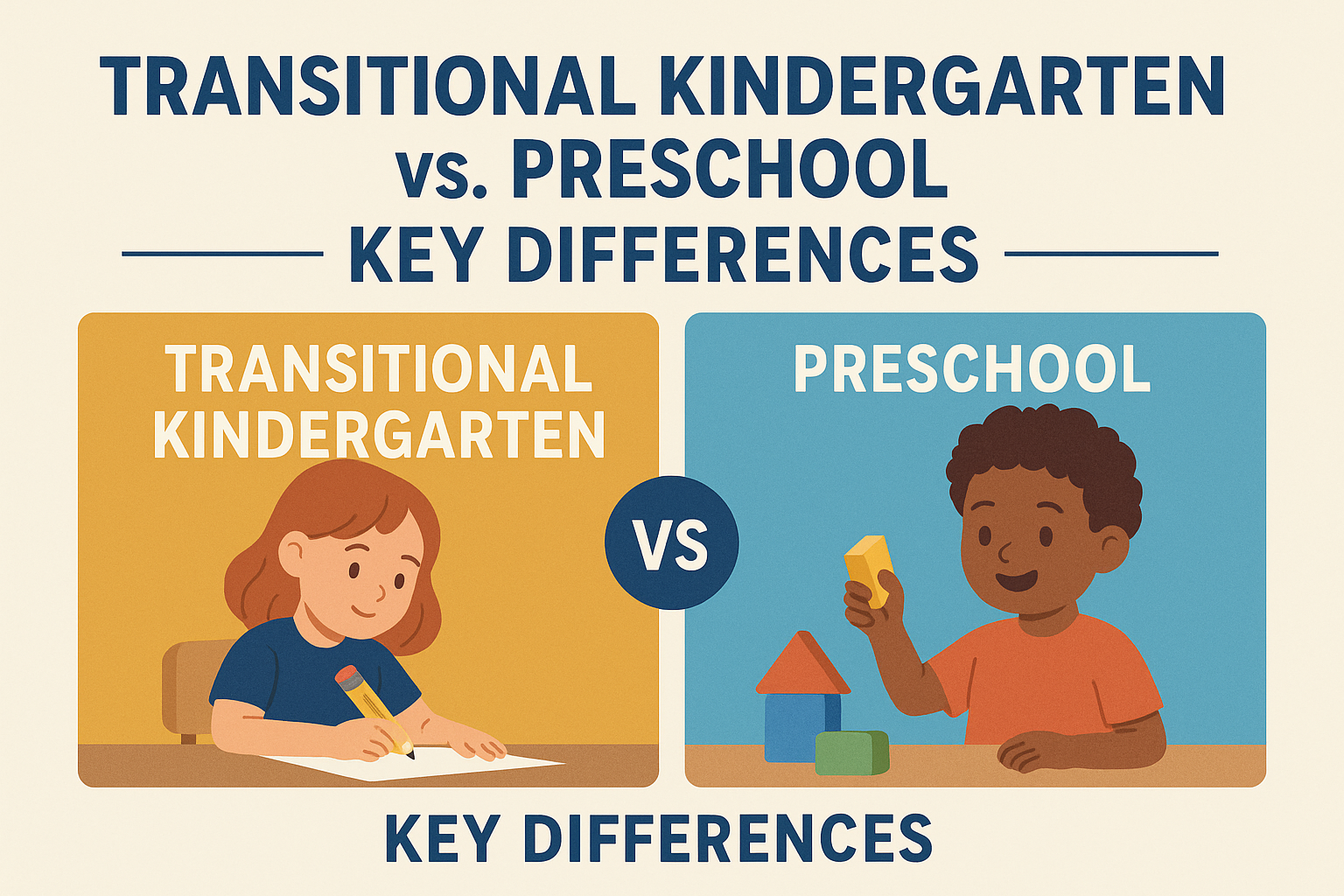
Transitional kindergarten, often abbreviated as TK, is specifically designed for children who turn five years old between September 2 and December 2. This program acts as a bridge between preschool and kindergarten, catering to children who may not be quite ready for the traditional kindergarten environment. TK offers a curriculum tailored to young learners, focusing on social, emotional, and academic growth.
In a typical TK classroom, teachers use developmentally appropriate practices to nurture skills such as collaboration, problem-solving, and early literacy. Unlike standard preschool programs, which may prioritize play-based learning, transitional kindergarten introduces a more structured academic framework while still maintaining the fun and engaging elements essential for this age group.
2. Understanding Preschool
Preschool typically caters to children ages three to five, focusing primarily on social and emotional development through play-based learning. The goal of preschool is to provide children with their first formal educational experiences, preparing them for the transition to kindergarten. Activities in preschool often include art, music, storytelling, and interactive play, all designed to foster creativity, curiosity, and social skills.
Unlike transitional kindergarten, preschools may not have a specific age cutoff for enrollment, allowing for a broader range of developmental stages among children. This diversity can create a rich learning environment, enabling younger children to learn from their older peers while fostering friendships and cooperative play.
3. Curriculum Differences
One of the most significant differences between transitional kindergarten vs preschool lies in the curriculum. Transitional kindergarten programs are often aligned with state kindergarten standards, including phonics, numbers, and early writing skills. Teachers in TK programs are trained to recognize when children might need more individualized support to meet these academic benchmarks.
On the other hand, preschools typically emphasize a play-based curriculum that allows children to explore concepts at their own pace. Activities may include hands-on learning, imaginative play, and thematic units that encourage exploration. The focus is generally less on standardized learning objectives and more on holistic development.
4. Social and Emotional Development
Both TK and preschool programs prioritize social and emotional development, but they approach it differently. In transitional kindergarten, the structured environment encourages children to develop skills like cooperation, conflict resolution, and emotional regulation within a more academic context. Teachers often facilitate group discussions and collaborative projects that help children learn to express their feelings and work together.
Preschool, while also fostering these skills, tends to provide a more relaxed atmosphere where children can engage in free play. This unstructured time allows kids to practice social interactions organically, helping them develop friendships and learn to communicate their needs and feelings effectively. (See: Early Learning Programs by the U.S. Department of Education.)
5. Teacher Qualifications and Class Sizes
Another notable aspect of the transitional kindergarten vs preschool debate is the qualifications of the educators and the class sizes. Transitional kindergarten teachers often hold specific credentials that enable them to instruct within a more academic framework. Many are required to have a teaching credential and training in early childhood education, ensuring that they can provide both academic instruction and developmental support.
Preschool teachers may have diverse educational backgrounds, and while many are trained in early childhood education, the requirements can vary widely by state and institution. Class sizes in TK programs are often smaller, allowing for more individualized attention, whereas preschool classrooms can sometimes accommodate larger groups. This difference impacts the level of personalized instruction each child receives.
6. Transition to Kindergarten
One of the end goals for both transitional kindergarten and preschool is to prepare children for kindergarten. However, the transition process varies significantly between the two. Transitional kindergarten acts as a direct preparatory step, with many programs designed to align directly with kindergarten expectations. Children who attend TK are often more familiar with the structure and routines of kindergarten, which can make the transition smoother.
In contrast, children transitioning from preschool to kindergarten may require additional support as they adapt to the more structured environment. While preschool lays a solid foundation for learning, the differences in routine and expectations can present challenges for some children. Parents often play a crucial role in this transition, helping their kids adjust to new environments and teaching them how to navigate different social dynamics.
7. Choosing the Right Path for Your Child
The choice between transitional kindergarten vs preschool ultimately depends on several factors, including your child’s age, developmental stage, and readiness for structured learning. If your child is on the younger side of the five-year age range, transitional kindergarten may provide an excellent opportunity for them to develop essential skills in a more supported environment.
If you have a child who is three or four years old, preschool may be the best fit, allowing them to explore their interests in a play-based setting. Assessing your child’s individual needs, personality, and learning style is critical in making this decision. Additionally, visiting various programs, speaking with educators, and considering logistics such as location and cost will all contribute to finding the best educational path for your family.
8. Cost Considerations
When it comes to education, cost is an undeniable factor that many parents consider. Generally, transitional kindergarten programs are funded by the state and provided through public school systems, which can mean little to no cost for families. This accessibility can be a significant advantage for parents who may be concerned about the financial implications of early childhood education.
Preschool, on the other hand, can vary widely in terms of cost. Private preschools, which may offer specialized programs or curricula, often come with tuition fees that can be substantial. Even public preschools may have associated costs or sliding scale fees based on family income. Understanding the financial commitment necessary for each option can be crucial in making a choice that aligns with your family’s budget.
9. Parental Involvement
Parental involvement can play a significant role in the effectiveness of both TK and preschool experiences. In transitional kindergarten, parents might find themselves more engaged due to the structured nature of the program, which often encourages communication between home and school. Some TK programs may even involve parents in volunteer opportunities, workshops, and events that support curriculum themes. (See: CDC's Developmental Milestones.)
Preschools also value parental involvement, but the nature of this involvement may differ. Many preschool programs encourage parents to participate in classroom activities, provide snack days, or volunteer for field trips. This collaborative approach can help parents feel more connected to their child’s education and reinforce learning at home.
10. Future Implications of Early Education
Research suggests that early education can have lasting effects on a child’s academic and social development. Studies indicate that children who attend quality preschool programs are more likely to perform better in school and develop positive social skills. Additionally, transitional kindergarten has been shown to reduce kindergarten retention rates by preparing children more adequately for the academic demands of their future schooling.
Investing time in understanding transitional kindergarten vs preschool can lead to better long-term outcomes for your child. These early educational experiences shape not only the foundation of learning but also the child’s attitude towards school and education as a whole.
11. Additional Support Services
Another consideration when comparing transitional kindergarten vs preschool is the availability of additional support services. Many TK programs often include access to specialists such as speech therapists, occupational therapists, and counselors to help children with diverse needs. This integrated support can make a significant difference for families who may be navigating developmental delays or other challenges.
Preschools may also offer some support services, but the extent can vary widely. Some preschools partner with local agencies or provide a referral system for parents seeking additional help. Knowing what resources are available can influence your choice, especially if your child might benefit from extra support in their early education journey.
12. Statistics on Early Childhood Education
Understanding the broader impact of early education can provide insight into why choosing the right program is crucial. According to the National Institute for Early Education Research, children who attend high-quality preschool programs are 30% more likely to graduate high school and are 50% more likely to enroll in postsecondary education. Additionally, studies show a 10-15% increase in literacy and math skills among children who attend transitional kindergarten, highlighting its effectiveness in preparing children for the academic rigors of kindergarten.
Furthermore, research from the American Educational Research Association shows that children who have a structured early education experience, such as TK, tend to have better long-term social skills and fewer behavioral problems in elementary school. These statistics illustrate the importance of early educational choices and their long-lasting impact on a child’s life.
13. FAQ: Transitional Kindergarten vs Preschool
What is the main difference between transitional kindergarten and preschool?
The main difference lies in their structure and curriculum focus. TK typically offers a more structured, academic atmosphere aligned with kindergarten standards, while preschool focuses on social and emotional development through play-based activities.
Who qualifies for transitional kindergarten?
Children who turn five years old between September 2 and December 2 are generally eligible for transitional kindergarten. The program is designed for children who may benefit from additional preparation before entering traditional kindergarten.
Can my child attend both preschool and transitional kindergarten?
Yes, many children attend preschool before moving to transitional kindergarten. This sequence can help them develop foundational skills in a play-based environment before transitioning to a more structured setting.
How do I know if my child is ready for transitional kindergarten?
Readiness for TK can depend on your child’s developmental milestones, social skills, and comfort with structured learning environments. Discussing your child’s readiness with preschool teachers or early childhood education specialists can provide valuable insight.
Are there any disadvantages to transitional kindergarten?
While TK offers many benefits, some children may thrive better in a less structured, play-based preschool environment. It’s essential to consider your child’s personality, learning style, and readiness for academics when making this decision.
What are the long-term benefits of attending preschool or transitional kindergarten?
Long-term benefits include improved academic performance, better social skills, and a higher likelihood of continuing their education beyond high school. Children who attend quality early education programs often develop a love for learning that can last a lifetime.
Ultimately, both transitional kindergarten and preschool serve vital roles in early childhood education. By understanding the differences and similarities between these two options, parents can make informed decisions that best support their children’s development and future educational success.
“`
Trending Now
Frequently Asked Questions
What is the difference between transitional kindergarten and preschool?
Transitional kindergarten (TK) is designed for children turning five between September 2 and December 2, focusing on academic and social readiness for kindergarten. In contrast, preschool caters to ages three to five, emphasizing play-based learning and social skills without a specific age cutoff.
What age is appropriate for transitional kindergarten?
Transitional kindergarten is intended for children who turn five years old between September 2 and December 2. This program helps children who may need additional time to develop social and academic skills before entering traditional kindergarten.
Is preschool more focused on play than transitional kindergarten?
Yes, preschool primarily emphasizes play-based learning to promote social and emotional development. While transitional kindergarten includes play, it also introduces a more structured academic framework to prepare children for the demands of kindergarten.
What skills do children learn in transitional kindergarten?
In transitional kindergarten, children develop essential skills such as collaboration, problem-solving, and early literacy. The curriculum is tailored to support their social, emotional, and academic growth, preparing them for a successful transition to kindergarten.
Can children attend both preschool and transitional kindergarten?
Yes, children can attend both preschool and transitional kindergarten. Many families choose preschool for early social and emotional development, followed by TK to bridge the gap to kindergarten, providing a comprehensive early education experience.
What did we miss? Let us know in the comments and join the conversation.