
“`html
When it comes to child development, understanding the nuances of play is crucial for parents, educators, and caregivers. Among the various types of play, associative play and cooperative play stand out as fundamental forms that contribute to a child’s social, emotional, and cognitive growth. While both forms are rooted in interaction with peers, they differ significantly in structure, intent, and outcomes. In this article, we’ll explore the essential aspects of associative play vs cooperative play, highlighting their key differences and offering insights into how each type impacts a child’s development.
1. What is Associative Play?
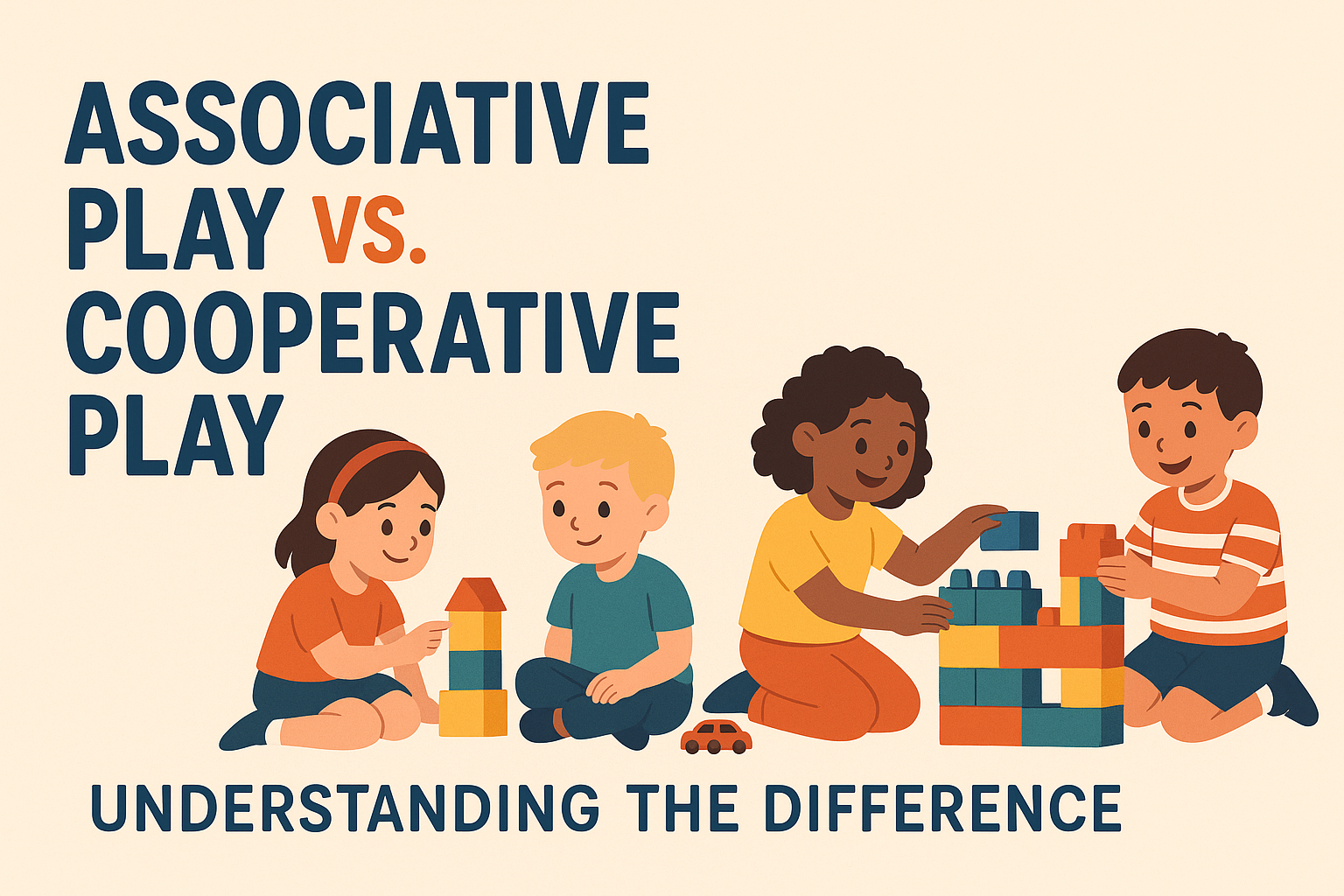
Associative play typically emerges in children around the ages of 3 to 4 years old. During this stage, children engage with one another while pursuing separate goals. Unlike parallel play, where kids play side by side without interaction, associative play involves communication and sharing of materials but lacks a unified objective. For example, two children may play with blocks, sharing them and chatting, but they are each building their own structure.
This type of play is essential for developing social skills. Children learn to express their ideas, negotiate sharing, and navigate the complexities of interpersonal interactions. Moreover, associative play provides an opportunity for children to explore their personalities and interests in a less structured environment, allowing for creativity and individuality to flourish.
2. Understanding Cooperative Play
Cooperative play builds on the foundations of associative play. It typically arises in slightly older children, around 4 to 5 years of age, when they begin to form deeper social connections. In cooperative play, children work together toward a common goal, whether it’s completing a puzzle, building a fort, or playing a game. There’s a collaborative spirit where roles may be assigned, and tasks are divided, requiring communication, teamwork, and problem-solving.
This type of play encourages children to develop critical social skills, including empathy, cooperation, and conflict resolution. For instance, when children negotiate who will be the leader in a game, they’re learning to assert themselves while also considering the feelings and ideas of their peers. Cooperative play reflects a child’s growing ability to work in groups and fosters a sense of community and belonging.
3. Key Differences in Structure
When examining associative play vs cooperative play, one of the clearest differences lies in their structure. Associative play is relatively unstructured; children are primarily focused on their individual activities while still interacting with their peers. They may exchange toys and take part in discussions, but the absence of a shared goal means their play is more spontaneous.
Conversely, cooperative play is more organized. Children engage in activities with a specific purpose, often leading to the creation of rules and roles. For example, if kids are playing a game of tag, they must agree on the rules and take turns chasing one another. This structured approach helps children learn to navigate group dynamics and develop leadership skills as they learn to collaborate effectively.
4. The Role of Communication
Communication plays a pivotal role in both associative and cooperative play, but it manifests differently in each. In associative play, conversations may revolve around sharing toys or expressing feelings about what they’re doing, but there’s less focus on achieving a collective goal. For example, during a block-building session, one child might say, “Can I use a red block?” while another responds without any further negotiation.
In contrast, communication in cooperative play is far more strategic. Children will discuss and negotiate their roles, share ideas, and collectively solve problems. An example would be a group of children participating in a role-playing game where they must decide who will take on which roles and how the storyline will unfold. This exchange not only builds vocabulary but also enhances listening skills—a crucial aspect of social interaction. (See: Child Development Overview.)
5. Impacts on Social Development
The differences between associative play vs cooperative play carry significant implications for a child’s social development. Associative play fosters a foundation of social skills, allowing children to practice sharing, taking turns, and interacting with peers in a relatively low-stakes environment. This type of play is vital for developing self-confidence as children explore their identities and preferences.
On the flip side, cooperative play amplifies these skills, requiring children to engage in more complex social interactions. As they navigate group activities, they learn to understand social cues, develop empathy, and manage conflicts. Research shows that children who engage in cooperative play are often better equipped to handle social challenges in school and beyond. They develop strong bonds with their peers, which can lead to lasting friendships.
6. Practical Insights for Parents and Educators
Understanding the distinctions between associative play and cooperative play can help parents and educators create enriching environments that promote both types of engagement. For younger children, provide opportunities for associative play with open-ended toys that encourage creativity – think blocks, art supplies, or simple games that allow for free exploration. This helps children develop their individual interests while learning to interact with others.
As children grow and begin to engage in cooperative play, it’s beneficial to introduce activities that require collaboration. Consider group projects, team sports, or structured games that require rule-following and teamwork. Encouraging children to discuss and negotiate during playtime can foster their communication skills and build a sense of community. It’s essential to allow children to lead their playtime experiences, which empowers them to make decisions and express their ideas.
7. Current Relevance and Future Implications
As we continue to navigate an increasingly digital age, understanding the dynamics of associative play vs cooperative play remains relevant. With the rise of technology, children may be spending less time engaging in face-to-face play. However, both types of play are crucial for developing essential life skills. Parents and educators must encourage real-world interactions that foster these play styles, even amidst a digital landscape.
Moreover, the concepts of associative and cooperative play can be applied beyond childhood. Adults can benefit from understanding these dynamics in teamwork and collaborative efforts in workplaces and communities. Recognizing the importance of individual contributions within a group context can enhance productivity and foster healthier relationships.
In summary, both associative play and cooperative play are vital for a child’s growth, shaping their social, emotional, and cognitive development. By understanding their differences and fostering environments that encourage both, we can equip the next generation with the skills they need to thrive in an interconnected world.
8. Examples of Associative and Cooperative Play
To better understand associative play vs cooperative play, let’s look at some practical examples that illustrate these concepts.
Associative Play Examples: (See: Importance of Play in Development.)
- Art Station: Two children are engaged at an art table. One is painting a picture, while the other cuts out shapes from paper, occasionally sharing colors and tools without any planned outcome.
- Sandbox Play: In a sandbox, one child may dig a hole while another makes a mound. They might trade shovels and talk about their creations but do not have a shared project.
- Dress-Up Time: At a dress-up station, several children might don costumes, pretend to be different characters, and interact with each other but create separate stories and scenarios.
Cooperative Play Examples:
- Building a Fort: Children work together to construct a blanket fort. They discuss the design, assign roles like “builder” and “decorator,” and work in tandem to create their space.
- Group Games: During a game of duck-duck-goose, children must agree on the rules, take turns, and communicate effectively to ensure everyone understands how to play.
- Cooking Play: If children are playing a restaurant game, they might decide who will be the chef, who will take orders, and who will serve food, creating a structured play scenario that encourages collaboration.
9. Statistics on Play and Child Development
Understanding the importance of play in child development is backed by various studies. Research indicates that:
- According to the American Academy of Pediatrics, engaging in play helps develop cognitive skills in children, as it stimulates their imagination and helps them learn problem-solving skills.
- A study published in the journal Child Development found that children who engage in cooperative play show better social skills and are more adept at resolving conflicts compared to their peers who primarily engage in solitary or associative play.
- The National Association for the Education of Young Children emphasizes that play is a critical mechanism for children to learn cooperation and teamwork, which are essential skills in later life stages.
10. Expert Perspectives on Play Types
Experts in child psychology and early childhood education often emphasize the significance of recognizing the differences between associative and cooperative play. Dr. Laura Jana, a pediatrician and child development expert, states, “Understanding how children play with one another provides crucial insights into their social development and can guide parents in creating supportive environments for their growth.”
Similarly, Dr. Kenneth Ginsburg, an expert in adolescent medicine, underscores that children who engage in cooperative play are more likely to develop resilience and adaptability, essential traits for success in today’s fast-paced world. He advises parents to facilitate play that encourages teamwork, as this prepares children for future interactions in school and later in the workplace.
11. FAQs about Associative Play vs Cooperative Play
What age does associative play start?
Associative play typically starts around the ages of 3 to 4 years old.
When does cooperative play develop?
Cooperative play usually begins to emerge between 4 to 5 years of age as children start forming deeper relationships with their peers.
How can I encourage associative play at home?
To encourage associative play, provide open-ended toys such as blocks, art supplies, or dress-up clothes. Create a space where children feel free to explore and engage with others without specific goals.
What are the benefits of cooperative play?
Cooperative play fosters teamwork, communication skills, conflict resolution, and empathy. It helps children develop strong social bonds and prepares them for collaborative environments in school and later in life.
Can both types of play coexist?
Absolutely! Children often engage in both associative and cooperative play throughout their developmental stages, learning from each experience and applying skills from one type to the other.
12. Encouraging Play in a Digital Age
In today’s technology-driven world, parents may worry that screen time is replacing traditional play. However, it’s vital to find a balance. While digital games can offer some social interaction, they often lack the depth of face-to-face play. Parents can encourage offline play by setting aside designated times for play without screens. Organizing playdates or group activities can help children practice associative and cooperative play in person.
Another strategy is to combine technology with physical play. For instance, augmented reality games can encourage children to explore their environment while working together to achieve goals. By integrating digital tools that promote movement and interaction, you can create opportunities for children to engage in both associative and cooperative play scenarios.
13. Long-Term Effects of Play Styles
Understanding the long-term effects of associative and cooperative play can shed light on their importance. Research indicates that children who regularly engage in cooperative play not only excel academically but also tend to have better emotional regulation as they grow older. These children learn how to collaborate, solve problems, and empathize with others, skills that are essential in adulthood.
Conversely, associative play helps in fostering creativity and independence, as children express themselves freely. While both play types have unique benefits, their combination provides a well-rounded foundation for developing interpersonal skills. As children transition into adolescence, these foundational skills translate into better peer relationships and increased emotional intelligence.
14. Conclusion
Both associative play and cooperative play are vital for a child’s growth, shaping their social, emotional, and cognitive development. By understanding their differences and fostering environments that encourage both, we can equip the next generation with the skills they need to thrive in an interconnected world.
“`
Trending Now
Frequently Asked Questions
What is associative play in child development?
Associative play is a stage of play that typically emerges in children aged 3 to 4 years. During this stage, children engage with each other while pursuing separate goals. They communicate and share materials but do not work towards a unified objective, allowing them to develop social skills and express their individuality.
How does cooperative play differ from associative play?
Cooperative play, which typically develops in children aged 4 to 5 years, involves working together towards a common goal. Unlike associative play, where children play alongside each other without a shared objective, cooperative play requires collaboration, communication, and the division of roles, fostering teamwork and deeper social connections.
What are the benefits of associative play for children?
Associative play helps children develop essential social skills, such as communication, negotiation, and sharing. It allows them to explore their personalities and interests in a less structured environment, promoting creativity and individuality while building foundational social interactions.
At what age does cooperative play typically begin?
Cooperative play usually begins in children around the ages of 4 to 5 years. During this stage, children start forming deeper social connections and learn to work together toward common goals, enhancing their ability to collaborate and solve problems as a team.
Why is understanding play types important for parents?
Understanding the different types of play, such as associative and cooperative play, is crucial for parents as it helps them support their child's social, emotional, and cognitive development. Recognizing these stages allows parents to provide appropriate opportunities for interaction and growth.
Agree or disagree? Drop a comment and tell us what you think.