
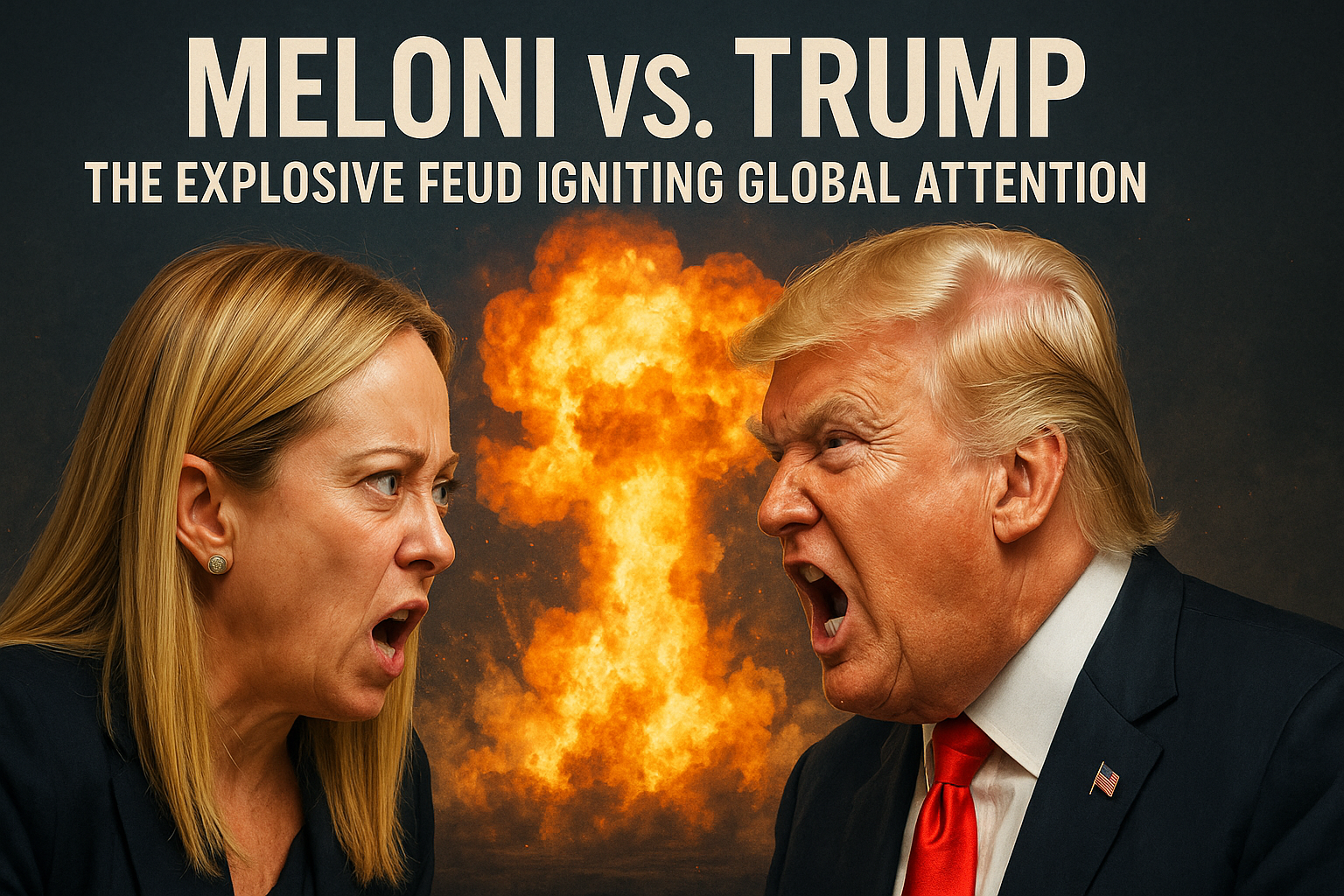

The political landscape can often resemble theater, with actors taking the stage to deliver lines that provoke, entertain, and engage. Recently, a new drama unfolded between Italian Prime Minister Giorgia Meloni and former U.S. President Donald Trump during a G7 summit, resulting in a public spat that has captivated global audiences. The Meloni Trump feud erupted amid what should have been a unifying moment for world leaders, instead spiraling into a series of sharp exchanges that showcased the personalities behind the politics.
Background of the G7 Summit
The G7 summit, which included leaders from the world’s largest advanced economies, was intended to focus on pressing issues such as climate change, global security, and economic collaboration. However, amidst the high-stakes discussions, a seemingly innocuous photo opportunity turned into a flashpoint for discord. The optics of the summit, usually a display of unity, took a hit as personal clashes overshadowed significant international dialogue.
Giorgia Meloni, who has been Prime Minister of Italy since October 2022, is known for her strong views on nationalism and immigration. Trump’s continued influence in American politics, despite leaving office in January 2021, makes any public exchanges involving him newsworthy. The juxtaposition of these two leaders—one representing a far-right populist wave in Europe and the other a controversial figure in American politics—only added fuel to the fire.
What Sparked the Feud?
The Meloni Trump feud ignited after Trump publicly criticized Meloni during a social media post that referenced a G7 group photograph. His remarks seemed to belittle her popularity and effectiveness in international politics, suggesting that she was riding on his coattails for recognition. Trump has a history of making disparaging comments about political figures, but this instance appeared particularly targeted.
In response to Trump’s jab, Meloni fired back with a pointed retort: “I’m popular without you.” This sharp response not only defended her position but also sought to assert her independence from Trump’s shadow. By countering Trump’s claims, Meloni signaled that she is not merely a figurehead within the broader nationalist movement but a capable leader in her own right.
The Social Media Amplification
In today’s digital age, social media serves as the primary stage for political theater. Trump’s comments and Meloni’s rebuttal quickly spread across Twitter, Instagram, and various news outlets, drawing attention from political analysts and casual observers alike. The exchange exemplified how social media could amplify political conflicts, transforming personal disputes into viral moments.
Memes, clips, and quotes from this altercation were shared widely, transforming the G7 summit from a gathering of world leaders to the backdrop of a viral moment that exemplified the ongoing schism in international politics. Political commentators weighed in, offering varying interpretations of the exchange. Some praised Meloni for her assertiveness, while others criticized her for engaging in a feud that detracted from more pressing global issues.
Impact on Diplomatic Relations
While some may view the Meloni Trump feud as a mere distraction, the implications extend beyond just personal rivalry. Such public exchanges can influence diplomatic relations, particularly as populist leaders like Meloni and Trump continue to shape the global political landscape. Their interactions may signal to allies and adversaries alike the tone and direction of international cooperation. (See: Background on the G7 summit.)
For Meloni, this incident posed a double-edged sword. On one hand, her pushback against Trump solidified her position among nationalists and populists. On the other, it risks alienating centrist leaders and those who prioritize diplomatic decorum. As Italy navigates its role in the European Union and its partnership with the United States, Meloni’s need to balance domestic support with international diplomacy becomes increasingly complex. There’s a fuller look at Trump's immigration strategy changes.
The Political Context
Both Meloni and Trump are products of a burgeoning worldwide populist movement characterized by skepticism toward traditional political elites and a focus on nationalism. Their supporters are often drawn to their fiery rhetoric and the sense that they represent the voice of the “common people” against established power structures. As such, their feud is not just a personal squabble but part of a larger narrative surrounding the rise of populism and its challenges to global governance.
The timing of the feud is significant, occurring during a pivotal moment in international relations. With issues such as the war in Ukraine, climate change initiatives, and a struggling global economy at the forefront of G7 discussions, the focus on personal attacks risks overshadowing essential dialogues. Analysts have pointed out that while Meloni’s response may resonate with her base, it could lead to a perception that she’s more interested in political theater than substantive policy.
Public Reaction and Media Coverage
The reaction to the Meloni Trump feud has been mixed. On social media, many users expressed support for Meloni’s defiance, celebrating her as a strong female leader standing up to a man often characterized as domineering. Conversely, critics argue that this feud detracts from the serious discussions at the G7 summit and undermines the importance of global cooperation in times of crisis.
Media coverage has varied significantly, with some outlets framing the feud as a comedic highlight of the summit, while others analyze the potential ramifications for international relations. The incident became a talking point on news programs, podcasts, and blogs, demonstrating how political conflicts can capture public interest and drive engagement.
What Lies Ahead?
As the dust settles from this latest episode, one must consider the longer-term implications of the Meloni Trump feud. Will this public clash impact Meloni’s standing within the European political arena, or will it bolster her position among nationalist factions? For Trump, the exchange may serve to reinforce his narrative of being a fighter against perceived elitism, but it also risks further isolating him from more traditional political circles.
In the coming months, both leaders will need to navigate their roles within the ever-changing landscape of global politics. For Meloni, maintaining a balance between catering to national interests and upholding international relations will be crucial. As for Trump, the feud may provide fodder for his political ambitions, but he will also need to contend with the complexities of a polarized electorate.
Ultimately, the Meloni Trump feud is emblematic of a broader trend where personal conflicts overshadow the pressing issues facing the global community. As leaders like Meloni and Trump continue to engage in public spats, one wonders whether the focus will ever shift back to the collaborative efforts necessary to address the complex challenges of our time. (See: Recent G7 summit news.)
Analyzing the Implications of the Feud
The fallout from the Meloni Trump feud could be more far-reaching than just a brief media sensation. Populist politics often thrive on confrontation, creating a narrative that appeals to their base while potentially alienating moderate voters. In Meloni’s case, embracing a confrontational stance may solidify her support among the far-right factions in Italy and Europe, but it simultaneously risks pushing away centrist voters who yearn for a return to stable diplomatic relations.
For Trump, this feud serves as an opportunity to reinforce his brand as a political outsider willing to challenge the status quo. His supporters may view this conflict as a demonstration of strength, but the risk lies in deepening the partisan divide that has characterized American politics since 2016. Is it possible that such feuds could lead to a greater fragmentation of political alliances, rendering cooperation on international issues increasingly difficult?
Comparing Leadership Styles
When examining the Meloni Trump feud, it becomes apparent that the leadership styles of Meloni and Trump are significantly different yet similarly populist in nature. Meloni’s approach tends to emphasize unity among her supporters, often invoking themes of national pride and traditional values. In contrast, Trump’s style has historically relied more on personal conflict and divisiveness, using social media as a tool to attack opponents.
This difference in approach can have different implications for each leader’s effectiveness. Meloni’s style may lead her to emphasize solidarity with her base while carefully navigating the political landscape of the European Union. Trump’s approach, however, could continue to land him in controversies that overshadow substantive policy discussions, especially as he prepares for potential future political battles.
Frequently Asked Questions (FAQ)
What exactly triggered the Meloni Trump feud?
The feud began when Donald Trump criticized Giorgia Meloni during a social media post related to a G7 summit photograph, belittling her stature in international politics. Meloni responded assertively, stating that she was popular on her own merit, which sparked the exchange.
How has the media portrayed the feud?
The media coverage has been a mixed bag, with some outlets treating it as a humorous highlight of the summit, while others have scrutinized its implications for international relations. The differing narratives reflect the polarized nature of contemporary media and its relationship with political events.
Will this feud impact Italy’s international relations?
Yes, the feud has the potential to affect diplomatic relations, particularly for Meloni. Her response could strengthen her position among nationalist factions but may alienate moderate allies who value diplomatic decorum. Navigating these dynamics will be crucial for Italy’s role in the EU and its relationship with the U.S.
How does this feud reflect broader trends in global politics?
The Meloni Trump feud is indicative of the rise of populism worldwide, where personal conflicts often overshadow significant policy discussions. Their confrontation exemplifies how political personalities can influence international relations, complicating efforts to address pressing global challenges. (See: Profile of Giorgia Meloni.)
What might be the long-term effects of this feud?
The long-term implications could include further polarization within political landscapes, complicating alliances and cooperation. For Meloni, it could bolster her standing within nationalist circles, while for Trump, it may reinforce his outsider image. The feud could also contribute to a growing trend where personal conflicts dominate the political narrative. Related reading: rising interest in Trump airport searches.
Expert Perspectives on the Feud
Political analysts have offered a range of perspectives on the Meloni Trump feud, highlighting its potential to reshape both leaders’ trajectories. Dr. Elena Martinez, a political scientist at a European university, suggests that Meloni’s response to Trump is a strategic move to strengthen her image at home: “By standing up to Trump, Meloni is not just asserting her independence; she is also appealing to the growing nationalist sentiment among her constituents who admire strength and defiance.” This positions Meloni favorably among her supporters and signals to the EU that she will prioritize Italy’s interests.
Conversely, former White House advisor Mark Simmons believes that Trump’s insistence on personal conflicts could backfire, stating, “Trump’s need to engage in public feuds often distracts from more pressing issues. While it may energize his base, it risks alienating voters who are more concerned about policy than personality.” This suggests that while the feud may serve immediate political needs, there could be long-term consequences for both leaders.
Future Political Landscape
The dynamics of the Meloni Trump feud indicate a shift in how political disputes are likely to unfold in the future. As populism continues to rise, the reliance on social media and personal attacks may become more pronounced. This could lead to a political environment where personal relationships are frayed, making consensus on critical issues even harder to achieve.
In Europe, the implications of this feud could spark similar conflicts among populist leaders. If leaders like Meloni continue to engage in high-profile spats, it could encourage others to adopt a more aggressive stance against their political rivals, leading to a more fragmented European political landscape. As the 2024 elections approach in the U.S., the fallout from this feud may also impact Trump’s potential candidates for future alliances, making it crucial for him to navigate these waters carefully.
Trending Now
Frequently Asked Questions
What sparked the feud between Giorgia Meloni and Donald Trump?
The feud ignited after Donald Trump criticized Giorgia Meloni in a social media post regarding a G7 group photograph, suggesting she was gaining recognition by riding on his coattails. This public jab drew a pointed response from Meloni, escalating their exchange.
What was the context of the G7 summit where Meloni and Trump clashed?
The G7 summit was intended to address significant global issues like climate change and economic collaboration among the world's largest advanced economies. However, personal clashes between leaders, particularly the Meloni-Trump feud, overshadowed the summit's purpose of unity.
How did Giorgia Meloni respond to Trump's criticism?
In response to Trump's disparaging remarks, Giorgia Meloni delivered a pointed retort, showcasing her political stance and resilience. The details of her rebuttal highlighted her commitment to her role as Prime Minister and her stance on international politics.
What are the political backgrounds of Giorgia Meloni and Donald Trump?
Giorgia Meloni is the Prime Minister of Italy, known for her strong nationalist and anti-immigration views, while Donald Trump is a former U.S. President who remains a controversial figure in American politics. Their differing political ideologies contribute to the intensity of their exchanges.
Why is the Meloni-Trump feud significant in global politics?
The feud is significant as it illustrates the tensions between far-right populism in Europe and the ongoing influence of Trump in American politics. Their clash during a major international summit highlights how personal rivalries can impact global diplomatic efforts.
What did we miss? Let us know in the comments and join the conversation.



