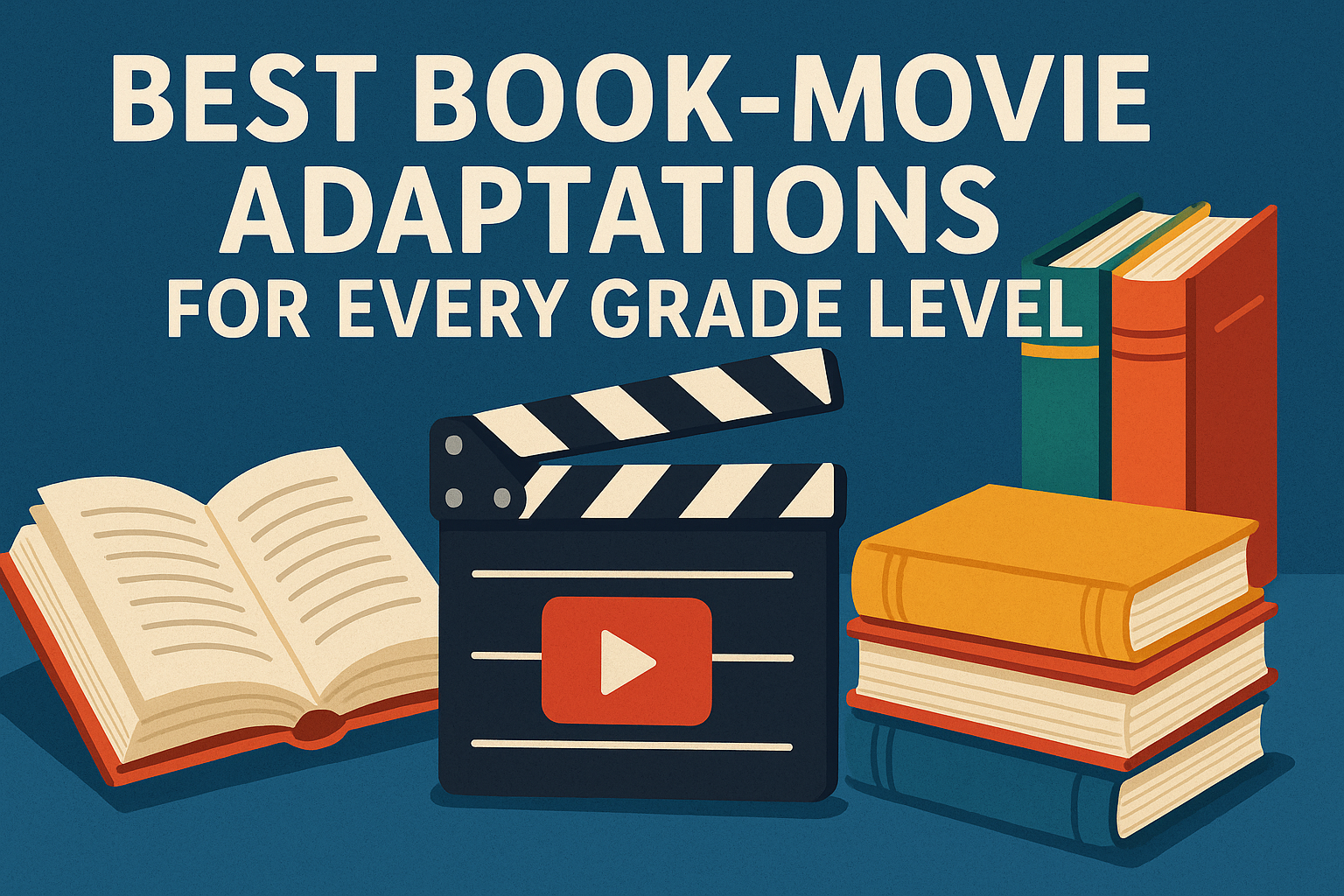

When it comes to bridging the gap between literature and cinema, few things captivate audiences quite like book movie adaptations. These adaptations can enhance the reading experience, making complex narratives more accessible and engaging for students across all grade levels. In this article, we dive into the top seven book-to-film adaptations, tailored specifically for different educational stages, providing insights on what makes them resonant and relevant.
1. Elementary School: “Charlotte’s Web” (2006)
Before diving into the deeper realms of literature, children in elementary school often find themselves enchanted by stories featuring talking animals and life lessons. One exemplary book movie adaptation is E.B. White’s “Charlotte’s Web”. The film, released in 2006, is a faithful retelling of the beloved children’s novel that has been inspiring young readers since its initial publication in 1952.
In this tale, a pig named Wilbur befriends a wise and caring spider named Charlotte, who devises a plan to save him from being slaughtered. The movie captures the charm of the original book while incorporating stunning animation and an all-star voice cast, including Dakota Fanning as Fern and Julia Roberts as Charlotte. The themes of friendship, loyalty, and the cycle of life resonate well with younger audiences, making it an ideal pick for elementary school students.
2. Middle School: “Harry Potter and the Sorcerer’s Stone” (2001)
As students transition into middle school, they often explore more complex narratives infused with fantasy and adventure. J.K. Rowling’s “Harry Potter and the Sorcerer’s Stone” is a cultural phenomenon that not only captivated readers but also resulted in one of the most successful film franchises in history. The 2001 film adaptation serves as a perfect introduction to the magical world of Harry Potter.
This adaptation remains largely faithful to the source material and introduces viewers to the enchanting world of Hogwarts School of Witchcraft and Wizardry. It helps young audiences explore themes of friendship, bravery, and the battle between good and evil. The immersive storytelling, combined with visual effects that bring magic to life, ensures that students remain engaged while drawing parallels between the book and its cinematic counterpart.
3. High School: “The Fault in Our Stars” (2014)
High schoolers often grapple with complex emotions, identity, and relationships, making John Green’s “The Fault in Our Stars” a poignant choice for older teens. The 2014 film adaptation of this bestseller captures the bittersweet love story between two teenage cancer patients, Hazel Grace Lancaster and Augustus Waters.
What sets this adaptation apart is its emphasis on authentic dialogue and character development. Viewers are treated to a realistic portrayal of love, loss, and the search for meaning in the face of mortality. The film encourages discussions around difficult topics, such as illness and grief, while providing a sense of connection and understanding among young audiences navigating similar feelings. It’s a powerful adaptation that resonates on multiple levels, making it a must-watch for high school students.
4. For the Classics: “To Kill a Mockingbird” (1962)
When it comes to classic literature, few stories are as impactful as Harper Lee’s “To Kill a Mockingbird”. The 1962 film adaptation remains a timeless portrayal of racial injustice, moral growth, and empathy. This adaptation is often used in high school curricula to delve into themes of prejudice, morality, and the complexities of human behavior. (See: Wikipedia page on Charlotte's Web.)
Gregory Peck’s iconic performance as Atticus Finch has become synonymous with moral integrity, making the film a crucial resource for discussions on ethics and justice. The pacing and emotional depth of the film mirror the somber tone of the book, allowing students to analyze the societal implications of the narrative. Engaging with both the novel and its film adaptation can spark profound conversations about social justice and empathy, proving the lasting relevance of Lee’s work.
5. Fantasy Lovers: “The Chronicles of Narnia: The Lion, the Witch and the Wardrobe” (2005)
For students enamored by fantasy, C.S. Lewis’s “The Chronicles of Narnia: The Lion, the Witch and the Wardrobe” offers a magical escape. The 2005 film adaptation brings to life the enchanting land of Narnia, where four siblings discover a world filled with mythical creatures and epic battles between good and evil.
The adaptation captures the essence of Lewis’s narrative while employing stunning visual effects and a powerful score. Themes of sacrifice, bravery, and redemption are woven throughout the story, providing a rich context for discussions about morality and faith. This film serves as an excellent introduction to the larger Narnia series and encourages young viewers to explore the written word further, fostering a love for both reading and cinema.
6. Graphic Novels: “Persepolis” (2007)
As students progress through their educational journey, the format of literature becomes increasingly diverse. For high school and college students, Marjane Satrapi’s “Persepolis” stands out as a unique adaptation of a graphic novel into film. The 2007 animated adaptation is based on Satrapi’s autobiographical graphic novel, which chronicles her childhood and early adult years in Iran during and after the Islamic Revolution.
This adaptation stands out for its stark black-and-white animation, which mirrors the graphic novel’s illustrations. It adeptly conveys themes of war, identity, and resistance while making complex historical contexts accessible to a younger audience. Students can engage with both the graphic novel and the film to explore the nuances of storytelling through different mediums, providing a rich discussion about culture, history, and personal identity.
7. Young Adults: “The Hate U Give” (2018)
In an age where social justice and activism are at the forefront, Angie Thomas’s “The Hate U Give” resonates deeply with young adults. The 2018 film adaptation tackles contemporary issues of race, police violence, and the importance of speaking out against injustice. This adaptation remains remarkably faithful to the novel, capturing the raw emotions and struggles faced by the protagonist, Starr Carter.
The film serves as a springboard for conversations about activism and the personal impact of systemic racism. It encourages viewers to reflect on their own experiences and the societal structures that shape their lives. Watching the film, in conjunction with reading the book, can inspire students to engage in meaningful discussions about societal change and the power of youth voices in effecting that change.
Why Book Movie Adaptations Matter
Book movie adaptations play a significant role in the literary and cinematic worlds. They bridge the gap between two different mediums, allowing stories to reach wider audiences. Not only do they make literature more accessible to individuals who might struggle with reading, but they also provide visual interpretations that can enhance understanding and retention. For instance, films can visually represent complex themes and emotions that might be harder to grasp through text alone. (See: CDC resources on literacy and education.)
They also serve as a catalyst for deeper engagement with the original material. Many viewers, intrigued by a film adaptation, may feel inspired to pick up the book afterward. In this way, adaptations can be instrumental in promoting literacy and encouraging a love for reading among audiences of all ages.
Statistics on Book Adaptations
In recent years, the popularity of book-to-film adaptations has surged. According to a report by the Motion Picture Association, approximately 30% of films released in 2022 were adaptations of books. These adaptations draw from a diverse range of genres, from classic literature to contemporary bestsellers.
Moreover, a survey conducted by the American Library Association found that nearly 65% of adults who watched a film adaptation of a book went on to read the original text. This statistic highlights the crucial role adaptations play in fostering an interest in literature, reinforcing their value in both educational and entertainment contexts.
Expert Perspectives on Film Adaptations
Filmmakers and authors alike have varying opinions on book-to-film adaptations. Renowned director Martin Scorsese once said, “There are many different ways to tell a story. The key is to focus on the essence of the narrative and translate it into a different medium.” This perspective emphasizes the importance of capturing the core elements of a story while acknowledging that adaptations can take creative liberties.
Authors, on the other hand, often have mixed feelings about adaptations. Some, like Stephen King, have openly criticized certain adaptations of their work, expressing concerns over how the essence of their stories may be altered. Meanwhile, others, such as J.K. Rowling, have embraced the film adaptations of their books, appreciating the new audience it brings to their original work. This dynamic reveals the intricate relationship between authors and filmmakers, as both aim to tell compelling stories, albeit through different lenses.
FAQs About Book Movie Adaptations
Q: What makes a good book-to-film adaptation?
A: A good adaptation captures the essence of the book while translating its themes and characters into a visual format. It should resonate with both readers of the original text and newcomers to the story. Strong performances, quality production, and a respectful interpretation of the source material contribute to a successful adaptation.
Q: Are adaptations always faithful to the original book?
A: Not necessarily. While some adaptations strive for fidelity to the source material, others take creative liberties to translate themes and narratives effectively into a film. This can sometimes lead to significant changes in characters, plotlines, or endings.
Q: Why do some adaptations succeed while others fail?
A: Success often hinges on the balance between staying true to the source material and making necessary adjustments for the film medium. Factors such as casting, directing, screenwriting, and audience expectations all play crucial roles in an adaptation’s reception. (See: Associated Press news articles.)
Q: How can educators use film adaptations in the classroom?
A: Educators can use film adaptations to spark discussions about themes, characters, and narrative techniques. By comparing a book to its film counterpart, students can deepen their understanding of storytelling and explore different interpretations of the same narrative.
The Future of Book Movie Adaptations
As we look ahead, the landscape of book movie adaptations is evolving. Streaming platforms like Netflix, Amazon Prime, and Disney+ are producing a growing number of adaptations, providing opportunities for lesser-known works to be brought to the screen. This trend not only diversifies the stories being told but also allows for deeper explorations of character and plot that traditional theatrical releases may not support.
Moreover, as technology advances, filmmakers are finding new ways to capture the essence of books. Virtual reality and immersive storytelling techniques are beginning to pave the way for adaptations that offer viewers a more interactive experience. Imagine stepping into a world like Narnia or Hogwarts, where you can explore the settings and engage with characters beyond the screen. This immersive potential may redefine how we experience both literature and its cinematic counterparts.
Ultimately, as adaptations continue to grow in popularity, they serve an important cultural purpose. They encourage a dialogue between the written word and visual storytelling, inviting audiences to appreciate literature in new and exciting ways.
Whether you’re a student or an educator, exploring these book movie adaptations can enrich the educational experience, providing diverse narratives that resonate across generations. Each of these films not only brings beloved stories to life but also encourages viewers to think critically about the themes and messages embedded within. From elementary school to high school and beyond, these adaptations serve as vital tools in promoting literacy, empathy, and a deeper understanding of the world around us.
Trending Now
Frequently Asked Questions
What are the best book-to-movie adaptations for kids?
Some of the best book-to-movie adaptations for kids include 'Charlotte's Web' for elementary school students, which features themes of friendship and loyalty, and 'Harry Potter and the Sorcerer's Stone' for middle schoolers, introducing them to the magical world of Hogwarts.
How do book adaptations enhance the reading experience?
Book adaptations can enhance the reading experience by making complex narratives more accessible, engaging students visually and emotionally, and providing a deeper understanding of the themes and characters presented in the original literary work.
Which book adaptations are suitable for high school students?
For high school students, adaptations like 'The Great Gatsby' and 'To Kill a Mockingbird' are suitable as they tackle complex themes and social issues, making them relevant for discussion in a classroom setting.
Are animated book adaptations good for younger audiences?
Yes, animated book adaptations like 'Charlotte's Web' are excellent for younger audiences as they captivate children's imaginations with vibrant visuals and relatable stories, while also teaching important life lessons.
What makes a book-to-film adaptation successful?
A successful book-to-film adaptation remains faithful to the original story while effectively translating its themes and characters to the screen, often enhancing the narrative with visual storytelling and strong performances.
What did we miss? Let us know in the comments and join the conversation.