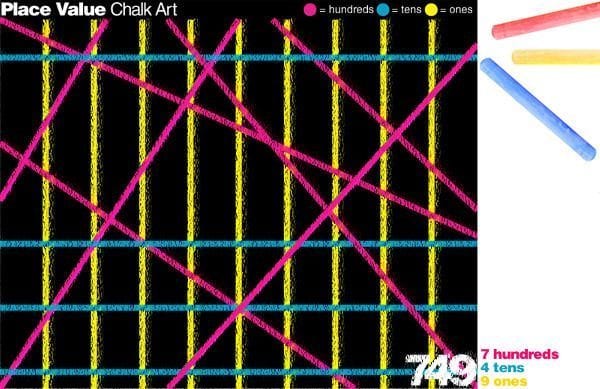

Introduction:
Place value is an essential mathematical concept that helps children understand the significance of each digit in a number. While conventional teaching methods can sometimes make the learning process dull, incorporating fun and engaging activities into the curriculum can significantly improve a student’s interest and comprehension. One such activity is teaching place value using sidewalk chalk. This article explores how to use this simple, yet effective method to teach place value.
Materials Needed:
– Sidewalk chalk in various colors
– A large outdoor area with a safe, flat surface (such as a driveway or school playground)
Instructions:
1. Preparation: Choose a spacious and safe area for the children to work on. Make sure the surface is clean and dry. Provide each child with their own set of colored sidewalk chalk.
2. Warm-up: Start with a brief review of place value concepts, emphasizing ones, tens, hundreds, thousands, and so on. Ensure the children are familiar with the base ten numbering system.
3. Introduction: Explain that they will be creating large place value charts on the ground using their colored sidewalk chalk. Describe each column as ones, tens, hundreds, etc., and assign specific colors for each column to maintain consistency.
4. Drawing place value charts: Instruct each child to draw a large grid representing the place value chart with rows for numbers 0-9 as per their understanding level (e.g., up to tens or hundreds). Ensure their name is written above the chart for easy identification.
5. Practice: Assign each child or group a few different mixed-digit numbers randomly and have them represent it in their respective charts by writing the digits in correct place value columns.
6. Interactive learning: Encourage children to walk around and observe their classmates’ charts for any discrepancies or creative representations of numbers.
7. Discussion: Once all children have completed their charts, initiate a discussion in which they share their experience, any challenges they faced, and what they learned from the activity.
8. Cleanup: Make sure to allot time for children to clean up their learning area and collect the chalk properly.
Conclusion:
Teaching place value using sidewalk chalk is a fun, interactive, and engaging way to help children grasp essential mathematical concepts. This outdoor activity not only promotes creative learning but also encourages peer-to-peer interaction and collaboration. By making learning enjoyable, students are more likely to retain crucial information and develop a positive attitude towards education – especially when it comes to mathematics.