
“`html
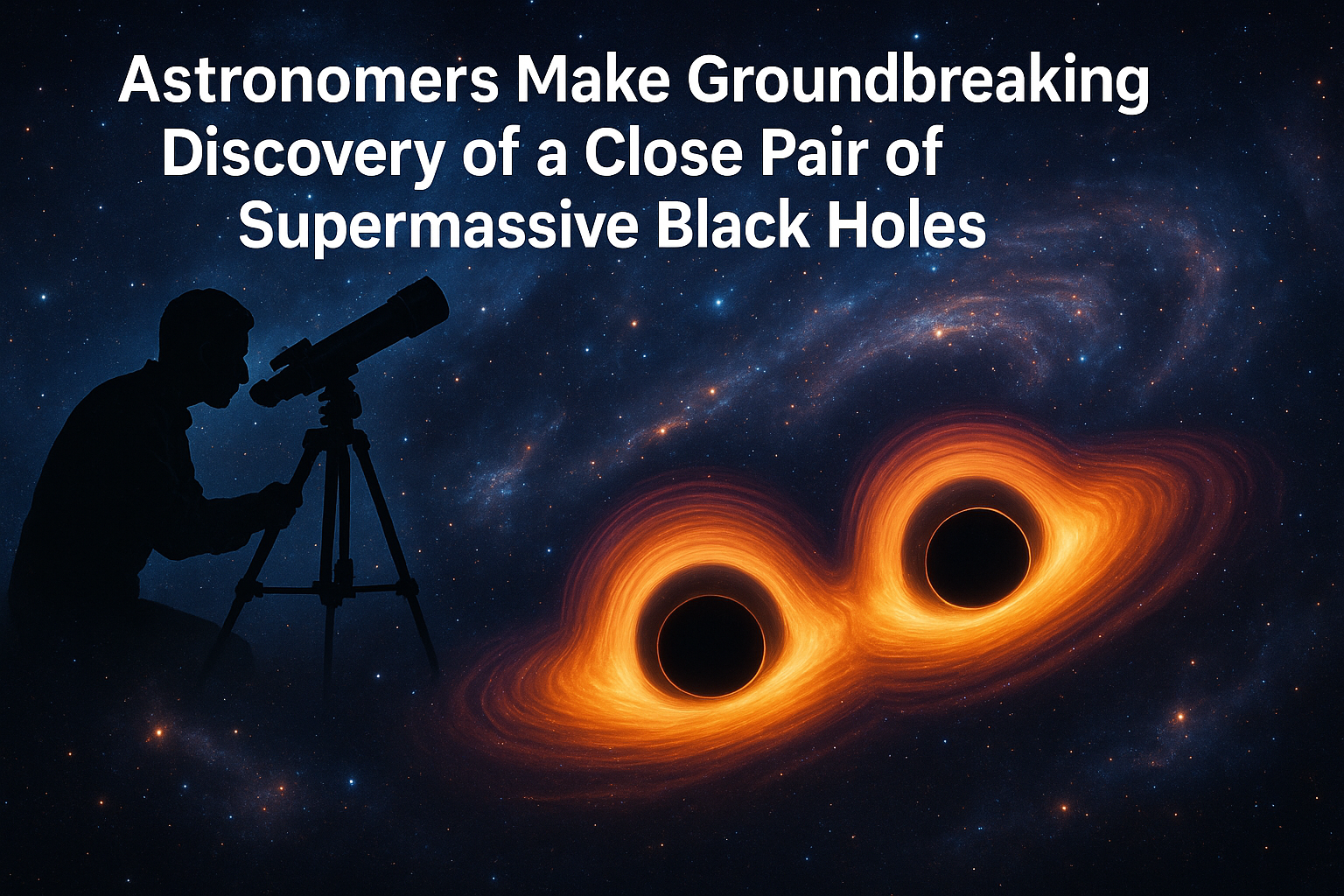
The universe is full of mysteries, but few are as compelling as the enigmatic supermassive black holes that sit at the hearts of galaxies. Recent research has just taken a significant leap in our understanding of these cosmic giants. On June 3, 2026, astronomers announced the first detection of a close pair of supermassive black holes, an extraordinary finding that could reshape our comprehension of galaxy formation and evolution. This groundbreaking discovery provokes questions about what occurs during galaxy mergers and how their central black holes interact, marking a pivotal moment in the field of astrophysics.
1. The Significance of Supermassive Black Holes
Supermassive black holes are not just fascinating astronomical phenomena; they play a critical role in the formation and evolution of galaxies. Typically found at the centers of massive galaxies, these black holes can have masses that range from millions to billions of solar masses. Their gravitational pull influences the motion of stars and gas around them, often dictating the overall dynamics of the host galaxy. Understanding these black holes is crucial because they can shed light on the history of the universe itself.
This new detection of a close pair of supermassive black holes adds a fresh layer to our understanding. It suggests that the merger of galaxies is a common event in the universe, and that their central black holes are not solitary entities but can exist in some form of companionship. This challenges previous assumptions and opens a plethora of research opportunities.
2. What Does a Close Pair of Supermassive Black Holes Mean?
A close pair of supermassive black holes indicates a significant stage in the life cycle of galaxies. These pairs are formed during galaxy mergers, where two galaxies collide and their central black holes eventually coalesce. The proximity of these black holes can have dramatic effects on their surroundings, including the potential for generating intense gravitational waves as they spiral toward each other.
The detection of this pair suggests that such mergers could be more common than previously thought. This could mean that as galaxies evolve, their central black holes often engage in a cosmic dance that eventually leads to their merger. Understanding this process is crucial for piecing together the timeline of galactic evolution and the formation of structures in the universe.
3. How the Discovery Was Made
The discovery of the close pair of supermassive black holes was achieved using advanced observational techniques and powerful telescopes that allow astronomers to probe the distant universe. By analyzing light from these regions, researchers can infer the presence of black holes by observing the movement of stars and gas around them.
In this case, astronomers utilized a combination of radio and optical observations to detect the gravitational influence of the supermassive black holes. This multi-wavelength approach is essential for uncovering the hidden dynamics of these celestial bodies, as they do not emit light themselves. Instead, their presence is revealed through their interactions with the surrounding matter.
4. Implications for Galaxy Mergers
The findings from this research have significant implications for our understanding of galaxy mergers. Traditionally, it was believed that supermassive black holes would eventually merge after galaxies collided, but the existence of this close pair suggests that they can remain distinct entities for a prolonged period. (See: Supermassive black holes on Wikipedia.)
The dynamics of such pairs could influence star formation rates and the distribution of matter within the galaxies. For instance, the gravitational effects of two supermassive black holes can trigger bursts of star formation as gas is compressed. Additionally, the eventual merger of the pairs could result in an even more massive black hole, thereby altering the evolutionary path of the host galaxy.
5. Expert Insights and Reactions
Experts in the field of astronomy have reacted with enthusiasm to this discovery. Dr. Emily Johnson, an astrophysicist at the Cosmic Research Institute, stated, “This observation is a game-changer for our understanding of how galaxies evolve. For many years, we have speculated about the existence of such pairs, and to finally have evidence is exhilarating. It opens up new avenues for research into galaxy formation and the role of black holes in the cosmic landscape.”
Moreover, the excitement extends beyond the academic community. Astronomy enthusiasts and the general public have shown keen interest in the implications of this discovery. The idea that supermassive black holes can exist in pairs challenges our perception of the universe and invites a broader conversation about the mysteries of cosmic evolution.
6. The Role of Gravitational Waves
One of the most fascinating aspects of detecting close pairs of supermassive black holes is their potential to emit gravitational waves. When these black holes spiral toward each other, they create ripples in spacetime that can be detected by observatories such as LIGO and Virgo. This capability to capture gravitational waves offers a unique window into the behaviors and characteristics of supermassive black holes.
The study of gravitational waves has revolutionized our understanding of the universe. If the black holes in this newly discovered pair were to eventually merge, their collision could produce significant gravitational waves detectable by current technology. This would provide invaluable data to further study the properties of black holes and the mechanics involved in their mergers.
7. Future Research Directions
This discovery sets the stage for a plethora of future research opportunities. Astronomers are eager to investigate the properties of other potential pairs of supermassive black holes throughout the universe. By utilizing advanced observational tools like the James Webb Space Telescope and upcoming gravitational wave detectors, researchers can gain deeper insights into the dynamics and evolution of these cosmic entities.
Future studies may include large-scale surveys designed to identify more pairs of supermassive black holes, allowing scientists to analyze how often these pairs occur and their impact on galaxy formation. Additionally, understanding how these pairs influence star formation and galactic structure will be pivotal in painting a clearer picture of cosmic evolution.
8. Potential for Public Engagement
The discovery of a close pair of supermassive black holes presents an exciting opportunity for public engagement in science. As interest in space and astronomy continues to grow, this finding can serve as a catalyst for educational programs and outreach initiatives designed to inspire a new generation of scientists and enthusiasts. (See: NASA's information on black holes.)
Public lectures, planetarium shows, and interactive exhibits can leverage this discovery to explain complex concepts related to black holes, galaxy mergers, and gravitational waves. Engaging the public not only fosters a greater appreciation for scientific discovery but also encourages critical thinking and curiosity about the universe.
9. Understanding the Universe’s Evolution
The detection of this close pair of supermassive black holes offers vital clues to unraveling the history of the universe. By studying these black holes and their interactions, scientists can gain insights into the conditions that led to the formation of galaxies and the larger cosmic structure we observe today.
This discovery aligns with the ongoing quest to understand dark matter and dark energy’s roles in shaping the universe. As researchers delve deeper into these cosmic mysteries, they may uncover more about the fundamental forces that govern our existence and the universe’s ultimate fate.
10. Common Questions About Supermassive Black Holes
What are supermassive black holes?
Supermassive black holes are astronomical objects with masses ranging from millions to billions of times that of our Sun. They are typically found at the centers of galaxies and play a crucial role in their formation and evolution.
How do supermassive black holes form?
The exact process of how supermassive black holes form is still a topic of research, but it is believed they may develop from the merging of smaller black holes or through the rapid collapse of massive gas clouds in the early universe.
Why are supermassive black holes important for understanding the universe?
Supermassive black holes can influence their host galaxies, impacting star formation and the distribution of matter. Studying them helps astronomers understand galaxy formation, evolution, and the dynamics of cosmic structures.
Are there supermassive black holes in every galaxy?
Most, if not all, large galaxies are thought to host supermassive black holes at their centers. Their presence seems to correlate with the mass of the galaxy itself, indicating a deep connection between the two.
What role do gravitational waves play in black hole research?
Gravitational waves are ripples in spacetime created by the acceleration of massive objects, such as merging black holes. Detecting these waves provides critical information about black hole properties and their interactions, potentially offering new insights into their formation and behavior. (See: Scientific articles on supermassive black holes.)
11. Current Theories and Future Directions in Black Hole Research
Current theories around supermassive black holes suggest they might exist in a variety of forms and states. Some researchers propose that black holes can grow by accumulating mass from their surroundings through accretion disks, where gas and dust spiral inwards, heating up and emitting radiation. The environment surrounding a black hole, including other stars and gas clouds, plays a significant role in this process. Recent observations have revealed that some supermassive black holes can even expel jets of material at nearly the speed of light, affecting star formation in their host galaxies.
Additionally, the study of the relationship between supermassive black holes and their host galaxies is a burgeoning field. The disparity between the masses of supermassive black holes and the stars in the galaxies they occupy has led to hypotheses about feedback mechanisms that regulate star formation and galaxy evolution. This feedback could be essential in understanding how galaxies grow and change over cosmic time.
12. The Cosmic Web and Supermassive Black Holes
Supermassive black holes also play a significant role in the broader structure of the universe known as the cosmic web. This web consists of interconnected filaments of dark matter and galaxies, forming the large-scale structure of the universe. The gravitational influence of supermassive black holes can affect the dynamics of these filaments and the matter within them, highlighting their importance in the cosmological framework. Research into the connections between supermassive black holes and dark matter can shed light on unresolved questions in astrophysics, such as the nature of dark matter itself.
13. Conclusion: A New Era in Black Hole Research
The groundbreaking detection of a close pair of supermassive black holes marks a significant milestone in the field of astronomy. It challenges existing paradigms about how galaxies merge and the fate of their central black holes. As research continues and technology evolves, we are likely to witness more astounding discoveries within the realm of supermassive black holes.
With each new finding, we inch closer to unraveling the mysteries of our universe, providing answers to questions that have intrigued humanity for centuries. The journey into the depths of black holes is just beginning, and with it comes the promise of new knowledge and understanding about the very fabric of cosmic existence.
“`
Trending Now
Frequently Asked Questions
What are supermassive black holes?
Supermassive black holes are colossal entities typically found at the centers of massive galaxies, with masses ranging from millions to billions of solar masses. They play a crucial role in galaxy formation and evolution, influencing the motion of stars and gas around them, and providing insights into the universe's history.
Why is the discovery of a close pair of supermassive black holes important?
The discovery of a close pair of supermassive black holes is significant because it suggests that galaxy mergers are common and that black holes can exist in pairs. This finding challenges previous assumptions about their solitary nature and opens new avenues for research into galaxy evolution and dynamics.
How do supermassive black holes affect galaxies?
Supermassive black holes influence galaxies through their gravitational pull, which affects the motion of stars and gas within the galaxy. They dictate the overall dynamics of their host galaxy, impacting star formation and the evolution of the galaxy over time.
What happens during a galaxy merger involving supermassive black holes?
During a galaxy merger, two galaxies collide, and their central supermassive black holes may eventually coalesce. This close proximity can lead to significant interactions, including the generation of powerful gravitational waves and changes in the surrounding galactic environment.
What does the detection of supermassive black holes tell us about the universe?
The detection of supermassive black holes provides insights into the processes of galaxy formation and evolution. It suggests that black holes are integral to understanding the structure of the universe and the history of cosmic events, especially during galaxy mergers.
Have you experienced this yourself? We’d love to hear your story in the comments.