Pedagogue Blog

How Do You Engage Parents Who Don’t Speak English?

Teacher Kerri Gardner uses a communication app with a translation feature to connect her kindergarten class with parents and the wider community.

By Chaks Appalabattula

Parent communication is a challenge in every school. According to a Gallup poll, only 1 in 5 parents are truly engaged with their children’s school. Districts with high immigration and low income rates have the added problem that many parents don’t fully understand English. Often, these same families have incomes that make regular access to a computer impossible. Most of these families do have access to a smartphone, though. Here’s an example of how one district took advantage of that fact to engage hard-to-reach parents.

Holyoke School District is a Title 1 district in Colorado that serves more than 400 families. The district communicates with these families through teacher notes and calls, newsletters, emails, newspaper articles, and more. Holyoke also offers evening workshops and meetings throughout the year on topics including technology, literacy, and scholarship applications. There are several committees that parents are encouraged to join, including an Accountability Committee, Parents in Education (PIE), and a Wellness Committee. The district also helps families with its Migrant Program and Homeless Program. Despite all of these existing programs, engaging immigrant parents is always a challenge, since they do not feel connected to the school community.

Turning Disconnected Parents into Academic Allies

Kerri Gardner is a kindergarten teacher at Holyoke Elementary School. Like many teachers in her district, she is always looking for a way to engage parents in her classes. “I wanted parents to know what we did throughout the day so they could talk to their child about it,” she said. In her search for a way to get past the language barrier that exists with many of her parents, about a year ago she found an app called Bloomz that promised to simplify communication with parents, and decided to give it a try.

Bloomz is a free mobile and web app that works on traditional phones (via text message), on computers, or even smartphones (via a mobile app). Bloomz offers translation to more than 84 languages. When she first started using the app, Gardner “was concerned about participation level from parents because our population is high poverty and we have high populations of a second language being spoken at home. Despite this, most of my parents signed up.”

With the Bloomz translation feature, Gardner posts messages or updates in English and parents receive them automatically translated into their preferred language. Gardner also bridges the language barrier by communicating with images. Last year, she remembered, “I took a lot of pictures to share with parents what fun learning activities we were doing. Pictures worked really well in Bloomz because of the language issues with parents, and for parents to share the pictures with their child in order to increase discussion.”

Staying in touch with parents on a daily basis had an impact on the dynamics of her classroom, too. “Bloomz promotes better behavior,” she said, “letting parents know how a student’s behavior is at school so parents can reinforce good behaviors at home or discuss poor behavior.” (Bloomz has recently announced new features to help track students’ behavior and share student portfolios, which will be available in time for the new school year.)

The daily communication allowed Gardner to work with parents to their students’ academic benefit, she said. Inspired by a message from her, “A parent talks to their child about what he learned that day and sees that he could use a little more practice and works with him at home on the skill.”

Gardner also found her own innovative ways to use the app in the classroom. “We took the photos and used them in class to meet a social studies standard, putting the pictures from the year in order on a timeline,” she shared. “I’ve basically photo-documented my kindergartners’ entire year because of the Bloomz app.”

Connecting with the Community at Large

In order to have a lasting impact, though, technology has to go beyond the classroom setting to help schools build relationships with their parent communities. As Gardner put it, “Bloomz helps develop positive relationships between school, home, and even the public by letting parents see the good things we’re doing at school.”

Her school administrator has taken notice, and is now asking several other teachers to start using the app as well. “It gives him a window into my classroom so that he can see what learning activities I’m using to teach the standards,” she said.

Gardner has big plans for Bloomz beyond the classroom: “To promote positive relationships with the community, next year I’d like to invite our local newspaper to view our Bloomz feed so that if they see a learning activity that they like, they can print it in the newspaper—with parent permission if photos are involved.”

Technology doesn’t only benefit people in high-income communities. Armed with a phone, a powerful imagination, and a communication app that seamlessly translates for her diverse community, Gardner has helped catapult Holyoke into a new century of community-building and parental engagement.

Chaks Appalabattula is the CEO of Bloomz, a new app that connects teachers with parents, creating an engaged parent community in classrooms and schools.

Want to follow Bloomz on Twitter? Follow them @BloomzApp

Education Should Begin with Problem-Solving

When schools compete, who wins?

That depends partly on how they compete. In the world of higher education, universities compete for enrollment: more students, and more funding. They compete for prestige: better students, and more acclaimed faculty. They compete for funding: more research, more graduate students. Do they ever compete to solve real world problems.

It is easy, amid all the competition for these benchmarks, to forget that the mission of any school–university or otherwise–should be to solve problems, and to teach students to do the same.

Solving Problems, or Hogging the Spotlight?

You can see the difference when it comes to the hype cycle that is so prevalent in today’s technology-obsessed reporting. Catching wind of the Next Big Thing in education–from the augmented reality classroom to the gamified lesson plan, the personalized learning system to the responsive test–may make headlines, but it may also drive us to lose sight of what all these new tools and old practices are really all about.

Online learning has been guilty of both in the past. MOOCs were heralded as the end of formal college education as we knew it, only to then be decried as non-starters that students were more likely to drop out of than use as a ladder to success. For-profit colleges, in the interest of maximizing enrollment (and profits), became synonymous with “online degrees,” even as major universities tried to bring their own curriculum and faculty into the internet age. Both are still struggling to win the credibility game.

All this, despite the fact that more and more students say they prefer online learning to traditional classrooms. It all can start to look like higher education is just a pie, and schools are just looking to get their slice, rather than ensure everyone is fed.

But between the breaking stories, there is some innovation quietly targeting not general acclaim or government-backed student loans, but the real world problems and challenges an educated populace is supposed to solve. When a program begins its life as a solution, rather than as a novelty or an obligatory offering, it makes an important difference–and not just to the students.

The UNProject

Several years ago, the state’s Department of Children and Family Services cut funding to travel training for agents working in the rural areas of Nevada. No longer could these welfare agents be compensated for pursuing professional training and continuing education by traveling.

Considering the geography of Nevada, as well as the socioeconomics of such a large, dispersed, and often underserved population, this put both the social workers and the families they served at a meaningful disadvantage.

Today it is easy to suggest that the circumstances clearly called for a distance education system to bridge the gap and keep rural social workers equipped with the best knowledge and practices available. That is the model used to deploy telehealth services like primary care to the nation’s rural and remote communities, after all.

But when the University of Nevada in Reno (UNR)’s social work department took on the challenge, they recognized that they had to do more than just digitize a curriculum–they had to make it practical, and accessible to people who would put their education directly into action.

This is what led to their UnProject: UNR’s attempt to broadcast training and learning opportunities using a new, online, education system that ran on the same Blackboard-based platform the university already used.

Blending Innovation with Accountability

Students, parents, professors, employers, and politicians all recognize the historical void of accountability in higher education. Graduates with exceptional records are still routinely seen as unprepared to do real work, and the growing burden of student debt is often cited as an example of waste and reckless spending when it doesn’t produce a growing economy or cutting-edge workforce.

Simply giving students material and holding them accountable for digesting it wasn’t a viable model. UNR was a stakeholder in the success of everyone who used their online classroom to serve real clients and their families around the state; outcomes were practical, not just grades and test scores. The faculty behind the curriculum of these programs were collaborating with the Nevada DCFS to determine areas of need, both on behalf of the clients, and of the social workers serving these families. They couldn’t drop the ball when it came to delivery.

The UnProject at UNR took questions of accountability head-on, because the very nature of the program was to solve a problem. Solving that problem required innovation, which meant the instructors were creatively designing course materials and accommodating their delivery platform in the interest of finding what worked best–not just adding bells and whistles for the sake of modernity or bragging rights.

Feedback was instant and continuous. The instructors learned what worked, what didn’t, and what had the biggest impact on the social workers in the field. They also helped these workers bridge the mental gap to see the new platform as a tool for them–not a novelty, and not a half-measure, but an evolving response to a felt need.

The best part was, their most effective tools weren’t something they had to purchase, or build from scratch: they were the basics already built-in to their Blackboard platform. They were free to focus on disseminating best practices and responding to their students, rather than troubleshooting with an unwieldy, untested new system.

Where You Start Informs Where You Go

This foundation in practice, in problem-solving, and in going from state bureaucrats to rural families and workers, underscores what is now the online social work degree at UNR.

Yes, it is still just another online degree–but the faculty and resources that power the program are as much a tool of the state government as they are a product delivered to paying students. The program grew from something solving a problem, to a pathway to certification. This is the broad sort of model that makes education meaningful and resilient–not just incorporating the latest gimmicks.

A focus on problem-solving answers more questions than simply format and packaging: rural child welfare workers are not looking to put feathers in their caps by taking online classes; these are professionals on the fringes of society (literally: Nevada is a huge state with many rural, impoverished, and marginalized communities and families). That means the curriculum, the materials, and the medium are all, by necessity, whittled down to what works.

It wasn’t a PR stunt. The people who benefited from the new system were in no position to publicize the success story. It was a case of educators doing what they do best, and the domino effect that results from effective instruction.

What is Valued

Online education can solve similar problems even for those who aren’t out in the field or limited by the realities of rural life. Non-traditional students–adults, working professionals, drop-outs, parents–have long lived and worked on the margins of higher education, unable to gain the credentials to validate and certify their skills, knowledge, and experience, to fully participate or reintegrate into the professional workforce.

When schools look at these potential students not just as enrollment figures and dollar signs, but real people with real needs and a capacity to solve problems themselves, the value of a degree and a school are maximized.

What Teachers Need to Streamline Lessons, Assessments

Despite all of the educational technology advancements of the past decade, the connection between in-class learning and assessments remains blurry. With state standards changing by the school year in some cases, it takes a lot of work to know WHAT to teach – and even more work to make sure that knowledge is expressed by students on the assessments. Aligning lesson plans with state standards takes some strategizing, even if the teacher is well aware of the requirements. All of that takes time – a lot of it – and teachers already work an average of nearly 55 hours per week, according to a Scholastic study.

Technology has the power to shrink that workload though and there are already some edtech companies ahead of the curve.

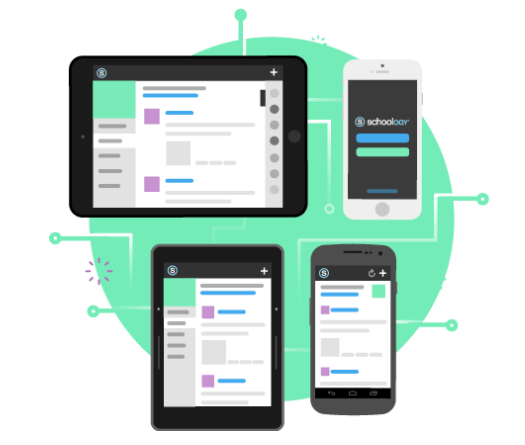
I’ve was recently able to demo Schoology, a learning management system that enables teachers with the tools to create learning content, organize lesson plans, communicate with students, collaborate with other teachers/administrators/parents, and manage the entire learning process. This all happens from a browser-based system that teachers can access anywhere with their login credentials. Schoology has third-party integration tools, too, so teachers don’t have to create their own lesson content in a vacuum.

Screenshot 2016-08-02 17.46.19


Schoology is available at the K-12, college, and corporate levels. The platform’s implications for K-12 teachers, however, are what impressed me most. Generally speaking, the level of involvement in an individual’s education gets smaller as that person gets older. In Kindergarten, parents, teachers, administrators and other caregivers are heavily involved in the education of their young students (or should be, at least). By high school, that involvement is still existent but in less hands-on ways. College and continuing education for careers usually just involve the student and his or her determination to succeed.

K-12 teachers, then, should have the most collaboration tools at their disposal. That’s not the case, though, as K-12 educators know all too well. Schoology is the first learning management and assessment management system I’ve seen that streamlines the “whole picture” of what teachers do and need for their students to succeed. It helps that the platform is incredibly easy to use and is accessible from anywhere with an internet or data-plan connection. Screenshot 2016-08-02 17.46.41

Schoology allows:

  • Connection between all school members, even after the school day ends.
  • District wide collaboration
  • Global connection between educators using the Schoology platform
  • Integration with the systems already in place at your school
  • A mobile app available on any iOS, Android or Kindle device
  • Analytics and performance tracking that boosts decision-making powerScreenshot 2016-08-02 17.46.52


Schoology is a one-stop platform for planning, teaching, collaborating, analyzing, and even testing.

Connecting to Assessments

Schoology takes its learning management system a step further than other platforms with its Assessment Management Platform. Essentially, Schoology employs an assessment engine that curates learning content and makes it available for assessment-building by teachers. It’s not just teachers, though. Districts can create and assign assessments within the system too, and deliver them in several language options.

There’s a lot of variety in the type of assessments educators deliver, from weekly quizzes to end-of-year exams. Schoology’s AMP addresses it all, each larger assessment unit building on the smaller one before it. It’s especially effective for district-wide required testing, as Cherry Creek Schools near Denver learned with its annual Algebra I assessment. I interviewed Cherry Creek’s District Instructional Technology Coordinator Kellie Ady for an Education Week piece and asked her specifically about the difference between the assessment pre-Schoology AMP, and post. Ady said that assigning work, testing students, and recording student progress/success was a cumbersome and disjointed process before Schoology. After participating in the beta program of Schoology, using just the Algebra I classes and assessments in the district, Ady said the process was much more streamlined. Teachers received immediate feedback and students were able to take the assessments in an interface that was comfortable and familiar.

“Moving forward, we will add more classes and assessments to the Schoology AMP. It just makes sense from an efficiency and effectiveness standpoint,” Ady said.

To learn more about Schoology’s learning management system and assessment management platform, head to Schoology’s K-12 features page.

Health Education Provides Mixed Messages

Is it possible that America’s schools are responsible for most of the country’s health problems?

Yes, these institutions of education–from the K-12 staples to universities, colleges, and trade schools–are preoccupied with messages of health, knowledge and success. But as every parent can attest, children are particularly attuned to the gap between word and deed.

In schools, millions of kids are peppered with advice about eating fruits and veggies, getting enough sleep, and avoiding the ubiquitous junk food. Then they are shuffled through cash-strapped cafeterias relying on deep fryers and sugary, fattening condiments to make frozen convenience foods palatable; athletic programs conspire with snack food retailers, gaining equipment in exchange for brand messaging and vending machines in the hallways. The nutritional guidelines individuals and institutions are supposed to follow end up being just that: guidelines, loose to the point of irrelevance.

The nutritional contradiction plaguing the nation’s schools is well known. But the mixed messages go further than diet, and set a destructive pattern that plays out over a lifetime.

School is Practice for an Unhealthy Life

Schools are the first place many children learn to sacrifice sleep. It is a conventional source of bragging rights, shared among the athletic and the poindextrous alike. Hours of rest and recovery, sacrificed in the name of study and scholarship or rehearsal and training, are exchanged as though they constitute accomplishment in and of themselves. And as common as the willfully sleepless trend is among students of all ages, it is also a quintessential element in the story of the starving artist, tortured genius, or serial entrepreneur. Again, experts can warn against the dangers of sleeplessness or critique the claims, but the cultural norm and social pressure is to treat sleep as expendable.

Never mind that fitness is the key to performance in academic endeavors as well as athletics; deprivation of sleep and a diet hinged on cost and convenience make for a more compelling personal narrative. America is obsessed with underdogs, and so has crafted a culture where we all set ourselves up for failure by neglecting the pillars of our personal health.

Poor diet and sleep habits, of course, correlate with one another: weight loss without proper sleep is nearly impossible, and poor diet can contribute to insomnia. This is well known. Also broadly understood is that the triad of diet, sleep, and exercise is implicated in virtually all of the leading causes of death and chronic illness in the United States.

Poor Young Bodies, Poor Young Minds

It is not a particularly long or winding road, therefore, from the habits of study, socialization, and personal neglect students learn to adopt in school, and the leading public health crises in the world today. And although our culture has done its level best to segregate mental health from physical wellness, the connection is clear: when our bodies fall into disrepair, our minds are likely close behind, if not leading the decline.

Schools are a training ground for lifestyle: extracurriculars go a long way in identity formation, and habits developed early on only become harder to change later. The neuroplasticity of young children in the K-12 years means it is the most critical time of all in terms of setting precedents of health. It is one thing for career-minded adults to sacrifice health and happiness in pursuit of security or advancement, but ingraining those choices as a matter of status and routine in school dooms children to duplicate that pattern in their own adult lives.

Teachers, parents, professionals, and celebrities are all setting the same example, and students are nothing if not impressionable.

They Have to Learn It Somewhere

Learning has a tendency to happen in spite of instruction, as well as in its absence. The passive instruction that drives students to skimp on sleep and compromise heavily on diet is an early life experience that will stick with them like an addiction well into adulthood.

We can’t take for granted that posters promoting apples and carrots will enter student minds by osmosis and ingrain a strong sense of what food is supposed to be–especially in the face of a contradictory message about what food is, presented by cafeterias, vending machines, and student dependence on energy drinks to survive the school day.

Parents can’t answer everything children ask about science – and that’s OK

Carol Davenport, Northumbria University, Newcastle

If a child asked you how close an astronaut can get to the sun, the chances are you’d need a moment – or perhaps a search engine – to figure it out. Anyone who has spent some time with young children know that they ask “why?” – a lot. Children have a curiosity about the world that leads them to question almost everything around them.

Unfortunately their parents typically don’t. A recent survey of 1,000 parents found that 83% of them couldn’t answer simple school science questions. While this may seem concerning, what’s more worrying is that 63% admitted to making up answers so that they didn’t have to admit to not knowing. So what should you do if you don’t know the answer?

The Institution of Engineering and Technology, which carried out the survey, and parenting website Mumsnet recently held a Twitter party with the hashtag #AskTheEngineers. Parents were asked to tweet questions that their children had asked, and then a team of engineers would tweet back answers. You can have a look at some of the questions below. Could you answer them?

  • How does gravity work? And what would happen without it?
  • Why do beavers build dams?
  • Why can’t we hear dog whistles?
  • How do stars stay in the sky?
  • How do onions make your eyes water?
  • Why do power stations have so much smoke coming out of them?
  • If light comes from the sun, where does dark come from?

Many primary schools put on after-school sessions for parents explaining how they can support their children with English and Maths. Parental support is known to be an important factor in how well a child does in school, so by equipping parents with the confidence to help their children, schools are aiming to improve the achievement of their pupils.

However, very few primary schools provide similar support in science. And, as the survey shows, this is an area that many parents feel unable to answer when their asked by their child.

Science isn’t about right and wrong

But do parents need to know all the answers? The questions posed to #AskTheEngineers cover a huge range of science and engineering topics – some not even taught at school. They also include questions that science doesn’t yet fully know the answer to (how does gravity work?) as well as questions that are more philosophical in nature (what is dark?). For that reason, I don’t think it makes sense to expect parents to know it all.

Parent and child thinking about science together.
Think Physics, Author provided

In fact, it’s far more important that parents feel confident in saying “I don’t know, let’s see if we can find out”. Many people who finished their science education at the age of 16 have gained the impression that science is about knowing the right answers because this is how they experienced science up to that point.

However, successful science involves not knowing the answer, but being willing to ask questions, just like children do. By admitting that they don’t know the answer and then searching for the answer, parents are modelling good practice to their children – supporting them in their educational development. There are many great websites that aim to communicate science to a general audience, including BBC iWonder, The Naked Scientists, or the Royal Institution ExpeRImental films.

I’m involved in the Think Physics project at Northumbria University, which is currently working with parents to increase their confidence in talking about science with their children. We have developed a five-week after-school club called “Science for Families”, which we are running with partner local authorities. Children, and their parents, come along to each session and together learn about different topics in science through hands on experiments using everyday objects.

The key aim of the sessions is to show parents that science is all about asking questions and exploring phenomena to find the answers. We aren’t aiming to “teach” parents the science topics that their children will be learning about, rather we are aiming to give them confidence to have conversations with their children about science.

Recent research has emphasised the importance of parents in children’s career choices, showing that parents who are comfortable talking about science are more likely to encourage their children into careers which involve science. So if you’re stuck with an inquisitive child or two at home, just embrace their curiosity and learn with them.

So how close is it possible for astronauts to get to the sun? The engineers at the Twitter party replied that satellites can get even closer than Mercury, which is the closest planet, but they get very hot. However, it takes years and years to get there, so we haven’t sent any astronauts yet. You can view more of the engineers’ answers here.

The Conversation

Carol Davenport, Director, Think Physics, Faculty of Engineering and Environment, Northumbria University, Newcastle

This article was originally published on The Conversation. Read the original article.

Cheating and Technology – Unethical Indifference

Academic dishonesty is nothing new. As long as there have been homework assignments and tests, there have been cheaters. The way that cheating looks has changed over time though, particularly now that technology has made it easier than ever. Perhaps the most interesting caveat of modern-day cheating in U.S. classrooms is that students often do not think that what they are doing is wrong.

A study by the Josephson Institute of Ethics interviewed 23,000 high school students and asked them a variety of questions about academic ethics. Of the teens surveyed, 51 percent said that they had knowingly cheated at some point on an exam but that they had no qualms about the behavior. A Common Sense Media survey found that 35 percent of students had cheated via cell phone, though the parents surveyed in that particular study did not believe their kids had ever cheated. In many cases, students did not realize that tactics like looking up answers on a smartphone were actually cheating at all.

In today’s K-12 classrooms, students who cheat are rarely caught. There are no formulas written on in the insides of hands or students looking across the aisle, or whispering answers to their classmates. Today’s students use smartphones, tablets or even in-class computers to aid their cheating endeavors and leave no trace of their crimes. Since cheating through technology is not listed specifically as being against the rules in many school policies, students do not view the actions an unethical.

Consider the following ways that technology aids in modern-day academic dishonesty:

• Storing notes on a cell phone.
• Purchasing prewritten papers online, or ordering them to be customized.
• Writing a paper that is basically the same as something else found online, but changed enough to look original.
• Students text messaging each other answers.
• Using a smartphone camera to take a picture of a test or exam.
• Using voice recorders or virtual assistance programs to record or ask for answers.

Most of the tactics on this list were non-existent 10 years ago, or at least the technology was not in common use by young people. A Pew Internet survey found that 78 percent of teenagers have mobile phones, up from just 23 percent in 2011. The technology is being adopted so quickly that school districts cannot adequately keep up with cheating policies, or even awareness campaigns that alert students to the problem with using technology to find answers in a certain way.

From a young age, students learn that answers exist at their fingertips through search engines and expert websites. It is more efficient to just look up the answers through the hard work someone else has already done than to find the answers on their own. K-12 students are not the only culprits though. When was the last time you went to the library or dug through physical records or documentation to find the answer to something? Adults take advantage of the convenience of technology all the time – even in the workplace. The difference, of course, is that most adults grew up at least partially technology-free. Today’s students will not have that life experience and instead will have learned the quickest ways to find answers – not necessarily the right ones.

Schools must develop anti-cheating policies that include technology and those policies must be updated consistently. Teachers must stay vigilant when it comes to what their students are doing in classrooms and how technology could be playing a negative role in the learning process. Parents must also talk to their kids about the appropriate ways to find academic answers and alert them to unethical behaviors that may seem innocent in their own eyes.

What do you think can fix the technology/cheating issue?

Read all of our posts about EdTech and Innovation by clicking here. 

How Mentorship Can Help Teachers Succeed

Just like having good mentors is important to student teaching, as newly hired educator, having a mentor at your school is incredibly important, too. Mentor teachers can provide invaluable help to new teachers. Mentors are experienced, patient, knowledgeable veteran teachers who are selected and trained to guide new teachers. These mentors assist new teachers to adapt to the school culture and norms, which include official and nonofficial norms, and school or district-specific norms. They will also guide the new teachers with curriculum, teaching strategies, successful scheduling, and communication skills. They can supervise you and provide you with suggestions on improvements that you can make. New teachers can turn to their mentors for support when times are tough and seek advice. In many programs, mentors are responsible for new teacher assessments, and mentors can suggest training for teachers to improve performance. Successful mentorship programs don’t end there and also guide new teachers in choosing professional workshop opportunities.

Mentors Know The Ropes
Mentors can help you with recognizing which files from the principal get the highest priority and which administrator has the most power in evaluation, and they may offer you helpful inside information (e.g., the room where the best projector is located).

Mentors Help Keep You On Track
Not all schools have such programs, and in those schools, new teachers may have “tele-mentor” and “e-mentor” support programs over the Internet. If those options aren’t available, and you’d like to have a mentor teacher, you can always look for an unofficial one, or find support from several other teachers in the school. Research shows that first-year teachers who’ve had the support of a mentor develop better classroom management skills, stay in the teaching profession longer, and maintain their initial enthusiasm longer.

Mentors Know What You’re Talking About
True mentors are patient listeners and good guides. They provide thoughtful advice based on their years of experience. They can help prepare new teachers for formal evaluations. They understand how to provide support to new teachers learning the expectations of the field. You’ll find that as a new teacher, you’ll benefit from soliciting feedback from your mentor as a way to improve your teaching. When you receive feedback:

  • Focus on what is being said rather than how it is said.
  • Focus on feedback as information rather than as criticism.
  • Concentrate on receiving the new information rather than defending the old.
  • Probe for specifics rather than accept generalities.
  • Focus on clarifying what has been said by summarizing the main points to the satisfaction of all 
parties.

Be proactive about seeking out your mentor and engaging yourself in the professional relationship. Be thoughtful, be respectful, and be sure to remember to express your thanks!

Applied Behavioral Analysis and Autism

**The Edvocate is pleased to publish guest posts as way to fuel important conversations surrounding P-20 education in America. The opinions contained within guest posts are those of the authors and do not necessarily reflect the official opinion of The Edvocate or Dr. Matthew Lynch.**

A guest column by Dr. Domonique Randall

As parents, there seems to be an endless list of things to worry about when it comes to our children. Those concerns start the day a baby is born, with parents constantly tracking their child’s developmental path, concerned whether or not they are hitting their age-appropriate milestones.

A major developmental concern amongst parents is autism spectrum disorder (ASD), which is a range of complex neurodevelopment disorders characterized by social impairment, communication difficulties and restricted and repetitive patterns of behavior. According to the Center for Disease Control and Prevention’s (CDC) 2014 Community Report on Autism, the new estimate of autism prevalence is 1 in 68 children.

That can be a scary statistic for parents, but there is hope through early detection and proven evidence-based approaches, including applied behavior analysis (ABA).

ABA, which is the recommended treatment for ASD by several federal and state agencies, including the U.S. Surgeon General, is an evidence-based treatment approach. ABA is focused on understanding how behavior is affected by the environment. The scientific principles of learning are applied to behavioral deficiencies and excesses associated with ASD.  

The sooner a parent or physician can identify the signs of ASD, the better!  Some research has identified risk factors for ASD as early as a child’s first birthday.  Early intervention yields the best outcomes as far as developmental gains are concerned and increased IQ.  Studies show early intensive intervention, such as ABA, improves learning, communication and social skills.

The following early detection signs may indicate that your child is at risk for ASD. If your child exhibits any of these signs, please do not hesitate to contact your pediatrician.  Appropriate screening can determine whether a child is at risk for autism.

  • No big smiles or other warm, joyful expressions by six months or thereafter
  • No back-and-forth sharing of sounds, smiles or other facial expressions by nine months
  • No babbling by 12 months
  • No back-and-forth gestures such as pointing, reaching or waving by 12 months
  • No words by 16 months
  • No meaningful, two-word phrases (not including imitating or repeating) by 24 months
  • Any loss of speech, babbling or social skills at any age

Once a parent is faced with an autism diagnosis, so many questions run through their head – one of them being, “What do we do now?” While there is currently no single known cause or cure for autism, there is a way to improve the everyday struggles, but time is of the essence. Choosing the best treatment and getting started early is critical.

First, make a commitment to choose only evidence-based treatments, such as ABA. It can be overwhelming when you search the Internet, so a good starting place is the First 100 Day Kit available on www.AustimSpeaks.org.

Next, be sure you have a support system in place with family and friends that will support you in your efforts to start and maintain ABA treatment. Often times the focus of ABA treatment will require that you, family and friends change your responses to the child’s behavior to support his or her learning.

Third, find quality ABA treatment programs that will focus on your child’s needs as well as your family’s needs.

Here are some key components of quality programs:

  1. Qualified Professionals – this includes Board Certified Behavior Analyst and Behavior Technicians
  2. Data-driven treatment decisions
  3. Individualized assessment and treatment based on your child’s strengths and weaknesses
  4. Several forms of teaching to promote acquisition and generalization of skills- naturalist training, structured teaching, and social learning opportunities
  5. Parent training and support in ABA principles and techniques
  6. Teaches replacement behavior through the use of positive reinforcement

Finally, consider the commitment in terms of resources and time. Intensive ABA often consists of 30 plus hours per week for multiple years. A total of 38 states now require some coverage for diagnosis and treatment for autism. To learn more about this mandate, visit. www.AutismSpeaks.org.

Being your child’s advocate is important. Just remember, early detection and intervention is key. The sooner the signs of autism are identified and evidence-based treatment, such as ABA can begin, the better the outcome for your child.

_____________

Dr. Domonique Randall, BCBA-D, is the founder and CEO of The Shape of Behavior, an ABA clinic for individuals with ASD and other disabilities. She has over 17 years of experience in autism treatment. To learn more about The Shape of Behavior and its services, visit www.shapeofbehavior.com.

4 Major Types of Educational Leadership

There are four major styles of leadership which apply well in the educational setting. While each of these styles has its good points, there is a wide berth of variation, and in fact, transformational leadership is truly an amalgamation of the best attributes of the other three. Let’s explore how servant leadership, transactional leadership, and emotional leadership compare to transformational leadership.

1.   Servant Leadership

Servant Leadership takes the focus from the end goal to the people who are being led. There is no sense of self-interest on the part of the leader, who steps back and supports only the interests of the followers. Guidance, empowerment and a culture of trust are hallmarks of this style of leadership. A servant leader puts complete trust in the process and in his or her followers, assuming that those within the organization will align with its goal.

The primary issue with servant leadership is that it’s not viable on an organizational level, in large part because it does not keep its eye on the prize. With the focus being so entirely upon the needs of the people within the organization, the goal of the organization is nearly completely lost and therefore not attained. Education happens in the real world, where unfortunately people have shortcomings and quite often need guidance in order to get things going in the right direction. Transformational Leadership offers that same focus on the individual, while building an investment in the end goal of the organization and thereby creating a momentum to achieve it. Transformational Leadership takes Service Leadership to the next level.

2. Transactional Leadership

Give and take is the hallmark of transactional leadership – it is indeed modeled just like a business transaction. Of course the employer/employee relationship is largely transactional as is. Employers need work done and employees do that work in exchange for money. That “quid pro quo” (“something for something”) is the heart of the workplace, and everyone is generally happy with this arrangement, but it only works if everyone involved sees it that way. In education, there is often more at stake for employees who quite often understand their jobs to be more than just a simple exchange of services for money, but rather see their higher purpose. Money is therefore not the motivating factor.

This is where transformational leadership can step in to compliment transactional leadership, taking the whole process as step further by building upon other forms of motivation outside of simply the exchange of goods and services for money. However transformational leadership only really works of the leader is able to keep up the charisma and interpersonal relationships which are required for it to work. When transformational leadership fails, the last resort is quite often transactional leadership, which is easy and straightforward, if less than effective in the long term.

Perhaps the biggest contrast between transformational and transactional leadership is that the latter is laissez faire, in which the leader allows employees to do as they like, whereas the former is completely hands on and intrusive in its nature.

3. Emotional Leadership

Where transactional leadership was concerned primarily with the exchange of goods and services, emotional leadership is concerned with the feelings and motivations of followers. It takes the focus completely to the other side of the spectrum – demanding that leaders be emotionally intelligent themselves and then to motivate through the use of that emotional intelligence.

Emotional leadership and transformational leadership have a great deal in common with each other. With emotional leadership, the leader taps into their emotional center in order to find the path to guiding their followers. People sometimes argue that transformational leadership requires that same level of influence over emotions, however there is a fundamental difference in the two in that transformational leadership is by necessity a rational process rather than an emotional one.

4. Transformational Leadership

Transformational leadership takes from each of the other kinds of leadership its best qualities and then uses those, along with a deep sense of shared purpose, to motivate subordinates. While the other forms of leadership focus on one singular aspect or another, transformational leadership takes a broad view of the issues surrounding leadership and then uses those as a driving force for meeting the overall goals of the organization. For education in particular, transformational leadership offers the best of everything – from tapping into the emotions of workers to offering the compensatory core that is the case for all forms of business, to guiding from a place of support.

However since transformational leadership is informed by all of these various types of leadership, it’s always a good idea for leaders to learn more about these other styles so as to offer a deeper understanding of these forms so as to offer those in whose service they are the best support and guidance possible.

References

Transformational leadership is a theory of leadership that was developed by James Burns (1978), and has been written about by many other scholars since then. To read more of James Burns’ work on transformational leadership and other topics, click here to visit his Amazon.com page.

Top 3 Little-Considered Issues Related to Student Diversity

Schools and colleges tout the buzz word “diversity” when talking about their ideal student populations, but ideals and reality do not always add up. Diversity is more than filling a quota, or having a certain number of students from an under-represented minority group in your classroom.

There are many issues to address that will help improve our education system in a manner that celebrates the diversity in this country. Here are three issues related to diversity that you might not even have thought about.

  1. Native Americans are falling through the cracks when it comes to education. Obama wants to dedicate $1 billion to changing this.

Young people in Indian Country are some of the most at-risk in the United States. Many grow up in communities suffering from poverty, unemployment and substance abuse. More than one-fifth of Native Americans over 25 years of age never earned a high school diploma. Of those who attend college, only 39 percent earn a bachelor’s degree within six years.

Administrative officials said the President was inspired to increase funds to better serve this population partially as a result of last year’s visit to the Standing Rock Sioux reservation. He and the First Lady traveled to North Dakota and met with young people who shared how drugs, violence and poverty impacted their lives.

President Obama’s budget request includes $1 billion for American Indian schools next year, with millions of those dollars dedicated to restoring crumbling buildings and connecting classrooms via broadband Internet.

The federal government reports that around one-third of Bureau of Indian Education schools were in poor condition last year. This has forced students to learn in classrooms that fail to meet health and safety standards.

I can only imagine the impact $1 billion would make on the Native American community, one that is in such dire need of resources. Students do not deserve to have roofs caving in on them — they deserve to attend school and get an education in dramatically better conditions.

  1. There is a gender gap in colleges now—and the imbalance works against men.

If you have been following education hot button issues for any length of time, you’ve likely read about the nationwide push to better encourage girls in areas like science, technology, engineering and math (STEM). The thought is that by showing young women that these topics are just as appropriate for them as their male peers, more women will find lasting careers in these traditionally male-dominated fields.

I’m all for more women in the STEM workplace but with all this focus in one area, are educators neglecting an even larger gender gap issue?

Nationally, over 57 percent of college attendees are female when public and private school stats are combined. Females have been consistently edging ahead of their male classmates since the late 1970s when the percentages flip-flopped. Aside from all-female schools, there are others that have marked disproportionate numbers. Pacific Oaks College in Pasadena has nearly 96 percent females in attendance, and the University of Tennessee Health Sciences Center in Memphis has over 93 percent.

There are a few reasons why more young women than men are choosing a college education. The first is that there are more trades that do not require a college degree that appeal to men. The second is that economically speaking, women earn a better living with a college degree than without one in comparison to men. Though there is still a wage gap (in 2012, women earned just 80.9 percent of the salaries of their male counterparts), women see the value their earning potential can gain from achieving a college diploma.

I hear people asking this question all the time: What are K-12 educators doing wrong when it comes to preparing young women for STEM careers? It’s a valid one.

But based on the statistics I’ve listed here, shouldn’t we also be asking this question: What are K-12 educators doing when it comes to preparing young men for a college education?

It all comes down to the weight we assign to the worth of a college education. If a diploma is simply a way to earn more money over a lifetime, then perhaps men are doing the intelligent thing by launching into the workforce early and without student loan debt. That logic is flawed, however, when taking into account the fact that blue-collar jobs are declining in favor of white-collar ones. A young man making a lifelong career decision today simply cannot predict what educational demands will be placed on his field in another 10, 20 or 30 years.

Money aside, there are other pitfalls in a disproportionate number of men going to college. Statistics show that marriages where the couples have differing education levels more often end in divorce than couples with the same educational achievements. And even before divorce is an option, women who set college educational goals may not want to settle for men with less motivation – at least when it comes to academics. If this trend continues, social dynamics may be impacted.

  1. Even as student bodies are becoming more diverse, college faculty remains homogenous.

According to the National Center for Educational Statistics, just 16 percent of full-time professors at post-secondary institutions are minorities. That means that 84 percent of those in full-time professorships are white. 60 percent are men and 25 percent are white women.

Those numbers decrease slightly with faculty. 79 percent of the “instructional faculty” within this nation’s colleges and universities are white and just six percent are black.

Considering the hiring boom that many schools have experienced since the start of the 1990’s, it’s mildly surprising that not many minorities were included in that growth.

The Condition of Education: Characteristics of Post-secondary Faculty” shows that there was a 42 percent increase in the number of instructional faculty hired from 1991-2011. During that 20 year period, not many institutions hired minorities to fill their vacant positions.

What’s striking is the gross under-representation of minority professors at America’s higher education schools. While many may be concentrated within Historically Black Colleges and Universities or schools who have a high number of black students, that percentage makes barely a dent in the overall number of black, Asian, Hispanic, and American indigenous who may teach at America’s best schools of higher learning.

While the government is rightly focused on college affordability, we should slightly turn our attention towards why many colleges and universities fail to hire minorities for faculty and professorship positions.

What do you think? Do you think we need to expand our focus on what diversity is and re-think the initiatives we use to increase it?

Click here to read all our posts concerning the Achievement Gap.


4 Ways Colleges Can Close the Achievement Gap

There’s a lot of talk in P-12 learning about how exactly to best close the achievement gap, or the space that separates traditionally advantaged students with those who have historically been at-risk where academics are concerned. By the time students get to college, the emphasis shifts slightly to focus more on the diversity of who is on a university campus and less on outcomes. Without the stringent assessments that are now synonymous with the P-12 process, colleges have an easier time simply making appearances when it comes to the true success of all students on their campuses.

This isn’t to say that there is no accountability – several independent associations and often the colleges themselves release data on graduation rates, post-grad employment rates, and even the amount of debt incurred by students. Yet when it comes to truly closing the achievement gap between students from all life backgrounds, ethnicities and races, P-12 institutions seem to be held to a higher standard than their 13 – 20 counterparts. This is not only a disservice to the students, but to the American population as a whole that then misses out on enjoying the innovation, advancement and prosperity that comes with a more highly educated public.

So how can colleges step up their game when it comes to closing the achievement gap?

  1. It’s only been in the last decade or so that colleges have begun to recognize that different students need different guidance to reach that graduation podium. It’s why a crop of programs designed for first-generation and minority college students are flourishing across the country. These initiatives run the gamut – from recruiting these students, to providing intense mentorship programs, to partnering with community businesses for job placement. Targeting the guidance of students based on their backgrounds is vital to getting them their degrees and all of this conscientious hard work by universities is certainly making a dent when it comes to higher achievement from traditionally at-risk college students.
  2. Overall colleges are doing a better job in recent years of providing a full career arc before students set foot on campus. This gives them an idea of what to expect when it comes to the courses they will take, the mentorship programs available, the potential for internships, and the job placement initiatives. For students who are putting their working lives on hold to obtain a college degree, a greater understanding of what that means in long-term financial terms is necessary to convince them the leap to college life is a good one.
  3. For all of the strides college recruiting programs have made, there is still an overarching theme that recruiting new students is an isolated process. Get the kids on campus, then move on to the next batch. In reality, recruiting should be a very small part of a larger strategy that not only brings students of varied backgrounds to campus, but sustains them until graduation. Some schools are improving in this regard, but there’s still a lot of work needed to flip this mentality from one of solitude to solidarity with other student help groups.
  4. The need for an affordable college education is mentioned so often that it seems that we are all becoming desensitized to it. The reality is that having affordable college, not just providing loans to students, will go a long way towards helping close the achievement gap. Initiatives like providing the first two years of community college for free to qualifying students, and even student loan forgiveness programs for high-demand jobs, are a few ways that the dream of a college degree can become more accessible to minority, first-generation and other at-risk students.

There’s a reason to pay so much attention to closing the achievement gap in P-12 classrooms: a better educated public means a stronger economy, greater industry competition on a global scale, and an overall better quality of life for all citizens. It is high time colleges stepped back from their diversity plans long enough to question whether those efforts are truly doing enough to close the country’s achievement gap for life. Continued targeted guidance throughout the college process, improved recruiting, and a bigger push for affordable college are a few ways that the U.S. college and university landscape can step up its efforts for equality in higher education achievement.

3 Reasons to Embrace Diversity on College Campuses

It’s easy to think of college campuses as islands – academic havens with little interaction with the greater world beyond. In reality, the work done on the grounds of colleges and universities has a big impact on society, from medical breakthroughs to mass adoption of social change. It’s important then that U.S. institutions of higher learning are representative of society as a whole in their student bodies and staff. That’s easier said than done, of course, but multicultural representation on college campuses should be a top priority.

Beyond the boost a multicultural campus brings to the immediate student and faculty body, there are some things they can bring to the “real” after-college world too. Here are three of them.

1. It can help us eliminate the wage gap. There is a gender wage gap and there is a minority wage gap. Unless you are a white male, you are probably making less than white males who do the same job as you. Some argue that the wage gap doesn’t exist but statistics show otherwise. The latest numbers from the Bureau of Labor Statistics finds that women make 78 cents for every dollar earned by a man in the U.S. The racial pay gap varies but in industries like technology, minority workers make $3,000 to $8,000+ less than white counterparts.

Even if these numbers are not 100 percent accurate, they are telling of an overarching problem with the American workforce: people are not paid equally. By having more diversity in the amount of highly educated workers, Americans have a better shot at getting rid of the nasty wage gap for good. Not only will these educated workers be more apt to ask for what they are worth, but it stands to reason that more diversity will emerge in positions of leadership (i.e. – those that make salary decisions). Feeding diversity into the professional workforce goes a long way toward pay equality and ups the standard of living for minorities and women.

2. It can help us get rid of discrimination. Racial tensions have spiked in the past year or so around the country, accented by the deaths of Michael Brown in Ferguson, Missouri, and Eric Garner in New York City. Though a lot of people like to believe that discrimination is no longer an issue in the U.S., these incidents and reactions to them highlight just how much more work needs to be done to eliminate prejudices, injustice and discrimination between races.

In my experience, it is easier to judge and alienate hypothetical people that you have never actually met. Once you’ve spent some time with the very people you once judged, it becomes more difficult not to view them as equals. Unfortunately when it comes to our nation’s public schools, diversity is difficult to achieve in districted areas. Kids go to school alongside their neighbors – people who often look like them, have a similar socioeconomic background, and who have the same basic life experience. Colleges and universities are able to break out of this mold and can be the first pass at diversity students experience. It’s important to maximize that opportunity by making sure not just campuses, but individual programs, are well represented with students from a variety of racial and socioeconomic backgrounds. It is harder to discriminate against a friend and colleague than a nameless ideal of a person.

3. It can help us become more competitive on the world stage. The more ideas brought to a discussion, the better the chance of a good one. When a variety of perspectives are pooled, innovation and creativity emerge. Nations like Japan have always had an academic edge but Americans often win out because of the one thing that just can’t be taught: visionary thinking. When everyone brings the same experience to a problem, there will be less ways to solve it. A diverse college body means a more diverse workforce after graduation. This helps EVERYONE. When the U.S. succeeds on the world stage, Americans all benefit.

Diversity matters on college campuses and not just for the benefit of those institutions. Could the next generation of college grads be the one to help the U.S. surge ahead of world competitors through collective creativity? To eliminate the wage gap? To put an end to discrimination? All of these accomplishments are on the horizon in the U.S. – and colleges and universities can give them all a boost by fostering multiculturalism and diversity on campuses.

Latest Posts