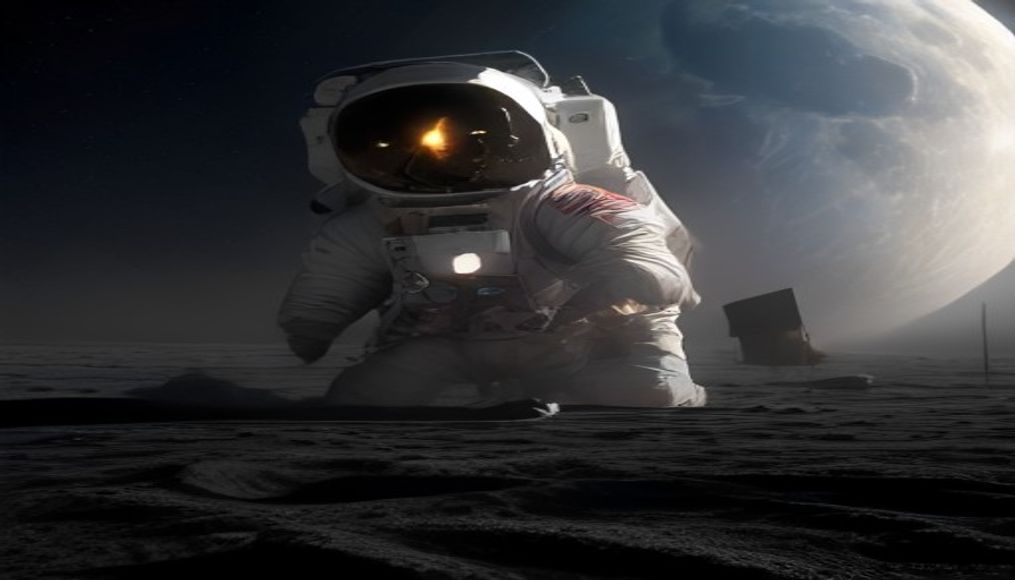
Imagine a future where the Moon isn’t just a distant, romantic orb, but a bustling hub of industry, supplying Earth with invaluable resources. It sounds like science fiction, doesn’t it? Yet, thanks to a significant new investment by NASA, that vision is inching closer to reality. Interlune, a privately funded natural resources company, recently secured a $6.9 million Small Business Innovation Research (SBIR) Phase III contract from NASA’s Space Technology Mission Directorate (STMD). This isn’t just a routine grant; it’s an 18-month, firm-fixed-price deal, announced on May 4, 2026, aimed squarely at developing the critical technologies needed for lunar resource extraction. If successful, this partnership could fundamentally reshape how Interlune NASA contract impacts lunar resource extraction, opening up unprecedented opportunities for a sustainable human presence beyond Earth.
For decades, the idea of mining the Moon seemed like pure fantasy, confined to the pages of sci-fi novels. But as our technological capabilities advance and the drive for deep space exploration intensifies, the Moon’s vast, untouched reserves are no longer a distant dream but a tangible prize. This Interlune contract is a clear signal that NASA is serious about turning that dream into a practical, economic reality. We’re talking about transforming lunar raw materials into usable resources – a true game-changer for long-duration missions and even a potential new economic frontier. It’s a bold bet, but one that could pay off in astronomical dividends. (Lunar gold rush insights)
The Lunar Treasure Chest: What Resources Are We Chasing?
So, what exactly are these ‘lunar resources’ everyone is so excited about? While gold and diamonds might come to mind, the real treasures on the Moon are far more strategic for space exploration and, potentially, for energy production back on Earth. The primary targets for Interlune’s mission are helium-3 and hydrogen, along with other solar wind gases. These aren’t just any gases; they are crucial elements for future space endeavors.
Hydrogen, for instance, is a fundamental component of rocket fuel. Imagine being able to refuel spacecraft directly on the Moon, rather than hauling every ounce of propellant from Earth’s deep gravity well. This capability would drastically reduce the cost and complexity of missions to Mars and beyond. It’s a bit like having a gas station halfway to your destination – utterly transformative for long-haul travel.
Then there’s helium-3. This isotope is incredibly rare on Earth but relatively abundant in the lunar regolith, deposited over billions of years by the solar wind. Why is helium-3 such a big deal? Because it’s a potential fuel for nuclear fusion reactors. Unlike traditional nuclear fission (which powers most of our current nuclear plants), fusion promises clean, virtually limitless energy with minimal radioactive waste. While terrestrial fusion research is making strides, lunar helium-3 could provide a more efficient and cleaner fuel source, potentially solving our planet’s energy crisis in the distant future. Of course, the engineering challenges of fusion are immense, but having a readily available fuel source on the Moon makes the prospect far more tantalizing. The implications for how Interlune NASA contract impacts lunar resource extraction for such a critical energy source are truly profound.
Unlocking the Lunar Regolith: Interlune’s Technological Arsenal
Extracting these valuable gases from the lunar surface isn’t as simple as sticking a straw in the ground. The Moon’s surface, or regolith, is a complex mix of dust, rock fragments, and tiny glass beads, all bombarded by solar wind particles. Interlune’s contract specifically targets the development of a sophisticated payload suite designed to tackle these challenges head-on. This isn’t just about digging; it’s about precision measurement, sorting, and extraction. (See: NASA's lunar exploration initiatives.)
The core of Interlune’s proposed technology involves several key components. First, there’s a robotic arm. This isn’t your average industrial robot; it needs to be robust enough to operate in the harsh lunar environment, with its extreme temperatures, vacuum, and abrasive dust. This arm will be crucial for gathering samples of regolith and feeding them into the processing system. Think of it as the lunar miner’s primary hand, carefully sifting through the Moon’s surface.
Next up is a size sorting device. Why is this important? Because the solar wind gases, like helium-3 and hydrogen, tend to adhere more efficiently to smaller particles of regolith. By separating the finer grains from the larger ones, Interlune can concentrate the valuable resources, making the extraction process much more efficient. It’s a clever trick, akin to panning for gold, but with specialized machinery designed for lunar dust.
Finally, and most crucially, the payload will include systems specifically designed to extract solar wind gases. This likely involves heating the sorted regolith to release the trapped gases, which can then be collected and stored. This entire integrated system is a significant engineering challenge, requiring miniaturization, power efficiency, and resilience against the unique lunar environment. The goal is to have this entire payload ready for launch in 2028, aboard a commercial robotic lander – a tight timeline that speaks to the urgency and ambition of this project.
The Artemis Connection: Building a Sustainable Lunar Presence
This Interlune contract doesn’t exist in a vacuum; it’s a vital piece of NASA’s broader Artemis program. Artemis aims to return humans to the Moon, establish a sustainable lunar presence, and ultimately use the Moon as a stepping stone for human missions to Mars. You can’t have a ‘sustainable’ presence without sustainable resources. Hauling everything from Earth is simply not feasible or economical for long-term habitation.
The ability to ‘live off the land’ – or in this case, ‘live off the Moon’ – is absolutely critical. Imagine astronauts on the lunar surface being able to produce their own breathable oxygen from lunar ice, or generate rocket fuel from hydrogen extracted from the regolith. This significantly reduces mission costs, increases mission flexibility, and enhances the safety and self-sufficiency of lunar outposts. This is where how Interlune NASA contract impacts lunar resource extraction becomes so central to the entire Artemis vision. Related reading: Artemis III preparations overview.
The Interlune project, by focusing on measuring gases in regolith and demonstrating extraction technologies, is laying the groundwork for this future. It’s about proving the concept, gathering crucial data, and refining the techniques needed to turn lunar dirt into vital supplies. This isn’t just about a single mission; it’s about establishing the foundational capabilities for a permanent human foothold on our nearest celestial neighbor, creating an independent lunar economy where resources are manufactured and traded. For more on this, see 2027 lunar lander strategy.
The Dawn of a Lunar Economy: Commercial Implications and the New Space Race
Beyond the scientific and exploratory goals, the Interlune contract carries immense commercial implications. We are witnessing the very early stages of a ‘new space race,’ not just between nations, but between private companies vying for a slice of the off-Earth economy. The potential financial rewards of lunar resource utilization are staggering. (See: NASA's Small Business Innovation Research program.)
Consider the value of rocket fuel produced in space. If a significant portion of propellant for deep space missions could be manufactured on the Moon, the cost savings for launch providers and space agencies would be enormous. This creates a new market, a new industry, and potentially new billionaires. Similarly, if lunar helium-3 ever becomes a viable fuel for fusion reactors on Earth, its value could skyrocket, making lunar mining companies incredibly lucrative ventures.
Interlune, as a privately funded natural resources company, is positioned at the forefront of this emerging market. Their success with this NASA contract could provide a crucial competitive advantage, demonstrating proven technology and establishing them as a key player in the future lunar economy. This isn’t just about selling resources; it’s about selling the *capability* to extract and utilize those resources. This commercial angle, linking directly to high-CPC niches like investing in space tech, future commodities, and the business of off-Earth manufacturing, is why this news has such strong viral potential. Everyone wants to know who will strike it rich in the next great frontier, and how Interlune NASA contract impacts lunar resource extraction could be the first domino to fall.
Challenges and Hurdles: It’s Not All Smooth Sailing
While the prospects are exciting, it’s important to temper enthusiasm with a dose of reality. Lunar resource extraction is incredibly challenging. The Moon is a harsh mistress, with extreme temperature swings, vacuum conditions, abrasive regolith that can damage machinery, and radiation. Any equipment sent to the Moon must be incredibly robust, autonomous, and capable of operating with minimal human intervention.
Power is another significant hurdle. Extracting gases, especially through heating processes, requires substantial energy. Developing efficient, reliable power sources for lunar operations – whether solar, nuclear, or something else entirely – is an ongoing area of research and development. Furthermore, the precise distribution and concentration of resources like helium-3 and hydrogen vary across the lunar surface. We still need more detailed mapping and exploration to identify the most economically viable mining sites. See also Artemis II mission recap.
Then there are the economic challenges. While the long-term potential is clear, the initial investment required to establish lunar mining operations is massive. Companies like Interlune need significant capital, and government contracts like NASA’s SBIR are crucial for de-risking these early-stage ventures. It’s a classic chicken-and-egg problem: you need to prove the technology before you can attract major investment, but you need major investment to prove the technology. NASA’s role here is to bridge that gap, providing the initial push to get these innovative companies over the first major hurdles. (See: The future of lunar mining.)
Regulatory frameworks also need to evolve. Who owns the resources on the Moon? What are the rules for extraction, processing, and commercial trade? These are complex legal and ethical questions that the international community is only just beginning to grapple with. The Outer Space Treaty of 1967 generally prohibits national appropriation of celestial bodies, but it doesn’t explicitly forbid commercial resource extraction by private entities. Navigating this evolving legal landscape will be as crucial as the technical challenges.
Looking Ahead: What 2028 and Beyond Might Hold
With the Interlune payload expected to be ready for launch in 2028, the next few years will be absolutely critical. This demonstration mission won’t just be a technical test; it will be a beacon for the entire space industry. If Interlune can successfully demonstrate on-site measurement and preliminary extraction of lunar gases, it will provide invaluable data and a significant confidence boost for future, larger-scale operations.
Success would likely trigger further investment, not just from NASA, but from other government agencies and private investors eager to capitalize on the burgeoning lunar economy. It could accelerate the development of more advanced mining equipment, larger processing plants, and even the infrastructure needed to transport and store these lunar resources. We might see an exponential increase in lunar missions, each building upon the last, steadily transforming the Moon into a functional outpost rather than just a scientific curiosity.
This is truly a pivotal moment. The vision of a sustained human presence on the Moon, fueled by lunar resources, feels more tangible than ever. The $6.9 million contract awarded to Interlune by NASA isn’t just about a technology demonstration; it’s about laying the groundwork for humanity’s expansion beyond Earth. It’s a bold step, and one that could very well usher in an era where the Moon is not just observed, but actively utilized, fundamentally changing how Interlune NASA contract impacts lunar resource extraction and the future of space exploration for generations to come.
Trending Now
- this guide on the ozempic puzzle: 7 critical strategies to protect your muscles
- This One Side Effect of Ozempic Could Devastate Your Smile
- Shocking Ozempic Side Effects: The Dental Decay & Muscle Meltdown Nobody’s Talking About
- The AI Music Copyright Battle Just Got Wild: 10 Things You Need to Know
Frequently Asked Questions
What is NASA's $6.9 million contract with Interlune about?
NASA's $6.9 million contract with Interlune is aimed at developing technologies for lunar resource extraction. Announced on May 4, 2026, this 18-month contract represents a significant investment in turning the Moon into a potential source of invaluable resources for Earth.
What resources are being targeted for extraction on the Moon?
The primary resources targeted for extraction on the Moon include helium-3 and hydrogen, along with other materials from solar wind. These resources are considered strategic for space exploration and could also play a role in energy production back on Earth.
How could lunar mining impact human presence in space?
Lunar mining could fundamentally reshape how humans sustain a presence beyond Earth by providing essential resources. This could support long-duration missions and potentially create a new economic frontier, making space exploration more viable and sustainable.
What does the term 'lunar gold rush' refer to?
The term 'lunar gold rush' refers to the burgeoning interest in mining the Moon for valuable resources, such as helium-3 and hydrogen. This concept encompasses the potential economic opportunities and technological advancements that could arise from extracting lunar materials.
Why is NASA investing in lunar resource extraction now?
NASA is investing in lunar resource extraction now due to advancements in technology and the increasing drive for deep space exploration. The investment signals a serious commitment to making lunar resources a practical reality, which could transform space exploration and energy production.
Have you experienced this yourself? We'd love to hear your story in the comments.