I find it unfair that people in the world live without their basic needs met. It is especially frustrating because my family in Ethiopia lives without one of these basic needs: access to clean water.
In Ethiopia, most people receive their water from unsanitary ponds shared by animals. As in many developing countries, the current water infrastructures in place create hygiene and sanitation health concerns. Hygiene, probably the most essential factor in human health, has been an area of little emphasis by international aid organizations. My family has told me stories about traveling eight hours to collect water, just to come up shorthanded with dirty water.
I experienced this hardship myself when I visited the region of Ethiopia from which my family emigrated: I became sick with a stomachache from water that I drank after getting baptized. The water was out of a well, and while it was a mistake not to drink bottled water, something can be done so this doesn’t happen to anyone.
Since then, I have wanted to affect change in how to provide clean drinking water in developing countries, especially for my country, Ethiopia. More specifically, I want to help develop a reservoir system for the country.
I can achieve this goal only if I learn as much as possible in my science, math, engineering and technology classes. Then, I will have the tools needed to work effectively in international development.
The concepts incorporated in the idea of creating a sanitary environment with clean water in Ethiopia will require a system involving various types of engineering.
Creating a water infrastructure system in Ethiopia would provide benefits to a large population, and in the long run would set an example for other leaders to spread the movement across the continent of Africa. There would be many other benefits of this system including empowerment of the Ethiopian people, especially for the children. I want them to know that they can make positive changes in their own communities.
I can’t think of anything that would be more satisfying than seeing this through — especially in my family’s home country. And I would have no chance of making it come true without a STEM education.
STEM is bigger than just learning; it’s what will create the future world. That’s why it requires students to become better advocates for themselves and to be able to work cooperatively with others.
From a competitive standpoint, I admire the challenges that STEM brings to me because it helps me establish the critical thinking that I’ll need to fulfill my aspirations.
While I was reluctant to join Rangeview’s STEM program my freshman year, I realized my goals would be incomplete without it. After I joined, I have not looked back. It gives me great pride to carry on the legacy of what it means to be a problem solver in this increasingly competitive world.
If I succeed in building a better water management system in Ethiopia, I hope to come full circle and give back to Rangeview High School and its STEM department, which has empowered me in my creativity, decision making, and teamwork skills to actively solve a problem.
Chalkbeat is a nonprofit news site covering educational change in public schools.
The technology shaping classrooms is ever-evolving. It’s important for educators to keep an eye on what is coming down the pipeline
With the emergence of virtual reality in 2016, tech implementation within schools is progressing. It’s anticipated that both virtual reality and robotics will become increasingly widespread over the next 2 to 3 years. Additionally, wearable tech is expected to be adopted in K-12 education within the next 4 to 5 years, according to the New Media Consortium Horizon Report released recently.
Horizon Report Findings
The 2016 K-12 report was published at the end of 2016 and examined tech trends on a short-term (one year or under), mid-term (2 to 3 years) and long-term (4 to 5 years) basis. The emerging technology was evaluated for possible impact on and use in teaching, learning and for analysis of schools.
Virtual Reality
2016 was the year that educators began to focus on virtual reality for application in schools. Overall, the market for virtual reality is booming. It’s estimated that revenue from entertainment-related virtual reality will hit $3.2 billion by 2025, with the education arena attracting a whopping 15 million users.
With the recent launch of devices from Sony, Oculus, and HTC, 2016 revenue from equipment sales were estimated to reach $895 million for the year. The vast majority of sales were due to the release of premium devices from these brands. The stage has been set for the education sector to incorporate virtual reality into K-12 curriculum easily.
Serving in educational environments, virtual reality is positioned to begin being used to produce engaging field trip settings. Incorporation of stimulating student-led research, instruction and activities is what educators are interested in with VR, for the coming year. Virtual reality appears to be a promising tool enabling students to become the master of their learning by way of experimental, collaborative experiences.
Robotics
Over the next two years, the robotics industry is anticipated to double with a projected $135 billion market value come 2019. Robotics use in K-12 classrooms include hands-on, applied learning, especially with STEM classes and programming to encourage problem-solving and critical thinking skills. Instructional opportunities abound for programs that promote computational thinking and application of the material. There are even robots being created to specifically aid spectrum disorder learners in developing better social and communication skills. Robotics is also helping to deliver education to special needs, homebound and rural community students.
Wearable Technology
According to the Horizon Report, within the next five years, the increase in wearable tech for education purposes will skyrocket. This refers to smart devices worn by users in the form of accessories such as eyewear and jewelry. Innovators are also working on implantable devices that are implanted directly into human tissue. Within the next three years, an expected 411 million devices will be sold worldwide. Research has indicated that over the next five years, U.S. schools will grow in wearable tech adoption by 46 percent annually.
Wearable devices are already being used for several practical applications, like tracking heartbeat, sleep and other data. The potential for improved teaching methods include lessons that are heavily project-based, allow students the option to perform presentations anywhere, manipulating students’ data and giving educators the chance to move between groups of students to enhance collaborative experiences. Wearable tech is already making its way into the K-12 landscape and will continue to evolve over the next half decade.
The future of providing innovative, engaging educational content by way of ground-breaking technology is promising. Schools will encounter continuous advancement of current tech, with increased ways to enhance student learning.
Like many middle school science teachers, I’ve spent more time talking about rocks and minerals than I care to discuss.
As a sixth-grade science teacher at Excellence Girls Charter School, an Uncommon school, earth science was an important part of my work. And throughout my career, I have found ways to make those lessons engaging: One day, students were handed a top-secret mission from NASA to create a planet similar to Earth, requiring them to learn about the interior of our planet, its atmosphere, and the water, carbon, and nitrogen cycles. Another day, the students walked into a classroom filled with fog. They could barely find their desks, and that’s how they learned about cumulus clouds.
Still, I questioned whether those topics were the best use of my students’ time.
It was difficult to give students a real answer about how the curriculum would affect their futures, especially for the ones who might opt to go down a technical track after high school. Not that there aren’t plenty of careers in health and environmental sciences they might choose from, but I wanted to equip them with knowledge that would create tangible career options for every single one of them.
A few years ago, I read an article about a homeless man who learned how to code and got a job at Microsoft without a college degree. I thought, “My students love technology. If he can learn to code and springboard himself into a lucrative career, so can they.” That’s when I started a coding club in my school in North Carolina.
There was one problem: I didn’t know the first thing about how to code.
The night before each club meeting, I would practice lessons on Codeacademy and then teach them to my students. We fell in love with coding together.
Many of the students that hadn’t performed well academically in the past did extremely well in coding club. They also started showing up to my science class fully engaged. They had found a class where they could see a future for themselves. Still, I was troubled that the girls almost seemed to feel out of place.
I started at Excellence Girls Middle Academy one and a half years ago, and yes, I started out teaching rocks and minerals. My principal, a former science teacher, is amazing and loves math and technology. She immediately agreed that we needed a coding enrichment initiative, and I started my coding club there with 20 girls.
The girls in the club were fearless. They exuded confidence that they could do anything and be anyone. Being surrounded by each other, it was a no-brainer to them that women could be programmers.
In my coding brain, this means: < if girls == fearlessness && excellence> < Girls + coding == empowerment >. How could I deny any of my students this opportunity?
At the end of my first year at Excellence Girls, I told my principal I couldn’t teach rocks and minerals anymore, and that I could only stay if we replaced my earth science class with a computer science class.
She agreed. I found a summer fellowship that the Flatiron School was offering in partnership with Teach For America, and since I was a TFA alumnus, I got to learn to code for free. I now have a solid foundation in Ruby on Rails, HTML, and CSS, and I teach 87 girls an introduction to computer science course full time.
My point is not to draw more attention to what I’m doing or to downplay the importance of more traditional subjects.
But I see my coding class as giving students an important opportunity they might not otherwise have: to grow comfortable enough to pursue coding in the future, which could lead to in-demand career options for them and more much-needed diversity in the tech sector.
I’m inspired to see the mayor rolling out the Computer Science For All initiative over the next 10 years, and it’s great to see Teach For America getting involved. But I urge teachers not to wait for the city’s initiatives to reach their schools. You don’t have to be a part of TFA to do this either. Just start a coding club at your school this year.
I know firsthand how unnerving it can be, especially if you don’t have any coding experience. Turn to organizations like ScriptEd, New York on Tech, and the iZone, which provide free lesson plans and tools. If you want your students to be exposed to other people of color in STEM fields, my blog POCIT (People of Color in Tech) provides interviews with people with diverse backgrounds.
It’s possible to turn sixth-grade science class into a place that engages students now, and helps them engage with their futures.
Chalkbeat is a nonprofit news site covering educational change in public schools.
Q. My daughter is a technology geek. Of course, she spends a lot of time on games, but I’d like to make sure she’s learning this summer, too. Ideas?
Summer Blues: There’s an app for that
As your kids are cheering summer – dreaming of endless hours of TV, Elitches, the pool, and hanging with friends –you, as a parent, shouldn’t despair. You know skill retention during these long summer months is important. Now how, you ask, am I going to interest my kids in school-like activities while summer sun and fun beckons out the window?
Fortunately, your answer is in your kids’ other great love: technology. Summer is a great time for your child to explore their interest and passions and work on core academic and 21st Century skills. The mobile device is the perfect tool to make this happen.
So, where do I start? Your first step is to identify three to five of your child’s top interests. If you are unsure, simply take some time to ask him or her questions about what she is thinking or doing, observe your child at play, and be aware of what they are talking about. Once you’ve made your list, narrow it to the top three. These will be your areas of focus for iPhone or iPad applications.
Next, have (or help) your child download at least four e-books on those three subjects. Make sure that the books are grade-level appropriate or just above his or her current skill level. Try to get a mix of non-fiction and fiction so your child practices reading both styles.
Then, visit YouTube and have your child (with your help as needed) find videos on his or her areas of interest and save them. You can use these videos to supplement or extend on the e-book content or simply as a change of pace when “I’m-bored” starts to echo through your halls.
Finally, download apps that are available for your child to use either for your Android device through Google Play or your Apple device through the iTunes store. The following are some apps to consider:
Summer can be a great time for learning to happen outside the hustle and bustle of the school schedule. Enjoy this time with your child and add to your child’s summer break fun by exploring new learning worlds.
Chalkbeat is a nonprofit news site covering educational change in public schools.
Boulder psychologist Jan Hittelman shares some tips with parents about how to limit over exposure to technology and what harm can ensue if you don’t.
Q. I am worried about what I am seeing out there. Everywhere I go, children, teens and plenty of adults are perpetually glued to their gadgets. How can I set reasonable limits in my family?
A. In the fast-paced world of ever-evolving technology, it is difficult for parents to keep up. Children are spending more time in the virtual world resulting in less time for old-fashioned activities like having a face-to-face conversation, playing outside or going for a bike ride.
We have yet to see what impact, if any, these changes in socialization patterns will have on children’s development, but there are certainly reasons to be concerned. Like any skill, social skills are not inborn but rather require practice to learn and develop.With shorter recess times and nightly homework, our children have fewer and fewer opportunities to simply socialize with peers and family members.
The speed of this technological evolution often outpaces a parent’s ability to develop effective strategies to address it. While we cannot stop technological progress, here are some ways to reduce technology’s negative effects:
Tips to create a healthy approach to technology
Be aware of your own behavior. How much time do you spend in front of a screen, talking on your phone or watching TV? Like it or not, we are the role models for our children and need to practice what we preach.
Create technology-free days. Set aside time in the evenings and/or the weekends for everyone in the family to turn off cell phones, iPods, televisions, video games, computers, etc., and actually interact with each other.
Discuss technology etiquette. Make sure that your children understand appropriate uses of technology in terms of treating others with respect and only communicating in ways that would make you proud.
Make technology a privilege, not a right. Consider having your child earn technology time as a function of meeting their responsibilities at home and in school. Imagine if every hour of technology was a function of actually interacting with others in the real world without plugging in to something!
Develop family rules regarding technology. Include your children in discussions about turning their phones off after a certain time at night, how much is too much daily screen time, the importance of other activities like exercise and in-person social interaction, as well as how to prioritize other responsibilities with leisure pursuits.
Let us know what strategies work best for you by posting a comment.
Chalkbeat is a nonprofit news site covering educational change in public schools.
Just as students have to learn how to be good citizens within their community, they need to know how to behave and be a positive part of the digital community. Digital citizenship is an important responsibility that everyone needs to understand as it encapsulates as many aspects of behavior and actions as physical interaction does. Depending on the age of the student, there are different areas that you can focus on. As the student’s age, you have to ensure that their understanding and ability to be a good digital citizen continues.
Starting with stranger danger and cyberbullying, your students will need to continue to learn about this aspect of technology throughout their educational career.
#1 Seamless Incorporation into the Daily Lessons
The best way to ensure that children understand about digital citizenship is to build it into the daily lessons. By practicing it every day, it becomes second nature, regardless of what age the students are. Nor does it take much extra time or effort since you are already likely working with technology every day.
When your students make presentations, you can highlight copyright and intellectual rights. For younger students, you can highlight issues like plagiarism and citing their research. As the kid’s age, you can begin to ask them how they would like to have their work discussed and used by others. Have them think about how they would feel if someone else were to profit from their hard work, especially if it was done without their consent.
To teach about the importance of being careful online, you can have your student create online accounts for people you are studying in history or literature. The pages they create will teach them to think about the people and characters from a new perspective, as well as showing them how to be respectful of others when chatting on those pages.
#2 Find the Right Resources
This suggestion is probably the most challenging, but not for a lack of resources. With the rapid pace that technology changes, new tools and resources are constantly being posted. One of the most beneficial to educators is the forums and discussion boards where teachers, administrators, professors, and others in the industry chat about their experiences and share their ideas.
Keeping in mind that you want to be able to incorporate daily lessons on citizenship, the resources should help simplify the incorporation. Apps provide an excellent way of teaching students at any age range, although it can be difficult to find apps that will work in a school setting. A wealth of devices are also available, although they can be cost prohibitive. Things like Google Cardboard works to keep the cost to a minimum.
Ultimately, collaboration is the best way to find the best resources for your lessons. The more people in education that you chat with, the more ideas you will find to enhance your students’ understanding of digital citizenship.
#3 Focus on Topics Based on Your Students’ Age Group
As you begin to find new and exciting ways of teaching digital citizenship, you may end up getting caught up in the possibilities and forget to consider the children’s age group. Each year of school will require a different approach and level of complexity. You have to keep the goals and expectations appropriate for the age you are educating.
In Kindergarten, the focus will be on issues like stranger danger and how to be safe when using the Internet. First and second graders will need to be reminded of safe practices, but you will also need to introduce topics like cyberbullying so they can learn how to treat others online, and how to react when someone is a bully. You will need forums and boards that you can monitor. As kids reach the age to be able to use Facebook (13 according to the Facebook Terms and Conditions), then you need to introduce concerns about social media and how to behave.
The older the students are, the more challenging it can be because technology frequently targets the older children. Your lessons will need to address the possible problems and resolutions to those problems when new technology and apps appear.
#4 Review Comments Sections of Articles for Other Areas
When you are teaching about a historical figure, a math concept, or science theory, you can use online resources. Once you are done with the main section or video, you can scroll down to the comment section and review what others have said about the section. You will need to make sure to review the comments before you start the lesson to ensure there is nothing inappropriate for the classroom. However, if there is anything that is wrong (without being highly inappropriate or abusive), you can talk to your class about the behavior and how it could be addressed. This makes it easy to cover both the lesson and the daily digital citizenship lesson at one time.
#5 Examine Cyberbullying Stories and Find Solutions
The older the children, the more likely it is they will encounter cyberbullying. The number of stories about cyber bullying is plentiful, and sometimes tragic. You will need to be very careful about what examples you use. For younger students, make sure you use examples that are already resolved so that you know how things ended. You will need to use examples of cyberbullying that had negative results, as well as those that had positive resolutions, regardless of age group.
Be careful about the stories that you use, particularly if you use ongoing cases with older students. Older students will be able to understand the tragic endings, and you cannot entirely avoid them. However, you must be careful about how you teach these examples to ensure that students understand how to combat these situations to avoid the worst possible outcome appropriately.
For all age groups, discussions should revolve around how/why the events are cyberbullying and how the students would react if it happened to them. Make sure to draw parallels to their lives if you notice that some students are beginning to show signs of cyber bullying their peers in discussion boards and forums at the school.
Conclusion
The more people rely on technology, the more important digital citizenship becomes. In the early days, it was like the Wild West where there were no rules and people fended for themselves as best they could. With the rise of the Internet, a digital society began to form, bringing with it a slew of social norms and etiquettes. Many of the behaviors of people in the early days are no longer considered acceptable, but it is not something your students will innately know, especially if they have become accustomed to that sort of behavior. As a teacher, you can begin to instruct students on how to be careful and respectful so that they can enjoy all of the amazing possibilities of the digital age.
Scientific laboratory courses in most schools suffer from a lack of space and funding needed to provide materials for each student. Even in college level classes, most students experience labs as a viewing only experience, which is crowded and does not allow for student engagement. Various high schools and colleges are turning to virtual labs to help replace and improve this typical lab experience.
Standard lab courses can have a follow the directions feel, that leaves even the most scientifically inquisitive student bored and under-engaged. Both students and teachers suffer from a lack of time to properly prepare and execute the lab, therefore leaving out a lot of the procedures that many argue are necessary for real scientific learning. Also, there is no real scientific discovery, as there is the pre-defined expected answer at the end of the lab. Students do not have the time or resources to make a hypothesis, follow it to the end, and then alter and repeat the experiment for different results. This essential part of the scientific method that is missing in the current pedagogy, but there is evidence that a huge change is on the horizon.
Virtual or computer simulated labs, designed specifically to supplement scientific learning are becoming a powerful tool in the education arena. Labs for all types of STEM topics have been created and are available for use online. These labs allow students to utilize technology to increase their interaction with science further. Such places as Howard Hughes Medical Institute offer free use of online virtual labs that significantly support both scientific learning and critical thinking skills. Research has shown that online virtual labs provide lower cost more contemporary content for students.
Two particular labs have proven to be especially useful as online versus traditional labs. The first is a lab allowing students to breed flies to get a particular genotype and phenotype. To do this in real life, much time and expense would be needed for the students to test and analyze many different generations of flies. With the use of the computer program, students can experiment with genetic inheritance in a much quicker time frame, think hours instead of weeks, allowing for a more in-depth study of the subject matter at hand.
The second set of labs research has shown to be beneficial are chemistry labs, where often, it is hard for students to visualize how they are getting a result due to a chemical reaction. With the use of a virtual lab to study the varying levels of the chemical process, students were better able to understand the solution by trying different options within the program. Compared to an actual lab, the virtual lab was as effective, but with a much lower cost per student ratio.
Virtual labs are the way of the future, as more and more technology is brought into the classroom. They can be incredibly supportive of the current teaching methodology if combined with proper preparation and structure.
Thousands of educators from across the country converged on Denver’s convention center this week to explore how technology can help — and sometimes hinder — classroom learning.
Digital devices and technology are commonplace in classrooms, from math lessons on iPad apps to more out-there experiments like using virtual reality to teach geography.
But as such practices have spread, detractors have emerged, too. One former teacher suggested in a Washington Post column that all technology be removed from the classroom. His rationale: Devices keep students from focusing on their work.
Chalkbeat caught up with a handful of Colorado teachers at this week’s International Society for Technology in Education conference, which concluded Wednesday.
For the most part, educators had a lot of good things to say about technology, saying it has revolutionized communication between students and created new ways to record students’ progress. Yet they also cautioned that it can be expensive and could create divides between students from different socioeconomic backgrounds.
Here’s a sample of what the teachers had to say:
When using technology in his Skinner Middle School classroom in Denver, Kelsey Andersen makes sure not to coddle his students. In his eyes, the best way for a student to learn is through doing.
“I think that’s kind of the point. I don’t teach them how to use something, I let them go for it. I give them a little information on how to get started, and that’s it. For example, I’ll open up PowerPoint, and tell them I’d like a presentation on rockets.”
But there are limitations to getting some of the gadgets for his class.
“Cost is always a barrier. One-time purchases are easier to get. You can get a $1,500 grant to buy something, but then you need a couple hundred dollars in software to get it to run. It’s the the consumable costs that are a bit harder.”
Matthew Hunter is a third grade teacher at a very small, rural school district in Rangely, in northwest Colorado. He saw some ideas at ISTE he’d like to bring back to his school, but knows all too well the limits for a cash-strapped district.
“We’re trying to make sure we stay on a reasonable level. Chromebooks, maybe. The coding, the programming, we’re looking at that. We have to start at the most rudimentary level.”
Gwynn Moore is a teacher at Aurora Frontier, which serves students in preschool through eighth grade. She uses technology in her classroom to teach students different storytelling methods.
“The students make newscasts that are viewed by the school. I have students learning how to research information. They are learning how to be prepared to utilize many different types of technology.”
One pitfall teachers embracing technology should be mindful of, Moore said, is what happens after the last school bell.
“Let’s say a student doesn’t have access at home, then what happens?”
Students at Littleton’s Deer Creek Middle School make comics books using computer programs such as Photoshop. They find the storyboard process an arduous one, but Pamela Farris, an art and technology teacher, sees the value nonetheless.
“They hate it, but it really helps them figure out the sequence of events. They’re having to work together.”
Farris said the frenetic pace of technological change is also on her mind.
“Things become outdated. I gave one kid a DVD. He asked me, ‘What do I do with this?’ Really it’s the same projects. You just update them.”
Digital storytelling is one concept from the conference Linda Horne would like to emulate.
She teaches English language learners at Challenge to Excellence, a charter school in Parker that serves students from kindergarten to eighth grade. Horne already introduces her youngest kids to some digital work.
“With my little ones, we do blogs. I have video blogs of them speaking. I can share them with the parents. It’s a great way to document their progress.”
Chalkbeat is a nonprofit news site covering educational change in public schools.
The first attempt by the “nation’s report card” to measure students’ ability to think creatively and use technology found wide racial achievement gaps — and evidence that schools aren’t effectively teaching important skills.
The National Assessment of Educational Progress, or NAEP, has long been the only way to compare student test scores in math and reading across states. In 2014, amid growing calls for testing to go beyond basic academic skills, the group added a new exam to measure students’ “technology and engineering literacy,” or their ability to solve real-world problems. The test asked them to follow a series of steps to complete tasks such as designing a bike lane that increases safety and improving the environment for a class pet.
The results of that exam came out Tuesday and revealed that 43 percent of students met NAEP’s proficiency bar, meaning that they can diagnose simple technological problems and work toward solutions.
Within that total there were wide gaps: Students whose families are so poor that they qualify for free or reduced-price lunch scored 28 points lower, on average, than students from more affluent families. The gap between black and white students was even more pronounced, with 56 percent of white students scoring at or above “proficient” and just 18 percent of black students meeting that bar.
Those gaps are similar to ones that students tend to post on NAEP’s math and reading exams. The technology test was given at a time when many states were rolling out new learning standards that emphasize critical thinking and problem solving, and the results underscore the possibility that the shift to more rigorous standards could reinforce existing inequities.
A survey of the 21,500 students who took the test suggested that it could be challenging for schools to close the gaps. Nearly two thirds of students said they learn the most about how things work from their families; only 13 percent of students said their teachers were the top source of technology learning.
The National Association Governing Board, the federal office that administers NAEP, is using the results to call for more technology learning opportunities in and out of school.
“The scores clearly show that when students have opportunities to engage with technology and engineering, they become fluent in the skills that prepare them for living and working in the modern world. But access to these opportunities from place to place is patchy,” said Tonya Matthews, president and CEO of Detroit’s Michigan Science Center, in a statement from the board. (The Michigan Science Center is home to a charter school that draws students from across Detroit.)
“That’s a call for communities to create opportunities where needed, from schools to science centers to after-school programming,” she added.
Chalkbeat is a nonprofit news site covering educational change in public schools.
Gamifying or gamification is just a supposedly new twist on something that teachers have been using since the stone ages. It is not only the use of games to supplement teaching, but rather the use of what makes games engaging and motivating in the classroom.
Think of gamifying a lesson or a unit as a way to bring in the characteristic of a game into the classroom to create a more stimulating, positive and multi-modal learning experience for the students. It is also an excellent way to provide a lot of interaction and student directed learning, allowing kids to highlight the way they learn and their personal growth in non-standardized ways.
Let Students Design the Game
Older students can design the game, after all, they have years of experience. This includes determining quests, challenges, and points. This in itself is a great social studies activity working on finding a compromise, conflict resolution and even on elements of democracy.
Class meetings are held to determine the types of quests or events and the points, rewards or badges they will earn. This gives the students the responsibility for designing their learning. Teachers will need to provide clear objectives and goals for the activity that are linked to the quests and challenges. Students will also need to come up with several ways to be able to demonstrate learning for each objective. These could include quests to complete specific online activities, research projects, quizzes, essays or to demonstrate learning through class presentations, plays, videos or other options.
This information, once determined by the group, can then be displayed on charts and progress bars for individual students or learning teams. Different units will lend themselves more to team learning than others, but teams are important in gamification as they support all students through group interaction and discussions about the topic.
Choices and Results
In social studies, the choices made by different groups or the lack of action of groups or individuals both historically and in the present has an impact on the world. By providing the opportunity to evaluate how actions result in changes or possible changes, students begin to see the relatedness of all aspects of the past, present and future. With multiple learning paths and choices, teams can compare their options and discuss the alternative outcomes that arise from different choices and paths.
For example, quests could involve creative ways to show:
What the world would look like if the Industrial Revolution did not occur
How would America today be different without the Declaration of Independence
How would history be written if Group X were in power in Country Y during a particular period
Role Plays and Team Activities
Providing quests that allow students to become experts about a particular historical figure, event or a current event is an ideal option for gamification. Students can earn points or badges for by devising ways to synthesize and present the information. This can range from a PowerPoint for the class to a written essay or a more creative way of sharing their knowledge.
The quest can involve a scenario, with the player or the team then having to complete the scene as their figure or group and provide evidence as to why their character would have made those choices.
For example, if studying the early development of the American government, students could each choose a character for the game. They then learn as much about that character as possible and the beliefs that caused that character to advocate for the particular concept in the governmental structure.
Then, with the scenario, choose a current political issue and have students demonstrate through a choice of options how their game character would recommend a solution. Presentation of a certain number of facts would earn x number of points while adding different elements to the quests would boost the point total based on the matrix developed by the class.
While this is a more complex way of understanding, it is engaging and motivating for students and teachers alike. Gamification also allows for more student control over their learning and how they demonstrate that learning in creative ways.
Can you think of some additional ways that you can gamify a social studies classroom? Please share your ideas in the comments below. I look forward to reading your ideas.
There’s no denying that the digital age has transformed education. However, education in this time of technological transformation needs to extend beyond the question of “How can we incorporate technology and digital tools into the classroom?” and into the realm of “How can we better prepare today’s students to be leaders in technology tomorrow?”
Successfully preparing students to become future technology leaders requires a good deal more than simply equipping students to go off to college to study engineering, computer science, mathematics, or another technology-related field. It requires fostering curiosity, collaborative skills, and a willingness to try — and fail — in their quest to find new solutions and explore new ideas. Teachers, Ed techs, and other educators can support this effort by inspiring their students in a variety of ways.
1. Introduce Them to Current Leaders
Bringing inspirational speakers into the classroom is one of the most effective ways to inspire your students’ thinking and spark new ideas — and new dreams. Listening to stories and advice from current technology leaders will give your students new perspectives on what they can do with their own lives, and help guide them toward decisions that will put them on a path toward leadership. Guest speakers in the classroom can also add new dimensions to your lessons and inspire students to explore new ideas and different directions.
2. Incorporate Technology Into the Classroom
Students today are more connected than ever before, and classrooms are quickly following suit. To truly foster a new generation of leaders, though, teachers need to actively incorporate technology into learning, facilitating their use of new technologies like online streaming and collaboration. Encouraging students to collaborate with each other using online tools like Google Classroom, for example, helps them develop the leadership skills like communication and problem-solving that are in high demand moving into the next decade, while also helping students learn from each other. Using online streaming technologies, you can open a whole new world to your students, connecting them with leaders in different fields, while also giving them the hands-on skills that they’ll need to be competitive in the new world.
3. Support Curiosity
Current leaders in technology note that one of the key components to success in software development and related fields is unrelenting curiosity. A willingness to not only ask questions, but find the answers, is vital to uncovering the new ideas that will change our world. Teachers have a responsibility to foster this curiosity and encourage students to observe the world around them and develop empathy for others, so that they can better understand problems and what’s required to solve them. Give students space to play, to experiment, and test out their ideas, and support them as they search for answers to their questions.
Above all, support students as they uncover their passions. Success in technology requires being passionate about some aspect of the process, whether it’s writing code, improving user experience, or analyzing data or something else entirely. When students are passionate, they will find reasons to explore every aspect of that interest, and it’s your job as an educator to help them determine what that “thing” will be. When you’re successful, you’re setting your students on the path to success in technology leadership.
4. Make It Real
Learning experiences are almost always more effective when they are hands-on, real-world experiences. Learning about technology in a theoretical sense is important, but real-world experience is invaluable when it comes to applying and testing knowledge. Assign projects that require students to solve real problems, and give them the tools they need to test their ideas. As Design Thinking becomes more firmly intertwined in both the classroom and in technology development labs, skills in identifying problems and testing new ways of solving them are going to become more important. Not to mention, giving your students to opportunity to apply their learning in a meaningful, tangible way also helps them to build their portfolios and better represent their knowledge, which will help them down the road as they pursue new opportunities.
Creating the technology leaders of tomorrow requires more than just giving students technical skills. By fostering the qualities that make excellent leaders, you can set your students on the right track and give them a solid foundation that will take them — and our digital world — to new heights.
Do students learn as much when they read digitally as they do in print?
For both parents and teachers, knowing whether computer-based media are improving or compromising education is a question of concern. With the surge in popularity of e-books, online learning and open educational resources, investigators have been trying to determine whether students do as well when reading an assigned text on digital screens as on paper.
The answer to the question, however, needs far more than a yes-no response.
Reading in print versus digitally
In my research, I have compared the ways in which we read in print and onscreen. Between 2013 and 2015, I gathered data from 429 university students drawn from five countries (the U.S., Japan, Germany, Slovenia and India).
The students in my study reported that print was aesthetically more enjoyable, saying things such as “I like the smell of paper” or that reading in print is “real reading.” What’s more, print gave them a sense of where they were in the book – they could “see” and “feel” where they were in the text.
Print was also judged to be easier on the eyes and less likely to encourage multitasking. Almost half the participants complained about eyestrain from reading digitally (“my eyes burn”), and 67 percent indicated they were likely to multitask while reading digitally (compared with 41 percent when reading print).
At the same time, respondents praised digital reading on a number of counts, including the ability to read in the dark, ease of finding material (“plenty of quick information”), saving paper and even the fact they could multitask while reading.
Measuring learning
But the bigger question is whether students are learning as much when they read onscreen.
A number of researchers have sought to measure learning by asking people to read a passage of text, either in print or on a digital device, and then testing for comprehension.
Most studies have found that participants scored about the same when reading in each medium, though a few have indicated that students performed better on tests when they read in print.
The problem, however, with learning-measurement studies is that their notion of “learning” has tended to be simplistic. Reading passages and answering questions afterwards may be a familiar tool in standardized testing, but tells us little about any deeper level of understanding.
Some researchers are beginning to pose more nuanced questions, including one scholar who has considered what happens when people read a story in print or on a digital device and are then asked to reconstruct the plot sequence. The answer: Print yielded better results.
Another aspect of learning is to see how outcomes differ when students are doing their reading in less prescriptive experimental conditions. One study let students choose how much time to spend when reading on each platform. The researchers found that participants devoted less time to reading the passage onscreen – and performed less well on the subsequent comprehension test.
This finding is hardly surprising, given the tendency so many of us have to skim and search when going online, rather than reading slowly and carefully. In my study, one student commented,
“It takes more time to read the same number of pages in print comparing to digital.”
Another complained,
“It takes me longer because I read more carefully.”
Critical thinking and reading
How does the learning question relate to educational goals? There is much buzz today about wanting students to be good at critical thinking. Definitions of that goal are elusive, but it’s pretty clear they involve being able to understand complex ideas, evaluate evidence, weigh alternative perspectives and construct justifiable arguments.
To become proficient in critical thinking – at least in a literate society – students need to be able to handle text. The text may be long, complex or both. To make sense of it, students cannot skim, rush ahead or continually get distracted.
So, does reading in print versus onscreen build critical thinking skills?
Reading helps develop critical thinking skills. mrskradz, CC BY-ND
The comprehension studies we talked about earlier tell us little about the kind of reading we recognize as necessary for serious contemplation or analysis. An alternative approach, at least for starters, is asking students about their digital and paper-based reading patterns – much as physicians ask for histories (along with physicals and lab tests) to figure out what ails their patients.
While my own study didn’t directly measure learning, it did query students about their reading patterns and preferences. The responses to some of my questions were particularly revealing.
When asked on which medium they felt they concentrated best, 92 percent replied “print.” For long academic readings, 86 percent favored print. Participants also reported being more likely to reread academic materials if they were in print.
What’s more, a number of students indicated they believed print was a better medium for learning. One said,
“It’s easier to focus.”
Others stated,
“[I] feel like the content sticks in the head more easily” and
“I feel like I understand it more.”
By contrast, in talking about digital screens, students noted “danger of distraction” and “no concentration.”
Obviously, student perceptions are not the same thing as measurable learning outcomes. And my research didn’t probe connections between reading platforms and critical thinking.
However, a pattern did emerge: Print stood out as the medium for doing serious work.
Digital is convenient and cheaper
At the same time, we cannot ignore other factors impacting students’ decisions about what reading platform to chose for school work.
Convenience is one big consideration: More than 40 percent of participants in my study mentioned convenience (including easy access to materials) as what they liked most about reading onscreen.
Money is another variable. Students were highly conscious about differential prices for print and digital versions of reading materials, with cost often driving choice. As one student put it,
“Cost rules everything around me.”
Many students revealed a mismatch between finances and learning. When queried about which reading platform they would choose if cost were the same, 87 percent said “print” for academic work.
Adapting to digital learning
We also need to keep in mind the growing trend for universities to adapt their curricula to fit the proverbial “procrustean” bed of a digital world – a world tailor-made for skimming, scanning and using the “find” function rather than reading slowly and thoughtfully.
Professors now toy with ditching long or complex reading assignments in favor of short (or more straightforward) ones, moving closer to digital reading patterns in the nonacademic world. This world hypes condensed versions of texts and shorter reading material that is bite-sized to begin with.
The question then is how can universities help students read text thoughtfully, reflectively, and without distraction on digital devices?
One key could be adaptation. Research suggests students may be overconfident about what they are understanding when they read digitally. Teaching them to be mindful in their digital reading (for instance, by writing down key words from the reading) may help in learning.
Another form of adaptation is happening in the realm of digital hardware and software. Modern screens cause less eyestrain, and annotation programs continue to improve. Some digital reading devices now come with tools enabling them to digitally approximate physical page flipping and multiple place-marking.
However, in my view, while short-and-to-the-point may be a good fit for digital consumption, it’s not the sort of reading likely to nurture the critical thinking we still talk about as a hallmark of university education.



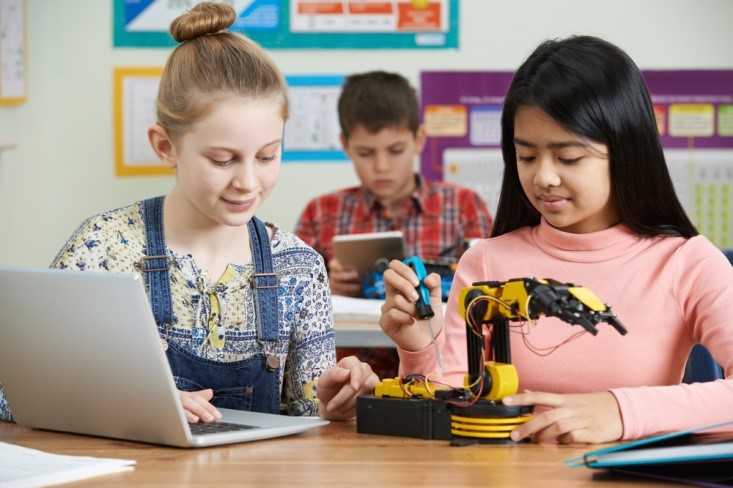 There’s no denying that the digital age has transformed education. However, education in this time of technological transformation needs to extend beyond the question of “How can we incorporate technology and digital tools into the classroom?” and into the realm of “How can we better prepare today’s students to be leaders in technology tomorrow?”
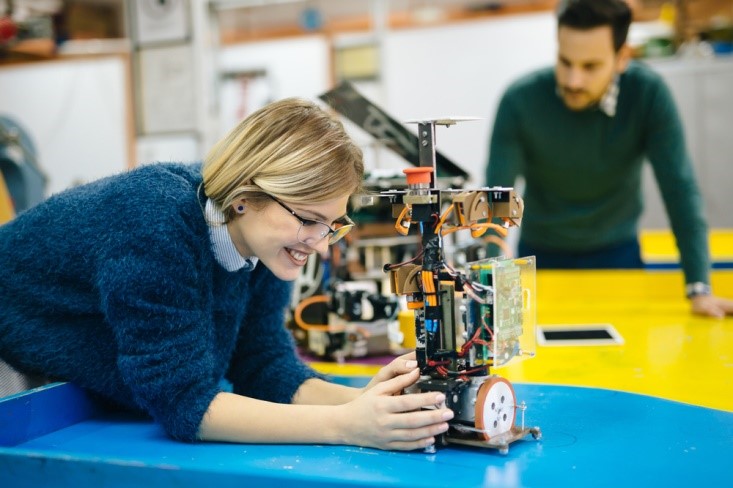 3. Support Curiosity


 However, in my view, while short-and-to-the-point may be a good fit for digital consumption, it’s not the sort of reading likely to nurture the critical thinking we still talk about as a hallmark of university education.
