
Academic and Behavioral Interventions

19 Ways to Teach Learners to Allow Others Take Part in Learning Activities or Games

Are you looking for ways to teach students to allow others to take part in activities? If so, keep reading.

1. Make sure that those students who are willing to take turns are not taken advantage of by their peers.

2. Make sure that other students are taking turns with the student so a reciprocal relationship can be achieved.

3. Provide a realistic level of expectation for taking turns.

4. Get the student to participate in a learning experience with one peer. As the student shows success, slowly increase the size of the group.

5. Ascertain the peers with whom the student would most prefer to interact and attempt to enable the interaction.

6. Let the student have many turns and enough learning materials to satisfy immediate needs, and slowly require sharing and taking turns.

7. Designate the student to interact with younger peers.

8. Designate the student to participate in learning activities in which they are likely to interact successfully with peers.

9. Make sure the student knows that interacting with peers is contingent upon appropriate behavior.

10. Teach the student appropriate ways to interact with peers in group games (e.g., suggest learning activities, share learning materials, problem-solve, take turns, follow game rules, etc.).

11. Observe learning activities closely, so the peer(s) with whom the student interacts does not encourage unacceptable behavior.

12. Make sure that learning activities are not so stimulating as to make successful interactions with peers complicated.

13. Place the student in extracurricular learning activities to urge appropriate interaction with peers.

14. Identify the peer with whom the student is most likely to be able to successfully interact (e.g., a student with similar interests, background, classes, behavior patterns, nonacademic schedule, etc.).

15. Make sure, beforehand, that the student can successfully take part in the learning experience (e.g., the student knows the rules, the student is familiar with the game, the student will be compatible with the other students playing the game, etc.).

16. Consider using a classroom management app. Click here to view a list of apps that we recommend.

17. Consider using an adaptive behavior management app. Click here to view a list of apps that we recommend.

18. Consider using Alexa to help the student learn to behave appropriately. Click here to read an article that we wrote on the subject.

19. Click here to learn about six bonus strategies for challenging problem behaviors and mastering classroom management.

19 Strategies to Help Learners Learn to Let Others Take Part in Learning Activities or Games

Are you looking for strategies to help students learn allow others to take part in activities? If so, keep reading.

1. Assess the appropriateness of the task or social situation concerning the student’s capacity and ability to perform successfully.

2. Urge group participation by giving students tasks that require working together to finish the learning experience (e.g., making murals, bulletin boards, maps, art projects, etc.).

3. Urge peers to take turns with the student.

4. Get the student to work directly with a peer to model taking turns. Slowly increase the size of the group over time.

5. Minimize competitiveness in the school environment (e.g., avoid situations where winning or “beating” someone else becomes the primary objective of a game, learning experience, or academic exercise; etc.).

6. Facilitate learning activities in which students work together for a common goal rather than individual success or recognition (e.g., school bulletin board, class project, bake sale, etc.). Emphasize that bigger accomplishments are realized through group effort than by individual effort.

7. Select an outgoing, non-menacing peer to interact with the student.

8. Give special learning activities for the entire class at the end of the day that is contingent upon taking turns throughout the day.

9. Organize the classroom environment to take advantage of natural opportunities to take turns (e.g., use more group learning activities, point out logical consequences when a student takes turns, etc.).

10. Leverage chances to work together (e.g., when there is a spill, designate students various duties for cleaning it up; when a new student enters the classroom, designate various students duties for orientation; etc.).

11. Make the student practice taking turns if they are unable to willingly do so.

12. Give enough learning materials, learning activities, etc., so taking turns will not always be appropriate.

13. Give the student many chances to take turns to help the student in learning the concept of taking turns.

14. Make sure that every student gets to use learning materials, gets a turn, etc., and that there is no chance for selfishness

15. Show the student the natural rewards of taking turns (e.g., personal satisfaction, friendships, companionship, etc.).

16. Consider using a classroom management app. Click here to view a list of apps that we recommend.

17. Consider using an adaptive behavior management app. Click here to view a list of apps that we recommend.

18. Consider using Alexa to help the student learn to behave appropriately. Click here to read an article that we wrote on the subject.

19. Click here to learn about six bonus strategies for challenging problem behaviors and mastering classroom management.

19 Hacks for Teaching Kids to Share with Others

Are you looking for hacks for teaching kids to share with others? If so, keep reading.

1. Do not Let the student bring things to school that they are not willing to share (e.g., games, toys, etc.).

2. Make sure the student is not expected to share everything (e.g., do not punish the student for not sharing a hat, gloves, personal things, etc.). Everyone has things they would prefer not to share with others.

3. Connect with parents (e.g., notes home, phone calls, etc.) to disseminate information about the student’s progress. The parents may reinforce the student at home for sharing at school.

4. Draft an agreement with the student stipulating what behavior is required (e.g., sharing) and which reinforcement will be implemented when the agreement has been met.

5. Praise those students in the classroom who share.

6. Talk with the student to explain(a) what the student is doing wrong (e.g., failing to give classmates chances to use things) and (b) what the student should be doing (e.g., sharing learning materials).

7. Give the student enough learning materials to satisfy immediate needs (e.g., one of everything). As the student shows success, slowly lessen the number of learning materials, and require the student to share the available learning materials

8. Make sure that shared learning materials are returned to the student so they will create a positive concept of sharing.

9. Learners who cannot share with one another because of their personal dislike for each other should not be placed in the same group when sharing is required. If a student prefers not to share with one specific person, it does not mean that they do not have the capacity and ability to share.

10. Give the student many experiences to share with others and have learning materials returned. On occasions where the student learns that shared learning materials will be returned, the student will be more likely to share in the future.

11. Make sure the student knows that if shared learning materials are used up, worn out, broken under normal use, etc., they will be replaced.

12. In group situations, give the student appropriate learning materials for the learning experience so sharing problems do not disrupt the learning experience.

13. Do not expect the student to share all learning materials. Learners need to “own” some learning materials (e.g., jewelry, clothing, etc.).

14. Provide a realistic level of expectation for sharing school learning materials based on the student’s age level and capacity and ability to share.

15. Praise the student for sharing: (a) give the student a concrete reward (e.g., privileges such as leading the line, handing out learning materials, 10 minutes of free time, etc.) or (b) give the student an informal reward (e.g., praise, handshake, smile, etc.).

16. Consider using a classroom management app. Click here to view a list of apps that we recommend.

17. Consider using an adaptive behavior management app. Click here to view a list of apps that we recommend.

18. Consider using Alexa to help the student learn to behave appropriately. Click here to read an article that we wrote on the subject.

19. Click here to learn about six bonus strategies for challenging problem behaviors and mastering classroom management.
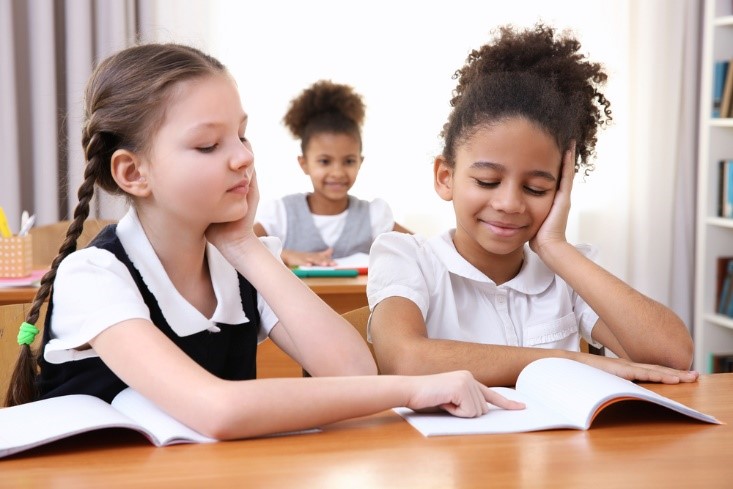
19 Ways to Teach Kids to Share with Others

Are you looking for strategies to teach kids to share with others? If so, keep reading.

1. Give the student many chances to both borrow and lend to help the students in learning the concept of sharing.

2. Make sure that every student gets to use learning materials, take a turn, etc., and that there is no chance for selfishness.

3. Highlight to the student the natural rewards of sharing (e.g., personal satisfaction, friendships, having people share in return, etc.).

4. Make sure that those students who are willing to share are not taken advantage of by their peers.

5. Make sure that other students are sharing with the student so a reciprocal relationship can be achieved.

6. Provide a realistic level of expectation for sharing.

7. Practice sharing by having each student work with a particular school content for an established length of time. At the conclusion of the period (e.g., 10 minutes), have each student pass their content to another student.

8. Give students sufficient time to finish learning activities requiring sharing, so the selfish use of school learning materials is not appropriate for success. Learners are less likely to share if sharing reduces the likelihood of finishing on time, being successful, etc.

9. Minimize the requirements for the student to make oral exchanges when sharing (e.g., shyness may inhibit sharing if the student is required to orally connect with others). Learning materials should be placed in a central place when not in use so they can be obtained by the students. This will enable the aspect of sharing that makes learning materials available to others when not in use.

10. Do not force the student to interact with other students with whom they are not entirely comfortable.

11. Create rules for sharing school learning materials: • Ask for learning materials you wish to use. • Exchange learning materials carefully. • Return learning materials when not in use. • Share learning materials with others. • Take care of shared learning materials. Examine rules often. Praise students for following the rules.

12. Intervene early and often when there is a problem to prevent more severe problems from happening.

13. Teach the student to respect others’ belongings by respecting the student’s belongings.

14. Embody sharing (e.g., by lending pencils, paper, etc.).

15. Teach the student to take turns sharing learning materials (e.g., each student may use the colored pencils for 15 minutes, one student cuts while the other student uses the glue, etc.).

16. Consider using a classroom management app. Click here to view a list of apps that we recommend.

17. Consider using an adaptive behavior management app. Click here to view a list of apps that we recommend.

18. Consider using Alexa to help the student learn to behave appropriately. Click here to read an article that we wrote on the subject.

19. Click here to learn about six bonus strategies for challenging problem behaviors and mastering classroom management.
19 Strategies to Help Learners Who Refuse to Share with Others

Are you looking for strategies to help students learn to share with others? If so, keep reading.

1. Assess the appropriateness of the task or social situation concerning the student’s capacity and ability to perform successfully.

2. Urge sharing by giving tasks that require sharing to finish the learning experience (e.g., making murals, bulletin boards, maps, art projects, etc.).

3. Urge peers to share with the student.

4. Teach the student the concept of sharing by having the student borrow from others or lend things to others.

5. Get the student to work directly with a peer to model sharing. As the student shows success, slowly increase the size of the group.

6. Minimize competitiveness in the school environment (e.g., avoid situations where refusing to share contributes to writing; situations where winning or “beating” someone else becomes the primary objective of a game, learning experience, or academic exercise).

7. Facilitate learning activities (e.g., school bulletin board, class project, bake sale, etc.) in which students work together for a common goal rather than individual success or recognition. Emphasize that bigger accomplishments are realized through group effort rather than by individual effort.

8. Put the student in charge of communal school things (e.g., rulers, pencils, crayons, etc.) to experience sharing.

9. Let the student have many turns and enough learning materials to satisfy their immediate needs. As the student shows success, slowly require sharing and taking turns.

10. Give special learning activities for the entire class at the end of the day that are contingent upon sharing throughout the day.

11. Give enough learning materials, learning activities, etc., so sharing will not always be appropriate.

12. Organize the classroom environment to take advantage of natural sharing opportunities (e.g., allowing more group learning activities, pointing out logical consequences when a student shares).

13. Leverage chances to share and help (e.g., when there is a spill, assign students various duties for cleaning it up; when a new student enters the classroom, designate students duties for their orientation; etc.).

14. Dissuade students from bringing personal possessions to school that others might desire. Urge the use of communal school property.

15. Embody sharing behavior by allowing students to use your learning materials contingent upon returning them.

16. Consider using a classroom management app. Click here to view a list of apps that we recommend.

17. Consider using an adaptive behavior management app. Click here to view a list of apps that we recommend.

18. Consider using Alexa to help the student learn to behave appropriately. Click here to read an article that we wrote on the subject.

19. Click here to learn about six bonus strategies for challenging problem behaviors and mastering classroom management.

26 Ways to Teach Learners to React Appropriately When Peers Attempt to Be Nice to Them

Are you looking for ways to teach students to react appropriately when peers attempt to be nice to them? If so, keep reading.

1. Urge the student to interact with others.

2. Convey your feelings in a socially acceptable way.

3 Embody appropriate ways to respond to interactions with other students or teachers.

4. Utilize feedback related to performance (e.g., test scores, grades, etc.) in place of praise or recognition. As the student becomes more capable of accepting praise and recognition, slowly deliver oral praise and recognition.

5. Praise the student for responding properly to praise or recognition based on the number of times they can be successful. As the student shows success, slowly increase the number of times required for reinforcement.

6. Praise those students in the classroom who respond properly to praise or recognition.

7. Recognize and praise the student in private. The public aspect of praise or recognition is often the cause of the unacceptable response.

8. Assess the appropriateness of the social situation concerning the student’s capacity and ability to be successful.

9. Give chances for appropriate interactions within the classroom (e.g., peer models engaged in appropriate interactions).

10. Always treat the student with the utmost respect. Talk objectively at all times.

11. Give praise or recognition for smaller increments of success so that the student may slowly become accustomed to the recognition.

12. Give the student positive feedback that indicates they are essential.

13. Instead of emphasizing winning or “beating” other students in competition, urge individual success or progress that may be enjoyed privately rather than publicly.

14. Praise the student for responding properly to others’ attempts to be friendly, complimentary, sympathetic, etc.: (a) give the student a concrete reward (e.g., privileges such as leading the line, handing out learning materials, 10 minutes of free time, etc.) or (b) give the student an informal reward (e.g., praise, handshake, smile, etc.).

15. Talk with the student to explain(a) what they are doing wrong (e.g., using unacceptable language, responding negatively, calling names, making unacceptable gestures, etc.) and (b) what they must be doing (e.g., being positive in response to others).

16. Assist the student in creating social understanding (e.g., people may be embarrassed by what you say, feelings can be hurt by remarks, tact is the best policy, remember interactions that have made you feel excellent and treat others in the same manner, etc.).

17. Show praise with a matter-of-fact delivery and avoid exaggerated exclamations of success.

18. Utilize alternative forms of praise or recognition that are not menacing to the student (e.g., written notes, telephone calls to parents, display work done well, etc.).

19. Show respect for the student’s right to a sensible amount of privacy.

20. Attempt several groupings to ascertain the situation in which the student is most comfortable.

21. Give praise and recognition as a natural consequence for appropriate behavior.

22. Draft an agreement stating appropriate ways to respond to others and find which reinforcement will be implemented when the agreement has been met.

23. Consider using a classroom management app. Click here to view a list of apps that we recommend.

24. Consider using an adaptive behavior management app. Click here to view a list of apps that we recommend.

25. Consider using Alexa to help the student learn to behave appropriately. Click here to read an article that we wrote on the subject.

26. Click here to learn about six bonus strategies for challenging problem behaviors and mastering classroom management.

19 Strategies to Help Learners to React Appropriately When Peers Attempt to Be Nice to Them

Are you looking for strategies to help students to react appropriately when peers attempt to be nice to them? If so, keep reading.

1. Let the student be a member of a group without requiring active participation.

2. Teach the student social interaction skills (e.g., ways to properly respond to others’ attempts to be friendly, complimentary, sympathetic, etc.).

3. Designate a peer to sit/work directly with the student (e.g., in various settings or learning activities such as art, music, P. E.; on the bus; tutoring; group projects; running errands in the school building; break time; etc.). As the student becomes comfortable working with one other student, slowly increase the size of the group.

4. Embody appropriate ways to respond to others who are friendly, complimentary, sympathetic, etc.

5. Connect with parents (e.g., notes home, phone calls, etc.) to disseminate information about the student’s progress. The parents may reinforce the student at home for responding properly to praise or recognition at school.

6. Give recognition and praise equally to the students of your class.

7. Give the student many chances for social and academic success.

8. Urge others to compliment the student.

9. Minimize stimuli that contribute to the student’s unacceptable responses to others’ attempts to interact.

10. Intervene early and often to prevent the student from losing self-control.

11. Praise other students for responding properly to interactions with students or teachers.

12. Restrict interactions with the peer(s) who is the primary focus of the student’s unacceptable responses.

13. Give the student frequent chances to meet new people.

14. Make sure that reinforcement is not provided for unacceptable behavior(e.g., paying attention to the student only when they respond improperly to praise or recognition).

15. Recognize and praise the student when they will most likely be able to demonstrate an appropriate response (e.g., when the student is not being singled out in a group).

16. Consider using a classroom management app. Click here to view a list of apps that we recommend.

17. Consider using an adaptive behavior management app. Click here to view a list of apps that we recommend.

18. Consider using Alexa to help the student learn to behave appropriately. Click here to read an article that we wrote on the subject.

19. Click here to learn about six bonus strategies for challenging problem behaviors and mastering classroom management.
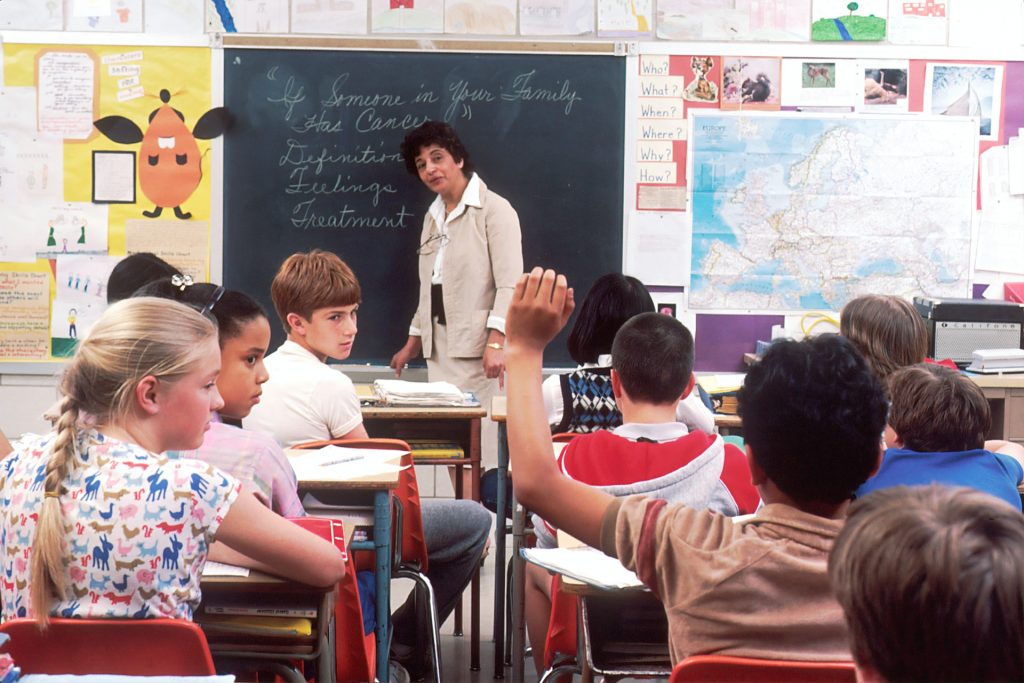
19 Techniques to Teach Kids to Not Interrupt Classmates During Learning Experiences

Are you looking for techniques to teach kids not to interrupt classmates during learning experiences? If so, keep reading.

1. Praise those students in the classroom who demonstrate on-task behavior.

2. Give the student many chances for social and academic success.

3. Plan leisure activities for the end of the day. Make participation in these learning activities dependent upon appropriate behavior during quiet activity periods.

4. Take the student away from the learning experience until they can demonstrate appropriate behavior and self-control.

5. Provide students with frequent chances to interact with one another (e.g., before and after school, between learning activities, etc.).

6. Minimize learning activities that might threaten the student (e.g., announcing test scores aloud, making students read aloud in class, overly praising the success of high achievers, etc.).

7. Organize their surroundings in such a way as to limit chances for the student to talk to other students during quiet activity periods (e.g., keep the student engaged in learning activities, have the student seated near the teacher, etc.).

8. Teach appropriate social rituals (e.g., say, “Excuse me,” before interrupting; wait until someone stops speaking to begin talking, etc.).

9. Attempt several groupings to ascertain the situation in which the student is most comfortable.

10. Teach problem-solving skills: • Find the problem. • Find the goals and objectives. • Create a strategy/plan for action. • Carry out the plan. • Assess the results.

11. Teach the student appropriate ways to express their needs to others (e.g., waiting a turn, raising their hand, etc.).

12. Assess the degree of task difficulty to ascertain whether the student will require additional information, time, assistance, etc., before assigning a task.

13. Make sure that the student knows the relationship between unacceptable behavior and the consequences that follow (e.g., others ignoring him/her, disrupting the learning of others, etc.).

14. Place the student near the teacher.

15. Converse with the student to explain (a) what they are doing wrong (e.g., bothering other students who are trying to work, listen, etc.) and (b) what they must be doing (e.g., demonstrating appropriate behavior).

16. Consider using a classroom management app. Click here to view a list of apps that we recommend.

17. Consider using an adaptive behavior management app. Click here to view a list of apps that we recommend.

18. Consider using Alexa to help the student learn to behave appropriately. Click here to read an article that we wrote on the subject.

19. Click here to learn about six bonus strategies for challenging problem behaviors and mastering classroom management.
19 Tips for Teaching Kids to Not Interrupt Classmates During Learning Experiences

Are you looking for strategies to teach kids not to interrupt classmates during learning experiences? If so, keep reading.

1. Give constant, positive reinforcement for appropriate behavior. Ignore as many unacceptable behaviors as possible.

2. Make sure that reinforcement is not provided for unacceptable behavior (e.g., making unacceptable remarks, talking to others during quiet activity periods, etc.).

3. Give the student an easily grasped list of consequences for unacceptable behavior.

4. Get the student to make a list of consequences associated with regularly occurring behaviors (e.g., By disrupting others, I will be perceived as unmannerly. By behaving aggressively, I will cause people to avoid me.).

5. Provide a predetermined signal (e.g., hand signal, oral signal, etc.) if the student begins to talk to other students during quiet time.

6. Provide a predetermined signal (e.g., hand signal, oral signal, etc.) when the student begins to display unacceptable behavior.

7. Give the student frequent chances to participate, share, etc.

8. Place the student away from those students they are most likely to bother.

9. Teach the student to use techniques such as crossing their arms and legs, clinching their fists, and webbing their hands when they feel the urge to speak to others during quiet activity periods.

10. Show learning activities that let the student be highly active and talkative.

11. Praise the student for demonstrating appropriate behavior: (a) give the student a concrete reward (e.g., classroom privileges, passing out learning materials, 10 minutes of free time, etc.) or (b) give the student an informal reward (e.g., praise, handshake, smile, etc.).

12. Praise the student for raising their hand to be recognized.

13. Give a full schedule of learning activities. Stop lag time from happening when the student can bother other students.

14. Praise the student for working quietly: ( a) give the student a concrete reward (e.g., privileges such as leading the line, handing out learning materials, 10 minutes of free time, etc.) or (b) give the student an informal reward (e.g., praise, handshake, smile, etc.).

15. Give the student enjoyable learning activities to perform when they finish a task early.

16. Consider using a classroom management app. Click here to view a list of apps that we recommend.

17. Consider using an adaptive behavior management app. Click here to view a list of apps that we recommend.

18. Consider using Alexa to help the student learn to behave appropriately. Click here to read an article that we wrote on the subject.

19. Click here to learn about six bonus strategies for challenging problem behaviors and mastering classroom management.
24 Strategies to Teach Learners Not to Interrupt Classmates During Learning Experiences

Are you looking for strategies to teach students not to interrupt classmates during learning experiences? If so, keep reading.

1. Talk regularly with the student to lessen their need to talk to other students.

2. Give the student a break to regroup when they are disturbing others.

3. Coordinate for individual tasks when the group setting is overly distracting.

4. Draft an agreement with the student stipulating what behavior is required (e.g., working quietly) and which reinforcement will be implemented when the agreement has been met.

5. Ask the student if they need to talk with you or need to ask any questions before assigning a task, learning experience, etc., that will be time-consuming.

6. Assess the appropriateness of the social situation concerning the student’s capacity and ability to function successfully.

7. Support the student in identifying the situations in which they are most likely to talk beyond what is required or at unacceptable times. After they have identified these situations, have them think of ways to minimize their occurrences.

8. Refrain from seating the student near people with whom they may be enticed to talk to during lectures, seminars, group projects, etc.

9. Ask the student a question when they are most likely to be able to respond correctly.

10. Connect with parents (e.g., notes home, phone calls, etc.) to disseminate information about the student’s progress. The parents may reinforce the student at home for demonstrating appropriate behavior at school.

11. Take into account the student’s capacity and ability level before expecting them not to intrude on others when they are talking, working, reading, etc.

12. Urge the student to consider the consequences of their behavior before engaging in any learning experience.

13. Provide directions, explanations, and instructions concisely to lessen the student’s need to ask other students for information.

14. Urge the student to model the behavior of successful peers by not talking to others during quiet activity periods.

15. Choose a specific duration of time (e.g., each hour on the hour, break time, after finishing a task, etc.) when it is permissible for the student to converse with their peers.

16. Talk with the students parents about their impulsivity. Do they exhibit this type of behavior at home.

17. Talk with the student about the need to lessen impulsive behavior to increase work productivity and general happiness.

18. Teach the student to recognize appropriate times to talk to other students (e.g., between learning activities, during breaks, at recess, etc.).

19. Do not let the student use ADHD as an excuse. Hold the student responsible for their actions. However, accept the problems ADHD brings into the student’s life while they are learning to make accommodations.

20. Do not provide too much free time for the student.

21. Consider using a classroom management app. Click here to view a list of apps that we recommend.

22. Consider using an adaptive behavior management app. Click here to view a list of apps that we recommend.

23. Consider using Alexa to help the student learn to behave appropriately. Click here to read an article that we wrote on the subject.

24. Click here to learn about six bonus strategies for challenging problem behaviors and mastering classroom management.
