Behavior Management

5 Super Common End-of-Year Behavior Issues (Plus How to Address Them!)

As the end of the school year approaches, students and teachers alike become restless and eager for summer vacation. Unfortunately, this often leads to behavior issues that can disrupt the learning environment. In this article, we’ll discuss five common end-of-year behavior issues and provide strategies for addressing them.

1. Declining focus and attention:

As students anticipate exciting summer activities and events, their ability to concentrate on schoolwork may dwindle. To address this issue, consider incorporating engaging lessons, games, or activities that capture their interest. Keeping the learning environment dynamic will help hold their attention and increase their willingness to participate.

2. Increased chatter and socializing:

With summer around the corner, it’s not uncommon for students to become more social during class time. While socializing is essential for healthy development, it can be distracting when it gets in the way of learning. To address this issue, establish clear expectations for appropriate classroom behavior and remind students of these expectations as needed. Incorporate structured group activities that allow them to socialize productively while focusing on the material.

3. Fatigue from a long school year:

Burnout is an all-too-real experience for both students and teachers as the academic year winds down. To address fatigue-related behavior issues, prioritize self-care, encourage healthy habits (such as getting enough sleep), and remind students of the importance of staying balanced during this hectic time.

4. Anxiety over upcoming assessments:

End-of-year exams can create a lot of stress and anxiety for students which may lead to acting out or struggling behaviorally in class. To address this issue, offer regular support and encouragement while providing ample opportunities for practice and review before final exams. Encouraging open communication about student concerns can also help alleviate some of their anxiety.

5. Resistance to completing assignments or participating:

Many students start to mentally disengage from school towards the end of the year, causing them to resist completing assignments or participating in class. To address this issue, set clear expectations for student performance and participation, and continue to provide consistent consequences for lack of engagement. Offer incentives for those who meet expectations, such as special privileges, fun activities, or additional breaks.

By taking a proactive approach and implementing these strategies, you can help minimize end-of-year behavior issues and maintain a positive learning environment. It’s essential to remember that every student is different, so consider customizing these approaches to your unique classroom dynamic to ensure the most productive final weeks before summer break.


A Positive Relationship Will Not Fix All Classroom Issues. Period

As educators, we genuinely care about our students and want to create a safe, supportive environment in which they can learn and thrive. One essential aspect of establishing such an environment is building positive relationships with our students. However, it is crucial to recognize that even a strong relationship between teachers and students cannot solve all classroom issues. In this article, we will discuss the importance of fostering positive relationships in the classroom while acknowledging that they are not the ultimate solution to every problem.

Importance of Positive Teacher-Student Relationships

Research suggests that a healthy rapport between teachers and students has beneficial effects on their academic performance, motivation, and overall well-being. A positive relationship means that students feel respected, valued, listened to, and understood when they are in the classroom. They are also more likely to engage in learning activities and become enthusiastic about sharing their ideas.

In addition to promoting academic success, positive relationships contribute to the development of social skills and emotional intelligence. Through meaningful interactions with supportive adults, children learn how to express themselves effectively, demonstrate empathy towards others, regulate their emotions productively, and collaborate successfully in group settings.

Limitations of Positive Relationships

While building healthy relationships with our students is essential, it is not a panacea for addressing all classroom challenges:

1. Individual Learning Needs: Students come from diverse backgrounds with varying strengths, weaknesses, and learning styles. A one-size-fits-all teaching approach may not address every student’s specific needs. Despite strong teacher-student relationships based on understanding and trust, a tailor-made educational plan might still be necessary for certain students.

2. Behavioral Issues: Though positive connections with teachers may deter some disruptive behavior or offer added motivation for improvement on the part of the student, they cannot adequately address deep-rooted behavioral issues stemming from external factors such as family dynamics or mental health concerns. In these cases, additional interventions – like counseling or behavior management plans – may be necessary.

3. Environmental Factors: Just because the teacher-student relationship is strong doesn’t mean that the classroom itself is conducive to learning. Issues like overcrowding, poor ventilation, and lack of resources may still prevent students from reaching their full potential.

4. Personal and Cultural Differences: In a diverse classroom, differences in culture, beliefs, ethnicity, and language can create misunderstandings and conflicts even when there is a good rapport between teachers and students. Equity and cultural responsiveness training for educators can play a vital role in addressing these issues.

Final Thoughts

Nurturing positive relationships with our students undeniably contributes to their success and well-being in the classroom. However, we must remember that no singular approach will solve all issues we face as educators. Adopting a comprehensive approach that includes differentiated instruction, targeted interventions, environmental improvement, and attention to equity and cultural responsiveness will ensure that all our students receive the support they need to prosper and grow academically and socially.

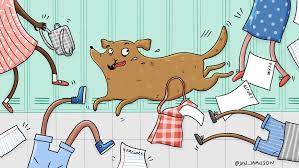
Sorry Not Sorry, But Your Badly-Behaved Dog Can’t Come to School

Introduction:

It’s no secret that dogs are man’s best friend, and pet parents often want to include their furry companion in every aspect of their lives. However, there comes a point when we must draw the line; not all spaces are appropriate for pets, especially when it comes to schools. This article explains why badly-behaved dogs should not be allowed on school premises, regardless of how much we love them.

1. Safety Concerns:

One of the primary reasons dogs shouldn’t be allowed in schools is the potential safety risk they pose. Untrained or poorly behaved dogs can become aggressive or unpredictable around strangers and children. Allowing an unruly dog into a school environment puts students, teachers, and staff at risk for bites or attacks, which could lead to severe physical harm or psychological trauma.

2. Allergies and Health Issues:

Many people suffer from allergies related to pet dander or hair, and allowing even well-behaved dogs inside educational institutions can exacerbate these allergies. Health and hygiene concerns also arise with fleas and ticks that can infest school buildings, bringing diseases while potentially creating further difficulties for both staff and students.

3. Disruption of Learning Environments:

Dogs are naturally social creatures who enjoy playing and interacting with others – including humans. Unfortunately, this can result in bad behavior such as barking, jumping, begging, or stealing food from both students and staff members within the school environment. These distractions are disruptive to the educational process, making it harder for teachers to maintain focus and effective learning.

4. Legal Implications:

Some municipalities have specific laws governing where dogs are permitted or forbidden entry; this may include schools or other public spaces. By bringing a disobedient dog onto campus, you might inadvertently violate local regulations and could face potential legal ramifications.

5. Teaching Responsible Pet Ownership:

Adhering to the rules and understanding why poorly-behaved dogs shouldn’t be brought to school is part of being a responsible pet owner. Teaching our children about proper dog behavior, basic obedience training, and socialization helps encourage compassion and responsibility when it comes to pet ownership.

Conclusion:

While we all love our four-legged companions, schools are not the appropriate environment for badly-behaved dogs. Safety concerns, health risks, disruption of learning environments, legal implications, and promoting responsible pet ownership are crucial factors to consider when deciding whether or not to bring your furry friend to school. Instead, focus on training and socializing your pet so that they can enjoy positive interactions in the right settings and leave the school environment to the students and staff.

26 Ways to Motivate Students to Follow School Rules

Are you looking for ways to motivate students to follow school rules? If so, keep reading.

1. Get the learner to list the pros and cons of an action. Get the learner to consider whether the pros outweigh the cons before they take action.

2. Talk with the learner about the role and benefit of rules outside the school setting (e.g., job site, social situation, leisure learning activities, etc.).

3. Praise the learner for following school rules based on the duration of time the learner can be successful. As the learner shows success, slowly increase the duration of time required for reinforcement.

4. Praise the learner for following school rules: (a) give the learner a concrete reward (e.g., classroom privileges, passing out learning materials, 10 minutes of free time, etc.) or (b) give the learner an informal reward (e.g., praise, handshake, smile, etc.).

5. Help the learner find specific school rules they have difficulty following and make these rules into goals for behavior improvement.

6. Get the learner to question any school rules they do not understand.

7. Get the learner and their parents to sign a copy of the school discipline plan and consequences for failing to follow school rules.

8. Get the learner to find the situations in which they are most likely to fail to consider the consequences of their behavior. After they have identified these situations, have them think of ways to minimize their occurrences.

9. Give the learner many chances for social and academic success.

10. Provide maximum supervision of the learner. As the learner can successfully follow school rules, slowly decrease supervision.

11. Select a peer to escort the learner in nonacademic settings.

12. Draft an agreement with the learner stipulating what behavior is required and which reinforcement will be implemented when the agreement has been met.

13. Utilize related consequences for the learner’s unacceptable behavior(e.g., running in the halls results in having to walk with an adult, throwing food in the cafeteria results in having to sit next to an adult when eating, disruption in the library requires additional adult supervision, etc.).

14. Intervene early and often to prevent the learner’s behavior from leading to the contagion for other students.

15. Urge the learner to realize that all behavior has negative or positive consequences. Talk about how the learner behaviors that will lead to positive consequences.

16. Get the learner to orally repeat the school discipline plan and consequences.

17. Make the learner verbalize the school rules at designated times throughout the day (e.g., before school, during recess, at lunch, at the end of the day, etc.).

18. Provide visibility to and from the learner. The teacher and the learner should be able to see each other at all times. Make eye contact possible at all times.

19. Do not let the learner use ADHD as an excuse. Hold the learner responsible for their actions. However, accept the problems that ADHD brings into the learner’s life while they are learning to make accommodations.

20. Talk with the learner regularly to ascertain if school rules are being followed.

21. Make sure that the learner knows the relationship between unacceptable behavior and the consequences that follow (e.g., lunch detention, suspension, after-school detention, etc.).

22. Create school rules: • Walk in halls. • Arrive for class on time. • Respect the privacy of others. • Talk quietly in the halls. Examine rules often. Praise students for following the rules.

23. Consider using a classroom management app. Click here to view a list of apps that we recommend.

24. Consider using an adaptive behavior management app. Click here to view a list of apps that we recommend.

25. Consider using Alexa to help the student learn to behave appropriately. Click here to read an article that we wrote on the subject.

26. Click here to learn about six bonus strategies for challenging problem behaviors and mastering classroom management.

What is a Removal Punishment?

This is a method in character modification that wipes out nice results that continually allow a behavior in a bid to bring down how much this behavior occurs. Removal punishment is a vital concept in B. F. Skinner’s operant conditioning theory. In behavioral psychology, the objective of punishment is to lower unwanted behavior. One of the most effective ways to understand this concept is to consider that in behavioral terms, negative means taking something away. That’s why negative punishment is often mentioned as “punishment by removal.”

Because negative punishment methods lower the probability of the behavior happening again by eliminating a stimulus, the stimulus has to be essential or pleasant. The subject learns to associate the negative outcome with the behavior.

There’re lots of examples of negative punishment in daily life. Being grounded, losing privileges, losing access to the tablet, and being fined for violating the law are common examples of negative punishment. Some specific situations include:

  •         Giving a driver a parking ticket to stop illegal parking
  •         Taking away a kid’s recess privilege to stop disruption
  •         Charging a late fine to stop individuals from paying their bills late
  •         Taking away a teen’s phone to end the bad attitude
  •         Cutting a kid’s screen time to stop the tantrum
  •         Looking away to remove attention to stop a dog from jumping onto its owner

Removal punishment can be very useful when the following three criteria are met:

Continguity: It refers to the immediacy of the behavior and the stimulus elimination. The behavior’s suppression won’t be as effective if punishment is delayed. When there’s a substantial gap between the behavior and stimulus elimination, the association is weakened. Also, other actions might appear simultaneously, and the behavior then erroneously becomes the one being suppressed.

Contingency: Contingency defines the punishment’s dependent nature on the behavior. If the punishment is given whenever the target behavior happens, the punishment relies on the undesired behavior’s appearance. If the stimulus removal occurs before the behavior or whether it appears or not, then it’s less likely to work.

Consistency: Consistency is crucial for removal punishment to work. Individuals still regularly speed despite the probability of getting a traffic ticket because they don’t receive one each time. They’re only fined if they’re caught, which is why it doesn’t perform well in this case.

One problem of removal punishment is that it works well as long as the stimulus removal remains consistent. But after the punishment stops, the unwanted behavior is highly likely to resume. Another downside is that while it may stop the unwanted behavior, it doesn’t offer information on the desired action. Here’s an example of removal punishment generating an unintended problem. A pupil misbehaves in class, and the instructor takes his/her token gold star away. This penalty might leave a deterring impact on the conduct. But if a kid is misbehaving because he/she is hyperactive or anxious, the punishment doesn’t teach the kid how else to manage the issue. This forceful behavior restraint might lead to emotional or mental problems for the kid.

What is a Presentation Punishment?

This is the act of using unpalatable stimuli to decrease the frequent occurrence of a behavior. This causes such an individual to not want to engage in such behaviors to avoid the consequence in the future. This is adding something to the mix that’ll lead to an unpleasant consequence. Using a presentation punishment might be beneficial in particular circumstances, but it’s just one part of the equation. Guiding the kids toward more appropriate, alternative behaviors is also needed.

All actions have consequences, and presentation punishment can only be a natural consequence of a particular action. For instance, if kids touch a hot oven, they’ll burn their hands. If they consume whipped cream that has spoiled as they hid it below their bed, they’ll have a stomachache. While these experiences are unpleasant, they serve as important teaching moments. Just as one would, kids may be inclined to modify their behavior to keep away from the consequence. When selecting a punishment, parents should consider punishing the behavior, not the kid.

Some examples of common presentation punishments include:

Writing: This method is often utilized in schools. The kids are obligated to write an essay on their behavior or write the same sentence many times.

Grabbing or hand slapping: This might instinctively occur at the moment. The parents might lightly slap a kid’s hand, reaching for a container of boiling water on the oven, or who’s pulling a sibling’s hair. The parents may forcefully pull or grab a kid who’s about to encounter traffic.

Chores: Many parents use chores as a method of punishment. A kid who smears all over the table or scribbles on the wall might be asked to clean it up or carry out other household tasks.

Rules: Few individuals crave more rules. Incorporating additional rules may be the incentive to modify behavior for the kid who frequently misbehaves.

According to a 2016 review of 50 years of research, the more the parents spank kids, the more likely they’re to disobey them. It might increase aggression and antisocial behavior. It might also contribute to mental and cognitive health problems. When it comes to hitting with a ruler, spanking, or other types of physical punishment, they aren’t recommended. Children are pretty good at discovering loopholes. They tend to discover equally undesired behaviors unless parents teach them alternative ones.

Positive punishment is when the parents add a consequence to undesired behavior to make it less attractive. An example of this is adding more household tasks to the list when the kids neglect their responsibilities. The objective is to motivate the kids to manage their daily chores to avoid a growing list.

It’s important to note that positive punishment is different from positive reinforcement. Positive punishment adds an unwanted consequence following an undesirable behavior. Positive reinforcement is providing a reward when the kids behave well. If parents give the kids an allowance for doing particular chores, that’s positive reinforcement. The objective is to improve the probability of continuing good behavior. These strategies can help the kids develop associations between behaviors and their consequences when used together.

What is Punishment?

This is the negative outcome of certain actions, which is used to stop an individual’s propensity to perform such actions in future circumstances. In operant conditioning psychology, punishment is a term utilized to mention any change that happens after a behavior that lowers the likelihood that the behavior will happen again in the future. 

Both positive and negative reinforcements are utilized to increase behaviors, while punishment is focused on eliminating or reducing unwanted behaviors. Many individuals confuse negative reinforcement with punishment, but they’re two very different mechanisms. Reinforcement, even when it’s negative, always increases a behavior. On the contrary, punishment always reduces a behavior.

Psychologist B. F. Skinner, who first defined operant conditioning, recognized two different types of aversive stimuli that can be utilized as punishment. These are:

Positive punishment: This includes presenting an aversive stimulus after a behavior. For instance, when a pupil talks out of turn in the middle of a class, the instructor may scold the kid for interrupting.

Negative punishment: This includes removing a desirable stimulus after a behavior. For instance, when the pupil from the above example talks out of turn again, the instructor promptly tells the kid that he/she will have to miss recess due to that behavior.

While punishment can be beneficial in some instances, one can probably imagine some examples when a punishment doesn’t consistently decrease unwanted behavior. Prison is one such example. Individuals often continue committing crimes after they’re released from prison after being sent to it for a crime. 

Researchers have identified two contributing factors to punishment’s effectiveness in different circumstances. First, punishment is more beneficial if it’s applied quickly. Prison sentences often happen long after someone committed the crime, which might help explain one reason why sending individuals to jail doesn’t always result in a decrease in criminal behavior. Second, punishment achieves better results when it’s consistently applied. 

It can be hard to give a punishment all the time a behavior happens. For instance, individuals often continue to exceed the speed limit even after getting a speeding ticket because the behavior isn’t consistently punished. Punishment is more likely to result in a decrease in behavior if it’s consistently applied and immediately follows the behavior.

Punishment also has some major drawbacks. First, any behavior alterations because of the punishment are often temporary. Probably the biggest downside is that punishment doesn’t actually provide any information about desired or more appropriate behaviors. While subjects may be learning not to carry out particular behaviors, they aren’t actually learning what they should be performing. Another aspect to consider about punishment is that it may have undesirable and unintended consequences. 

For instance, a 2014 survey in the U.S. identified almost half of parents acknowledged spanking their younger kids (age nine and below) in the past year. According to researchers, this kind of physical punishment may result in aggression, antisocial behavior, and delinquency among kids. This is why Skinner and other psychologists propose that any potential short-term benefits from utilizing punishment to modify behavior need to be weighed against the prospective long-term consequences.

23 Ways to Motivate Your Students Not to Use Profanity

Are you looking for ways to motivate students not to use profanity? If so, keep reading.

1. Give learning experiences that emphasize cause and effect links between behavior (e.g., use of obscene/profane language to express one’s thoughts and feelings) and consequences (e.g., loss of others’ respect, lost communication because the obscene/profane language overshadowed the message, etc.).

2. Organize the learner’s surroundings to encourage chances for self-expression without obscene/ profane language (e.g., seating the learner in front of the classroom for careful monitoring and to prevent task- and communication-related frustration, etc.).

3. Teach the learner ways of working through problems to decrease frustration and stress-related behavior. These include (a) problem identification, (b) goal/objective development, (c) strategy development, (d) plan development, (e) plan implementation, and (f) evaluation of plan effectiveness.

4. Stop peers from provoking the learner into reactive, oral responses.

5. Show an interest in the learner (e.g., acknowledge the learner, ask for the learner s opinion, work one-on-one with the learner).

6. Assist the learner’s focus upon positive attempts to connect thoughts and feelings without the use of obscene/profane language. They need to be able to recognize successes and errors for improvement in self-expression.

7. Help the learner find their own unique set of antecedents to the use of obscene/profane language. For every antecedent identified, help the learner create positive, alternative actions they may move toward problem-solving.

8. Give the learner chances for creative self-expression (e.g., sculpting, gymnastics, writing, drawing, dancing, acting, etc.). Learning activities need to be viewed as an avenue of self-expression rather than a way to reinforce, reward, or earn grades.

 9. Present and keep positive, consistent class management that incorporates a chance to think through consequences before decisions are made.

10. Give students and parents information about stress. Include positive alternatives to lessen and/or manage stress.

11. Advocate for supports and services to rule out or give for organic or physical concerns such as Tourette’s Disorder according to individual need.

12. The learner who is experiencing emotional or behavioral disturbances may respond to stressful situations with abusive or profane language. Advocate for support and service.

13. Watch the learner for changes in behavior. A learner who does not typically use obscene/ profane language but has begun to do so may be experiencing other concerns (e.g., personal crisis, substance abuse, etc.).

14. On occasions where teaching the learner to express thoughts and feelings without using obscene/ profane language, give functional lessons (e.g., interviewing for a job, trying an introduction to a new person, etc.) so the learner can designate pragmatic value to this skill.

15. Address and correct the use of obscene/profane language by talking one-on-one with the learner instead of confronting the learner in large groups. Do this to minimize embarrassment and decrease the chances a learner may have for vicarious reinforcement (e.g., approving statements and actions of peers for using obscene/profane language, etc.).

16. Urge the learner to view himself/herself positively. Make sure the learner knows the use of obscene/profane language represents a poor choice, but they are an “excellent” person. This may help lessen potential crises in which use of obscene/profane language is an antecedent to other undesirable behaviors (e.g., attempts to hurt themselves or others, etc.).

17. Consider using a classroom management app. Click here to view a list of apps that we recommend.

18. Consider using an adaptive behavior management app. Click here to view a list of apps that we recommend.

19. Consider using Alexa to help the student learn to behave appropriately. Click here to read an article that we wrote on the subject.

20. Click here to learn about six bonus strategies for challenging problem behaviors and mastering classroom management.

21. Consider using a socio-emotional learning app. Click here to view a list of apps that we recommend.

22. Consider using an emotional intelligence app. Click here to view a list of apps that we recommend.

23. Consider using a school counseling app. Click here to view a list of apps that we recommend.

What is a Premack Principle?

This is a rule that says that recreational activities that cause some form of pleasure can make individuals participate in activities that they don’t find fun. It’s a theory of reinforcement that suggests that a less desired behavior could be reinforced by engaging in a more desired behavior. The Premack principle is credited to its originator, psychologist David Premack.

Before the introduction of the Premack principle, operant conditioning held that reinforcement was dependent on the association of one single behavior and one single consequence. For instance, if students perform well on a test, the studying behavior that led to their success will be reinforced if the instructor compliments them. In 1965, Premack expanded on this idea to demonstrate that one behavior can reinforce another. 

He was studying Cebus monkeys when he noticed that behaviors that an individual spontaneously engages in at a higher frequency are better rewarding than those the individual engages in at a lower frequency. Premack suggested that the high-frequency, more rewarding behaviors can reinforce the low-frequency, less rewarding ones.

After Premack shared his ideas, several studies with both animals and people have supported the principle. Premack himself conducted one of the initial studies. He first determined if his kid participants preferred eating candy or playing pinball. He then used two scenarios: one in which the kids had to play pinball to eat candy and another in which they had to eat candy to play pinball. Premack identified that only the kids who preferred the sequentially second behavior exhibited a reinforcement effect in each situation. 

Brenda Geiger identified that giving seventh and eighth-grade pupils time to play on the playground can reinforce learning by making play dependent on the completion of their tasks in the classroom. Apart from improving learning, this simple reinforcer increased the time students spent on each task and their self-discipline and decreased the need for instructors to discipline them.

The Premack principle has become a hallmark of behavior modification and applied behavior analysis and can successfully be applied in different settings. Two areas where the application of the principle has proven particularly beneficial are dog training and child-rearing. For instance, when teaching a dog playing fetch, the dog has to learn that if it wants to chase the object again (highly desired behavior), it has to bring the object back to its owner and drop it (less desired behavior). 

The Premack principle is utilized all the time with kids. Many parents have told kids that they must finish their homework before they can play a video game or they’ve to eat their vegetables before having dessert. While it can be highly effective with kids of all ages, it’s vital to understand that not all kids are equally encouraged by the same rewards. So, caregivers must decide on the behaviors that are highly motivating to the kids to apply the principle successfully.

The Premack principle has several limitations. For example, an individual’s response to an application is dependent on the context. The person’s preferences and the other activities available to the individual at a given moment will play a role in if the selected reinforcer will generate the less-probable behavior.

What is a Secondary Reinforcer?

This is an outcome that people appreciate simply because of its link to a primary reinforcement. Secondary reinforcement includes the process of conditioning or learning to understand its association with the primary reinforcement. For instance, food is a primary reinforcer, and money buys food. Therefore, in this case, money is a secondary reinforcer, and its value is relative to food, which is the primary reinforcer. While a primary reinforcer is biological in nature, a secondary reinforcer becomes reinforcing after being associated with a primary reinforcer, such as treats, money, or praise.

Key advantages of secondary reinforcers include:

  •         More convenient to utilize than primary reinforcers
  •         Fit better in natural environment situations
  •         They can be utilized to expand the interest of a person
  •         Utilizing a token economy system can expand the time between new reinforcers’ presentations without the person losing interest

Therapists, teachers, and parents often utilize token economies to motivate clients and kids to engage in adaptive behaviors. While they don’t have any reinforcement value, such tokens can be utilized to buy primary reinforcers such as candy, soda pops, and other privileges. Once the association has been formed, the tokens themselves become reinforcing.

Secondary reinforcement is stronger than primary reinforcement because it isn’t tied to biological needs. For instance, if a dog isn’t hungry, it’s unlikely to listen to its trainer’s commands if it’s used to food being a reward. Likewise, if a kid has just had a large piece of cake, he/she isn’t going to practice the musical instrument in exchange for candy. The child may do it in exchange for a star on the chart (secondary reinforcer) that can be exchanged for candy later.

Any organism would do activities that finally help it survive effectively. However, humans look forward to making their lives better apart from survival. Bring complex organisms, both mentally and physically, humans depend mostly on reinforcement that’s in some way connected to their healthy survival.

Even though humans are omnivores, they don’t go hunting in the forest or graze on grasslands. Humans have different methods to acquire food. They work, for which they receive money. Money buys food that satiates hunger, thus helping survival. So, money is the secondary reinforcer.

Here’s another example that can help one understand secondary reinforcers. Humans feel sleepy due to tiredness. Before going to bed, they brush their teeth, wish good night to others at home, say a bedtime prayer, and then go to sleep. The process becomes a ritual and is connected to the behavior of sleeping. So, even if one isn’t tired someday and doesn’t feel sleepy, performing the ritual will involuntarily hint to the body that it’s time to sleep, and the body will prepare itself to sleep. Therefore, in this case, the ritual is a secondary reinforcer.

Ivan Pavlov’s classical conditioning experiment is a famous example of conditioned or secondary reinforcement. In the experiment, Pavlov rings a bell and immediately gives food to his dog to which it salivates. After repeatedly performing this exercise, the dog learns to connect the bell to food and salivates when it’s rung (even when food isn’t given).