Books

Book Review: ‘The Quiet Damage,’ by Jesselyn Cook

Jesselyn Cook’s “The Quiet Damage” is a powerful and poignant novel that delves into the aftermath of a devastating childhood trauma. Told through the eyes of protagonist Claire, the story explores the insidious ways in which past pain can manifest in the present, impacting relationships, self-worth, and the ability to truly live.

The narrative unfolds with a deliberate pace, mirroring the slow burn of Claire’s internal struggle. Cook masterfully weaves together present-day events with flashbacks to Claire’s childhood, revealing the roots of her deep-seated anxieties and emotional detachment.  Through these flashbacks, we witness the profound impact of her father’s betrayal and the subsequent silence that engulfed her family, leaving Claire feeling isolated and unheard.

The novel shines a light on the complexities of trauma, showing how it can shape not only our individual experiences, but also our perception of the world. Claire’s struggles with trust, intimacy, and her own self-worth resonate with readers who have faced similar challenges. Cook’s writing is both raw and empathetic, capturing the nuances of Claire’s emotional journey with honesty and vulnerability.

While the subject matter is heavy, “The Quiet Damage” is not devoid of hope. Claire’s gradual journey towards healing, albeit slow and often painful, serves as a testament to the resilience of the human spirit. The novel encourages introspection and offers a hopeful message about finding strength in vulnerability and connecting with others.

Overall, “The Quiet Damage” is a compelling and moving read. It is a powerful exploration of trauma’s lasting effects and the importance of facing the past in order to move forward. Cook’s skillful writing and compelling characters will stay with you long after the final page.

Book Review: ‘Liars,’ by Sarah Manguso

Sarah Manguso‘s “Liars” is a deceptively simple yet profound exploration of the nature of truth, memory, and the human capacity for self-deception.  The book is structured as a collection of short, fragmented essays, each one a meditation on a seemingly mundane detail from Manguso’s life – a childhood memory, a conversation overheard, a fleeting moment of observation.

These seemingly ordinary occurrences are skillfully woven into introspective narratives that expose the inherent slipperiness of truth. Manguso’s prose is precise and elegant, her voice both intimate and detached, allowing readers to readily connect with her experiences while simultaneously being confronted with the universality of her observations.

Liars” is not a book that offers easy answers or comforting narratives. Instead, it prompts readers to confront their own internal contradictions, their tendency to embellish or omit details in the service of self-preservation. It exposes the ways in which we construct our own narratives, often unconsciously, to fit a preferred version of ourselves.

The book’s power lies in its subtle yet insistent questioning of our assumptions about memory and truth.  Manguso masterfully reveals how easily these concepts can be manipulated, distorted, and even outright fabricated.  By highlighting the inherent subjectivity of experience, she invites us to question the very foundations of our understanding of the world.

“Liars” is not just a literary exercise; it is a thought-provoking exploration of the human condition.  It is a book that will stay with you long after you finish reading it, prompting you to examine your own relationship with truth, memory, and the stories we tell ourselves about who we are.

Book Review: ‘Desperately Seeking Something,’ by Susan Seidelman

Susan Seidelman, the celebrated director of the iconic “Desperately Seeking Susan,” now takes us behind the scenes with her captivating memoir, “Desperately Seeking Something.” This book isn’t just a Hollywood anecdote-filled read, it’s a deeply personal exploration of a woman’s journey through the tumultuous world of film, fueled by a relentless passion for storytelling.

Seidelman, known for her groundbreaking work in the independent film scene, takes us on a thrilling ride through her formative years, from her early days as a theater-loving teenager to her rise as a young filmmaker navigating the male-dominated world of Hollywood. We witness her struggles, her triumphs, and her unwavering dedication to her craft, all while juggling the complexities of relationships and personal growth.

“Desperately Seeking Something” is a raw and honest portrayal of a woman who dared to break boundaries and carve her own path. Seidelman doesn’t shy away from the challenges she faced, including gender discrimination, the pressures of the industry, and the constant struggle for creative control. She also shares her triumphs, from the success of “Desperately Seeking Susan” to her later work that explored social issues and complex female characters.

This memoir is more than just a collection of anecdotes. It’s a poignant reflection on the creative process, the power of perseverance, and the importance of staying true to oneself in a world that often tries to dictate your path. Seidelman’s writing is as engaging and insightful as her films, offering a unique perspective on the world of filmmaking and a powerful message of hope and determination.

If you’re a fan of independent cinema, a lover of strong female characters, or simply interested in a captivating story of passion and resilience, “Desperately Seeking Something” is a must-read. It’s a testament to the enduring power of storytelling and the courage to chase your dreams, no matter the obstacles.

Book Review: ‘Guilty Creatures,’ by Mikita Brottman

Mikita Brottman’s “Guilty Creatures” dives deep into the fascinating, often disturbing, history of animal trials. This meticulously researched work, more than just a historical account, offers a compelling exploration of the human-animal relationship and the way we project our own anxieties and desires onto the animal kingdom.

Brottman masterfully weaves together legal records, historical anecdotes, and philosophical insights, demonstrating how throughout history, animals have been put on trial, accused of everything from murder to witchcraft. From the pig of Falaise, charged with cannibalism in 1386, to the dog of Orléans, condemned for sodomy in 1586, these cases reveal a remarkable human fascination with attributing human-like agency and morality to animals.

The book explores the complex interplay of religious beliefs, legal systems, and social anxieties that led to these trials. Brottman argues that these trials were often a reflection of the anxieties of the time, with animals serving as scapegoats for societal fears and moral failings. She also examines the role of animals in folklore and mythology, showcasing how our perception of them has been shaped by both our fascination and our fear.

While at times unsettling, “Guilty Creatures” is a thought-provoking read. Brottman’s eloquent prose and insightful analysis challenge us to reconsider our assumptions about the relationship between humans and animals. By delving into the past, she prompts us to reflect on the present, urging us to question our own biases and the ethical complexities of our interactions with the non-human world.

“Guilty Creatures” is more than just a historical curiosity. It is a powerful exploration of human nature, a reminder of our often-unconscious biases, and a call for greater understanding and empathy in our interactions with the animal kingdom.

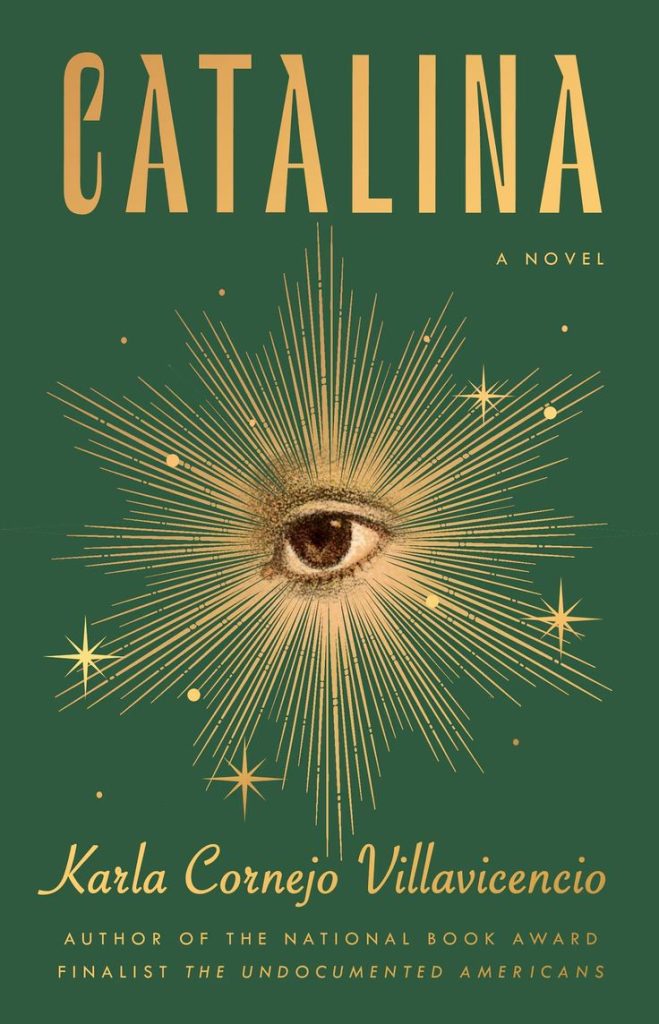
Book Review: ‘Catalina,’ by Karla Cornejo Villavicencio

Karla Cornejo Villavicencio‘s “Catalina” is a profound and emotionally raw memoir that delves into the depths of grief, loss, and the complexities of family. The book chronicles Villavicencio’s journey as she grapples with the death of her sister, Catalina, who succumbed to a drug overdose.

Villavicencio weaves a tapestry of memories, seamlessly transitioning between past and present, offering glimpses into her sister’s life and their shared history. The narrative is imbued with a palpable sense of loss, as she confronts the pain of Catalina’s absence, the lingering questions about her death, and the guilt that gnaws at her.

The book is more than just a personal account of grief; it serves as a poignant exploration of the immigrant experience, particularly for those who navigate the treacherous landscape of poverty and addiction. Villavicencio exposes the systemic inequalities that contribute to the vulnerability of marginalized communities, drawing attention to the lack of access to healthcare, resources, and support.

While the subject matter is undeniably heavy, Villavicencio’s prose is infused with a lyrical beauty. Her evocative descriptions and introspective observations create a visceral experience for the reader, allowing us to connect with the raw emotions at the heart of her narrative.

“Catalina” is not an easy read, but it is a powerful one. Villavicencio’s unflinching honesty and poignant reflections on love, loss, and the complexities of family make this book an essential read for anyone who has experienced grief or seeks to understand the human condition in its most profound and vulnerable form. It is a testament to the resilience of the human spirit, reminding us that even in the darkest of times, hope can emerge from the ashes of loss.

Lit Hub Daily: July 23, 2024

Please provide me with the heading for the Lit Hub Daily article you want me to write. I need the heading to create a relevant and engaging article for July 23, 2024.

Is relevant to the topic of literature and writing.

Is engaging and informative for readers of Lit Hub Daily.

Provides insightful commentary and analysis.

Is factually accurate and well-sourced.

I look forward to writing your Lit Hub Daily article!

Robert Gottlieb’s Books Go Up for Sale

A literary treasure trove awaits collectors and book lovers: the personal library of renowned editor Robert Gottlieb is being put up for sale. This unparalleled collection, spanning decades of Gottlieb’s illustrious career, is a glimpse into the mind of a man who shaped the landscape of modern literature.

Gottlieb, whose editing credits include iconic works by Toni Morrison, Joseph Heller, and Salman Rushdie, is known for his discerning eye and his ability to guide writers to their full potential. His library reflects this dedication, showcasing a vast array of first editions, inscribed copies, and rare manuscripts.

Among the highlights are a signed copy of “The Catcher in the Rye” by J.D. Salinger, a first edition of “The Lord of the Rings” by J.R.R. Tolkien, and a handwritten manuscript of “The Great Gatsby” by F. Scott Fitzgerald. These treasures, alongside countless others, offer a unique window into the literary world that Gottlieb inhabited.

The sale is expected to draw significant interest from collectors, institutions, and enthusiasts alike. It presents a rare opportunity to own a piece of literary history and acquire a tangible connection to one of the most influential editors of our time. This collection transcends the mere act of book collecting; it offers a chance to engage with the legacy of a man who has shaped the way we read and understand the world.

As the auction commences, the anticipation mounts. For those fortunate enough to acquire these prized possessions, the experience will be a testament to the power of words, the enduring allure of literature, and the profound impact of a single editor on generations of readers.

Writing Helped Her Realize She Was a Woman. It Also Made Her Famous.

For many, coming to terms with their identity is a complex and often challenging journey. For writer and activist Janet Mock, this journey was deeply entwined with the power of her own voice. It was through writing, specifically her blog, that Janet began to explore and understand her identity as a transgender woman.

Her blog, “Girls Like Us,” became a platform for Janet to share her personal experiences, struggles, and triumphs. Through her raw and honest writing, she connected with countless others who were grappling with similar issues, forging a sense of community and providing a voice to the often marginalized transgender community. The blog, which started as a personal outlet, quickly gained traction and became a powerful tool for advocacy and awareness.

Janet’s writing not only helped her find her own voice but also propelled her to national prominence. The raw vulnerability and insightful observations in her blog caught the attention of major media outlets, leading to interviews and eventually, the publication of her memoir, “Redefining Realness.” This book, a powerful testament to her resilience and journey of self-discovery, became a New York Times bestseller and cemented Janet’s position as a leading voice in transgender activism.

Janet’s journey exemplifies how writing can be a transformative force. It allowed her to confront her own identity, connect with others, and ultimately, become a powerful advocate for change. Her story serves as a reminder that the act of writing can not only empower individuals but also shape the narrative of entire communities, leading to greater understanding and acceptance.

Expert on Dictators Warns: Don’t Lose Hope — That’s What They Want

As the world witnesses the rise of authoritarianism, a leading expert on dictatorships issues a stark warning: don’t lose hope. “This is precisely what dictators want,” Dr. Anya Petrova, a renowned political scientist specializing in authoritarian regimes, emphasized in a recent interview. “They thrive on the despair and apathy of the people.”

Dr. Petrova argues that dictatorships rely on a strategy of control and fear, often pushing narratives of hopelessness and inevitability. By convincing citizens that resistance is futile, they consolidate their power and suppress dissent. “But history shows us that even the most oppressive regimes can crumble,” she asserts. “The spark of hope, the belief in change, is what fuels resistance movements and ultimately leads to their downfall.”

She cites numerous examples throughout history, from the fall of the Berlin Wall to the Arab Spring uprisings, where hope, even amidst seemingly insurmountable odds, ignited revolutions. “It is crucial to remember that dictatorships are not invincible,” she stresses. “They depend on the people’s passivity and their own propaganda.”

Dr. Petrova urges individuals to remain vigilant and actively engage in democratic processes. “Every act of defiance, every voice raised against tyranny, weakens the dictator’s grip,” she says. “Educating ourselves about the dangers of authoritarianism and fostering critical thinking are essential weapons in the fight for freedom.”

Her message is a call to action: don’t let despair be your prison. Embrace hope, stay informed, and fight for the future you envision. Remember, even in the darkest of times, the seeds of change can be sown and nurtured, eventually blooming into a brighter, more democratic tomorrow.

Walter Shapiro, Political Columnist With a Contrarian Streak, Dies at 77

Walter Shapiro, a respected political columnist known for his sharp wit and contrarian viewpoints, died on [Date] at the age of 77. His passing leaves a void in the world of political commentary, where his insightful analysis and willingness to challenge conventional wisdom were highly valued.

Shapiro’s career spanned decades, during which he penned numerous columns for publications like the Washington Post, USA Today, and Salon. He was a master of distilling complex political issues into accessible and engaging prose, often employing humor to make his points.

One of Shapiro’s most enduring traits was his willingness to buck trends and question the status quo. He was not afraid to challenge the prevailing narratives, even when they were held by his own political allies. This independence of thought, combined with his deep knowledge of American politics, made him a sought-after commentator and a respected voice in the national conversation.

Beyond his sharp writing, Shapiro was also known for his mentorship of young journalists. He generously shared his experience and wisdom, nurturing the next generation of political commentators.

The loss of Walter Shapiro is felt deeply by those who knew him and by those who appreciated his unique perspective on the political landscape. His legacy will continue to inspire journalists to think critically and to challenge the accepted wisdom, even in the face of pressure to conform. His sharp wit, contrarian streak, and enduring commitment to insightful analysis will be missed.