Education News

Free higher education won’t magically improve access

This article was written by P. Pratap Kumar

Many academics, including myself, have explored why free higher education is not economically viable in South Africa.

Money is not the only issue, though. Quality also matters. And the two go hand in hand. Students have hastened to conflate free education and access to quality education. But introducing free university education will not magically grant students access to quality education, nor employment in the marketplace. There’s a lot of work to be done to achieve this. And in my view this should take precedence over doing away with university fees.

This work will not only involve universities as institutions.

The starting point must be to improve the quality of basic and secondary education. South Africa’s basic education system faces serious problems and has done so for years.

Added to this is the fact that universities have become increasingly bureaucratic as well as driven by the need to raise money from fees. This makes them ever more expensive and beyond the reach of the vast majority of South Africans. Universities must return to their core business of teaching, research and learning rather than focusing on profit margins.

And, last but not least, there needs to be a shift in students’ attitudes: they must begin to value their access to universities.

Basic education is a mess

The basic education system compares poorly with others on the continent. It fares even worse when compared globally.

The country has too few teachers; those who are in classrooms are frequently under qualified and perform badly. Teacher to pupil ratios are extremely high and many public schools – particularly those in rural areas – lack even basic infrastructure like desks and books.

Against this backdrop, the relatively small number of students who eventually manage to enter university education are naturally ill-equipped to handle the complex nature of knowledge construction at a tertiary level. They struggle with literacy and numeracy and are in no way ready to tackle university assignments.

So, fundamental change must happen in the basic education sector. It’s no use making higher education free for all if those entering the system are not able to cope with its demands.

Universities aren’t corporate houses

While it is necessary to overhaul the basic education system, South Africa needs to also transform its educational institutions and make them affordable.

This will involve not just equipping students with the skills the country needs, but also making degrees affordable. The cost of higher education in South Africa has risen phenomenally in the last two decades.

According to a 2016 survey, a standard Bachelor of Arts or Bachelor of Social Science costs anywhere from R14 000 to an average of around R35 000. This is far beyond the reach of most South African households. By comparison, a standard Bachelor of Arts at one of Kenya’s biggest public universities currently costs the equivalent of R14 000 for a year.

Higher education must be seen to be within the reach of poor students who aspire to it. Universities are not corporate houses that need to be obsessed by profits and income. It’s not appropriate that they focus on things like “management and efficiency techniques and professional support for accountability, measurement, ‘product control’ and assessment” instead of teaching and research.

Corporatisation of the higher education system has led South Africa down the wrong path. Too much money is spent on paying senior managers and remunerating bloated administrative units.

With the ever-growing decrease in state funding for higher education, the universities are forced to depend on student fees, donor funding and other sources. There may be some justification that universities are profit driven to pay for the increasing costs of higher educational institutions.

But all this comes at a cost to students and the academic programme. It’s time to return the academic agenda – teaching and research – to the centre of university life.

Rethinking protest

It’s also important to remember that access to education is a two sided coin. It’s not enough for universities to open their doors; the people entering must also value their access. Yes, universities have a lot of work to do to ensure they are transformed. But there must also be a change in the culture of students.

Students must realise that South Africa is no longer fighting an external enemy like the apartheid system. Instead, citizens are fighting within a system of democracy. This means that the way the country protests needs to be rethought. In the past the means for legal protest weren’t easily available. There are now appropriate structures and institutions to seek redress and put pressure through peaceful protest and through democratic negotiations. The destruction of infrastructure that’s been seen at educational institutions in recent months will only deprive the future generations of access to education.

Politicians have a major role to play in changing this culture of protest, as do parents, traditional leaders, NGOs and other religious and cultural institutions, such as churches.

The Conversation

P. Pratap Kumar, Emeritus Professor, School of Religion, Philosophy and Classics, University of KwaZulu-Natal

This article was originally published on The Conversation. Read the original article.

Keeping girls at school may reduce teenage pregnancy and STIs – but sex education doesn’t

This article was written by Amanda Mason-Jones

Worldwide, more than 65m adolescent girls have no access to school. And it’s not just poorer countries that suffer from bad education. In the UK, one in five young people don’t complete post-16 education, making it one of the worst performing countries in league tables measuring how well young people are educated. This affects not only life chances but also health outcomes and well-being.

Studies conducted as far afield as the US, Norway and rural South Africa, for example, have suggested that encouraging school attendance can help young people avoid early sexual activity – and girls to avoid unplanned pregnancy. But this has never been confirmed by experimental evidence – until now.

A comprehensive Cochrane review of studies from around the world combined the data from more than 55,000 young people aged on average between 14 and 16. And it has shown that providing a small payment or giving away a free school uniform can incentivise the young to stay in school for longer, especially in places where there are financial barriers to attending.

Most significantly, it also reveals that the approach could prevent three in every ten pregnancies among that age group globally, and may also delay sexual activity and reduce sexually transmitted infections (STIs) in both girls and boys – although further high quality studies are needed to confirm this. Additionally, it suggests that the mainstay of the current approach – “sex education” – isn’t working to achieve these ends.

Sex education is failing

The studies in the Cochrane review were all randomised controlled trials from Europe, Latin America and sub-Saharan Africa. Most were of high quality and had follow-ups at between 18 months and seven years.

The sex education programmes they investigated included peer and teacher-led education and the innovative uses of drama and group work. But most of the programmes did not provide access to the necessary health services, such as condoms or other contraception, especially for the youngest age groups.

What is clear is that we really don’t know what works and for whom when it comes to curriculum-based sex education in schools. We are often told that we do know, but the studies quoted previously have been based on self-reported behaviours of young people which are prone to bias.

Sex and sexuality are sensitive topics, especially when there are legal or moral ramifications for someone admitting to having sex. This new review, by contrast, has for the first time only included studies featuring measurable biological outcomes from records or tests of pregnancy and STIs. The fact that it points to sex education not working to reduce pregnancy and STIs among the young, therefore, is all the more significant. It seems we need a radical rethink.

Staying at school: a healthy contraceptive? Shutterstock

But what should be done? Most people agree that sex education should start early and focus on relationships, not just on the mechanics of sex. Most also agree that it should be inclusive and sensitive to a range of sexualities, including not assuming that all young people have started to have sex. Equally, few would disagree that we need to reform current approaches to take into account new risks from digital communications and social media, and that schools are a good place to encourage the development of healthy relationships.

However, MP Sarah Champion, whose Dare to Care national action plan calls for “compulsory resilience and relationships education” in UK schools, needs to consider this new evidence. She talks about young people needing “the tools to rebuff harmful requests and behaviour from abusers”. This focus solely on an individualised notion of resilience is flawed unless it incorporates more ecological and culturally sensitive definitions, and a clear understanding that it is not at all easy to “rebuff” violent approaches, especially in young people’s intimate relationships.

We need to build schools that are safe, welcoming and supportive – with adults, including parents, that are open and have the skills to talk to children about sexuality. We also need to think carefully about how the sexuality education offered by schools can effectively achieve its aims.

New ways of thinking about sex

Certainly, current strategies are failing. Talking about sex in schools doesn’t encourage young people to have sex, but equally – as the Cochrane review shows – it is not likely to delay them having it either, as some previous authors have suggested.

Some, for example, have claimed that programmes such as TeenStar, which encourage abstinence from sexual activity, are effective. But this conclusion is based on studies that are considered to have serious flaws.

The Cabezon study, for example, examined pregnancy outcomes from a programme in Chile that promoted abstinence from sexual activity. They suggested that the programme was successful by comparing the number of girls who were pregnant at the end of the study (19), with the number of pregnancies from a group who didn’t receive the programme (52). This made the programme look amazingly successful, but it excluded miscarriages and also illegal abortions that go unrecorded in Chile, so they were unlikely to have included all unwanted pregnancies that had occurred. The study also suffered from a number of biases including during randomisation and recruitment to the study, and selective reporting of the results.

In future, we need to rely on good quality evidence when developing public health policy. If sex education were to become compulsory, for example, it would be sensible to track its effectiveness experimentally to ensure that policies are working as expected.

While this study may highlight the failings of sex education at the moment, it also points to the effectiveness of school in general in the prevention of STIs and unwanted pregnancies. That, at least, is a good start.

The Conversation

Amanda Mason-Jones, Senior Lecturer in Global Public Health, University of York

This article was originally published on The Conversation. Read the original article.

Expansion is no longer the answer to improving the Australian education system

This article was written by Dean Ashenden, University of Melbourne

For 50 years, Australia’s policymakers have been persuaded that growth at every level of the education system would be a good thing in itself – and would drive economic growth and social progress.

That faith is now under unprecedented pressure.

While massive expansion has brought the benefits of education to millions, it has also created new problems, and left old ones unresolved.

Human capital theory

Belief in the power of education to lift lives and societies is hardly new. But “human capital theory” gave it a new form.

Developed by a small group of US economists in the late 1950s, human capital theory arrived in Australia via the OECD in 1964, when L. H. Martin became the first in a long line of Australian policymakers to argue that education was not a necessary expense but an investment.

Investment in education would make individuals and economies more productive, triggering a virtuous circle of economic growth, more equal opportunity, higher levels of health and civic-mindedness, and cultural enrichment. The economic rain would follow the educational plough.

It followed (as one Australian human capital theorist argued) that,

“education spending should be expanded up to the point where the rate of return to additional spending is equal to the general rate of return on capital”.

Anything less will reduce the rate of economic growth and result in “a culturally impoverished and less cohesive society”.

In the meantime, education pays for itself (as another theorist put it) “many times over”.

Promise and performance

Governments have certainly done as advised.

In just two generations they have tripled the proportion of students completing 12 years of schooling, expanded numbers in vocational education and training (VET) from a few tens of thousands to around 1.5 million, and multiplied higher education numbers by thirteen.

But 50 years on it is clear the benefits of vastly expanded access to education are heavily offset in ways scarcely anticipated by the human capital argument:

  • Despite claims that education pays for itself, the chronic problem of funding it has recently become acute, pushing minister Pyne from his portfolio, and his government toward a near-death electoral experience.
  • Even the OECD, the leading apostle of human capital theory, concedes that “over-education” is relatively pronounced in Australia. Employment and salary returns to degree and diploma programs have fallen steadily, while at the lowest qualification levels returns are negligible or even negative. On the other side of the transaction, employers continue to complain about the employability and “job readiness” of graduates
  • Despite more years of schooling by many more people, a persistently large minority of students is “disengaged”, and an even larger proportion of adults lacks the skills “to meet the demands of everyday life and work”.
  • Research dominates the universities and they dominate the system as a whole. The universities have been allowed to pursue their own interests at the expense of teaching, and to undertake increasing amounts of educational work for which neither they nor their students are well equipped. Their dominance extends to the purposes and curriculum of schooling, and contributes to the perception of VET – under-funded and beset by scandal – as an educational last resort.
  • There have been few or no gains in the social distribution of opportunity in and through education. It seems likely that structural inequality – the distance between the best and worst educated, and the distribution of the population across that spectrum – has increased.
  • Growth has been in time served as well as numbers enrolled, causing costs for young people to rise as returns fall. They spend a steadily increasing proportion of their lives in a limbo between childhood and fully adult circumstances and responsibilities in pursuit of employment which may or may not materialise.

Growth still the solution?

There are those who argue or assume that growth should still be the first objective of policy.

The most recent substantial review of higher education, for example, relied on human capital theory to argue for a much-expanded, demand-driven system.

Deloitte Access Economics prosecutes the same case, claiming not just a long list of social, health and other benefits for expansion, but an 8.5% increase in GDP “because of the impact that a university education has had on the productivity”.

Australia’s most successful federal minister of education, John Dawkins, recently called for a comprehensive rethink, but with funding for further growth as the central question, a view apparently shared by the Grattan Institute.

The guns of policy are pointing in the wrong direction. We need a re-orientation for the next 50 years as substantial as that introduced by Martin 50 years ago.

A different orientation for public policy

The first question for policy should not be the size of the system or its funding but its disposition, character, and consequences:

  • Policy has concentrated on the supply of skills and knowledge; it should now concentrate on their use and development in the workplace.
  • The effort to load up individuals with economically useful skills and knowledge via front-end, formal education should give way to expanding career and training paths and work-based learning across the broadest possible range of industries and occupations, including most of the professions.
  • The focus on the social distribution of education should be widened to tackle structural inequality. Policy must be directed less toward opportunity to get the best, and more toward providing the highest possible proportion of the population with the best possible educational experience and attainment.
  • The priority currently given to the top half of the system and to those who do well at school and go on to higher education should be given to those for whom education is a bad experience with bad consequences.
  • Policy should above all stop equating human capital with the consumption of formal education. That conflation has allowed occupational groups, including particularly the professions and those aspiring to professional status, to combine with education providers to use credentials to drive up amounts of education consumed. Educational provision should be seen within the larger frame of learning and its recognition, irrespective of where, when or how undertaken, but particularly learning and its use in workplaces.

It is possible to detect the beginnings of such a re-orientation in some of the areas discussed; in others, it is not.

Learning the lessons of experience

Although human capital theory has gone largely unchallenged in policy debates, among economists it has been as much criticised and rejected as accepted.

Even those who work within the human capital framework often distance themselves from the growth argument appealed to by governments and others.

The rise of human capital theory from one among several accounts of the education-economy relationship to conventional wisdom owes as much to its political usefulness to governments and to the education industry as to its merits.

There is much more to the complex interaction of education and learning (on the one hand) and economic activity (on the other) than human capital theory comprehends, including particularly competition for economic advantage through education by occupational groups and by families and individuals.

There is also much more to education than its contribution to economic activity.

Martin depended upon a theory. Now we have experience. If the lessons of the past 50 years are to be learned, policymakers will need a much broader course of instruction than can be provided by human capital theory.

The Conversation

Dean Ashenden, Honorary Senior Fellow, Melbourne Graduate School of Education, University of Melbourne

This article was originally published on The Conversation. Read the original article.

Prospective higher education students need better information about admissions process: Shergold report

This article was written by Michelle Grattan

More students than ever before have the opportunity for higher education but their choices are being undermined by a confusing admissions system in much need of reform.

This is the conclusion of a report to Education Minister Simon Birmingham, which points to “a paradoxical situation”.

“Entry into universities has become more equitable. Yet there is evidence that families with less experience of higher education, which are economically disadvantaged or live in regional Australia, are less able to understand how admissions processes operate.”

The report, “Improving the Transparency of Higher Education Admissions” is from the Higher Education Standards Panel, chaired by Peter Shergold, a one-time head of the Prime Minister’s department, and will be released by Birmingham on Wednesday.

It says the increasing diversity of admissions criteria for higher education is not well enough understood. Media focus is on the Australian Tertiary Admission Rank (ATAR) but in 2014 more than half the students admitted to higher education courses were admitted on other criteria. These included previous study and mature age provisions.

“Diversity is good. Varied entry standards and pathways are giving greater numbers of students the opportunity to benefit from higher education than ever before.

“More students from disadvantaged families, who in previous times would not have been able to gain entry to higher education, are now able to do so.

“However, choice is being undermined by information about the system’s operation that is confusing, ambiguous, misunderstood and unevenly distributed.”

Problems include: no common language to describe entry requirements; the ATAR calculation differing in each jurisdiction; information not being provided in a readily accessible way that facilitates comparisons; the ATAR focus leading many prospective students to assume that is the only path; and the danger that some higher education providers might make exaggerated claims about ATAR requirements, in an effort to boost their prestige.

There is consensus that the autonomy of higher education providers to set their own admission criteria should be upheld, but the panel says the emphasis should be on a student-centred approach.

The panel has produced a detailed set of recommendations to:

  • achieve more transparency by using common language and publishing consistent information about admissions processes;
  • widen the accessibility of information to prospective students;
  • improve the comparability of information from providers about admission processes and entry requirements;
  • make providers more accountable for the information they give;
  • ensure providers are subject to common reporting requirements, and
  • give students, parents, teachers and career advisers the knowledge and capacity they need to navigate admissions policies and processes.

Releasing the report at a higher education summit in Melbourne, Birmingham will support the recommendations’ intent and promise an official response within weeks. The government will get input from the sector and states and territories.

“Admission policies should not only empower students to make wise, well-informed choices but should also create levels of transparency and accountability that, coupled with optimal financial incentives, help to ensure that higher education providers make enrolment decisions that are genuinely in the best interests of students and the nation,” Birmingham will say.

“That shift towards greater transparency is why the Turnbull government has been such a strong advocate of the QILT [Quality Indicators for Learning and Teaching] website – giving students better information about institutions and course quality, as well as graduate employment outcomes.”

The site has received about 490,000 visits. Enhancements to QILT would be part of the government’s response to the report and broad higher education reform, including better information for postgraduate students and greater use of universal data sources, Birmingham will say.

“We also require better understanding of whether students are moving between sectors or institutions within sectors or moving in to work or from a bachelor course of study to a diploma or advanced diploma in the same or another institution. Those students are currently being counted as non-completions.”

The Conversation

Michelle Grattan, Professorial Fellow, University of Canberra

This article was originally published on The Conversation. Read the original article.

Young scientists seek solutions to South Africa’s higher education crisis

This article was written by Sahal Yacoob and Karen Jacqueline Cloete

The South African Young Academy of Science (SAYAS) has decided it is time to speak out about the country’s higher education crisis. The academy constitutes 50 young academics and 20 alumni from multiple disciplines – including health sciences, natural and social sciences, engineering and the humanities. They are selected on academic merit from institutions of higher education and research.

This is a summary of a statement formulated at the organisation’s 2016 general assembly in October. In it, the academy warns of “catastrophic” consequences if university protests continue and no long-term solutions to the sector’s complex, multi-tiered problems are implemented.

We are acutely aware of the challenges that students face. We teach and supervise undergraduate and postgraduate students. These are South Africa’s future young academics.

We financed the completion of our own higher education. A number of us are now burdened with high levels of debt that – as young academics employed in varied temporary, permanent, funded and self-funded positions –- we struggle to repay.

As a group of young academics committed to the South African academic project, we can no longer avoid engaging with these crucial issues at this complicated moment. If this situation remains unresolved, the implications will be catastrophic. This is true for undergraduate and postgraduate students, including both South African and international students. Those who are on time-limited bursaries and fellowships are also at risk.

As an example, if any academic year is compromised, the country could experience a shortage of medical doctors and allied health professionals. Internship placements in those fields will be vacant without graduates. This will place further stress on an overburdened public health system upon which most South Africans rely.

There has so far been a lack of constructive leadership at the national level and lack of effective engagement between staff and student leaders. This has triggered escalating tensions. It has also led to the development of unproductive, often confrontational and personalised debates. These run counter to the principles of scholarly engagement. They hinder the possibility of finding collective solutions to this crisis.

We call for urgent and peaceful resolutions across our campuses that will result in the removal of police and private security. We want to avoid confrontations between police and private security with students and staff. We acknowledge the presence of diverse experiences of structural and direct violence, and the threat these forms of violence pose across our campuses.

We also acknowledge that the presence of police and security is experienced differently. It creates contexts in which teaching, learning, research and innovation cannot take place.

Universities need to recognise the anxiety and psychological trauma experienced by many staff and students during this period. Institutions must commit to addressing this trauma and anxiety. Doing so will help facilitate the resumption of high-quality teaching and learning when institutions reopen.

Recommendations

It’s crucial to develop spaces for respectful engagement that acknowledges and supports continued debate and differences of opinion. We offer our members as a resource to support constructive national dialogue on this crisis.

Fee-free higher education could be financed in different ways, guided through the development of evidence-informed financing models. But it is not academics alone who ought to be involved in this process.

We call on the President of South Africa to:

  • urgently address the root cause and not just the symptoms of the crisis being experienced across institutes of higher education;
  • commit to increased funding streams for the sector, which will improve equity in access to quality higher education;
  • immediately convene a national dialogue. It needs to include student, parent and academic representatives. University administrators, the private sector and industry must also be included. This will be a safe space to discuss approaches and develop a consensus statement committing to realising the goal of fee-free quality higher education for poor and “missing middle” students. The missing middle are those whose parents earn too much money to qualify for government loans but not enough to afford tuition;
  • urgently reformulate the emergency task team he established around this crisis to include the National Treasury. This is necessary to move away from reducing the crisis to one associated only with security concerns. The National Treasury is a key player in realising funding goals.

It’s also important that the President work with the fees commission he established to complete its inquiry into different financing models. The commission needs to release an approved model for implementing fee-free quality higher education for poor and “missing middle” students.

We offer the President our academy’s expertise to support the development of sustainable solutions.

Dire consequences

South Africa will struggle to maintain and grow its internationally respected research-intensive environment if academic programmes are suspended and university campuses closed.

The country’s academy and science innovation needs room to transform and grow. We are very concerned that this crisis will negate the gains made to date – and will have dire consequences moving forward.

The Conversation

Sahal Yacoob, Experimental Particle Physics, University of Cape Town and Karen Jacqueline Cloete, Postdoctoral researcher in the biological applications of ion beam analysis techniques, iThemba LABS

This article was originally published on The Conversation. Read the original article.

New partnerships are needed to arrest economic malaise in South Africa

This article was written by Steve Koch

South Africa’s Finance Minister Pravin Gordhan presented his 2016 mid-term budget on the back of a crisis in higher education funding characterised by widespread national student protests. The Conversation Africa’s business and economy editor Sibonelo Radebe asked Steve Koch to weigh the minister’s speech.

What is your reaction to the minister’s statements on funding higher education? Could he have done better?

The minister’s statements were well calculated, measured, and responsible in the current climate. The additional increase in National Student Aid Financial Scheme funds should go quite some way towards improving access to post-school education.

Assuming “better” means finding money to fund “free education for all, immediately”, the answer is no. Despite what student activists would like to believe, free education for all is pro-rich. This is because, disproportionately, students who qualify for post-school education come from richer households.

The answer is a more nuanced “maybe” if “better” means finding more money to help poor students fund their tertiary education. There are options, not necessarily palatable to all, such as privatisation of state-owned enterprises, which might raise revenue and reduce pressure on the fiscus. But changes of that nature would not be made in a medium-term budget. They would more likely feature in the State of the Union Address.

What should be done to address the higher education crisis in the long term?

There appear to be two components to this crisis. The one that appears to have driven the initial #FeesMustFall movement is that post-school education is relatively expensive and, even though funding for post-school education is one of the fastest rising budget items, student numbers have risen faster.

The bigger problem is that the economy has not grown fast enough to absorb workers for far too long. Students or their parents are left with potentially crippling debt and yet limited prospects to repay. Dealing with this will require some creativity, and a willingness to experiment to engender positive change in the economy. In my view, positive change requires opening up space and creating funding opportunities for entrepreneurs and businesspeople, while working to limit “rent-seeking”. Corruption, bribery and collusion are common forms of rent-seeking, which is the use of a position of power (political, economic or otherwise) to further your one’s own interests.

But one of the undercurrents of the current crisis is political, not economic. There is a desire for change, period. Thus, we see the rejection of democratically elected student council representatives, the rejection of current curricula and the rejection of socially accepted rules of engagement, among other things. Dealing with this will have to go far beyond the structures of a medium term budget.

What do you think credit rating agencies are taking out of this budget?

The medium term budget did not signal any big changes in policy associated with either large increases in budget deficits or long-term debt. And the minister was adamant that South Africa was able to control its own destiny.

These were important pronouncements because they underscored a commitment to budget sustainability.

The credit rating agencies are likely to take solace from this. But the minister is not capable of changing the economy overnight. And there are international risks, as well as local economic and political risks, beyond his control that remain important factors in credit rating decisions. Politically, uncertainty surrounding the minister’s continued appointment, as well as any potential replacement’s commitment to sound fiscal management, remains. Similarly, uncertainty surrounding the US Presidential elections, and the US’s continuing commitment to either free trade or Africa cannot be discounted. Economically, Brexit and the resultant relationship between Europe, the UK and Africa create further uncertainties about South Africa’s growth potential.

Given the prevailing political environment do you think the finance minister will achieve what he has set out to do?

One way to define the minister’s job description is that he has the responsibility to pay – sustainably – for activities that government would like to fund. He spoke about the realities of the local and international economic situation. He also restated the importance of creating a South Africa that was different (and far better) than the one inherited in 1994.

The reality is that government’s ability to directly fund new activities has decreased. But if business and civil society become more involved, government’s need to directly fund new activities will decrease.

For me one of the key takeaways was the message that the country’s full potential requires not just the government, but also the efforts of the private sector and civil society. If I’m reading this correctly it could herald the beginning of positive change in the economy and society.

It remains to be seen whether this theme permeates future government policy actions, or whether business and civil society begin to work with government and each other to achieve positive change. But the minister’s efforts are likely to open fiscal space, and, therefore, could help achieve what is required.

The Conversation

Steve Koch, Professor of Economics, University of Pretoria

This article was originally published on The Conversation. Read the original article.

The Key to STEM Achievement: Answering the Question

‘When Am I Going to Use This?’

In Maureen Foelkl’s classroom at Chapman Hill Elementary School in Salem, Oregon, second and third grade students designed solutions to seasonal flooding and erosion in their community with the help of actual engineers in the field.

The project won Foelkl the Presidential Award of Excellence in Math and Science Teaching. While working on it her students learned about complicated concepts such as how a flood plain works, how structures can keep water out, and what kinds of materials can hold water in.

Foelkl invited civil engineers to talk with her students about these topics either in person or through interactive conversations that took place online. Her students then designed and tested their own prototype structures for mitigating the effects of or for withstanding a flood.

Foelkl, who is now an independent contractor writing science, technology, engineering, and math (STEM) curriculum for multiple organizations, says her students were highly engaged throughout the project. Having outside experts speak with them “brought authenticity to the lesson,” she says. “My students asked questions that I could not begin to answer.”

She adds: “No textbook I know can come close to interacting with students in that fashion.”

Making It Real

Research suggests the No. 1 reason students avoid STEM-related courses or careers is because they don’t see the relevance of what they are learning. In other words, there is a huge gap between what is happening in the classroom and in the real world.

Clearly, it’s time for a new approach—and Foelkl and many others have found that connecting students with actual STEM professionals helps make these subjects come alive in ways that a textbook just can’t replicate.

In Oregon, the state has created nearly a dozen STEM Partnerships, or regional hubs in which leaders from the education, business, and nonprofit communities come together to design community-based solutions to their STEM workforce challenges.

The South Metro-Salem STEM Partnership is one such hub, which serves districts in the Salem and Portland areas—accounting for about 25 percent of the state’s students. A key element of their effort is Oregon Connections, which is connecting students (and teachers) with industry experts. These STEM-related professionals come into the classroom either in-person or virtually to make science and math more meaningful for students.

“To me, the most important thing is making it real,” says Melissa Dubois, director of the South Metro Salem STEM Partnership. “We don’t get the innovations we get by magic. You don’t get an iPhone because it just materialized from nowhere; there are people with skills and expertise who have a really great time trying to dream up and build these kinds of products.”

Through Oregon Connections, teachers can request scientists, engineers, and other STEM-related experts to visit their classrooms in person or through an online conversation to talk about the work they do and why it’s important. The online conversations are powered by Nepris, which matches teachers with STEM experts from anywhere in the country and also hosts the video conferences.

Teacher, Maureen Foelkl, guides her third graders from Chapman Hill Elementary School in Salem, Oregon through a STEM lesson and brings in industry experts to her class virtually using Nepris or for in-class visits using Oregon Connections.

“I have been using Oregon Connections extensively over the past three years,” says Dylan McCann, a sixth grade math and science teacher at Twality Middle School in Tigard, Oregon. “We’ve met virtually with programmers, military defense engineers, naval architects, and pilots. My students have had the opportunity to see actual professionals using concepts we have been learning in the classroom—and that gives them an answer to the age-old question: ‘When am I ever going to use this?’”

Opening Students’ Eyes to New Possibilities

Besides making STEM topics more engaging and relevant for students, bringing industry experts into the classroom also opens students’ eyes to new career choices they might never have considered before. And, having the entire world of professionals at their fingertips through Nepris means there are virtually no limits on whom they can talk to.

Dubois says it’s important for students to know that the things they love to do could lead directly to a career: “If you’re an outdoor kind of kid, there’s a role for you. Do you love exploring the woods after school? There are people who do this for a living, and it’s a really important job, because it helps us manage our resources and be good stewards of the environment.”

That personal connection, now fulfilled by Oregon Connections, seems to be missing in many classrooms, she adds. And even though it might only be 30 minutes with somebody on a giant screen through the Nepris connection or a short in-person visit arranged by the partnership, “it’s far more impactful than the teacher saying, ‘You could be an engineer when you grow up.’” When students are exposed to actual professionals who are doing this work on a daily basis, those are the things they remember. They remember the people, not the words.”

The Oregon Connections program has “opened doors to occupations that hone in on students’ interests,” Foelkl says. “I have my students tell me at the beginning of the year what they might want to do after high school. The most frequent answers used to be a veterinarian, a zookeeper, a teacher, or someone in the military. These are all grand occupations, but somewhat limiting.” After hearing from STEM professionals, she says, “I had students tell me they want to work on plane engines, become a chemical engineer, become an inventor and open their own business, teach others about how to stay safe, lead environmental causes, write their own code—and still care for animals.”

Students in Maureen Foelkl’s third-grade class at Chapman Hill Elementary School in Salem, Oregon designed solutions to flooding and erosion with help from professionals linked to their class through Oregon Connections.

Seeing STEM professionals who look like them also helps address a lack of equity in these fields.

“I purposely try to bring in professionals who can personally connect with my young girls and students of color,” McCann says. “I think it is extremely important to give students in the underrepresented demographics (role models) they can look up to and have conversations with. For instance, last year my students were learning about thermal energy transference, and I had a young African American woman talk to my students about what it’s like to design, build, and test rockets—and what it’s like to get to blow things up for a living. She spoke about her journey as an African American woman (in a STEM-related field), and she showed my students that with perseverance and a great attitude, they can achieve anything they ever want.”

He concludes: “Giving my students the opportunity to connect with real people using what we are learning in class every day is invaluable. Without this real-world exposure, there is no context to what we are doing in the classroom. I have seen my students remember concepts and maintain excitement for careers they never thought possible, years after a visit with a professional. Bringing professionals into my classroom will continue to be a part of my teaching strategy for years to come.”


Want to understand your child’s test scores? Here’s what to ignore

Stephen Sireci, University of Massachusetts Amherst

Now that the first month of school is over, parents can get ready for the next milestone of the school year – they will soon get reports of the state tests their children took last year.

My estimates show that approximately 26 million students in public schools took statewide tests in reading and math last year. Many of them also took statewide tests in science. These tests provide important information to parents about how well their children are doing in school.

However, my research also shows that when parents receive their child’s test score report, they may have a tough time separating the important information from the statistical gibberish.

What’s more, the results might not even give them accurate information about their child’s academic growth.

Is your child ‘proficient’?

The No Child Left Behind law, enacted in 2002, required all states to set “achievement level standards” in reading and math for grades three through eight, and for one grade in high school, typically 10th or 11th grade. States were also required to develop tests to measure students’ level of “proficiency” on each test.

The new federal law passed in December 2015, the Every Student Succeeds Act (ESSA), will continue this practice.

As a result, the test reports parents receive classify children into achievement levels such as “basic” or “proficient.” Each state decides what these classifications are called, but at least one category must signify “proficient.”

These achievement level categories are described on the test score reports, and so this information is easily understood by parents. For example, I find it helpful each year to see if my sons reach proficiency in each subject area.

How is student growth being measured?
Student image via www.shutterstock.com

But children’s test scores in a given year, and their achievement level, are not the only information reported in some states. A new statistical index, called a “student growth percentile,” is finding its way into the reports sent home to parents in 11 states. Twenty-seven states use this index for evaluating teachers as well.

Although a measure of students’ “growth” or progress sounds like a good idea, student growth percentiles have yet to be supported by research. In fact several studies suggest they do not provide accurate descriptions of student progress and teacher effectiveness.

What does it mean?

What exactly are “student growth percentiles”?

They are indexes proposed in 2008 by Damian W. Betebenner, a statistician who suggested they be used as a descriptive measure of students’ “academic growth” from one school year to the next. The idea was to describe students’ progress in comparison to their peers.

Like the growth charts pediatricians use to describe children’s height and weight, student growth percentiles range from a low of one to a high of 99. However, their calculation involves a lot more error than physical measurement such as height and weight. Our research at the University of Massachusetts Amherst indicates substantial error in their calculation.

The scores do not actually measure children’s growth.
Children image via www.shutterstock.com

Student growth percentiles are derived from test scores, which are not perfectly accurate descriptions of students’ academic proficiency: Test scores are influenced by many factors, such as the questions asked on a particular day, students’ temperament, their level of engagement when taking the test or just the methods used to score their answers.

Each student’s growth percentile is calculated using at least two different test scores, typically a year or more apart. The most recent test scores of a student are then compared to the most recent test scores of students who had similar scores in previous years. This is to see which of those students had higher or lower scores this year.

The problem, however, is that each of the calculations carries some measurement error. Further calculations only compound that error. So much so that the results end up with twice as much error. No statistical sophistication can erase this error.

The question is, why are so many states using such an unreliable measure?

Using it for accountability

The use of student growth percentiles is due in part to a desire to see how much students learn in a particular year, and to link that progress to accountability systems such as teacher evaluation.

In 2010, the Race-to-the-Top grant competition invited states to come up with innovative ways of using test scores to evaluate teachers, which paved the way for this new measure of “growth” to be quickly applied across many states.

However, the use of student growth percentiles began before research was conducted on their accuracy. Only now is there a sufficient body of research to evaluate them, and all studies point to the same conclusion – they contain a lot of error.

In addition to our research at the University of Massachusetts Amherst, research on the accuracy of student growth percentiles has been conducted by education nonprofits such as WestEd, Educational Testing Service and other research institutions. Researchers J.R. Lockwood and Katherine E. Castellano recently concluded that “A substantial research base already notes that student growth percentile estimates for individual students have large errors.”

However, many states seem to be unaware of these research findings. Massachusetts even goes so far as to classify children with growth percentiles less than 40 as “lower growth” and children with growth percentiles greater than 60 as “higher growth.”

Measuring teacher performance

As I mentioned earlier, 27 states are using student growth percentiles to classify teachers as “effective” or “ineffective.” Research on the use of growth percentiles for this purpose indicates they could underestimate the performance of the most effective teachers, and overestimate the performance of the least effective teachers – the exact opposite of what these states are trying to do with their teacher evaluation systems.

These measures are being used for teacher performance as well.
Teacher image via www.shutterstock.com

A recent report by WestEd evaluated the use of student growth percentiles for evaluating teachers and concluded they “did not meet a level of stability” that would be needed for such high-stakes decisions.

Let’s go back to traditional measures

I believe student growth percentiles have taken us a step backwards in the use of educational tests to improve student learning.

Traditional measures of children’s performance on educational tests, such as whether they are “proficient” in a given year and their actual test scores, give a good idea of how well they performed in math or reading in a particular year.

These traditional percentile ranks are still reported on many educational tests, just like they were when we as parents were in school. Traditional percentile ranks compared us to a national or state group in a given year, rather than comparing us to how other kids in the nation or state were “growing” across different tests they took in different years, as student growth percentiles attempt to do.

Given what we now know about student growth percentiles, my advice to parents is not only to ignore them on their children’s test score reports, but also to contact their state department of education and ask why they are reporting such an unreliable statistic.

Developing measures of how much students have learned over the course of a year is a good goal. Unfortunately, student growth percentiles do not do a good job of measuring that.

The Conversation

Stephen Sireci, Professor of Educational Policy, University of Massachusetts Amherst

This article was originally published on The Conversation. Read the original article.

Could Cyberbullying Be Causing a Rise in Absenteeism?

Seventy-one percent of teens use more than one social networking site.

Think about that statistic for a second. Roughly seven out of every ten teens are sifting through a combination of Facebook, Instagram, Pinterest, Twitter and a multitude of other sites. Ninety-two percent of teens browse the internet daily, and 24 percent report they are “online constantly.”

Technology is now the common way of life, especially for teens. With the widespread use of this technology, it should not be surprising teens have adopted an age-old practice to fit into this digital age — bullying.

Cyberbullying as a practice is simple to understand. Teens pick on other teens through the use of technological platforms. And yes, it is a big deal. Almost 43 percent of kids have reported they have been cyberbullied. So, when kids are being harassed through social media or even in person, what is their defense? How can they prevent this? Many think there is only one answer. And that’s to simply not show up to school.

Absenteeism is not a new issue for the education community. One of the educator’s main jobs is to take attendance and make sure their students are showing up to class. If they don’t show up, then it is the educator’s responsibility to notify the administration of an absent child. New studies that look into absenteeism give stunning results that should be raising red flags.

In a study that encompassed over 500 school districts, it was found that 30 percent of students missed at least three weeks of school for the entire year. Three weeks equals out to 15 days of learning and development these kids miss out on. While this statistic is alarming, the question that naturally comes up is what is causing this high percentage of absences. While sickness and family issues are a natural part of the process, ABC News conducted a study on cyberbullying and found some intriguing results.

According to the ABC study, 160,000 students stay home from school every day because of bullying. That means 160,000 students are not getting a proper education because of the presence of bullying in all forms and shapes. It may blow you away, but it’s apparent that bullying is a serious problem in school and should not, under any circumstance, be ignored or thrown to the wayside.

Specifically, cyberbullying is a tough act to stop. While teachers can break up fights and keep students away from each other physically, the online arena is a whole different world. Harassment doesn’t just stop when the kids go home for the day. It follows them.

Facebook posts, insulting tweets and horrific Instagram pictures are all tools for cyberbullies. And then there are the texts, which put down the victim and pummel their mind until they believe what the bully is saying.

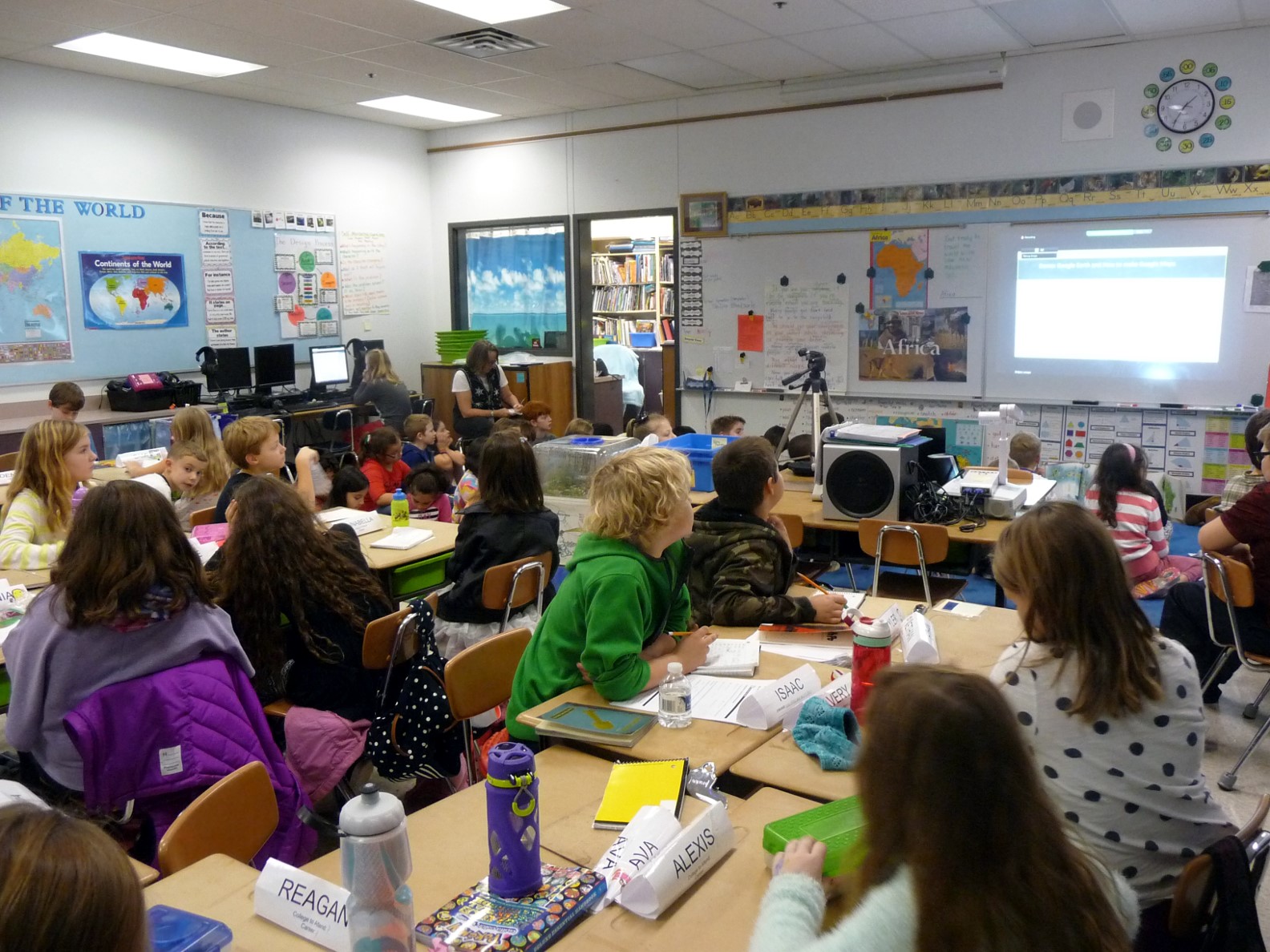
With cyberbulling being so prevalent, it’s hard to contain it and stop it. Technology is great in so many respects and is used quite often in the classroom. Chromebooks are employed in many schools on a regular basis for testing and enhancing the students’ learning experience. Built-in projectors that hang on the classroom ceiling allow teachers and students to explore any question they have about a topic as the internet is just a click and keystroke away. Technology isn’t going anywhere and is already becoming a normal method of teaching in the classroom.

The technology in the classroom also allows for a diversity of experiences to be seen, felt and heard. Students who learn better by doing can participate in experiential learning on their laptops while students who listen well can watch examples of their lessons play out on their computers. Technology allows all types of learning to occur, which is the goal of every teacher who cares about their students.

While correlation does not prove causation, technology does open up a new avenue for bullying. As with most things in life, there are good things and bad things associated with it. Taking away technology is not going to solve the problem of cyberbullying and absenteeism. Instead, educators and parents need to come up with a strategy to monitor their students’ and children’s activities online.

Understanding the Teacher Shortage Crisis and the Solutions to Fix it

By Keith Lockwood

According to numerous sources, America is experiencing a nationwide teacher shortage that will undoubtedly escalate to a crisis within the next two years. Recent reports state that there are currently over 30,000 teacher vacancies this year that will increase to 70,000 over the next two years. The reasons for the decline in the number of teachers are correlated to teacher evaluation systems blended with high stakes standardized testing implemented over the past ten years, a shrinking student base in teacher education programs, a lack of respect for the teaching profession, and low salaries and benefits. These variables lead to challenging circumstances for urban, suburban and rural school districts across the country.

Read the rest of this article on The Huffington Post.