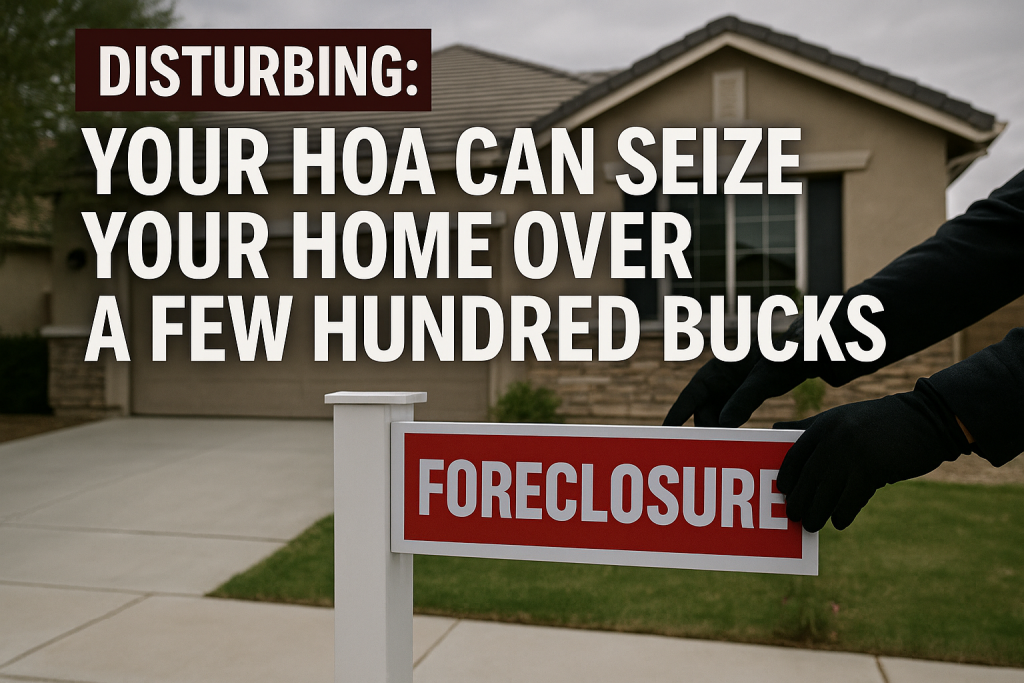
Imagine losing your home, not because you couldn’t pay your mortgage, but because you fell behind on a few hundred dollars in Homeowners Association (HOA) dues. Sounds far-fetched, doesn’t it? Yet, this unsettling scenario is becoming an increasingly common reality for homeowners across the United States. A recent report from Fox Business sheds light on a disturbing trend: cash-strapped HOAs are aggressively ramping up foreclosures against homeowners who are delinquent on their dues. This isn’t just about unpaid fees; it’s about a fundamental shift in how HOAs operate, driven by escalating costs and a zero-tolerance approach to debt recovery. Understanding the mechanics of HOA foreclosures is no longer just for legal professionals; it’s crucial for every homeowner living under an HOA’s jurisdiction.
The emotional and financial stakes in these situations are incredibly high. For many, their home is their largest asset, a sanctuary, and the cornerstone of their financial stability. To face the threat of losing it over what might seem like a relatively small amount of debt compared to a mortgage balance is infuriating and terrifying. This phenomenon isn’t just a legal curiosity; it’s a social and economic issue impacting countless families, pushing them to seek urgent advice on how to avoid or fight these foreclosures. It forces us to ask: how did we get here, and what can homeowners do to protect themselves when facing the daunting prospect of an HOA foreclosure?
1. The Rising Tide of HOA Foreclosures: A Troubling Trend
The numbers don’t lie. Data indicates a significant uptick in HOA-initiated foreclosures, a trend that is deeply concerning for homeowners nationwide. This isn’t a localized issue; it’s a widespread phenomenon touching communities from bustling suburban enclaves to quiet retirement villages. Why the sudden surge? It boils down to economics. HOAs themselves are facing immense financial pressures. The cost of maintaining common areas, amenities, and infrastructure has skyrocketed. Everything from landscaping and pool maintenance to roof repairs and pest control has seen substantial price increases. But perhaps the most significant burden has been the dramatic rise in insurance premiums, especially in areas prone to natural disasters or those with aging infrastructure.
To cover these escalating expenses, HOAs have two primary levers: raising dues or aggressively collecting delinquent payments. Many are doing both. When homeowners fall behind, even by what seems like a modest sum, HOAs are increasingly turning to the ultimate enforcement tool: foreclosure. This isn’t just about recovering the unpaid dues; it often includes hefty late fees, interest, and, critically, significant legal costs, which can quickly inflate a small debt into tens of thousands of dollars. It’s a harsh reality that puts homeowners in an incredibly vulnerable position, often pitting them against an organization designed, in theory, to protect property values and maintain community standards.
2. Financial Strain on HOAs: The Root Cause
To truly grasp why HOA foreclosures are on the rise, we need to understand the financial squeeze HOAs are experiencing. Think of an HOA as a mini-government for your community. It has budgets, expenses, and a responsibility to maintain collective assets. Just like any household, when costs go up, the budget gets tighter. Insurance, in particular, has become a major pain point. In regions susceptible to hurricanes, wildfires, or even just general climate risks, property insurance rates for multi-unit dwellings or communities with extensive common areas have surged by hundreds, even thousands, of percent in some cases. This isn’t just a marginal increase; it’s a fundamental shift in their operating costs.
Beyond insurance, general maintenance and repair costs have also climbed. Supply chain issues, labor shortages, and inflation have driven up the price of everything from pool chemicals to asphalt for roads. When an HOA can’t meet these obligations through its regular income stream (dues), it faces a stark choice: defer maintenance (which can lead to bigger problems and devalued properties down the line), impose special assessments (which are often unpopular and can strain homeowners’ finances), or get aggressive with collections. Many HOAs are choosing the latter, viewing foreclosure as a necessary, albeit drastic, measure to ensure the financial solvency of the community and protect the interests of paying members. (See: Homeowners Associations and Foreclosure Trends.) Related reading: rising insurance costs.
3. The Legal Framework of HOA Foreclosures: What Gives Them This Power?
It might seem incredible that an HOA can initiate a foreclosure, a power we typically associate with mortgage lenders. However, this authority is deeply embedded in the legal structure of most HOAs. When you purchase a home in an HOA community, you automatically agree to abide by its Covenants, Conditions, and Restrictions (CC&Rs) and its bylaws. These documents, which are legally binding, almost universally grant the HOA the right to place a lien on your property if you fail to pay your dues or assessments. This lien acts as a security interest, similar to a mortgage, allowing the HOA to pursue foreclosure if the debt remains unpaid. housing tax credit insights offers useful background here.
The specific process for HOA foreclosures varies by state. Some states allow for "non-judicial" foreclosures, which can be faster and less expensive for the HOA, requiring minimal court involvement. Others require a "judicial" foreclosure, meaning the HOA must go through the court system to obtain an order to sell the property. Regardless of the method, the underlying principle is the same: the HOA’s lien can be enforced through the sale of the property. This legal power is formidable and often catches homeowners by surprise, particularly those who mistakenly believe their mortgage lender’s lien takes absolute precedence. While a first mortgage typically has priority, many states allow HOA liens for delinquent dues to take a "super priority" status for a certain number of months of assessments, making them a potent threat.
4. The "Super Priority" Lien and Its Implications: An Unseen Danger
One of the most complex and potentially devastating aspects of HOA foreclosures is the concept of a "super priority" lien. While a mortgage lender usually holds the "first lien" on a property, meaning they get paid first in a foreclosure sale, many states have enacted laws that grant HOAs a limited "super priority" over even the first mortgage for a certain number of months of delinquent assessments (often six to twelve months). This means that if an HOA forecloses, these specific unpaid HOA dues can take precedence over the primary mortgage, requiring the HOA to be paid from the sale proceeds before the mortgage lender.
This "super priority" can significantly complicate matters, especially for mortgage lenders. Because the HOA’s claim can jump ahead of a portion of their loan, it incentivizes lenders to monitor HOA accounts more closely and sometimes even pay delinquent HOA dues on behalf of homeowners to protect their own investment. For homeowners, it means that even if they are current on their mortgage, a relatively small HOA debt can lead to a foreclosure that potentially wipes out all their equity and leaves them without a home. It underscores the critical importance of understanding your HOA’s specific lien rights and the laws in your state, as these details can profoundly impact your financial stability.
5. The Emotional and Financial Toll on Homeowners: A Crisis of Housing Security
Beyond the legal jargon and financial specifics, the human cost of HOA foreclosures is immense. Imagine the panic and despair that sets in when you receive a foreclosure notice from your HOA over a few hundred or thousand dollars, especially when you’ve diligently paid your mortgage for years. This isn’t just about losing an asset; it’s about losing your home, your stability, and often, your entire life savings tied up in equity. The emotional toll can be devastating, leading to stress, anxiety, and a feeling of betrayal by the very organization meant to serve the community.
Financially, the consequences are equally dire. Even if a homeowner manages to stave off foreclosure, the legal fees, late penalties, and interest can quickly inflate the original debt to an unmanageable sum. These costs often dwarf the initial delinquent amount, making it incredibly difficult for homeowners, especially those on fixed incomes or facing temporary financial hardship, to catch up. A foreclosure can also severely damage credit scores, making it harder to rent a new home or secure future loans. It’s a downward spiral that can push families into severe financial distress, highlighting the brutal reality that a seemingly small debt can trigger a catastrophic loss. (See: Social Determinants of Health.)
6. Preventative Measures: How to Avoid HOA Foreclosures
The best defense against HOA foreclosures is proactive prevention. First and foremost, understand your HOA’s financial obligations. When you buy into an HOA community, thoroughly review the CC&Rs and bylaws. Don’t just skim them; read them carefully to understand your responsibilities, the fee structure, and the consequences of delinquency. Know when dues are due, how late fees are assessed, and what the process is for collections. Ignorance is not a defense, and these documents are legally binding.
Secondly, budget for your HOA dues just as you would your mortgage or utility bills. If you anticipate financial difficulties, communicate with your HOA immediately. Many HOAs, especially before initiating costly legal action, may be willing to work out a payment plan. Ignoring the problem will only make it worse, as fees and interest will continue to accrue. Consider setting up automatic payments for your dues to avoid accidental omissions. Finally, keep meticulous records of all payments and correspondence with your HOA. This documentation can be invaluable if a dispute arises, providing a clear paper trail of your compliance.
7. Fighting an HOA Foreclosure: Legal Options and Strategies
If you find yourself facing an HOA foreclosure, don’t despair, but act quickly. Your first step should be to consult with an attorney specializing in real estate and HOA law. Time is of the essence, as foreclosure processes can move rapidly. An attorney can review your specific situation, examine the HOA’s lien, and identify any potential defenses. For instance, sometimes HOAs fail to follow proper procedures, or the amount they claim is owed is incorrect. These errors could be grounds to challenge the foreclosure.
Another strategy might involve negotiating directly with the HOA. A lawyer can often facilitate this, potentially arranging a payment plan, a reduced settlement, or a temporary reprieve. In some cases, homeowners might explore refinancing their mortgage to pay off the HOA lien, though this can be challenging if credit has already been impacted. Lastly, some states offer mediation programs for homeowners and HOAs to resolve disputes before they escalate to foreclosure. Exploring all available legal avenues and negotiation strategies is crucial to protecting your home and your financial future. For more on this, see property tax concerns.
8. The Broader Impact: Community Harmony and Property Values
The rise in HOA foreclosures isn’t just a problem for individual homeowners; it has broader implications for the entire community. While HOAs argue these actions are necessary to maintain financial stability and property values, an increase in foreclosures can actually have the opposite effect. A flood of foreclosed properties, especially if they sit vacant or fall into disrepair, can depress property values for everyone in the neighborhood. It can also create an atmosphere of fear and distrust, eroding the sense of community that HOAs are supposed to foster. (See: Foreclosure Resources from HUD.)
Furthermore, aggressive foreclosure tactics can be seen as disproportionate and unfair, especially when the initial debt is small. This can lead to increased legal battles, higher administrative costs for the HOA (which ultimately come back to all homeowners through increased dues), and a damaged reputation. Striking a balance between enforcing rules and maintaining community harmony is a delicate act, and many critics argue that the current trend leans too heavily towards punitive measures, potentially sacrificing the very community spirit it aims to preserve.
9. Legislative Calls for Reform: Protecting Homeowners from Predatory Practices
The contentious nature of HOA foreclosures has not gone unnoticed by lawmakers and homeowner advocates. There’s a growing call for legislative reform to better protect homeowners from what some consider predatory practices. Proposals often include stricter regulations on when and how HOAs can initiate foreclosure proceedings, mandatory mediation before legal action, and caps on the amount of interest and fees HOAs can charge.
Some states are considering laws that would require HOAs to accept reasonable payment plans, preventing them from foreclosing on homeowners who are making a good-faith effort to pay off their debt. There’s also discussion around increasing transparency in HOA financial management and providing homeowners with more robust legal avenues to challenge excessive fees or improper procedures. While the balance between HOA authority and homeowner protection is complex, the escalating crisis of HOA foreclosures is undeniably pushing the conversation towards greater oversight and more equitable solutions. It’s a developing area of law that all homeowners, and especially those in HOA communities, should watch closely. See also Gen Z homeownership challenges.
The threat of HOA foreclosures is a stark reminder that even in seemingly secure homeownership, vigilance is key. It’s a complex issue driven by financial pressures on HOAs and the often-overlooked power embedded in community covenants. As a homeowner, staying informed, understanding your obligations, and acting decisively if financial difficulties arise are your best defenses against losing your most valuable asset over what might initially seem like a trivial sum. Don’t let your guard down; your home could literally depend on it.
Trending Now
Frequently Asked Questions
Can an HOA foreclose on my home for unpaid dues?
Yes, an HOA can initiate foreclosure proceedings if you fall behind on your dues. This is becoming more common as HOAs face financial pressures and adopt aggressive collection practices, potentially putting your home at risk even for a small amount of unpaid fees.
What happens if I don't pay my HOA fees?
If you fail to pay your HOA fees, the association may impose late fees, file a lien against your property, and ultimately initiate foreclosure proceedings. It's essential to address any payment issues quickly to avoid severe consequences.
How can I stop my HOA from foreclosing on my home?
To prevent foreclosure by your HOA, communicate with them about your financial situation, seek a payment plan, or negotiate a settlement. Consulting with a legal professional experienced in HOA law can also provide you with strategies to protect your home.
Why are HOA foreclosures increasing?
The rise in HOA foreclosures is largely due to economic pressures on associations to maintain properties and services. Many HOAs are adopting a zero-tolerance policy on unpaid dues, leading to an increase in aggressive collection efforts, including foreclosures.
What should I do if I receive a foreclosure notice from my HOA?
If you receive a foreclosure notice from your HOA, it's crucial to act quickly. Review your rights, consult with a legal expert, and consider options like negotiating with the HOA or challenging the foreclosure. Ignoring the notice can lead to losing your home.
Have you experienced this yourself? We'd love to hear your story in the comments.