Education

4 Classroom Rules I Always Forget to Enforce

Introduction:

As an educator, it’s important to establish a set of classroom rules to maintain discipline and create a conducive learning environment. However, there are always certain rules that inadvertently slip our minds. This article discusses four commonly forgotten classroom rules and offers suggestions on how to remember and enforce them effectively.

1. No eating or drinking in the classroom

While it’s essential to ensure students are comfortable, allowing them to eat or drink in class can lead to distractions, spills, or general untidiness. Remind students of the no eating or drinking rule by posting clear signage at the entrance of the class. Moreover, allocate a designated space for students to consume their snacks during breaks so that they can refuel without disrupting class proceedings.

2. Raising hands before speaking

Students often get excited about sharing their thoughts and ideas during class discussions, causing them to blurt out answers instead of waiting their turn. A simple but effective strategy involves emphasizing the importance of raising one’s hand and waiting for permission to speak. Encourage this practice by praising students who follow this rule and gently remind those who don’t.

3. Respecting others’ personal space

Another commonly overlooked rule is maintaining personal space between students, preventing accidental contact with others’ work or belongings. Establish, define, and emphasize boundaries within your classroom by assigning seating arrangements or designating specific areas for group work. Reinforce these boundaries throughout the year by periodically revisiting and discussing this rule with your students.

4. Staying seated unless given permission

Some students struggle with staying seated during the entire lesson, finding reasons to move about the room when unwanted situations arise. Establish a rule that keeps students in their seats unless they have been granted permission by the teacher. To enforce this rule further, consider implementing a system that rewards students for staying in their seats and engages in cooperative activities with classmates when appropriate.

Conclusion:

Enforcement of classroom rules is crucial for maintaining an ordered and productive learning environment. By making a conscious effort to remember and consistently enforce these four commonly forgotten rules, you will set the stage for a more focused and harmonious classroom experience. Remember, your commitment to applying classroom rules contributes significantly to your students’ academic success and personal growth.

Help! I Love My Students, But Sometimes I Really Miss Other Grown-ups

Teaching is a rewarding and fulfilling profession, full of potential for personal and professional growth. Teachers often form strong bonds with their students, creating powerful and meaningful connections that can last a lifetime. However, the nature of the job also means that teachers spend most of their day surrounded by young minds, which, though delightful and energetic, can sometimes leave them yearning for the company and conversation of fellow adults. If you find yourself nodding in agreement, don’t worry – you’re not alone.

First off, it is essential to acknowledge that missing adult interaction is entirely normal and does not imply any lack of commitment or dedication to your students. Having a healthy balance of both child-centered and adult-centered interactions is crucial for maintaining personal well-being and fostering a dynamic work environment.

So how can teachers maintain this balance? Here are a few tips to help increase adult interaction while still being fully present for your students:

1. Make time for your colleagues

Seize opportunities to interact with other teachers during breaks or lunchtime. If possible, carve out time to simply chat or share experiences related to teaching. Planning social gatherings outside working hours can also help establish stronger bonds with colleagues.

2. Join professional organizations

Professional organizations such as local teacher unions or specialized subject organizations are an excellent way for educators to network and share knowledge. Being part of these groups usually involves meetings, workshops, conferences, or seminars where adult interaction is at its highest.

3. Collaborate on projects

Working together with other teachers on projects related to curriculum development or school-wide initiatives provides an excellent context for adult interactions. This type of collaboration offers opportunities to learn from one another and grow together as professionals while benefiting the students.

4. Engage in professional development opportunities

Taking advantage of professional development programs such as training or certification courses fosters growth and learning. These programs also offer adult-centered social interactions and exposure to new networks outside your immediate colleagues.

5. Cultivate hobbies outside of school

It’s essential to have a life outside of the classroom. Pursue non-education-related interests that can help you connect with other adults who share similar passions. Join clubs, volunteer, or attend classes in subjects that interest you – these will certainly bring new adult friends into your life.

6. Set boundaries between work and personal life

Creating a clear distinction between work and personal life is key to ensuring that you have enough time for quality adult interactions. By setting boundaries, you are also making sure that your work remains vibrant while you continue to recharge your adult-centric batteries.

Teaching is inherently fulfilling, and cherishing the relationships built with students is a significant aspect of the profession. However, it’s healthy to acknowledge the need for adult connections and nurture them alongside your students. By respecting this balance, you can maintain overall well-being, revitalize your perspective, and bring your best self to the classroom each day.

Resources for Talking To Students About the Attack on the Capitol

Introduction

The attack on the United States Capitol on January 6, 2021, was an unprecedented event that left the nation in disbelief. Educators around the country are faced with the challenge of discussing and processing these events with their students. In order to assist educators in addressing this difficult topic, we have compiled a list of resources that can help stimulate healthy and informative conversations about the Capitol attack.

1. PBS NewsHour Extra

PBS NewsHour Extra provides classroom resources on current events, including lesson plans, videos, and articles. Their coverage of the Capitol attack includes discussion questions, video clips, and accompanying articles designed to help teachers facilitate constructive discourse among students. Explore their resources at:

https://www.pbs.org/newshour/extra/

2. Facing History and Ourselves

Facing History and Ourselves is a nonprofit organization that provides educational materials on historical events and social issues to promote moral reflection among students. Their resources on the Capitol attacks include articles with guiding questions for discussion on topics such as democracy, protest, and political violence.

https://www.facinghistory.org/resource-library?search_api_fulltext=Attack%20on%20the%20Capitol

3. Smithsonian Magazine

Smithsonian Magazine’s article “How to Talk About the Attack on the Capitol With Children” offers expert advice from educators and psychologists about how to address this topic with young learners. This resource aims to help teachers have age-appropriate conversations with students.

https://www.smithsonianmag.com/smithsonian-institution/how-to-talk-about-attack-on-capitol-with-children/

4. Common Sense Media

Common Sense Media’s guide titled “Explaining the News to Our Kids” provides age-specific tips for discussing news events with children and helps educators answer difficult questions students may have regarding current events like the attack on the Capitol.

https://www.commonsensemedia.org/blog/explaining-the-news-to-our-kids

5. Share My Lesson

Share My Lesson is a platform that offers free teaching resources, created by teachers, for teachers. They offer lesson plans and webinars on the Capitol attack aimed at helping educators engage students in conversations about democracy, protest, and the consequences of violence.

https://sharemylesson.com/collection/capitol-protests

Conclusion

The attack on the Capitol was a shocking and complex event that educators across the nation are working to explain and discuss with their students. These resources can help facilitate valuable conversations in the classroom, providing context and understanding to an unprecedented moment in America’s history.

How To Upgrade Your Google Classroom With BookWidgets

Introduction:

Google Classroom has revolutionized the way teachers and students interact, making it easier than ever to manage assignments, share resources, and communicate effectively. But what if you could enhance your Google Classroom experience even further, by integrating a powerful, interactive tool like BookWidgets? In this article, we’ll guide you through the process of upgrading your Google Classroom with BookWidgets, so you can make the most of this remarkable educational platform.

Step 1: Get Familiar with BookWidgets

Before you start integrating BookWidgets into your Google Classroom, it’s crucial to understand its features and benefits. BookWidgets allows teachers to create engaging, interactive lessons and activities for students. This includes quizzes, flashcards, puzzles, games, worksheets, and more. The best part is that all these widgets can be customized according to the curriculum and shared with students through popular learning management systems (LMS) like Google Classroom.

Step 2: Setting Up a BookWidgets Account

To get started with BookWidgets, you’ll need to create an account. Visit the BookWidgets website (https://www.bookwidgets.com/) and sign up for a free trial or one of their paid plans. Once you’ve created an account, explore their library of widgets and templates to discover the different resources available for use in your Google Classroom.

Step 3: Integrating BookWidgets with Google Classroom

Linking your BookWidgets account to your Google Classroom is simple. Follow these steps:

1. Log in to your BookWidgets account.

2. Click on “My Account” in the top right-hand corner.

3. Choose “Integrations” from the menu.

4. Find the Google Classroom integration option and click on “Connect.”

5. Follow the on-screen instructions to authorize access between your BookWidgets and Google accounts.

Now that you’ve successfully integrated both platforms, it’s time to start creating and sharing widgets.

Step 4: Creating Your First Widget

To create a widget, follow these steps:

1. Click the “+Create Widget” button on your BookWidgets dashboard.

2. Choose a widget template. You can view examples and demos for each type of activity before selecting one.

3. Customize your widget by editing content, images, colors, and other elements according to your lesson plan or topic.

4. Save your creation and preview it to ensure that it meets your teaching objectives.

Step 5: Sharing Widgets in Google Classroom

Once you’ve created a widget, you can easily share it with students through Google Classroom:

1. Open the finished widget in the BookWidgets editor.

2. Click on “Share” located in the top right-hand corner.

3. Choose “Share with Google Classroom.”

4. Select the class and action (“Create assignment,” “Ask question,” “Make announcement,” or “Material”).

5. Customize details like due date, point allocation, or any additional instructions.

6. Click on “Assign” or “Post” depending on the chosen action.

Your BookWidgets assignment will now be available to students in Google Classroom! As they complete activities, you will receive feedback and analytics to help track student progress.

Conclusion:

Upgrading your Google Classroom with BookWidgets opens up endless possibilities for interactive learning experiences. Give your students engaging activities that cater to diverse learning styles and watch their motivation soar. Integrate BookWidgets with Google Classroom today and revolutionize your teaching approach!

What to Do When a Student Self-Harms – Advice

Introduction:

As educators, we are often the first-line witnesses of our students’ emotional and mental well-being. One challenging issue that may arise in school settings is self-harm. Self-harm refers to a deliberate act of causing physical harm to oneself, usually as a means to cope with emotional distress. In this article, we will discuss the steps educators can take when faced with this difficult situation.

1. Recognize the signs:

The first step in addressing self-harm is recognizing the warning signs. Common indicators may include frequent unexplained injuries, inappropriately dressed for weather (e.g., consistently wearing long sleeves in hot weather), social withdrawal, and sudden changes in behavior or academic performance.

2. Approach with sensitivity:

If you suspect a student is self-harming, approach them in private and express your concern in an empathetic and non-judgmental manner. Use supportive language and avoid blaming or shaming the student. Remember that your role is not to diagnose or treat but rather to offer help.

3. Listen and validate:

When talking with the student, it’s essential to listen attentively and validate their feelings without condoning the self-harming behavior. It can be helpful to reiterate your concern for their well-being and acknowledge their courage in discussing such a personal issue.

4. Encourage professional help:

While it’s essential to provide support as an educator, it’s equally important to direct the student towards professional assistance. Suggest that they speak with a school counselor, mental health professional, or another trusted adult who can help address their distress.

5. Notify relevant parties:

In cases of suspected self-harm, it’s crucial to notify relevant parties such as parents or guardians and school administrators so they can provide additional assistance or resources. Always follow your school’s reporting procedures and maintain confidentiality.

6. Create a safe environment:

Work collaboratively with other school staff members to create an environment that fosters a sense of belonging and safety for all students. Encourage open communication and implement social-emotional learning programs to promote mental well-being and resilience.

7. Monitor progress:

Following your initial intervention, monitor the student’s progress by staying connected and maintaining open lines of communication. Offer continued support as needed and encourage them to engage in positive coping mechanisms.

In conclusion, as an educator, it’s essential to recognize the warning signs of self-harm and take action in a supportive and empathetic manner. By following these steps, you can help students who self-harm find the support they need to overcome their distress, build resilience, and develop healthier coping strategies. Remember that you are not alone in this journey; work closely with other school staff members and mental health professionals on your path to supporting students effectively.

Want To Support Your Teachers’ Mental Health? 7 Mistakes To Avoid

As schools and educational institutions focus on providing quality education, the mental health of teachers often goes unnoticed. With increasing workload and emotional challenges, it’s essential to support and nurture educators’ mental well-being. To achieve this, here are seven mistakes to avoid when addressing teachers’ mental health.

1. Ignoring the importance of teacher mental health

It’s crucial to acknowledge the significance of teachers’ mental health in a thriving educational environment. Failing to do so leads to more stress, burnout, and reduced productivity among educators. This can negatively impact both the students and the overall ambiance of the school or institution.

2. Neglecting work-life balance

Teaching is an incredibly demanding profession that often requires extra hours outside of school for grading, lesson planning, and attending meetings. It’s imperative that school administrators recognize this challenge and help teachers foster a healthy work-life balance by discouraging excessive workload, offering flexible schedules when possible, and encouraging personal time off.

3. Overlooking professional development needs

Just like any other professional, teachers need consistent growth opportunities to stay motivated and engaged in their career. A lack of these opportunities can lead to job dissatisfaction, affecting their overall mental well-being. Providing regular chances for professional development will not only help improve teachers’ mental health but also benefit the students with high-quality teaching methods.

4. Failing to create a supportive community

Teachers face a range of emotions every day – from frustration to joy – which can become overwhelming if they lack a supportive community. Create a safe space where educators can freely discuss their needs, concerns, and achievements without fear of judgment or repercussions.

5. Ignoring signs of stress or burnout

Pay attention to visible changes in a teacher’s behavior that may indicate stress or burnout – such as increased irritability, withdrawal from social activities, or reduced productivity. Early intervention, through mental health resources or open discussions, can help prevent these issues from escalating.

6. Disregarding the importance of counselor availability

School counselors can provide much-needed support to teachers by offering advice on self-care and coping strategies. Ensuring that every school has an accessible counselor helps create a holistic environment for educators to thrive.

7. Insufficient communication channels

Effective communication is vital in addressing the needs and concerns of educators. Open lines of communication within the school allow teachers to voice their concerns and receive needed support from administrators, further promoting a healthy workplace.

In conclusion, it’s essential to recognize that a supported and mentally healthy teaching staff plays a vital role in creating and maintaining a high-quality education environment. By avoiding these seven mistakes, schools can better nurture the mental well-being of their educators – ultimately benefiting the entire school community.

20 Inspirational Bulletin Board Ideas for Black History Month

Introduction:

Black History Month, observed in February in the United States and Canada, is a time to celebrate the achievements and contributions of African Americans throughout history. One great way to educate and engage students during this commemorative month is through inspiring bulletin board displays. Here are 20 inspirational bulletin board ideas to help you highlight Black history and culture in your classroom or school.

1. Famous African American Inventors

Celebrate African American inventors who have made groundbreaking contributions to various fields. Display pictures of inventors along with brief descriptions of their inventions.

2. Black Women in History

Highlight inspiring black women from different historical periods, including political figures, artists, and scientists, to show the diversity of their achievements.

3 Civil Rights Movement Timeline

Create a detailed timeline of major events in the Civil Rights Movement, featuring prominent leaders and activists.

4. Black Architects and Their Buildings

Showcase the work of influential black architects along with pictures of the buildings they designed.

5. Notable Black Authors & Poets

Display books and biographies of renowned black authors and poets like Langston Hughes, Maya Angelou, and Toni Morrison.

6. The Harlem Renaissance

Celebrate the cultural explosion of the Harlem Renaissance by displaying artworks, photos, literature excerpts, and musical compositions from that period.

7. Journey Through Slavery

Present a visual timeline describing the Trans-Atlantic slave trade and key milestones leading up to emancipation.

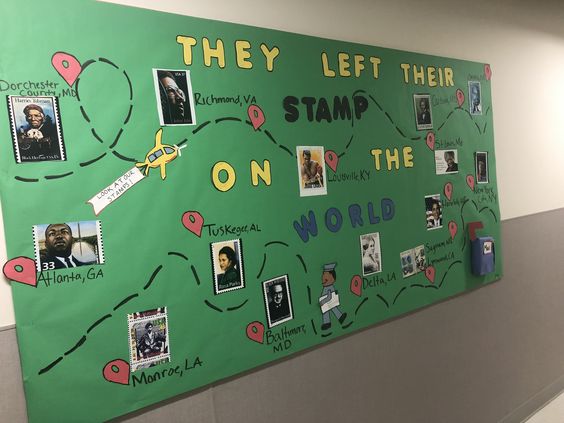
8. Birthplace Map

Create an interactive map with pins marking the birthplaces of iconic African Americans throughout history.

9. HBCUs (Historically Black Colleges & Universities)

Feature the history and accomplishments of historically black colleges and universities in America.

10. Musical Legends

Honor celebrated African American musicians from different genres – jazz, blues, hip-hop – alongside images or album covers.

11. Leaders in Sports

Pay tribute to African American athletes who have broken barriers and made significant contributions to the world of sports.

12. Talented Black Artists

Display artwork from prominent black artists, with each piece accompanied by a brief biography or an interesting fact.

13. Famous Firsts

Highlight milestones in black history by showcasing African Americans who were the first in their fields, such as Barack Obama and Mae Jemison.

14. Black-Owned Businesses

Promote local black-owned businesses by featuring them on your bulletin board along with descriptions of their products or services.

15. Unsung Heroes

Honor lesser-known figures in African American history that have made important contributions but may not be as widely recognized.

16. The Civil Rights Act of 1964

Analyze and illustrate the impact of the Civil Rights Act of 1964 on desegregation, voting rights, and equal employment opportunity for African Americans.

17. Everyday Heroes: Black Professionals

Featuring local black professionals from various careers, highlighting their achievements and roles in the community.

18. Inspiring Quotes from Black Figures

Showcase inspiring quotes next to portraits of black leaders, activists, authors, and public figures.

19. Did You Know? Black History Facts

Assemble a collection of interesting and lesser-known tidbits about black history on your bulletin board with fun trivia questions for students to answer.

20. Celebrating Today’s Youth Activists

Highlight contemporary young leaders championing change in social justice, education, and environmental issues, among others.

Conclusion:

Incorporating these inspirational bulletin board ideas will encourage discussion and engagement in your classroom throughout Black History Month. Not only do these ideas honor the achievements and contributions of African Americans, but they also foster an appreciation for the rich history and culture within our diverse society.

Top Podcasts for Women’s History Month: Girl Power For the Classroom

In celebration of Women’s History Month, it’s essential to amplify the stories and voices of incredible women who’ve shaped our world. Podcasts have quickly become a widely popular platform for sharing and learning from these remarkable narratives. In this article, we explore top podcasts that celebrate girl power and are perfect for the classroom, inspiring both students and educators alike.

1. The History Chicks

The History Chicks podcast dissects the lives of notable women throughout history. Hosted by Beckett Graham and Susan Vollenweider, they offer well-researched and captivating insights into the lives of influential women spanning various time periods, cultures, and fields. The podcast provides educators an opportunity to present strong female role models to their students.

2. Encyclopedia Womannica

A daily podcast featuring 5-minute episodes, Encyclopedia Womannica dives into the untold stories of remarkable women across history and around the globe. Hosted by Jenny Kaplan, this podcast inspires listeners with tales of trailblazing women who’ve made significant contributions to society in various forms. It’s an excellent way to start or end a class with a short burst of girl power inspiration.

3. Stuff You Missed in History Class

Tracy V. Wilson and Holly Frey host Stuff You Missed in History Class to unveil lesser-known stories from the past. While not exclusively focused on women, this podcast frequently showcases stories of extraordinary women who’ve played crucial roles in shaping history. The podcast discusses an array of topics, including science, politics, arts, and war – making it perfect for incorporating into classroom discussions.

4. The Guilty Feminist

The Guilty Feminist is a funny and thought-provoking podcast that covers an array of feminist themes connected to womanhood and gender inequality. Hosted by Deborah Frances-White along with guest hosts and expert interviews, the show inspires conversations about the challenges and triumphs experienced by women. As it touches on current events and delicate subjects, this podcast may be more suitable for high school or college classrooms.

5. Goodnight Stories for Rebel Girls

Based on the best-selling children’s book of the same name, Goodnight Stories for Rebel Girls is a podcast that narrates empowering stories of incredible women throughout history. Each episode features a woman’s unique journey, portrayed through engaging storytelling coupled with beautiful soundscapes. The podcast aims to inspire young listeners to dream big and break through stereotypes. It’s an ideal listening choice for elementary or middle school classrooms.

Incorporating these powerful podcasts into the classroom not only gives students a chance to explore historical narratives from diverse perspectives but also fosters meaningful discussions around gender equality and women’s accomplishments. This Women’s History Month, celebrate girl power by bringing these compelling stories into your curriculum and inspire the next generation of women leaders.

What Teachers Say vs. What They Actually Mean

Introduction:

Have you ever wondered if there’s a hidden meaning behind your teacher’s words? Teachers have their own unique language and methods of expressing their thoughts, often leaving students scratching their heads in confusion. In this article, we’ll provide some insight into the world of teacher-speak and what they might actually mean when they say certain phrases.

1. “The bell doesn’t dismiss you; I dismiss you.”

What they actually mean: Your teacher wants to maintain control over the class and ensure that all necessary information is covered before students leave. It’s a subtle way of saying, “Pay attention because I’m still giving important information.”

2. “Please see me after class.”

What they actually mean: This could mean anything from needing to discuss a recent assignment or behavior issue to simply wanting to check in on the student’s progress. Whatever the reason, it is not necessarily something to dread, but an opportunity for one-on-one communication with the teacher.

3. “This assignment is not busywork; it’s valuable practice.”

What they actually mean: Teachers are well aware that students don’t enjoy heaps of homework, so they try to emphasize that practicing will benefit them in the long run. It’s their way of saying, “I promise this work is meaningful and will help you improve.”

4. “There are no bad questions!”

What they actually mean: Teachers want to encourage an environment where students feel comfortable asking questions without fear of judgment. They may secretly roll their eyes at a student who asks for clarification on something simple, but their ultimate goal is to help everyone learn and understand the material.

5. “This will be on the test.”

What they actually mean: Pay attention! The teacher is signaling that this piece of information is essential and should be remembered during exams.

6. “I’m disappointed in your effort.”

What they actually mean: This phrase is not meant to be a personal attack. Instead, the teacher likely believes that you are capable of much more and wants you to reach your full potential.

7. “Class participation counts towards your grade.”

What they actually mean: Teachers want their students to engage in discussions and not just passively sit there. By tying participation to grades, they incentivize students to actively contribute.

Conclusion:

Understanding teacher language is crucial for success in school. By decoding their words and phrases, students can better comprehend their expectations and ultimately develop stronger relationships with their educators. So next time your teacher says something ambiguous, keep in mind what they might actually mean, and you’ll have a better idea of how to approach the situation.

27 #TeacherTruths Only Classroom Vets Will Understand

Introduction:

A teaching career comes with many ups and downs, but the rewards are immeasurable. As experienced classroom veterans, we’ve learned a thing or two about how to navigate the wonderful world of teaching. Here are 27 #TeacherTruths that only classroom veterans will truly understand and appreciate.

1. . No two days are ever the same, and that’s what keeps it interesting.

2. Your students can impress you with their creativity when you least expect it.

3. The joy of watching a struggling student finally “get it” is indescribable.

4. Classroom management is an art form, honed over many years of experience.

5. The difference between a good teacher and a great teacher is empathy.

6. Don’t sweat the small stuff; focus on the big picture instead.

7. Intuition and experience often trump lesson plans and textbooks.

8. A sense of humor is essential to keeping your sanity intact.

9. Parent-teacher conferences can be trying but also oddly fulfilling.

10. Over time, you become proficient at managing multiple tasks at once.

11. Teaching is far more than just imparting knowledge; it’s nurturing future generations.

12. Sometimes students teach you as much as you teach them.

13. Your favorite part of the day will usually involve little victories in the classroom.

14. Collaboration with other teachers is beneficial for both you and your students.

15. It’s impossible to please everyone, so focus on making a difference for those who appreciate it.

16. No one will ever fully grasp the amount of effort required behind-the-scenes work

17. Balancing work-life plays an important role in preventing burnout

18. Building trust with your students takes work but leads to better learning outcomes

19. The value of professional development should never be underestimated

20. Being flexible and adaptable are essential skills in this profession

21. The impact you have on your students’ lives goes far beyond the classroom walls

22. Grades aren’t the sole indicator of a student’s potential or success

23. Tackling the endless paperwork is a necessary evil – but it comes with the territory

24. A supportive school community makes all the difference for teacher morale

25. Great teaching isn’t about having all the answers; it’s about knowing how to facilitate learning

26. You’ll know you’ve been teaching for a long time when you finally start using – and understanding – technology like your students do.

27. Teaching has its share of difficult moments, but those challenges make the victories even sweeter.

Conclusion:

These 27 #TeacherTruths only scratch the surface of what it takes to be an experienced educator, but they offer insight to those veterans who’ve spent countless hours in the classroom and impacted countless lives. Embrace these truths, and may they inspire you to continue making a difference in the world through teaching.