Math Education

Why It’s Important to Honor All Math Strategies

Introduction

Mathematics is often considered a complex and intimidating subject, but it plays a vital role in our daily lives. Developing mathematical skills and understanding is crucial for many aspects of life, from personal finance management to problem-solving in various fields. One way to make mathematics more approachable and successful for students is by honoring all math strategies. This article will discuss the importance of recognizing and valuing different approaches to solving mathematical problems and how doing so can lead to increased success in learning the subject.

Embracing Multiple Approaches

There are numerous ways to tackle a math problem, each with its strengths and limitations. Encouraging students to explore various methods helps them find an approach that works best for their individual learning style. Students who feel comfortable with the strategies they are employing will be more likely to enjoy math and experience success in the subject. Additionally, having a diverse range of problem-solving methods at their disposal enables students to tackle more complex or unfamiliar problems with confidence.

Promoting Critical Thinking Skills

By exploring different calculus approaches, learners develop essential critical thinking skills such as analysis, evaluation, and synthesis. Honoring different solutions encourages students to reflect on their thinking process and analyze others’ strategies. This process fosters communication, debate, and collaboration among peers, further enriching their learning experience.

Building on Real-World Problem Solving

In real-world scenarios, problems rarely have only one correct solution; instead, multiple paths may lead to an answer or preferred resolution. Emphasizing a variety of math strategies equips learners with the ability and versatility needed for handling diverse challenges beyond the classroom.

Different Perspectives Lead to Deeper Understanding

When students encounter a variety of math solutions or perspectives, it leads them to think critically about the concepts behind each method. Consequently, they gain a thorough understanding of the underlying principles, allowing them not just to apply given knowledge but also to employ it in different contexts.

Developing an Inclusive Learning Environment

Valuing and acknowledging the varied ways students approach math fosters a more inclusive classroom. It sends the message that everyone’s perspective and problem-solving strategies are valuable, cultivating an atmosphere of respect, curiosity, and shared learning. In turn, this environment promotes student engagement, cultivates positive attitudes towards math, and boosts overall academic performance.

Conclusion

Honoring all math strategies is essential in fostering critical thinking skills, encouraging individualized learning, promoting mastery of concepts, preparing students for real-world problem-solving, and developing an inclusive learning environment. Implementing curriculum materials that offer diverse perspectives on mathematical approaches helps learners to glean a deeper understanding of the subject matter while also allowing them to approach problem-solving with confidence. By recognizing the importance of valuing all mathematical strategies, educators can pave the way for success in mathematics and beyond.

How I Use Kahoot! in Middle School Math

Introduction:

Kahoot! has become an essential tool in my middle school math classroom. This engaging and interactive game-based learning platform has transformed the way I teach and has brought excitement and enthusiasm to my students. In this article, I will share my experience of using Kahoot! in middle school math and how it has helped me improve student learning.

1. Starting the Class with a Warm-up Activity

Each day, I kick off my math class with a quick Kahoot! warm-up activity consisting of five to ten questions related to previously learned concepts or skills. It only takes a few minutes, yet it effectively helps set the tone for the lesson and remind students of past lessons. By using these warm-up activities, I’ve noticed an improvement in students’ preparedness and engagement as they enter class eager to compete with their classmates.

2. Reinforcing New Concepts

After introducing a new concept or skill, it’s essential for students to have opportunities to practice and reinforce their understanding. Kahoot! provides an inviting way for students to review materials through interactive quizzes that keep them fully engaged. By pairing questions on Kahoot! with group discussions, students collaborate as they work through problems together, enhancing their experience of learning the content.

3. Formative Assessment

Kahoot! allows me to assess my students’ understanding instantly, providing valuable feedback while simplifying the assessment process. Through quick quizzes, I can pinpoint what concepts might need more clarification or reinforcement before moving forward with the lesson.

4. Increasing Student Confidence and Collaboration

One of the strengths of Kahoot! is how it fosters collaboration among students while improving their confidence in math concepts. The time pressure on each question motivates them to think quickly and strategically, resulting in a more interactive learning environment for all.

5. Adapting Questions for Different Skill Levels

As a middle school math teacher, I must cater to a wide range of skill levels within my classroom. Kahoot! allows me to create quizzes and games that can be easily adapted for different skill levels. When I create a Kahoot!, I aim for a mix of questions that offer both challenge and opportunity for all my students.

6. Reviewing for Exams

Kahoot! has proven to be an invaluable tool when preparing students for exams. Through interactive quizzes, students practice essential skills and concepts from the entire unit in a fun and engaging manner, reducing exam anxiety while aiding retention of key information.

Conclusion:

Incorporating Kahoot! into my middle school math classroom has undoubtedly enhanced the learning experience for my students. The platform’s interactive elements and competitive nature motivate students to become active learners, fostering collaboration and boosting their confidence in math concepts. By leveraging Kahoot! as a teaching tool, my students are now more engaged, enjoying math lessons, and genuinely excited about learning new topics.

Try These 5-Minute Activities to Build Elementary Number Sense

Introduction:

Developing number sense, the ability to understand and manipulate numbers flexibly, is a crucial foundation for elementary students. Teachers and parents can easily incorporate engaging five-minute activities into daily routines to help children develop this important skill. Here are some fun and simple activities to build elementary number sense in just five minutes.

1. Number Talks:

Number talks are short and focused conversations that revolve around a specific math problem. Teachers can start by displaying a problem or question on the board and asking students for multiple solutions along with their explanations. This activity encourages students to think critically, share strategies, and learn from each other’s approaches. As students grow more comfortable with number talks, they will develop greater flexibility and fluency in working with numbers.

2. Quick Flash Cards:

Using flashcards is an excellent way to practice mental math skills such as addition, subtraction, multiplication, and division. Spend five minutes per day holding up flashcards for students to solve mentally—no pencil or paper needed. Teachers can vary the goals of this activity depending on the grade level or specific skills they want their students to practice.

3. Estimation Jars:

Fill a clear jar with small objects like candies, coins, or buttons and ask your students to estimate how many objects are inside without counting directly. This simple activity builds students’ ability to use their understanding of quantities to make educated guesses. Comparing estimates with classmates also promotes healthy discussions about strategies they used for estimating.

4. Number of the Day:

Choose a number for each day and ask your students various questions related to it. You may explore different ways of representing the number, discussing its properties, or constructing a story problem based on it. This activity improves students’ understanding of place value and operations while helping them recognize the variability of numbers.

5. Ten-Frame Games:

Ten-frames are tools that assist students in visualizing the relationship between quantities up to ten. Spend five minutes playing games with ten-frames, such as matching sets of objects to numbers or asking students to identify the missing number in a set. This activity encourages relational thinking and builds a strong foundation for understanding place value.

Conclusion:

With these five-minute activities, building elementary number sense doesn’t have to be time-consuming or difficult. Involve your students in these engaging activities and watch their confidence and skills in working with numbers grow. It’s a win-win—for you as a teacher and for your learners!

18 Creative Activities That Explore Congruent Triangles

1. Triangle Artwork: Create a contemporary artwork using congruent triangles with different colors and patterns.

2. Puzzle Time: Design a jigsaw puzzle that consists of various congruent triangle pieces, challenge your friends to solve it.

3. Origami Fun: Learn to fold paper origami shapes with congruent triangles as the base structure.

4. Geometric Sculptures: Build 3D geometric sculptures incorporating congruent triangular faces.

5. Digital Animation: Animate a short film or GIF highlighting congruent triangles and their properties.

6. Triangle Bingo: Create a bingo game using cards with rows and columns of congruent triangles, find unique congruency configurations to win.

7. Multi-Canvas Exploration: Compose a series of paintings, each exploring the role of color and texture within congruent triangles.

8. Dancing Triangles: Choreograph a dance routine that imitates the properties of congruent triangles in motion.

9. Congruent Triangles Board Game: Invent a board game where players must navigate or manipulate pieces composed of congruent triangles.

10. Triangle Web Comic: Draw a webcomic or series illustrating real-life situations or abstract concepts through the lens of congruent triangle theory.

11. Fashion Forward: Design and create garments inspired by patterns formed by congruent triangles.

12. Mobile Masterpieces: Construct hanging mobiles featuring balanced arrangements of congruenttriangle shapes.

13. Triangle Bake-off: Bake cookies or sculpt cake decorations based on designs that use congruent triangles as artistic elements.

14. Geometry Seek-and-Find: Create an illustrated “I Spy” type book where readers find hidden congruent triangles amidst other geometric figures.

15. Paper-Mache Wonders: Develop impressive paper-mache structures that employ congruent triangles as their central design principle.

16. Triangle Shadows: Design an interactive light installation that casts shadows of congruent triangles on the walls.

17. Congruent Triangles Music: Compose and perform a musical piece inspired by the relationships between congruent triangles, exploring rhythm, harmony, and dynamics.

18. Narrative Writing: Craft short stories focusing on characters who find solace or growth in understanding congruent triangle properties amidst life challenges.

These 18 creative activities will provide a fun and engaging way to explore congruent triangles while developing skills in art, problem-solving, mathematics, and creative expression. Give these projects a try, and watch as your love and knowledge of congruent triangles grow!

Verizon Teacher Discount

Introduction

Being an educator comes with its unique set of rewards – the most gratifying being the impact teachers have on young minds, shaping their futures. To support and appreciate these dedicated individuals’ efforts, many companies offer exclusive deals and discounts, one such example being Verizon. Verizon recognizes the significance of educators in our society and offers them a teacher discount to show their appreciation.

What is the Verizon Teacher Discount?

The Verizon Teacher Discount is an exclusive program specifically designed for educators at K-12 schools, colleges, and universities. It offers discounted rates on eligible monthly wireless plans, ensuring that teachers can stay connected with their students, colleagues, parents, and communities without breaking the bank.

With this teacher discount program, eligible educators can save up to $25 per month on an eligible Mix & Match Unlimited plan with 1 phone line or save $20 per month on a Start Unlimited plan along with other additional perks and features.

How to Get the Verizon Teacher Discount

To avail of the Verizon Teacher Discount and start saving on monthly wireless charges, follow these steps:

1. Verify your eligibility: Visit the official Verizon website or head over to your nearest Verizon Wireless store to confirm your status as an educator. You may be asked for a photo ID as well as details related to your school or institution.

2. Review your options: Once eligibility is confirmed, you can explore various discount options in the Mix & Match Unlimited plans based on your needs and preferences.

3. Sign up: Signing up for a new account or adding the teacher discount to your existing account is hassle-free with the help of Verizon representatives either in-store or online. They will guide you through each step of the process.

4. Enjoy savings: With the teacher discount applied to your account, you can enjoy reduced monthly charges while staying connected and enjoying all that Verizon has to offer.

Additional Benefits

Apart from the discounted rates on monthly wireless plans, Verizon also offers additional benefits that can help educators improve their digital learning capabilities. Some of these benefits include:

1. Professional Development Opportunities: Access to digital education platforms and support for remote learning, making virtual classrooms more engaging and accessible.

2. Digital Learning Tools: Special discounts on select devices and equipment, such as smartphones and tablets, to enhance online teaching methods.

3. Exclusive Tech Support: Dedicated IT assistance to troubleshoot any concerns or issues related to devices and services that educators may encounter.

Conclusion

The Verizon Teacher Discount is a thoughtful initiative that extends gratitude towards educators for their dedication and hard work in shaping the future of young minds. This program offers practical support by providing affordable connectivity solutions, improving digital classrooms, and offering exclusive resources to encourage seamless virtual communication within the educational community. With this incredible opportunity from Verizon, educators can stay connected while also saving money on their wireless plans.

13 Fabulous Activities That Focus On Factoring Quadratics

Introduction:

Factoring quadratics is a fundamental skill in algebra that enables students to understand advanced math concepts more profoundly. Engaging students with fun and interactive activities can make learning this skill exciting and enjoyable. Here are 13 fabulous activities that focus on factoring quadratics.

1. Quadratic Battleship: In this activity, students play a modified version of the classic game Battleship to practice factoring quadratics. Each player writes down their quadratic equations and their solutions in a grid, attempts to locate their opponent’s equations, and factors them once found.

2. Quadratic Puzzles: Create or print out puzzles that incorporate factoring quadratics into Sudoku-style grids. Students must factor the given equations to solve the puzzles using logic and problem-solving skills.

3. Jeopardy-style Game: Set up a Jeopardy-style game where factoring quadratic questions is one of many categories, or as the only category for those needing more practice with quadratics.

4. Factoring Ladder: Students work in teams to race against time in solving problems related to factoring quadratics step by step while connecting the links in a “ladder” format.

5. Quadratic Scavenger Hunt: Create an engaging scavenger hunt around your school or neighborhood, hiding questions about factoring quadratics that students need to find and solve.

6. Factoring Relay Race: Organize a relay race where students must solve quadratic equations with correct factorization before passing the baton onto a teammate for the next equation.

7. Factoring Bingo: Host a Bingo game focused on quadratic equations—each student’s Bingo card contains different quadratic equations, and they must factor them correctly to win.

8. Quadratic Equation Escape Room: Set up a series of puzzles related to factoring quadratics for students to complete within an escape room scenario, either online or in the classroom.

9. Quadratic Matching Cards: Print shuffled sets of matching cards containing factored and unfactored quadratics; students need to pair the cards that match in an effort to improve their skills on factoring quadratics.

10. Factoring Quadratic Posters: Have students create artistic posters that illustrate a particular factoring method, complete with examples of factoring quadratics.

11. Real-life Quadratic Applications: Present real-life scenarios to students that involve the use of quadratic equations, such as launching a model rocket—encourage them to factor and solve the equations for an enhanced understanding of practical applications.

12. Quadratic Riddles: Pose riddles or cryptic problems where the answer is an unfactored or factored quadratic, encouraging students to think critically about related concepts.

13. Quadratic Connect-the-Dots: Craft a connect-the-dots activity that incorporates factoring quadratic equations; students have to factor the given equations correctly and find corresponding points on a graph to complete the picture.

Conclusion:

These 13 fabulous activities offer engaging and interactive ways for students to practice factoring quadratic equations, develop problem-solving skills, foster critical thinking abilities, and enrich their learning experiences related to this crucial algebra skill.

13 Ways To Teach And Practice Parallel And Perpendicular Lines

Introduction

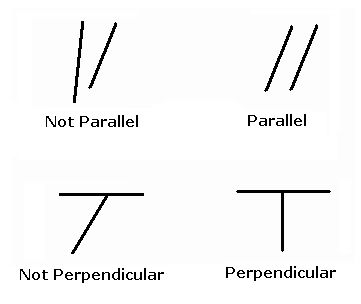
Parallel and perpendicular lines are essential concepts in geometry that help students understand the fundamental properties of shapes and spaces. Here are 13 ways to teach and practice these concepts in a fun and engaging manner.

1. Geoboard Activities

Using a geoboard, let students create parallel and perpendicular lines by stretching rubber bands between pegs. This hands-on activity can help students visualize these concepts in a concrete way.

2. Art with Lines

Have students create artwork using only parallel and perpendicular lines. This will help reinforce their understanding while also allowing them to express their creativity.

3. Line Hunt

Organize a scavenger hunt around your school or local area, where students must find real-world examples of parallel and perpendicular lines in architecture, nature, or everyday objects.

4. Interactive Whiteboard Games

Utilize online interactive whiteboard games that focus on identifying, creating, or manipulating parallel and perpendicular lines.

5. Cut and Paste Activities

Provide students with a variety of shapes that intersect at different angles, and have them classify the angles as parallel, perpendicular, or neither. They can then cut out the shapes and paste them onto labeled sheets.

6. Paper Folding

Demonstrate parallel and perpendicular lines by folding paper into various shapes, such as rectangles or squares. Encourage students to practice their folding skills by creating their own shapes.

7. Connect-the-Dots Worksheets

Design worksheets where students connect the dots to create parallel or perpendicular lines within given figures.

8. Tangram Puzzles

Challenge students to solve tangram puzzles by arranging the pieces such that there are specific parallel or perpendicular line relationships in their solutions.

9. Math Manipulatives

Use math manipulatives like pattern blocks or magnetic tiles to build structures that demonstrate parallel and perpendicular line relationships.

10. Active Learning Games

Introduce active learning games like “Simon Says” or “Red Light, Green Light,” where students must physically align themselves in parallel or perpendicular lines according to the instructions given.

11. Partner Activities

Pair students and let them work together to create shapes that use parallel or perpendicular lines. They can take turns drawing or building the shapes while the other student checks their work.

12. Challenge Problems

Provide higher-level challenge problems that involve finding missing angles, lengths, or side relationships in figures involving parallel and perpendicular lines.

13. Assessments

Regularly assess student understanding using quizzes, tests, or exit tickets that focus on parallel and perpendicular lines. This will provide you with valuable information about your students’ progress and understanding of the concepts.

Conclusion

Teaching and practicing parallel and perpendicular lines doesn’t have to be a dry and boring exercise in geometry class. By incorporating these 13 methods, you can create an engaging learning environment that helps students develop a strong foundation in this essential mathematical concept.

20 Volume Of A Cone Geometry Activities For Middle Schoolers

Introduction

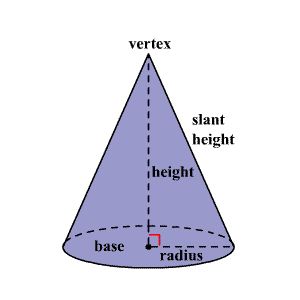
Cone geometry activities offer a fun and engaging way for middle school students to learn about volume calculations. The following 20 activities provide creative and interactive learning opportunities that cater to all student skill levels and preferences.

1. Cone Shape Art

Have students create artwork using cone shapes cut from colored paper. They can explore the juxtaposition of different sized cones to create interesting designs.

2. Building Ice-cream Cones

Using modeling clay or playdough, students can create a cone shape for an ice cream cone, then “scoop” spheres of ice cream to place on top.

3. Cone Net Templates

Students can practice constructing cones from flat net templates and discuss how this relates to real-world applications, such as party hats or packaging.

4. 3D Cone Model Challenge

Challenge students to build three-dimensional cone models using only drinking straws and tape.

5. Volume Riddles

Write riddles with clues that lead students to find the volume of different cones in the classroom.

6. Volume Debate

Divide students into groups to argue the pros and cons of using various methods for calculating the volume of a cone.

7. Real-life Applications

Discuss everyday items that are cone-shaped, such as funnels or traffic cones, and explore why these objects are designed that way.

8. Collaborative Cone Sculpture

In groups, have students create a large-scale sculpture out of various materials (cardboard, newspaper, etc.) incorporating cone shapes.

9. Chalk Volume Formulas

Get outside! Students can use sidewalk chalk to draw various cones and their respective volume formulas on the pavement.

10. Digital Design Challenge

Utilize digital design software or apps so students can create 3D models of various cones and calculate their volumes virtually.

11. Math Breakout Session

Create an escape room experience with math problems that focus on calculating the volume of different cones to solve a central mystery.

12. Stack the Cones

Students compete in a game where they must stack cone shapes for maximum height while maintaining stability.

13. Create Cone Infographics

Students can research and design an infographic related to cone geometry, highlighting volume calculation, history, and application.

14. Volume Scavenger Hunt

Create a scavenger hunt within the school grounds where students must find cones with specific volumes.

15. Theater Performance

In groups, students can stage a short play or skit in which the plot revolves around solving cone volume problems.

16. Cone Cartoons

Have students create comic strips or graphic novels featuring characters who are cones and explore adventures related to their volume.

17. Songs about Cones

Students can write songs, raps, or poems that teach or explain how to calculate the volume of a cone.

18. Cone Baking Project

With supervision, bake cone-shaped treats (waffle cones for ice cream) and discuss the process involved in making these conical delights.

19. Sports Science

Explore how sporting equipment like cones are used in various sports drills and analyze the reasoning behind their design.

20. Reflective Journals

Students can keep math journals documenting their progress and reflections on learning about cone geometry and its relevance in their lives.

Conclusion

These 20 engaging activities help middle schoolers develop essential skills in understanding volume calculations for cone geometry while promoting hands-on learning, creativity, and collaboration. By exploring various aspects of cone geometry, students will forge lasting connections between mathematics and real-world situations.

14 Engaging Activities For Graphing Quadratic Functions

Introduction

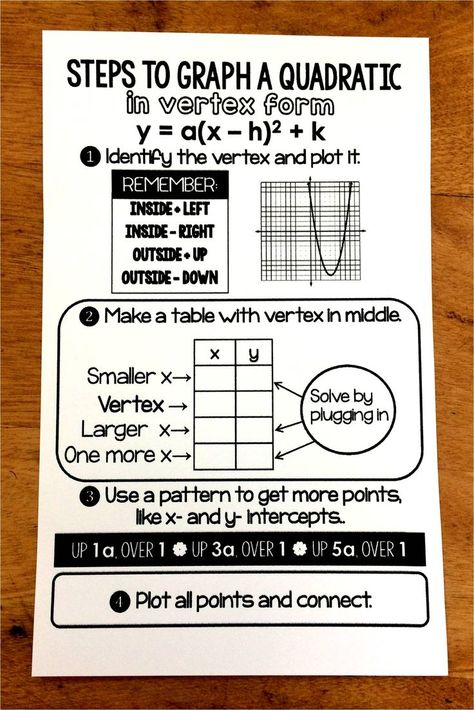
Quadratic functions play a vital role in algebra, particularly when dealing with problem-solving and graphing. To help students better understand and interact with these complex mathematical concepts, several engaging activities can be employed in and outside the classroom. This article highlights 14 of the best activities for graphing quadratic functions.

1. Quadratic Matching Game

This activity involves pairing quadratic equations with their corresponding graphs. By comparing features such as the vertex, axis of symmetry, and direction of the parabola, students will develop a deeper understanding of the relationship between equations and their graphical representations.

2. Quadratic Function Sort

Students are given a variety of cards depicting different characteristics (vertex, intercepts, axis of symmetry) or forms (standard form, vertex form). Their task is to sort them into categories as quickly as possible. As they become more proficient, challenge them to find different ways to categorize the cards.

3. Parabola Art

Provide students with graph paper and some quadratic equations to graph. They can then use the graphs that are created to explore how changes in the coefficients affect the parabolic shape and convert their creations into beautiful works of art.

4. Vertex Walk Maze

Create a maze on a large grid using vertices of quadratic equations instead of walls. Students must navigate through the maze by finding adjacent vertices that are part of a quadratic function while also graphing these functions.

5. Factoring Quadratics Relay Race

Divide your class into teams and set up relay-style factoring races where they must solve given quadratics by factoring correctly before passing on to their teammates.

6. Quadratic Functions Escape Room

Design an escape room challenge that requires students to use their knowledge of quadratic functions for solving puzzles and unlocking clues that ultimately lead them out of the room.

7. Real-World Application Projects

Assign projects where students need to apply quadratic functions to real-world scenarios, such as modeling the trajectory of a projectile, calculating the area of a curved surface, or analyzing sales of a product.

8. Quadratic Bingo

Create a bingo-style game using quadratic equations and their corresponding graphs. Students must match quadratic functions to their graph counterparts to create a winning pattern on their game board.

9. Quadratics on Technology

Utilize online tools and apps that help students visualize the effects of different coefficients in quadratic functions and experiment with graphing transformations.

10. Complete-the-Square Puzzle

Provide students with a set of “puzzle pieces” representing different portions of a complete square expression. Students work together or individually to combine pieces correctly, forming completed squares for various quadratic expressions.

11. Quadratic Function Scavenger Hunt

Develop a scavenger hunt where students must find hidden factors or roots, then use them to graph quadratics around the school or classroom.

12. Graphing Quadratics Mini-Golf Course

Create a mini-golf course using vertex form quadratics to represent obstacles on each mini-golf hole. Students work in teams to figure out how the ball’s path can be modeled using quadratic equations.

13. Real-Life Quadratic Functions Field Trip

Organize a field trip where students observe real-life examples of parabolic shapes (e.g., bridges, satellite dishes) and discuss how these structures are modeled using quadratic functions.

14. Quadratic Functions Unit Review: Jeopardy!

Reinforce learning by designing a Jeopardy!-style game for students to review terminology, concepts, and applications related to graphing quadratic functions at the end of the unit.

Conclusion

These 14 engaging activities offer an array of innovative ways for students to explore, understand and develop skills related to graphing quadratic functions.

40 Pi Day Jokes That Will Make Kids Laugh Out Loud

Pi Day, the best day to celebrate the most famous mathematical constant and enjoy some tasty mathematical humor. Get ready to giggle and chortle at these 40 jokes that are sure to make kids laugh out loud!

1. Why should you never talk to pi?

Because it will go on forever!

2. What do you get when you take a circle’s circumference and divide it by its diameter?

Pancakes! Just kidding, it’s pi.

3. What do you call a snake that’s exactly 3.14 meters long?

A πthon.

4. Why was the math book sad?

It had too many pi problems.

5. How do mathematicians stay cool in the summer?

By standing in the shade of a pi-ne tree.

6. What did zero say to eight?

“Nice belt!”

7. Why was π freezing?

Because it’s an irrational number.

8. What do you call a circle’s best friend?

Its “radius” buddy.

9. Registry_QMARK_TEAM_TASK_Description_ER_OUTPUT_Why did Pi Day take a vacationutdown_EXTRegistry_REG_MARK_QUESTIONuters.

It was feeling quite irrational!

10. What did pi say to its reflection?

“Stop being so irrational!”

11. Which knight loved pi the most?

Sir Cumference.

12. What do you get when you cross geometry with dessert?

A piece of π!

13. Why did seven eat pi?

It just couldn’t resist a big slice of π!

14. Why did the math teacher like teaching about circles?

Because they’re well-rounded students!

15. How many pie crusts does it take to make one π-fect pie?

3.14, of course.PLLUDWhat kind of pie can fly?

17. PLLUDCOPEXtALMESTAMP_DWhat’s a math teacher’s favorite dessert?

20. Why do circles always stick together?

They’ve got 360 degrees of friendship!

21. What type of music does π make?

Sine waves.

22. Why is 3.14 always so full?

It just ate π!

23. What do you call someone who loves maths and baked goods?

A pi-romaniac.

24. How much room does π need to throw a party?

Just a little slice will do.

25. How does a circle stay in touch with all its friends?