Math Education

26 Geo Board Activities For Kids

Introduction:

A geo board is an excellent educational tool that helps children develop creativity and mathematical skills. Comprising of a grid of pegs on which elastic bands can be stretched, these boards enable children to form various shapes and patterns. Here are 26 engaging geo board activities for kids that parents, teachers, and guardians can use to ignite the little ones’ interest in shapes and geometry.

1. Basic Shapes:

Introduce kids to basic shapes such as squares, rectangles, circles, triangles, and hexagons using the geo board.

2. Letters and Numbers:

Encourage kids to create numbers and letters with rubber bands by stretching them around the pegs.

3. Symmetry Exploration:

Prompt children to make symmetrical designs by copying one-half of a shape onto the other half.

4. Rotational Symmetry:

Teach the concept of rotational symmetry by having kids rotate their shapes and observe whether they still look the same.

5. Area and Perimeter:

Demonstrate how to calculate area and perimeter by counting squares enclosed within a shape or rubber bands stretched along the edge.

6. Fractions:

Illustrate fractions using different colored rubber bands for different fractional parts.

7. Pattern Making:

Guide children in creating simple repeating patterns or more complex tessellations with shapes.

8. Angles:

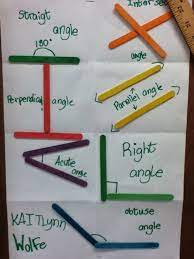
Teach acute, obtuse, right, and straight angles using intersecting lines created with rubber bands.

9. Scaling Shapes:

Show how shapes can be scaled up or down by adjusting the number of pegs between each vertex.

10. Comparing Sizes:

Ask kids to create two shapes of different sizes but identical in appearance and discuss relative sizes.

11. 3D Shapes Exploration:

Allow children to build 3D figures, like cubes or pyramids, on the geo board.

12. Color Sorting:

Have kids create designs using only one color of rubber bands or arrange bands by color into different shapes.

13. Mirrored Images:

Introduce the concept of reflection through making mirrored images of shapes across an imaginary central line.

14. Congruent Shapes:

Encourage children to create shapes that are identical in dimensions but have different orientation on the board.

15. Translation:

Teach kids the concept of translation by having them move shapes around without changing their orientation or size.

16. Origami-Inspired Designs:

Introduce kids to origami by having them recreate simple origami patterns on the geo board.

17. Artistic Patterns:

Urge children to make their own artistic designs by incorporating more colors and complex patterns.

18. Storytelling with Shapes:

Have children create characters or scenes from their favorite stories entirely out of 2D shapes.

19. Animal Shapes:

Inspire kids to represent animals using a combination of geometric shapes on the board.

20. Logic Puzzles:

Present logic puzzles requiring kids to use specific numbers of rubber bands or pegs to create unique shapes or designs.

21. Tangrams:

Introduce tangram puzzles using geo boards, with kids replicating given designs using rubber bands.

22. Name Designs:

Encourage kiddos to spell out their names using only shapes and bands on the geo board.

23. Emojis and Icons:

Prompt children to recreate emojis or popular icons using geometric patterns on the board.

24. Coordinate Planes:

Teach kids about coordinate planes by labeling an x and y-axis on the grid and plotting points for various shapes.

25. Speed Challenges:

Organize timed speed challenges where children compete to construct specified shapes or designs as quickly as possible.

26. Collaborative Creations:

Combine multiple geo boards, allowing kids to work together and come up with large-scale, creative masterpieces!

Counting to 100: 20 Activities You Must Try

Introduction:

Counting to 100 is a fundamental skill that every child must learn. Developing this essential math skill can be both fun and engaging, through a variety of entertaining activities that will keep children invested in learning. This article provides 20 fantastic ideas you must try to make counting to 100 enjoyable for kids.

1. Sing counting songs:

Songs are an excellent approach for teaching numbers, as they enable children to learn at their own pace while having fun. Incorporate popular counting songs into your routine.

2. Hopscotch with numbers:

Enhance the classic hopscotch game by adding numbers on the grid, resulting in counting practice while playing.

3. Number memory game:

Have pairs of numbered cards face down that children need to find matches for, enhancing memory skills and number recognition.

4. Play bingo with numbers:

Create a customized bingo card featuring numbers up to 100, allowing children to practice recognizing and calling out their numbers.

5. Counting with blocks:

Use toy blocks or LEGO bricks for stacking and counting practice.

6. Number puzzles:

Custom-made or store-bought puzzles teach problem-solving while working on number recognition.

7. Interactive online games/apps:

Several educational websites and apps offer fun counting games for children on various devices.

8. Sensory counting bins:

Fill bins or large containers with objects such as pom-poms, toy cars, or marbles, and have kids count as they explore the items.

9. Counting art projects:

Create beautiful artwork by counting shapes, colors, or other elements in creative ways.

10. Number scavenger hunt:

Scatter numbered items throughout the house or yard and create riddles or clues for a fun scavenger hunt experience.

11. Connect the dots worksheets:

Download printable connect-the-dots worksheets featuring themes that appeal to your child’s interests and involve various number sequences.

12. Board games incorporating numbers:

Choose board games that promote counting skills, like “Snakes and Ladders” or “Monopoly Junior.”

13. Storytime with number-themed books:

Integrate counting skills into storytime with books such as “The Very Hungry Caterpillar,” “Chicka Chicka 1, 2, 3,” or “One Hundred Hungry Ants.”

14. Jump rope counting:

Have children jump rope and count as they jump to develop coordination alongside counting skills.

15. Interactive hundred chart:

Place a hundred chart on the wall or floor, allowing children to interactively practice counting while also understanding the connection between written and verbal numbers.

16. Number stickers art activity:

Give your child a sheet of number stickers and encourage them to create patterns or images using the stickers, along with practicing their counting.

17. Estimation jar guessing game:

Fill jars with different amounts of objects such as candy, buttons, or coins, and have kids guess how many items are inside to practice estimation skills.

18. Counting with fingerplays:

Engage in fingerplays like “Five Little Ducks” or “Ten Little Fingers” to develop fine motor skills while counting.

19. Numeral hopscotch:

Similar to traditional hopscotch, draw a grid in ascending order on a sidewalk or driveway and have children hop from one numeral to the next while reciting the corresponding numbers.

20. Play dough number sculptures:

Let children create their favorite numbers using play dough in various colors and shapes.

Conclusion:

These 20 activities offer a diverse approach to teaching kids how to count up to 100 while making learning exciting and engaging for them. Don’t hesitate to mix up these ideas and tailor them according to your child’s interests and strengths, ensuring they have a solid foundation in basic numer

26 Fantastic Fractions Activities for a Fun Math Experience

Introduction:

Fractions can be a challenging concept for many students, but with the right activities and hands-on approach, learning fractions can become enjoyable. The following is a compilation of 26 fantastic fractions activities that combine creativity, interaction, and understanding to create a fun math experience.

1. Fraction Bingo: Using a bingo card with different fractions, students will try to match the called-out fractions with their cards.

2. Fractions on a Number Line: Have students place fractions on a number line to compare and order them.

3. Fraction Dominoes: Create dominoes with fraction representations and have students match equivalent fractions.

4. Fractions Memory Game: Create pairs of fraction cards and have students practice matching equivalent fractions through memory play.

5. Fraction Art: Allow students to represent different fractions through creative drawings or paintings.

6. Fraction Cooking: Have students help prepare meals while using fraction measurements in recipes.

7. Fractions in Nature Scavenger Hunt: Explore nature and find real-life examples of fractional concepts like half or one-third.

8. Online Fraction Games: Explore various educational websites that offer interactive fraction games.

9. Snowball Fractions: Write various fractions on snowballs (paper or Styrofoam) and have students throw them at matching targets representing equivalent fractions.

10. Fraction Skits: Turn fractional learning into a theater experience by having students perform skits that demonstrate understanding of various fraction concepts.

11. Pizza Fractions: Use pizza slice models to teach different topics like adding and subtracting fractions.

12. Playdough Fractions: Use playdough to create visual representations of fractional concepts.

13. Fractions Flip Book: Make flipbooks showcasing different fraction scenarios or equivalent fractions through illustration.

14. Fraction Treasure Hunt: Hide fractional clues around the classroom leading students on an educational treasure hunt!

15. Lego Towers versus Fraction Bars: Have students build Lego towers to represent fractions; compare and contrast with fraction bars.

16. Fraction Clothesline: Create a classroom clothesline with different fractional cards that students need to sort and order correctly.

17. Musical Fraction Chairs: Instead of playing regular musical chairs, use fractional cards and match with equivalent fraction chairs.

18. Origami Fraction Models: Teach students how to create origami shapes representing various fractions.

19. Egg Carton Fractions: Use egg cartons as fun manipulatives for teaching fractions by cutting the cartons into various fractional pieces.

20. Fraction War Card Game: Adapt the classic War card game to teach comparing fractions.

21. Fraction Sundaes: Teach fraction-related concepts (like making halves or quarters) using ice cream toppings and sundae components.

22. Fraction Worksheets and Puzzles: Encourage students to practice skills by tackling various worksheets, riddles, and puzzles involving fractions.

23. Paper Folding Fractions: Show students how folding paper can help them visually represent multiple fraction concepts, such as simplification or equivalency.

24. Fraction Hopscotch: Combine physical activity with fraction learning by having students jump on a hopscotch grid designed around fractional concepts.

25. Real-world Fractions Exploration: Observe real-life scenarios (books, newspapers, magazines) and find examples of fractions in everyday life.

26. Fraction Olympics: Host a mini-olympics event where students participate in various fraction-themed challenges, such as a relay race where they carry signs representing specific fractions that need to be simplified or combined before moving forward.

Conclusion:

By incorporating these 26 fantastic fractions activities into your classroom or homeschool curriculum, you can create an engaging learning environment where students will not only grasp key fractional concepts but also enjoy the process.

Exploring Quadrilaterals: 14 Engaging Activities for High School Students

Introduction:

Quadrilaterals are not always limited to simple squares and rectangles. These four-sided polygons have other interesting geometrical forms as well that are worth exploring for any high school student. Through interactive activities, students get to dive into the fascinating world of quadrilaterals while learning essential geometric principles and relationships. Here are 14 engaging activities to help your high school students understand and analyze different types of quadrilaterals.

1. Quadrilateral Classification:

This activity aims at enhancing students’ understanding of the different types of quadrilaterals. Students can create a chart categorizing quadrilaterals based on their properties like parallel sides, equal angles, and equal side lengths.

2. Quadrilateral Art:

Let your students create a piece of artwork using different types of quadrilaterals. Encourage them to use their creativity while reinforcing the basic properties of each quadrilateral.

3. Quadrilateral Scavenger Hunt:

Organize a scavenger hunt where students find objects in their surroundings shaped like various types of quadrilaterals, which helps them develop real-world connections with geometry concepts.

4. Quadrilateral Puzzles:

Challenge students with puzzles testing their knowledge of quadrilateral properties, such as recognizing which quadrilaterals fit specific criteria or solving problems that involve calculating area or perimeter.

5. Interactive Whiteboard Activities:

Use interactive whiteboard applications to create dynamic activities where students manipulate shapes and explore properties like side lengths, angles, and diagonals.

6. Diagrams and Proofs:

Teach your students how to draw accurate diagrams step by step and develop proofs using mathematical logic for various statements related to quadrilaterals.

7. Geoboards:

Engage your high schoolers in hands-on activities with geoboards to create various quadrilateral shapes and observe their properties in real time through elastic bands.

8. Online Games:

Explore online resources with educational games focused on quadrilaterals, providing a fun way to improve students’ understanding of geometric concepts and relationships.

9. Quadrilateral Relay Races:

Set up relay races in which students have to accurately identify quadrilaterals based on clues or properties given. The competitive nature keeps the game exciting and engaging.

10. Quadrilateral Origami:

Incorporate arts and crafts through origami, teaching students how to create various quadrilaterals using the paper-folding technique. Reinforce the geometric concepts while they take part in this hands-on activity.

11. Trigonometry Exploration:

For advanced high school students, introduce trigonometric principles and explore their applications within different types of quadrilaterals.

12. Quadrilateral Jeopardy:

Create a Jeopardy-style quiz where students compete in teams and answer questions related to the properties, classifications, and formulae of various quadrilaterals.

13. Role-playing Activity:

Transform your classroom into a court setting where each student represents a different type of quadrilateral, defending their unique properties while others critique or question them based on their own property knowledge.

14. Creating Math Lessons:

Encourage your high school students to take up the educator role by designing their own short lessons on specific quadrilaterals using any creative medium they prefer such as videos, slideshows, or posters.

Conclusion:

These 14 engaging activities help high school students explore the fascinating world of quadrilaterals while developing their conceptual understanding and analytical thinking skills in geometry. Through active involvement in these hands-on experiences, they are better able to grasp the intricacies of various geometric principles and apply them to solve real-world problems.

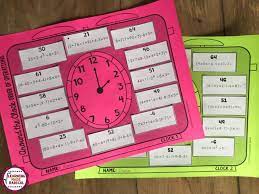
12 Fun Activities To Teach And Practice Order Of Operations

Introduction

Order of operations is a crucial concept in mathematics that helps students perform calculations with accuracy and consistency. The importance of understanding the order in which to perform mathematical operations cannot be overstated. To make learning this concept more engaging and enjoyable for students, here are 12 fun activities that can be employed by educators to effectively teach and practice the order of operations.

1. PEMDAS Bingo

Create bingo cards with order of operations problems, and have students solve them using the PEMDAS (Parentheses, Exponents, Multiplication and Division, and Addition and Subtraction) method. When they find the answer on their bingo card, they can mark it off. The first student to complete a row or column wins.

2. Order of Operations Relay Race

Divide your class into teams and set up a relay race. Give each team a set of cards with a complex order of operations problem. Each team member must complete one step of the problem before passing it on to the next person in line. The first team to successfully complete all steps wins.

3. Math Scavenger Hunt

Create a series of math problems that require students to use order of operations to solve. Hide these problems around your classroom or outdoor area. Students must find and solve each problem using the correct order of operations, then move on to the next clue.

4. Order of Operations War

This card game is similar to traditional war, but instead of comparing simple numbers, students compare their solutions to order-of-operations problems. The player with the highest value after solving the problem wins both cards.

5. Musical Math Chairs

Arrange chairs in a circle, each with an order-of-operations problem attached to it. Play music while students walk around the chairs—and when the music stops, they must solve the problem on their chair before sitting down.

6. Order of Operations Puzzle

Create a puzzle with interlocking pieces, each containing an order of operations problem. Students must solve each problem and connect the pieces according to a numbering system that corresponds to the correct answers.

7. Coding Challenges

Incorporate coding into your math lessons by having students create simple programs that demonstrate the correct order of operations.

8. Order of Operations Jenga

Label each Jenga block with an order of operations problem. Students must solve the problem on the block before removing it from the tower, ensuring they understand the concept while also testing their dexterity.

9. Artful Math

Combine math and art by having students create visuals or artistic representations of order-of-operations problems and solutions. This helps enforce understanding while tapping into students’ creative sides.

10. Beat-the-Clock Challenges

Create timed order-of-operations challenges for your students, with different levels of difficulty for added excitement. Students race against the clock to correctly solve as many problems as possible.

11. Math Jeopardy

Develop a Jeopardy-style game with categories based on different aspects of order of operations, such as solving parentheses or exponents first. Have students compete in teams to answer questions correctly and earn points.

12. Order of Operations Charades

Write complex math problems that require order-of-operations knowledge on notecards. Students must draw a card and then act out the solution step-by-step using only body language and gestures, while their classmates attempt to guess the correct process.

Conclusion

Teaching order of operations using engaging and enjoyable activities can make all the difference in helping students grasp this vital mathematical concept. The 12 activities listed above can be easily integrated into any classroom setting, catering to various learning styles and transforming what might have been an ordinary math lesson into an immersive, memorable experience for both educators and students alike.

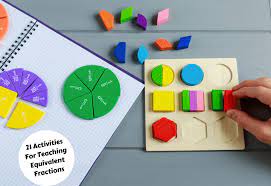
21 Activities for Teaching Equivalent Fractions

1. Fraction Strips: Create colorful fraction strips from construction paper to help students visualize equivalent fractions.

2. Pizza Fractions: Use pizza models to illustrate different fraction sizes, instructing students to find equivalents.

3. Matching Games: Design a matching game where students must pair equivalent fractions with each other.

4. Butterfly Method: Teach students the butterfly method of finding equivalent fractions by multiplying the numerator and denominator of each fraction by its respective opposite fraction’s denominator.

5. Cooking and Baking: Integrate real-life situations like cooking and baking to demonstrate how equivalent fractions can be used while measuring ingredients.

6. Simplifying Fractions: Instruct students on simplifying fractions, further highlighting how multiple fractions can have the same value.

7. Fraction Flip Books: Create flipbooks for hands-on learning, allowing students to find equivalent fractions by flipping pages with different numerators and denominators.

8. Solve for ‘X’: Provide algebraic expressions involving fractions where the student solves for ‘X’ to find two equivalent factions.

9. Music Rhythms: Utilize music rhythms and notes to teach students about equivalent fractions, since whole notes, half notes, and quarter notes represent fractional parts of a measure.

10. Online Games: Encourage students to play online educational games focused on finding and matching equivalent fractions.

11. Fraction Number Line: Employ a large number line in class to demonstrate how various equivalent fractions fall in the same place on the line.

12. Cross-multiplication Method: Teach the cross-multiplication technique as an alternative way of checking if two fractions are equivalent.

13. Group Activities: Divide the class into groups, providing each group with different pairs of fractions in which they must decide if they are equivalent or not.

14. Story Problems: Provide relatable story problems requiring the use of equivalent fractions in their solutions.

15. Collage Activity: Have students create a collage to find and represent equivalent fractions from images of everyday objects, such as quartered oranges, meter sticks, or divided chocolate bars.

16. Fraction Dominoes: Play fraction dominoes, where each domino tile has two fractions that need to be matched with other equivalent fractions on the board.

17. Interactive Whiteboard Activities: Utilize interactive whiteboards for practicing equivalent fractions with engaging software and tools.

18. Pattern Blocks: Leverage pattern blocks to represent different fractions and allow students to explore equivalence using various block shapes.

19. Candy Fractions: Use candies like M&Ms or Skittles to create a visual way for students to find equivalent factions while incorporating a fun treat.

20. Fraction Bingo: Play bingo, replacing traditional numbers with fractions requiring students to match equivalent fractions as spaces are called out.

21. Fraction Artwork: Encourage students to create artwork illustrating various equivalent factions on construction paper by cutting, pasting, or drawing shapes divided into fractional parts.

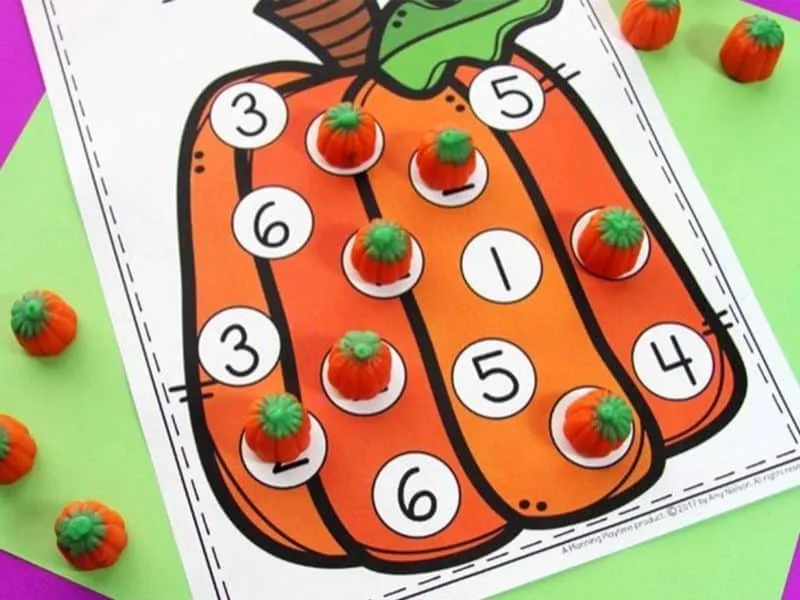
23 Perfect Pumpkin Math Activities for Kids

Pumpkins are synonymous with autumn, Halloween, and harvest time. These seasonal beauties provide the perfect opportunity for engaging children in math activities that are both fun and educational. Here are 23 perfect pumpkin math activities to incorporate into your lesson plans or family fun time this fall!

1. Pumpkin Counting: Arrange mini pumpkins in a one-to-one correspondence activity, reinforcing counting and numeral recognition skills.

2. Pumpkin Sorting: Have kids sort pumpkins according to size, color, or even shape.

3. Pumpkin Number Line: Align pumpkins with numbers written on them to create an interactive number line for counting forwards and backwards.

4. Pumpkin Patterns: Use differently shaped or colored pumpkins to create and extend patterns.

5. Measuring Pumpkins: Use standard or non-standard measuring tools to measure the height, width, or circumference of various pumpkins.

6. Estimation Game: Have children guess the weight of a pumpkin and then weigh it for comparison.

7. Pumpkin Weigh-In: Use a balance scale to compare the weight of two pumpkins.

8. Pumpkin Addition and Subtraction: Provide addition and subtraction problems that feature pumpkins as manipulatives.

9. Pumpkin Seed Counting: Have children scoop out seeds from a pumpkin and group them in sets of ten before counting the total amount.

10. Graphing Pumpkins: Collect data on the characteristics of various pumpkins (color, size, shape) and create simple bar graphs representing the data.

11. Greater Than/Less Than Pumpkins: Using two numbered pumpkins, have kids determine which is greater than or less than the other.

12. Missing Number Activity: Create pumpkin puzzles with missing numbers that need to be filled in according to numerical order

13. 3D Shape Exploration: Use mini pumpkins (or similarly shaped gourds) as examples of natural spheres found in everyday objects.

14. Pumpkin Fractions: Cut pumpkins into sections to explore halves, thirds, and quarters.

15. Money Math: Set up a pumpkin store where kids can purchase items with imaginary money, reinforcing the concept of spending and making change.

16. Pumpkin Time Telling: Use a large pumpkin as an analog clock for a hands-on lesson in telling time.

17. Pumpkin Seeds as Place Value Manipulatives: Teach place value by counting the scooped-out seeds from different pumpkins and representing the numbers using hundreds, tens, and ones grids.

18. Pumpkin Multiplication and Division: Use skip counting or groups of pumpkins to teach basic multiplication and division concepts.

19. Coordinate Graphing: Create a grid with pumpkin pictures and practice plotting points by identifying x- and y-coordinates.

20. Geometric Pumpkin Carving: Combine geometry and art by carving shapes into pumpkins, exploring properties of angles and lines.

21. Symmetrical Drawing: Have children draw half of a pumpkin on graph paper, highlighting symmetry concepts while completing the other half.

22. Sequencing Pumpkins: Line up different sized or colored pumpkins in ascending or descending order to introduce sequencing concepts.

23. Pumpkin Probability Game: Play a simple game of chance with two sets of colored mini pumpkins to investigate possible outcomes and probability concepts.

Incorporating these pumpkin math activities into your home or classroom this fall is an engaging way to keep kids excited about learning. Who knew math could be so much fun when you bring in seasonal elements like pumpkins?

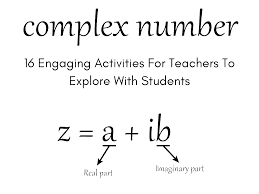
Fun With Complex Numbers: 16 Engaging Activities For Teachers To Explore With Students

Introduction:

Complex numbers may seem intimidating for both students and teachers, but exploring these fascinating mathematical concepts can be a fun and engaging experience. In this article, we’ll introduce 16 entertaining activities that teachers can use in the classroom to help students better understand complex numbers and their applications.

1. The Imaginary Plane Race:

Divide students into teams and give each team a complex number expressed as a point on the imaginary plane. Each team has to move their point along the plane, following specific mathematical operations that involve complex numbers (e.g., addition, multiplication). The first team to reach the finish line wins!

2. Complex Number Battleship:

Adapt the classic game of Battleship to include complex numbers on the grid. Students must guess their opponent’s hidden coordinates using complex number notation.

3. Complex Number Bingo:

Create bingo cards that contain different complex numbers, expressed in various forms like rectangular or polar coordinates. Call out operations or questions requiring students to find matching answers on their bingo cards.

4. Complex Conversions:

Create a series of stations where students practice converting complex numbers between rectangular and polar forms, exponential form, and trigonometric form.

5. Complex Coloring:

Create coloring pages that are based on fractals or other patterns generated with complex numbers. Students will get acquainted with these mesmerizing designs while creating beautiful artwork.

6. Mathemagic Tricks:

Teach your students some simple mathemagic tricks that rely on complex number properties. They can then awe their classmates and family members with their newfound magical skills!

7. Puzzle Solving With Complex Numbers:

Present students with algebraic equations or cryptographic puzzles that require the use of complex numbers for solving.

8. Complex Number Scavenger Hunt:

Hide various complex number-related problems around the classroom or school grounds; let students solve these problems as they search for clues in a scavenger hunt.

9. Complex Graffiti Art:

Engage your students in creating multimedia presentations or graffiti-style artwork that creatively represent complex numbers.

10. Mathematical Escape Room:

Design an escape room adventure where students must solve various complex number-related problems to advance through the challenges and unlock the final door.

11. Imaginary Line Dancing:

Teach students how to do various line dances using complex numbers as dance step coordinates.

12. Complex Music Composing:

Challenge students to create their unique musical scores using complex numbers to determine note values, rhythms, and melodies.

13. 3D Complex Number Modeling:

Use 3D modeling software to help students visualize and manipulate complex number shapes in three dimensions.

14. Complex Number Speed Drills:

Host a friendly competition where students try to be the first to correctly perform certain mathematical operations on complex numbers within a set time limit.

15. The Complex Number Feast:

Use complex numbers as ingredients for cooking up a delicious and educational classroom feast relating food items with numerical counterparts.

16. Imaginary Sports League:

Invent a new imaginary sport or game that requires players to use their understanding of complex numbers to strategize and compete effectively.

Conclusion:

Exploring complex numbers with these 16 engaging activities can spark creativity, enhance critical thinking, and make learning enjoyable for both teachers and students alike. By incorporating these games, puzzles, and hands-on learning experiences into your curriculum, you can help your students grasp the intriguing world of complex numbers while having fun at the same time!

23 Fantastic Ten Frame Activities for Kids

Introduction:

Ten frame activities are a great way to introduce children to basic math concepts, develop their counting and number sense skills and foster their creativity. They can be used both at home and in the classroom, providing countless hours of learning and fun. To help you get started, we have compiled a list of 23 fantastic ten frame activities. So, let’s dive in!

1. Ten Frame Playdough Mats:

Encourage children to create playdough balls and arrange them on ten frame mats to represent different numbers.

2. Ten Frame Number Cards:

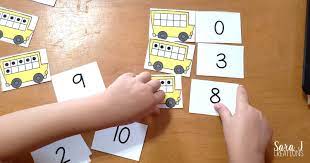
Create a set of cards with different numbers and corresponding ten frame representations for kids to match.

3. Ten Frame Memory Game:

Make two sets of ten frame cards with identical images for an engaging memory game.

4. Ten Frame Snack Time:

Incorporate a ten frame placemat into snack time by encouraging children to count out their snacks using the frames.

5. Ten Frame Egg Cartons:

Repurpose egg cartons into ten frames by cutting them down. Kids can use small manipulatives to place inside each cup.

6. Clothespin Ten Frames:

Attach clothespins to index cards that depict ten frames and have children clip the correct number of clothespins onto each card.

7. Outdoor Ten Frame Chalk Activities:

Draw a large ten frame with sidewalk chalk outdoors and have kids use natural materials (sticks or stones) for counting practice.

8. Ten Frame Puzzles:

Create puzzles with one piece displaying a number and the other showing its corresponding ten frame representation for kids to connect.

9. Lego Ten Frame Building:

Put together Lego structures based on specific numbers represented by ten frames.

10. Ten Frame Pom-Pom Sorting:

Sort varying colored pom-poms using tweezers or fingers into colored ten frames.

11. Ten Frame Bingo:

Create bingo cards with various completed ten frames, and have kids place small items or tokens onto the corresponding numbers as they’re called.

12. Snowball Ten Frame Toss:

Cut out ten frames from cardboard and encourage children to toss “snowballs” (like cotton balls) into the frames to represent numbers.

13. Ten Frame Matching Game:

Create pairs of cards with numbers, and their matching ten frame representations. Kids can then turn over cards to find the matching pairs.

14. Ten Frame Bead Counting:

String beads onto pipe cleaners in accordance with ten frame representations.

15. Ten Frame Cookie Counting:

Decorate sugar cookies with colorful icing or sprinkles to create ten frame images, making snack time a math learning experience.

16. Dot Sticker Ten Frames:

Use small dot stickers to complete partial ten frames printed on index cards.

17. Ten Frame I Spy:

Hide small objects around the room for kids to find and then place them on a large ten frame on the floor to represent the number of found items.

18. Monster Teeth Ten Frames:

Encourage kids to create monster-themed ten frames using marshmallows or gumdrops as “teeth” for their monster structures.

19. Ten Frame Geoboard Activities:

Use geoboards with rubber bands or colored string to create visible ten frames and practice counting skills.

20. Puzzle Piece Counting:

Draw ten frames on large puzzle pieces for children to count and match with the corresponding number piece.

21. Button Counting Cards:

Provide kids with buttons and counting cards featuring empty ten frames for them to fill in with the corresponding number of buttons.

22. Nature Walk Ten Frames:

Collect natural items during a walk, such as sticks, leaves, or rocks, and have kids arrange them into ten frames once back indoors.

23. Ten Frame Cupcake Liners:

Encourage kids to create monster-themed ten frames using marshmallows or gumdrops as “teeth” for their monster structures.

20 Hands-On Geometry Activities for Middle School

Introduction:

Middle school is an important time for students to enhance their skills in diverse subjects. One subject where hands-on learning can be especially beneficial is geometry. In this article, we will explore 20 engaging and interactive geometry activities for middle school students that can make learning both enjoyable and effective.

1. Geoboard Fun – Using geoboards, encourage students to create various shapes and analyze their properties of sides, angles, and symmetry.

2. Tangram Puzzles – Provide students with tangram puzzle sets to help them learn about triangles, squares, and parallelograms while solving unique puzzles.

3. Shape Scavenger Hunt – Send students on a scavenger hunt around the classroom or school grounds to identify different geometric shapes in real-world objects.

4. Paper Folding – Challenge students to create various geometric shapes by folding paper according to specific instructions.

5. Marshmallow Toothpick Shapes – With marshmallows as vertices and toothpicks as sides, have students build geometric shapes and analyze their properties.

6. Geometry Art Project – Allow students to unleash their creativity by creating a piece of art that incorporates various geometric shapes and patterns.

7. 3D Origami Models – Have students explore three-dimensional geometry by building origami models of different shapes like cubes, pyramids, and prisms.

8. Geometric String Art – Guide students in creating intricate designs using nails, string, and geometric principles.

9. Kite Building – Teach students about the properties of quadrilaterals while constructing kites with different materials.

10. Triangle Relay Race – Organize a relay race where each team must sort multiple triangles into categories like acute, obtuse, right-angled, equilateral, isosceles, or scalene before passing along to the next team member.

11. Geometry Bingo – Create a bingo game using geometric terms such as “congruent angles” or “parallel lines,” and have students compete to be the first to complete their card.

12. Symmetry Skits – Assign students to act out real-world examples of various types of symmetry, such as reflection, rotation, and translation.

13. Geometric City – Provide materials for students to construct a miniature city using only geometric shapes as building blocks.

14. Sandbox Math – Encourage students to use sandbox materials to create geometric shapes, measure angles, and calculate perimeters and areas.

15. Geometry Charades – Play a game of charades where students must act out geometric terms or shapes for their peers to guess.

16. LEGO Geometry – Leverage LEGO bricks as tools for learning geometry by having students build structures with specific geometric attributes.

17. Shadow Shapes – Utilize natural or artificial light sources to explore the shadows cast by different objects and analyze their geometric properties.

18. Geometric Mobiles – Encourage students to create mobiles with balanced geometric shapes that can demonstrate concepts of symmetry and equilibrium.

19. Tessellation Exploration – Introduce tessellations by having students create patterns using regular polygons that fill a 2D space without gaps or overlaps.

20. Online Geometry Games – Engage students in digital learning by providing them with access to interactive online geometry games that reinforce classroom lessons.

Conclusion:

Incorporating hands-on activities into your middle school geometry lessons can not only make learning more enjoyable but also help students develop a deeper understanding of essential concepts. By offering opportunities for exploration, creativity, and collaboration, these 20 activities will engage your students and enrich their educational experience in geometry.