
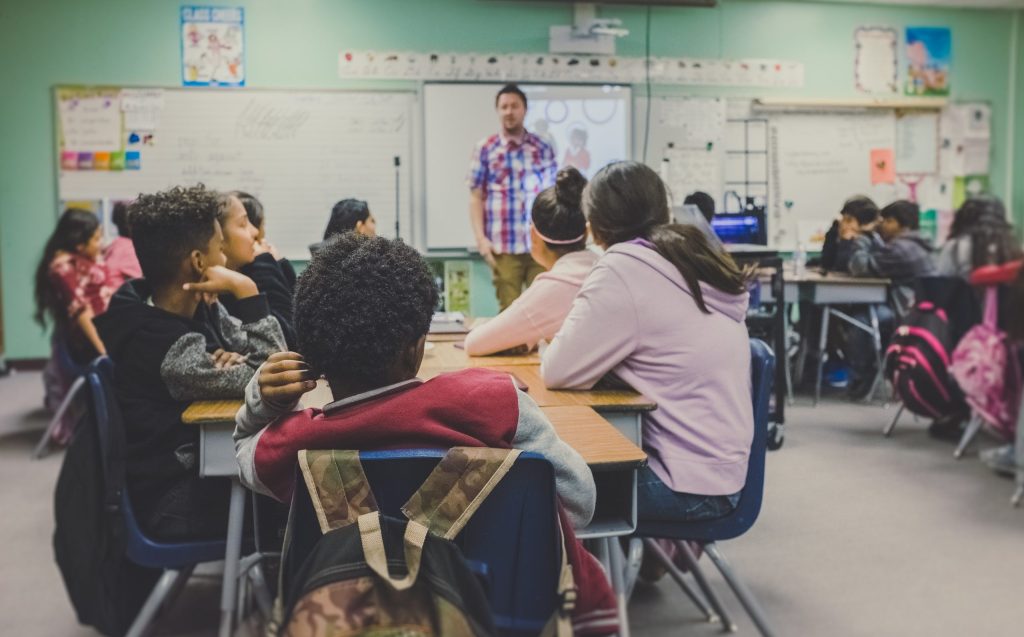
Teaching Strategies, Tactics, and Methods

What is Social Studies?

What are social studies in primary school?

Social studies cover a wide range of topics and subjects we learn about early on. These usually have to do with the world around us and the society we live in, whether in the past or the present.

It deals with human behavior, resources, relationships, and institutions at the highest level. Fields include history, geography, sociology, politics, economics, and anthropology.

Does that seem a bit heavy for children? Don’t worry! In primary school, learners will be working towards developing a general understanding of the world around them. They’ll learn about other people, other cultures, other value systems, and world history.

The main goal is to introduce children to different environments that they otherwise wouldn’t meet at such a young age, but there’s so much more to it than that. Keep reading to learn more about social studies in school, what children will learn, and why it’s an important part of their education!

Experiences and Outcomes of Social Studies

Under the Curriculum for Excellence, social studies aren’t categorized the same way they are in other countries. Based on the CfE experiences and outcomes that serve as a clarifying guideline for both teachers and students, social studies are grouped in the following way:

  • People, past events, and societies
  • People, place, and environments
  • People in society, the economy, and business

While these wider areas are the same for all three levels, the experiences and outcomes change over the different age groups. Let’s take a look at an example:

  • At an Early Level, children will learn that different types of evidence help them study the past.
  • By the end of the First Level, they should know which evidence can be trusted and used to study the past.
  • During Second Level, they’re taught how to interpret historical evidence from various periods. This helps them build a picture of Scotland’s heritage and their sense of chronology.

What are the three areas of social studies?

  1. People, Past, Events, and Societies

Focusing on the past and comparing it to the present, children will discover important events in their country’s history, from the Scottish Wars of Independence to Mary, Queen of Scots – and beyond!

It also includes topics more directly related to issues in the world today, such as information about Scottish Black History.

Examples of wider topics might include:

  • Scottish History
  • British History
  • World History
  • Then and Now
  1. People, Place, and Environment

In this area of social studies, children will look at how human activity has impacted nature, the advantages and disadvantages of different modes of transport, and many environmental issues facing today.

This unit covers many topics, and many have links to other curriculum areas. This includes links to both the sciences and technologies. Here are a few issues that you can find resources for at Twinkl:

  • Climates of the World
  • Community and Environment
  • Countries and Continents
  • Farming
  • The Rainforest
  • Maps
  • Scotland’s Environment
  • The Water Cycle
  • Weather and Natural Disasters
  1. People in Society, Economy, and Business

The last area of social studies (but certainly not the least) covers a broad spectrum of topics. These focus on modern or present-day issues, including the world’s global goals on climate action and business running. In addition, younger learners will explore simpler, more age-appropriate topics, such as learning about the different adults they can turn to if they have a problem, from teachers to police officers.

Once again, many points cross over into different subject areas – especially health and well-being.

  • People Who Help Us
  • Bullying and Discrimination
  • Citizenship and Global Issues
  • The Scottish Political System
  • The World of Work
  • Enterprise

Why is it important to learn social studies in primary school?

There are several benefits of introducing children to social studies in school. Some of the main ones include:

  1. Children can become curious, open-minded, and accepting by learning about other people with different backgrounds than themselves. These are brilliant traits that will serve them well in the future, both socially and academically.
  2. Even from an early age, they’ll be working on their self-image. This means they can understand their place in the world and realize their footprint. What does it mean to be a citizen of Scotland, the United Kingdom, or Europe? What does it mean to be a citizen of the world?
  3. The curricular area includes some of the most important topical issues of our time, especially regarding the environment. For example, children can learn about the effects of deforestation on the climate and the people who live in deforested areas. Not only does this raise awareness, but it also helps them to form opinions based on ethics and make morally-informed decisions.
  4. Social studies as a topic encourage children to build skills and knowledge that will be useful in later life. This includes understanding the political history of their country, as well as the value of money and how simple trades work.
  5. Searching for connections, patterns, and ‘chain reactions’ throughout history, such as finding out about the actions of one famous figure and how they impacted the world today, can build critical thinking skills.
  6. Most of these social studies topics are taught via reading through fact files, online resources, or non-fiction books. Therefore, it’s important to improve reading and analytical skills. Some that will prove useful include active literacy strategies like skimming, scanning, and taking notes.
  7. Social studies can tie in nicely with many other curricular areas, not just literacy and English. For example, any topic on renewable energy offers interdisciplinary learning opportunities with the sciences. Likewise, learning about different cultures can be followed up with an expressive art lesson on their traditional music or art.
  8. Children will work towards some of the ‘soft skills’ promoted by the Curriculum for Excellence, also known as the four capacities. It will help them become successful learners, confident individuals, responsible citizens, and effective contributors.

What is Hibernation?

During the winter, temperatures drop, and the food supply decreases. To survive, certain animals will hibernate – meaning to enter a period of inactivity through deep sleep/unconsciousness. This allows animals to store food, suppress their metabolism, and reserve energy.

Sometimes, animals will not go into a deep sleep but decrease their activity. This is another form of hibernation.

During hibernation, an animal’s temperature will drop significantly, and its heart rate will slow. Although this allows them to survive, it also carries great risk if they haven’t stored enough fat during the summer/autumn months. Animals are also at risk of death during hibernation if found by predators and exposed to extreme weather. This makes the location where animals hibernate important.

What is Torpor?

Torpor is a form of hibernation. It is a shorter, temporary period of inactivity to reserve energy in harsher conditions. Torpor usually lasts less than a day and allows certain animals to survive through shorter periods of extreme conditions.

Animals that Hibernate

A variety of different animals hibernate. Many animals need to hibernate to survive, from mammals to insects and reptiles.

Bears

Bears in colder climates will hibernate during winter when finding food is more difficult. Bears will eat twice as much food towards the end of summer and then hibernate in their dens. These can be in caves, under tree roots, and hollow trees. Bears will enter a deep sleep until the spring when they awaken.

Bumblebees

There’s a reason you won’t see bumblebees in winter; during the autumn months, most of them die, leaving the queen bumblebee to hibernate. The queen bumblebee will hibernate in the soil until spring when she begins her new colony of bumblebees.

Hedgehogs

Most hedgehogs hibernate through the winter months until spring. However, hedgehogs can remain active in the winter if the conditions are milder. During hibernation, hedgehogs will sleep in their nests built in thick undergrowth.

Bats

Bats in colder climates during the winter will hibernate in caves and other dark, enclosed areas. Bats can hibernate for up to six months.

Turtles

The box turtle hibernates within its shell. This turtle will usually hibernate, depending on the temperature, around autumn/winter.

Skunks

The skunk is an example of an animal that doesn’t enter complete inactivity during hibernation. Instead, they’ll enter small, enclosed spaces close to food and water during the winter, where they’ll become less active.

Animals that hibernate – why do they do it?

Hibernation isn’t the same as sleeping. During hibernation, animals reduce their metabolism and conserve energy, sometimes to an incredible degree. For example, during periods of hibernation, dwarf lemurs reduce their heart rates from over 300 BPM to fewer than 6. As a result, they can go up to 10 minutes without taking a single breath, and their brain activity becomes undetectable.

So why do they do it? While some animals, like bears and bees, hibernate during the winter months to avoid the cold, hibernation can also help animals endure other difficult conditions.

Some animals that hibernate do so to survive food shortages. For example, in Australia, echidnas will hibernate after fires, conserving their energy until food becomes plentiful again. Unfortunately, lots of smaller mammals are also harder to detect when hibernating. As a result, they’re five times more likely to die each month when they’re active compared to hibernation periods.

How do animals know when it’s time to hibernate?

It’s thought that there’s a compound in animals’ blood that, when triggered, alerts them to the fact that it’s time to hibernate. A combination of shorter days, dropping temperatures, and food shortages are all factors that contribute to the triggering of this compound.

What is an Unstressed Vowel?

Before we get into what an unstressed vowel is, it will be useful to understand what a vowel is.

The alphabet is divided into two types of letters; vowels and consonants. Consonants differ from vowels in how our lips and mouths move differently to pronounce them. Our lips will not touch when we pronounce vowels. Why not practice saying them out loud and see for yourself?

Vowels:

A, E, I, O, U

Consonants:

B, C, D, F, G, H, J, K, L, M, N, P, Q, R, S, T, V, W, X, Y

An unstressed syllable is a part of the word you don’t emphasize or accentuate, like the to- in today or the -day on Sunday. These may be referred to as unstressed vowels or simply unstressed letters. So, what happens to a vowel in an unstressed vowel? When silent vowels are unstressed, silent letters are letters that can’t be heard when the word is spoken, making learning to spell and recognize silent vowels important in the classroom.

The letter ‘y’ is a bit unusual in that it can play the role of a vowel in certain words. For example, the term ‘symbol’ imitates an ‘i’. There are other words, too, like ‘Auntie,’ that could also be spelled ‘Aunty.’

What is the difference between stressed and unstressed vowels?

Stressed vowel sounds are longer, louder, and higher pitch than vowel sounds without stress. You can use just one of these features or any combination of these features simultaneously. Overall, stressed sounds are “stronger” than unstressed sounds.

Stressed vowels and syllables tend to be spoken with and have more energy or power. This stressed energy usually comes from the diaphragm, whereas unstressed vowels and syllables are weaker and less energetic.

Did You Know…?

  • The word facetious contains all five vowels in alphabetical order.
  • Every English word contains at least one vowel, except for abbreviations.
  • Most languages have at least three vowels, the most common being ‘a, i, and u’ or something very similar.

Learn to Recognise Unstressed Vowels

So, now we have looked at vowels in general and their role in speech, language, and spelling. We can now move on to explore what is an unstressed vowel

The unstressed vowel is the little ‘uh’ sound in many words. For example:

The ‘a’ in asthma

The ‘er’ in water,

The ‘ar’ in the liar,

The ‘or’ in factor,

These sounds are often pronounced as ‘uh.’ The unstressed vowel is also known as the schwa by linguists, and there is even a symbol. It looks like this ǝ- a little upside down, e. Any written vowel can be spoken as an ‘ah’ sound.

The unstressed vowel is the most common sound in English, but it is tricky to teach because we don’t spell it out.

For example, we don’t spell ‘water’ as watuh’ or ‘lair’ and ‘liah.’ We have to use clues about vowel stress and syllable structure to determine where the sound goes.

Fun Fact:

The unstressed vowel or the schwa has also been referred to as the murmur vowel, the indeterminate vowel, the neutral vowel, the obscure vowel, and the natural vowel.

The unstressed vowel is one of the easiest sounds we can make because all we need to do is move our vocal cords. Other sounds require us to lower or raise our tongues or move our jaws. That’s why some of the first noises a baby will make will be that ‘uh’ sound because it’s so easy.

What is a Phonological Disorder?

Quick facts about phonological disorders:

  • This disorder is more common in boys.
  • The cause of a phonological disease in children is often unknown.
  • Phonological disorders are often idiopathic – they have no known reason.
  • Most children diagnosed with a phonological disorder will need speech therapy or treatment.

How can I recognize if my child has a phonological disorder?

  • If a child has trouble understanding by age 3, they may show signs of a phonological disease.
  • Children should be able to make most phonetic sounds correctly by age 4 or 5. A few exceptions may be the sounds: l, s, r, v, z, ch, sh, and the.
  • Harder sounds may not be pronounced correctly until age 7 or 8.
  • A child may be able to produce a certain sound correctly but use it in the wrong position in a word or the bad word. For example, a child may use the ‘d’ sound instead of the ‘g’ sound and say ‘doe’ instead of ‘go.’
  • They may make mistakes with sounds in particular words. For example, they can produce the ‘k’ sound in ‘kite’ but will leave it out. (Saying ‘lie’ instead of ‘like.’)

Children with phonological disorders and irregular phonological processes have trouble sounding and writing words when learning the language. As a result, these children typically struggle to understand the sound system and the normative speech patterns in early speech learning. However, most people usually have an innate ability to learn and recognize the sounds in their language. Still, the minority of people with phonological disorders need to adapt their abilities in other ways.

Children with a phonological disorder typically have trouble recognizing regular sound patterns learned in early language learning. For example, they may have issues producing sounds made at the front of the mouth, omitting consonants from words, or pronouncing the same word in varied and irregular ways. Of course, all children make mistakes, but normally they will begin to phase out common errors as they practice and learn their common language. Unfortunately, children with a phonological disorder tend not to improve on these common phonological errors and need extra support throughout the learning process.

Due to the disorder, children may typically have problems falling behind in the learning process and present with delayed developmental abilities, but this may not always be the case. For example, children who struggle with a phonological disorder may need speech therapy to improve their speech process and aid them in keeping up with other children in their age range.

What is the difference between a phonological disorder and an articulation disorder?

Phonological disorders should not be confused with articulation disorders. Both are speech disorders that display speech sound errors. Still, articulation disorders occur at a phonetic level (individual speech sounds of a language). In contrast, a phonological disorder is an error at a cognitive or linguistic level (pattern of sounds in a language).

A child with an articulation disorder knows each sound but has trouble creating them with the correct articulators (lips, tongue, teeth, jaw, and velum). Alternatively, a child with a phonological disorder can pronounce the sounds correctly, but they are used in the wrong places within words, or often sounds are omitted altogether. These disorders can and should be differentiated, but a child can have both diseases simultaneously.

Some examples of a child showing articulation disorder:

  • They may have problems making particular speech sounds properly. (They may display a lisp, which sounds like ‘th’.)
  • They may be unable to produce certain sounds and replace them with different sounds. (They may struggle to make the sound and say ‘wabbit’ instead of ‘rabbit’).

What is an example of a phonological disorder?

A child with a phonological disorder may struggle to make the g, k, or r sound. Instead, they might use a different sound. For example, they might say “wed” instead of “red,” or “cup” might sound like “tup.” They may also tend to drop a consonant in a word. For example, they might say “or” instead of “dog.”

There are two types of phonological disorders:

Phonological disorders are not always conventional, and some children may show more developmental issues than others.

Consistent phonological disorder

The child presents with a characteristic phonological disorder, and errors are unusual among other children in their age range.

Inconsistent phonological disorder

The child presents with a characteristic phonological disorder, and errors are unusual among other children in their age range. Additionally, they show a range of developmental phonological errors for single words. Single words have high variability, and a child may use many different pronunciations for a single word without the ability to recognize the difference, creating many phonological errors.

Many phonological speech processes are learned through a developmental process in the early years of teaching. For example, children in the UK know a comprehensive phonics program where they earn to differentiate sounds and predict new word blends. But many parts of the English language contain irregular words known as ‘sight words’ or ‘high-frequency words.’ These particular words are uncommon and do not adhere to the standard phonics rules. Therefore children have to learn them by sight. This can be even more difficult for a child with a phonological disorder.

What causes a phonological disorder?

It is mostly unknown what causes a phonological disorder, though it is known to be more common in boys. A family history of speech and language disorders, hearing loss, developmental delays, genetic diseases, and neurological disorders are all common risk factors for phonological process disorders, and they could develop in any child.

What is a phonological error?

A phonological error is an error made by children concerning the pronunciation and articulation of certain words or sounds. Most children make errors during early learning, as it is all part of learning, recognizing, and repeating. However, if children still present the same mistakes after six months, the child may be struggling with a phonological disorder.

Phonological errors include:

  • Reduplication
  • Consonant harmony
  • Context-sensitive voicing
  • Devoicing
  • Fronting
  • Final consonant deletion
  • Cluster reduction
  • Weak syllable deletion
  • Stopping
  • Gliding

Unusual phonological errors:

Backing- This is when sounds produced at the front of the mouth, such as /t/ and /d/, are replaced by sounds made towards the back of the mouth, such as /c/ and /g/.

For example,

Dog =gog

Top =cop

Initial consonant deletion- This is when the initial consonant in a word is not produced and is omitted altogether.

For example,

Dog = ogg

Cat = at

Ball = all

Glottal replacement- is when a consonant sound is replaced by a stop sound produced in the glottal.

For example,

Puppy = pu-ee

Kitty = ki-ee

Mummy = mu-ee

Glottal insertion- is when a stop sound made at the glottal is put into the child’s word production.

For example,

Puppy = pu-py

Kitty = ki-ty

Mummy = mu-my

Metathesis- is when the order of the consonants in a word is altered or rearranged.

For example,

Animal = aminal

Elephant = efelant

Lemon = lenom

Affrication of plosives- is when a plosive sound is produced instead of an affricate.

For example,

Toy = choy

Dog = jog

What is the difference between plosive and affricate?

A plosive (phonetics) is a sound produced from opening a previously closed oral passage; for example, when pronouncing the sound /p/ in “pug”/

An affricate(phonetics) is a sound produced using a combination of plosive and fricative sounds.

The life of a child with a phonological disorder can be impacted in many ways.

A child with a phonological disorder creates speech patterns that are often difficult to understand, making them more easily frustrated. As a result, children with phonological disorders will typically struggle with literacy and reading skills. Understanding the nature of the disease and finding the right modes of help can aid a child with a phonological disorder to improve their speech patterns faster and enable them to learn functionally according to their specific strengths and skills.

Examples of how phonological disorders can affect a child:

  • Unintelligible speech.
  • High chances of being misunderstood or misunderstanding given information.
  • Difficulties with social aspects of life that require speech.
  • Difficulties with literacy and reading skills.
  • Increased frustration.
  • Confidence levels are reduced.
  • Longer response times.
  • Long-term impact on social, academic, and vocational health and wellbeing.

How can I help my child with a phonological disorder?

Recognizing that a child is struggling with a phonological disorder is the first step to helping them, as is patience and understanding of your child’s abilities. Finding out more information about phonological disorders, speaking to a speech and language therapist, and implementing a curated speech and language therapy program is the best way to help children overcome them.

When to see a doctor

Suppose you have concerns about your child’s speech and think they may have a phonological disorder. In that case, you can ask your GP service or pediatrician to refer you to a speech pathologist for assessment.

Treatment

A qualified speech pathologist will be able to assess your child and understand if there are any concerns with their speech that may need further treatment. They will be able to identify the cause of the problem and plan treatment with you and your child. Treatment may include exercises for your child to train their speech and correct errors. They will also be able to inform you if you need regular appointments with a speech therapist.

Many children with articulation or phonological disorders see major improvements after working with a qualified speech therapist.

How does speech and language therapy work for phonological disorders?

Speech and language therapists can provide treatment through a therapy program unique to a child’s disorder, helping them increase their intelligibility to others and aid in their communicative process. Speech therapy treatment often depends upon the repetitive practice of sounds and assisting the children in differentiating between differing language patterns that sound similar.

For example,

Chin does not have the same sound as shin.

Bat is not the same as a bath.

Speech therapists often use visual examples like flashcards to help children differentiate between pictures and word sounds.

Speech therapists can also show children where to put their tongues and how to position their mouths when pronouncing certain words, and this is a practice you can also do at home to provide extra support. When understanding that they have emotional and physical support, children can gain confidence in their speech and practice each process until they reach mastery. As their speech therapy develops, children will also improve their writing and reading comprehension and gain a firmer grasp of the language.

As each child is unique, individualized service and speech therapy can be organized to cover a range of priorities:

  • Speech therapy
  • Individual therapy.
  • Group therapy.
  • Support, strategies including advice and training for parents, carers, teachers, and other professionals.
  • Augmentative and alternative communication
  • Cued therapy.

If you think your child may have a phonological disorder and need extra help, get in touch with a speech and language therapist in your local area.

What is Present Continuous Tense?

The present tense is used when describing an action that is currently happening or an event that occurs regularly. The present tense comprises three aspects: simple present, present continuous and present perfect.

The present continuous (or present progressive) tense is a way to convey any action or condition happening right now, frequently, and may be ongoing. It’s formed by using the present tense of the verb be (am/are/is) with the present participle of a dynamic verb. Dynamic verbs indicate an action, and the present participle is formed by adding the suffix ‘-ing.’

When to use the present continuous tense

The present continuous tense is used to write about events or actions that are happening currently, continuously, or ongoing. It adds a sense of immediate energy and effort to writing, and its effect helps readers understand when the action is happening.

You can use the present continuous tense to:

  • Describe something that’s happening right now, at this moment: “You are dancing the Macarena.”
  • Describe an ongoing situation or trend: “People are still dancing the Macarena.”
  • Describe an action plan for the future: “My boyfriend and I are dancing in the Macarena competition tonight.”
  • To describe a temporary situation: “We normally dance the Macarena, but we’re trying the Cha-Cha Slide tonight.”
  • To describe a continuous occurrence of the same event using words like ‘always,’ ‘forever,’ or ‘constantly’: “We’re always doing the Macarena; we thought we’d try something different.”

Some Examples of Present Continuous Tense

Here are a few simple examples of present continuous tense that your students can use to identify and perfect the formula of this tense form:

  • I am writing articles on different topics.
  • He is reading various kinds of books.
  • They are playing football now.
  • She is drinking coffee.
  • He is going to the library.
  • We are coming to shopping in this market.
  • We are watching a movie in this Cineplex.
  • You are shopping in that market.

What is the formula of present continuous tense?

An easy way to learn how to use the present continuous tense is to learn a simple formula that can be applied to your student’s writing activities. Read below for a clear basic recipe for the present continuous tense.

*to be [am, is, are] + verb [present participle]

E.g.

The boys play ball after school.

They are eating at Scott’s favorite restaurant today

They are sitting at Scott’s favorite booth, the one with the sparkling red plastic seats.

  • *First-person singular: I am
  • *Second-person singular: You are
  • *Third-person singular: He/She/It is
  • *First-person plural: We are
  • *Second-person plural: You are
  • *Third-person plural: They are

You can use this table to construct sentences with the present continuous tense until your students are comfortable with using this tense form.

Pronoun To Be Common Dynamic verb Example Present Continuous Tense
I Am To write I am writing
He, She, It, Is To watch He is watching
They, We, You Are To walk We are walking

Social Skills Activities for Autism

We learn social skills as we grow up. We observe other people and pick up on little things. You sometimes see children copying their parents – this is how these skills are picked up. Some autistic children pick up these skills differently and may need extra help to develop them.

Social Skills Scenario Cards

This activity helps autistic children to recognize emotions and feelings while allowing them to understand how other people might feel in certain situations.

Some autistic children require extra support when it comes to recognizing and understanding other people’s emotions and feelings, and this activity can help them with that. It also teaches them to think about what they say to other people.

An activity like this is a great way to stimulate and encourage discussion in your classroom about social situations without the pressure of actually being in a difficult situation.  Your students will surprise you with their wonderful points of view! Try these cards with your students and see what they might teach you!

It’s Okay If You Don’t Win

Nobody likes losing, but we must take the moral high ground, congratulate the winner, and move on. This can be a sensitive area for some autistic children. They may not react as expected when they haven’t won, which can cause them to get upset, overwhelmed, or angry. Some autistic children may also react negatively toward those who win.

For example, one says, “Ben has lost the race. He is sad and wants to hit Alyssa. What should he do?” This allows the child to think about the situation in a safe environment and discuss how it might make them feel, act,  and evaluate what is going on, which will help them to think about how they might want to act the next time they find themselves in a challenging and competitive environment.

Taking Turns

This is another common area that autistic children may need additional help with. It can be particularly difficult for some children to wait their turn, whether this is speaking in a conversation or to play a game.

You can read the story with the children and ask them questions as it goes on. You could ask them why they should wait and how it would make others feel if they didn’t.

Again, this is a brilliant way to help children develop their social skills and a great way to teach them about emotions and feelings.

Asking for help

Asking for help can be a big deal for some autistic children, as anxiety and shyness might crop up depending on who they have to ask. They may not know how to ask for help, or they might know when to ask for help.

Asking for help is a really important social skill. Adults sometimes need to ask for help, so ensuring children have this skill very important. Without this social skill, children may not ask for help, and it might not be noticed when they need support.

26 Fun Facts About France for Kids

As one of the most influential nations in the world, it is always important for developing children to learn about the country of France. From its mountainous Alps to the sun of the Southern Riviera to the romance of Paris, this beautiful country has a lot to offer and learn about. And this is not to mention the groundbreaking inventions and societal advances French people have given to the world.

Here, we’ll run through some of the most interesting France facts for kids and guide you to some excellent teaching resources that will help you approach topical lessons in the country.

Top 26 fun facts about France for kids

Here are 26 fun and interesting facts about France that you may choose to relay to your students:

  1. Liberte, Egalite, Fraternite: The national motto of France is  Liberte, Egalite, Fraternite, which translates to ‘Liberty, Equality, and Fraternity.’ The origin of this motto dates back to the French Revolution in the 18th century, but it didn’t gain popularity until the end of the 19th century.
  2. Tour de France: One of the most famous sporting events in the world is the Tour de France, which has been running for over 100 years. The Tour, which was first held in 1903, is the most prestigious cycling race in the world and runs every two years. The only time the Tour de France has not run on the schedule was during the two world wars. Even in 2020, with the coronavirus pandemic, the Tour de France was not canceled but postponed later.
  3. The Camera Phone: While it’s hard to imagine the world without them, there was once a time when camera phones did not exist. The first-ever camera phone was invented in France in 1997 by an entrepreneur and inventor named Philippe Kahn. The first photo that Khan took with his camera phone was of his newly born daughter, Sophie, which he then sent off to his family and friends. What a heartwarming fact about France!
  4. The Louvre: The Louvre art museum in Paris is the most visited worldwide. In 2019 alone, a staggering 10.2 million people visited the Louvre. One of the main reasons why tourists flock to this museum is that it is home to the world-famous ‘Mona Lisa painting by Leonardo da Vinci. Tourists can gather around to stare at the magnificent image from a distance of a few meters.
  5. Nobel Prize Winners: The Nobel Prize for literature is arguably the most prestigious, highly-regarded prize a writer can get. As a country, France has won the most Nobel Prizes for literature in history. The French writer Sully Prudhomme won the first Nobel Prize for literature in 1903. Following this, 14 other French writers were awarded the Nobel Prize for literature.
  6. Are tourists Galore: While it is well known that people love to holiday in France, did you know that it is officially the most popular tourist destination in the world? Every year, around 89 million tourists make their way to France to experience its vibrant cities, rich culture, and breathtaking countryside.
  7. L’Hexagone: Amongst its residents, France is fondly known as L’Hexagone, which translates to ‘the hexagon.’ This is due to the country’s geometric, hexagonal shape that can be seen clearly on a map. Corsica and France’s overseas territories are not included in its hexagon. However, it is just the mainland that makes this shape.
  8. French was the official language in England: Nowadays, there are far more French people who speak English than English people who speak French. However, for around 300 years, between 1066 and 1362, French was the official language of England. This coincided with William the Conqueror’s invasion and occupation of England in 1066, where he introduced the Anglo-Norman French language to the country. Anglo-Norman French was spoken mainly by royalty, aristocrats, and high-powered officials. In 1362, parliament passed the Pleading in English Act, which made English the official language of the government. This was because pleadings, simple statements of cases or motions for new laws, were being made in French, which many of the country’s residents did not understand.
  9. France has the record for the shortest reign of a King: In 1830, King Louis XIX was the king of France for just 20 minutes, the shortest reign of any monarch in history. King Louis XIX ascended to the throne after his father, Charles X, abdicated (stepped down as King). Louis soon followed in his father’s footsteps, abdicating the throne after just 20 minutes as King. Louis XIX shares the title of the shortest reigning monarch with Crown Prince Luís Filipe, who became king of Portugal after his father was assassinated. After just 20 minutes on the throne, Luís Filipe was assassinated and died.
  10. France is the largest country in the EU: France has a surface area of around 547,000 square kilometers, which makes it the largest country in the European Union.,
  11. It is bad luck to turn a baguette upside down: Baguettes are a trademark food of France, seen in every boulangerie (bakery) and supermarket around the country. There is a superstition that it is bad luck if you turn a baguette upside down. This superstition is believed to date back to medieval times. Historically, when execution was to be had in town, the executioner would be too busy to go to the bakery before work, so the baker would reserve a loaf for him by turning the baguette upside down. This led to an upturned baguette being associated with death and, thus, bad luck.
  12. Croissants weren’t created in France: While, much like baguettes, croissants are viewed as quintessential French cuisine, they were invented in Austria, not France. The Kipfer, the earliest ancestor of the croissant, was first created in the coffee shops of Vienna in the 13th century. The Kipfer was different from the croissants we have now, as it was made with a denser, less-flaky pastry.
  13. It is illegal to throw food away in France: No one likes to waste food, but in France, it is unlawful to throw away your leftovers. In 2016, a law declared it a crime to throw away unsold, edible food. Instead, the food must be donated to those that need it most. This is a fantastic fact about France that should inspire all of us to be more conscious about food waste!
  14. The average French citizen consumes 500 snails each year: Another staple of French cuisine is escargot, which is snails. Snails are typically served as an hors-d’oeuvre with garlic, which may not seem appetizing to you, but is very popular in France. It is so popular that it is estimated that the average French person consumes 500 snails every year.
  15. Over 400 kinds of cheese are made in France: A love of cheese is synonymous with France for a good reason. French people are the biggest consumers of cheese in the world, with almost half of the country’s population eating cheese every day. Furthermore, many of the French people consume are made in their home country, as France produces over 400 different types of cheese.
  16. Kilts originated in France, not Scotland: When you think of kilts, you automatically think of traditional Scottish dress. However, skirts were invented in France, not Scotland. While the kilts in early France were not a replica of the Scottish kilts we know today, they were still long skirts worn below the knee, with some even going down to the ground. The first tartan kilts that resemble the ones we know today did originate in Gaelic lands at the start of the 18th century.
  17. The French Army was the first to use camouflage: Camouflage is a great tool for soldiers in war, allowing them to blend into their surroundings. ‘camouflage’ originates from the French verb, ‘camouflage’ meaning ‘to veil or disguise.’ This is because the French Army was the first to create a dedicated camouflage unit in the First World War in 1915. In this unit, guns and vehicles were painted camouflage by painters called ‘camofleurs.’ However, it was not until a year after this that the British Army adopted the same technique and created their camouflage section known as the Special Works Park Royal Engineers.
  18. French people can marry the dead: This fact about France is a bit of a weird one. In France, it is legal to marry someone who has already passed away. This is only acceptable in exceptional cases, which require that you prove the deceased had the intention of marrying you while they were alive. For the marriage to take place, you must also receive permission directly from the president of France at the time.
  19. The first public screening of a film was in France in 1895: Film is another thing associated heavily with France, as the country has a rich history in cinema. In the 19th century, some of the biggest talents in French cinema were the Lumière brothers, Auguste Marie Louis Nicolas and Louis Jean. August and Louis were famous for their Cinématographe motion picture system and the short films they produced between 1895 and 1905. On the 28th of December 1895, at the Grand Café in Paris, the brothers held the first-ever public viewing or screening of a film. They showed their directorial debut, La sortie des ouvriers de l’usine Lumière (Workers Leaving the Lumière Factory), a black-and-white film showing workers leaving the Lumière factory that was just 5 seconds long.
  20. French is not the only official language of France: French has been the official administrative language of France since 1539, but it is not the only official one. There are over 25 different languages that are spoken in wider France, which are divided into different subgroups. In modern times, largely due to increased immigration, France has more languages than ever, with up to 2% of people speaking Arabic.
  21. The Tricolour: The French flag, as illustrated above, is called the ‘Tricolour,’ or, in French, ‘Le Tricolore.’ It was first adopted after the Storming of the Bastille during the French Revolution of 1789, with the blue-white-red stripes inspired by the Paris coat of arms. It has been the primary flag virtually continuously since 1830.
  22. France has four distinct climate regions: The climate of France is as varied as any country in Europe. This is because it has four different climatic regions, with the mountainous areas experiencing low temperatures and lots of rainfall at high altitudes, the coastal regions getting average rain, and the Mediterranean region having long, hot summers. ThAs a result, the weather in France is ge
  23. Paris is France’s largest capital city: France’s capital is its capital, Paris. Although it has over 10 million inhabitants within its urban area, its symmetrical architecture and famous landmarks have helped make it one of the world’s top tourism hotspots. Its fame increased even further after the construction of the Eiffel Tower, which, although it was not immediately popular, became a symbol not just of Paris but of France as a whole.
  24. Football is the most popular sport in France: Many sports are popular in France, with rugby, cycling, and handball all enjoying a lot of attention in wider society. However, the most popular sport in France is football, with the national team, nicknamed ‘Les Blues,’ winning two world cups in 1998 and 2018.
  25. War and Peace: France’s history is a fascinating tale of wars, revolutions, and subsequent peace. Perhaps the most significant event in the history of modern France was the French Revolution, which took place from 1789 to 1799. Inspired by the American Revolution, which took place just six years before, it led to the dissolution of the French Monarchy. Other major events in French history include World War 1 and World War 2, which partially took place in France.
  26. Famous Residents: Many notable people have called France home over its long history. Some of the most prominent figures include Napoleon Bonaparte, Joan of Arc, Zinedine Zidane, and Nostradamus.

What is Analytic Phonics?

Analytic phonics refers to a common approach to teaching reading that starts at the word level rather than the sound (phoneme) level. Unlike synthetic phonics, it doesn’t teach the blending of sounds together. Analytic phonics is also called implicit phonics because understanding the sound-letters connection is implied rather than introduced directly.

Analytic phonics is often taught with leveled reading books, look-say practice, and other aids such as phonics worksheets. However, it’s a very different way of teaching synthetic phonics, which will be discussed in more detail below!

What are some phonics analysis examples?

But how does analytic phonics work in practice? To help us understand this system a little better, let’s take a look at a few phonics analysis examples. This will give us an idea of how it’s taught and what children will learn.

Once children have learned the names of all 26 letters in the alphabet and their sounds, they’ll start to explore how these sounds might appear at the start of words. Check out these phonics analysis examples:

  • Cat.
  • Cup.
  • Car.

In these phonics analysis examples, children can see that all three words start with the same short ‘c’ sound. Using examples like these, children will learn to spot common sounds at the beginning, middle, and end of words. This means they’ll be able to see how units of sound (or phonemes) form part of words rather than looking at them out of context.

As well as making connections between words with similar sounds, children will learn to read and spell words using rhyme. If kids come across an unfamiliar word, they can attempt to spell or pronounce it by comparing it to a comment with similar sounds. Here are some phonics analysis examples:

  • Cake.
  • Bake.
  • Rake.
  • Stake.

If a child knows the word ‘cake’ and comes across another of these words for the first time, they’ll be able to see that both words have the word ending ‘ake.’

Context is also a very important part of the analytic method. For example, if a child came across an unfamiliar word with ‘ake’ at the end, they might be encouraged to guess the word based on their reading.

Synthetic phonics vs. analytic phonics

Now that we’ve looked through several examples of phonics analysis let’s try to break down the difference between the analytic method and another method of teaching phonics: the synthetic one.

Synthetic phonics is more accelerated, and children are taught letter sounds when they start school. But, unfortunately, this is before they learn to read and even before being introduced to books!

In analytic phonics, children are taught to recognize whole words by sight and later break them into smaller units. Letter sounds are introduced after the reading has begun. With analytic phonics, children can differ widely in their ability to pick up all the rules of the English alphabet.

However, the use of synthetic phonics doesn’t exclude the use of analytic phonics. Some words can’t be learned by breaking them into smaller parts, and children must learn them by sight. These are referred to as ‘sight words.’

How is analytic phonics taught?

Some phonics analysis examples give us an idea of how the analytic method is taught. But let’s go into further detail about how and when kids will pick up new phonics skills.

In analytic phonics, children first learn the names of each of the 26 letters of the alphabet and the sounds they make. The letter ‘m’, for example, has the letter name ’em’ and the sound/m/ as in ‘mad.’ Initially, the focus is on identifying these sounds when they appear at the beginning of words. After that, the child will learn to identify the sounds at the middle and end of the terms.

Following this, children are taught how to blend letters to make simple three-letter words such as ‘cat’ and ‘pig.’ Then they will be introduced to consonant clusters, first at the beginning and then at the end of words.

The next stage of analytic phonics is to teach pupils about important letter combinations that symbolize specific sounds, such as long vowel sounds and consonant digraphs.

What are the advantages of analytic phonics?

Analytic phonics can help children with their spelling. An example of this could be for the word ‘bug,’ where children learn that the initial sound is the same as that of ‘big’ and ‘bat.’ This will help them conclude that they should write that sound with the same letter (grapheme), ‘b.’

This technique is also useful for reading words that don’t lend themselves to being sounded out phonetically. For example, ‘could,’ ‘would,’ and ‘should.’ Children can recognize all three of these words by learning the rhyme of ‘old.’

What are the disadvantages of analytic phonics?

One of the disadvantages is that learning the sounds and their blends might not be very interesting, especially for younger children. This might make it hard to keep them engaged and maintain their interest. There are also over 1000 graphemes to phoneme relationships in English so children may get confused with the inconsistencies in spelling.

Children are also distanced from the phonemic structure of the word and guided back to memorization of whole words.

What is a Fraction Wall?

A fraction wall is a visual representation to help students learn, compare and identify fractions set out as a wall. This is a great way to help students understand the basics of fractions.

As a strand unit in the Irish primary maths curriculum, fractions can’t be avoided, although many children find them challenging. Tools such as the fraction wall can help children visualize what fractions are, the relationship they have with each other, and the link between fractions, multiplication, and division, which will give them a solid foundation as they move forward.

How do I use a Fraction Wall?

A fraction wall’s first layer of ‘bricks’ is one long brick labeled ‘1’. Next, the second layer of ‘bricks’ is split into two bricks, labeled ‘1/2’. This continues down the fraction wall, each layer divided into the next fraction. It can help students identify equivalent fractions and common denominators.

How can Children Benefit from Using a Fraction Wall?

As a vital element of the primary curriculum in Ireland, learning fractions at primary school is the key to moving on to more complicated forms of mathematics in the junior cycle and beyond. So it’s important to teach this information in a way that children will understand and remember.

If you place a fraction wall up on the wall in your classroom or learning space, then children can refer to it throughout their lessons. As a visual aid, fraction walls can help children make associations between pieces of information, quickly absorb new ideas, and help them retain the information.

A fraction wall can be useful for children in the 3rd and 4th classes who are starting to learn to identify fractions with denominators up to 12. It can help them order and compare fractions, understand the relationship between fractions and division and calculate a unit fraction of a number in line with curriculum aims.

For children in the 5th and 6th classes, fraction walls can be a great reference tool for consolidating and revising what they have learned. In addition, it can help them identify equivalent fractions and act as a useful tool as they move on to more complex operations, such as multiplication and division of numbers using fractions.

Examples of Questions that a Fraction Wall Can Help With:

What fractions are equivalent to 3/4?

How many times does 1/10 fit into 1/2?

How else could you write 1/4?

Who is Amerigo Vespucci?

Amerigo Vespucci

Amerigo Vespucci was a famous 15th-century Italian explorer. Find out ten interesting facts about Amerigo Vespucci & discover Amerigo Vespucci’s significance.

10 Interesting Facts About Amerigo Vespucci

Amerigo Vespucci was an Italian merchant, explorer, and navigator in the 15th century, whose discoveries shaped the world as we see it today. Here are ten interesting facts about Amerigo Vespucci:

  1. Vespucci and Christopher Columbus: In 1496, while working for the Medici family, Vespucci met and worked with Christopher Columbus. At this point, Columbus returned from his journey to the Americas. Columbus and Vespucci bonded over their shared love of exploration.
  2. Vespucci is said to have discovered Cape St. Augustine and the Amazon River: During his 1499 voyage to South America, after reaching the coast of Guyana, Vespucci turned south and found the mouth of the Amazon River. He is then believed to have traveled as far as Cape St. Augustine.
  3. Vespucci discovered Rio de Janeiro and Rio de la Plata: Vespucci’s voyage to the Americas in 1501, which Gonçalo Coelho led, was arguably his most successful. On this voyage, Vespucci discovered Rio de Janeiro and Rio de la Plata as he sailed along the coast of South America from Cape Sao Roque to Patagonia.
  4. America is the feminine version of the word Amerigas.
  5. A German cartographer was responsible for naming America: In 1507, Martin Waldseemüller, a German cartographer, created a world map using the information gathered during Columbus and Vespucci’s travels. He then named America using the Latin form of Vespucci’s first name, Americus and took the feminine version, America.
  6. Vespucci was the first person to identify the New World as a new continent: During his 1501 voyage, Vespucci was the first person to propose the idea that America was a completely different continent from Asia. He came to this conclusion as he realized that America was much larger and differently shaped from how Asia had been described. In 1502, Vespucci relayed his findings in a letter to his friend, Lorenzo di Pier Francesco de Medici, which is when the term ‘New World’ was coined.
  7. Vespucci named several constellations: On his voyage back from the New World in 1502, Vespucci named several constellations, including the Southern Cross.
  8. In 2012, a coin was minted in Vespucci’s memory.
  9. Vespucci is blamed for stealing peoples’ thunder: There is a significant amount of debate and controversy surrounding the letters that detail Vespucci’s achievements, and, as a result, many believe that he stole his discoveries from other explorers.
  10. Vespucci was awarded honorary Spanish Citizenship: In 1505, Vespucci was given the title of Pilot Major of Spain by King Ferdinand. This made Vespucci an honorary citizen of Spain.

Amerigo Vespucci: Early Life

Amerigo Vespucci was born in Florence, Italy, on the 9th of March 1454 to Nastagio Vespucci and Lisabetta Mini Vespucci. In childhood, Amerigo was heavily interested in books and maps, a fascination that would continue throughout his life. The Vespucci family held a high status in Florence then and were close friends with the famous Medicis, who ruled over Italy for over 300 years. Amerigo even worked for the Medicis as a banker and later as a supervisor of their ship-outfitting business. This job led him to move to Seville, Spain, in 1492.

During his time as supervisor of the Medici’s ship-outfitting business, Vespucci’s love of exploring grew. As part of his job, Vespucci would see the ships of renowned explorers at the time being prepared. This gave him invaluable insight into the actual business of exploration.

In the 15th century, European leaders utilized explorers to expand their empires and wealth. At this time, many explorers were focused on finding a northwest route to the Indies, as this would allow them to trade more easily and thus increase their country’s wealth. This was no easy feat, as voyages in the 15th century were much more arduous than nowadays. Just one trip could take years to complete. Furthermore, by the middle of the 15th century, most trade routes to Asia were controlled by Muslims. This meant they could charge whatever prices they liked for goods, both outgoing and incoming, and ships traveling to and from Europe and Asia. As a result of this monopoly on the existing trade routes, the need to find new ones increased greatly.

As part of his role in Seville, Vespucci worked closely with Christopher Columbus in setting up one of his first voyages. In 1496, the two men had the opportunity to talk with one another and discovered that they had much in common, including their love of exploration. This meeting with Columbus accelerated Vespucci’s interest in exploration and discovery. Moreover, Vespucci possessed many key skills in seafaring and exploration, such as cartography and astronomy. Finally, as people during the Renai

Vespucci’s First voyage

There is a dispute amongst historians over the date of Vespucci’s first official voyage. Some reports state that he set off in 1499 for the northern part of South America and the Amazon River. As he went, Vespucci gave names to the places he saw, such as the ‘Gulf of Ganges,’ as he still thought, like many explorers at this time, that he was in Asia. One of Vespucci’s great achievements was in improving celestial navigation techniques. He could even accurately estimate the Earth’s circumference within 50 miles.

Other historians look to a letter dated 1497 to suggest that this 1499 voyage to South America may have been Vespucci’s second trip. The letter is addressed to the Gonfalonier of Florence, a high official on Florence’s supreme executive council. In it are details of a voyage to the Bahamas and Central America. If the contents of this letter are correct, then Vespucci reached the mainland of the Americas over a year before Columbus did. However, some historians contest the authorship and contents of this letter and claim it to be a forgery.

Vespucci’s Most Successful Voyage

On the 14th of May, 1501, Vespucci set off for the New World. He voyaged along the coast of South America, all the way down to Patagonia, coming across the Rio de Janeiro and Rio de la Plata rivers. During this voyage, Vespucci began questioning whether he was entirely in Asia or a different place.

Vespucci was heavily inspired by the works of Marco Polo, who was a merchant and explorer in the 13th century. Polo’s accounts of his travels provided tremendous insight into the continent of Asia, especially concerning its geography, inhabitants, and the opportunities it possessed. During his explorations, Vespucci used Polo’s works as the basis of his assumptions.

One of the notable discoveries that Vespucci made when sailing around South America was that the sky contained different constellations that were not visible in Europe. Vespucci’s skills in cartography and astronomy came in very handy throughout his voyaging. On this 1501 trip, these skills led him to discover that the areas they explored proved larger and differently shaped than previous accounts of Asia. This discovery resulted in Vespucci concluding that he was entirely on a different continent. This suspicion was solidified when Vespucci was sailing to the southernmost point of South America, Tierra del Fuego. Again, Vespucci concluded that he was encountering a new continent that stretched much further than anyone had previously guessed.

Throughout this voyage, Vespucci wrote letters to a friend back in Europe, which detailed his travels and his profound discovery of the New World as a separate continent from Asia. These letters also contain many accounts of Vespucci’s interactions with the indigenous people in the New World and provide descriptions of their religious practices and beliefs, diet, marriage habits, and much more. These letters were published in many different languages and sold extremely well, even better than Columbus’ letters.

Vespucci embarked on other voyages throughout his life, none of which would be as successful as this one in 1501. In 1508, Vespucci was made a Pilot Major in Spain, a prestigious position. This position required using Vespucci’s incredible navigational skills, and throughout his time as a Pilot Major, he helped develop and standardize navigational techniques. He worked as a Pilot Major until his death on the 22nd of February 1512. Vespucci died of Malaria at around 58 years old.

Amerigo Vespucci’s significance and legacy

Amerigo Vespucci is remembered for several important reasons. First, he had a long career in sailing and explored many places. He also developed new technologies and methods for making sailing the world more accessible to other sailors. Here are just of the facts that show Amerigo Vespucci’s significance:

  • He was the first European sailor to explore the mouth of the mighty Amazon River
  • He developed a method for determining longitude while at sea; previously, sailors would use their reckoning and experience to determine their longitude. Instead, Vespucci was able to use a series of maps and celestial navigation to track the ship across the ocean safely.
  • He discovered the continent of America and was able to discern that it was a previously unknown continent, not Asia.

Who named America?

While it would be fair to assume that Vespucci named the new continent he had discovered after himself, it was called for later! It was first written down as America by a German clergyman, Martin Waldseemuller.

In 1507, Waldseemuller and other scholars worked on a cosmology book containing many large world maps. Aware of Amerigo Vespucci’s significance to America’s discovery, he suggested they be named after him. The maps were sold in great numbers, and the name was fixed into history.

Later on, in 1538, a cartographer called Gerardus Mercator gave the name “America” to both the northern and southern areas of the New World, and they have been known as North and South America since then.
