Uncategorized

After school shootings, students fare poorly in math, English


**The Edvocate is pleased to publish guest posts as way to fuel important conversations surrounding a P-20 education in America. The opinions contained within guest posts are those of the authors and do not necessarily reflect the official opinion of The Edvocate or Dr. Matthew Lynch.**

Louis-Philippe Beland, Louisiana State University and Dongwoo Kim, University of Missouri-Columbia

While school shootings have received widespread media attention, their impact on enrollment and student performance is not well-known. High school shootings can leave potentially damaging effects on both students and schools.

Could extreme violence in high schools hinder the ability of students to learn? Could it also influence their decision about whether to stay or change school?

As researchers studying the economics of education, we conducted a study on the effect of extreme violence in high schools in the United States. Our paper, now forthcoming at the academic journal Educational Evaluation and Policy Analysis, studies the consequences of both homicidal and suicidal shootings at schools.

Effect of high school shootings

We found that homicidal school shootings led to lower test scores in math and English tests. Standardized test scores in math and English went down by 4.9% and 2.9%, respectively, in affected schools.

We also found that enrollment in grade 9 (the high school entrance grade) decreased by nearly 6% following a deadly homicidal shooting.

We did not observe changes in enrollment for upper grades (grades 10, 11 and 12) the year after the shooting. This could be because students had formed their networks and connections by then. And the cost of transferring to another school was high in many ways.

Our estimates indicate that schools, on average, are highly affected when there is a homicidal shooting. The impact was more important in schools that were less affluent.

We found that the decreases in enrollment in grade 9 and in standardized test scores in math and English lasted up to three years after a deadly shooting.

However, we did not find any impact on behavioral outcomes: graduation, attendance or suspension rates.

We also found that suicidal shootings do not have significant impact on test results and enrollment, suggesting that murder at school leads to greater trauma.

Data sources

Here is how we collected our data:

Our data are taken from several sources. We collected data on shooting incidents from the 2010 School Associated Violent Deaths report from the National School Safety Center, a nonprofit that assists with safe schooling practices. The violent deaths report uses newspaper articles to track shootings at schools nationwide. The report covers shootings at schools between 1994 and 2009.

We matched this to the data on student enrollment per grade (grades 9 to 12) in the US from the Common Core of Data (CCD). As a program of the National Center for Education Statistics (NCES), the CCD collects all data on public schools, public school districts and state education agencies in the US.

In addition, we took information about students’ math and English abilities from each school’s report card and from data posted by each state’s Department of Education. A student’s ability in math and English is tested during high school using a standardized test.

Kids' scores drop after school shootings.
Doug, CC BY-NC-ND

Even then, one question that remained was whether students were really affected by shootings or whether our results showing a drop in test scores reflected the fact that good students do not enlist in the school after a shooting, a fact that decreases school test scores.

To answer this question, we got access to restricted student-level data from California and researched shooting incidents in Californian schools. We found that shootings have a negative effect on the math and English test scores of students who decide to stay in the same school.

We found that in California, the likelihood of students getting a satisfactory result in math and English dropped by 4.2% and 10.2%, respectively.

Future impact on kids

While we have looked only at the short-term consequences of school shootings, it is likely that these events have long-term consequences as well.

Several studies have shown how exposure to violent crimes could lead to depression and post-traumatic stress disorder (PTSD).

Studies have found linkages between a fatal sniper attack on a school playground and development of PTSD symptoms in kids. More recent studies have identified the negative effects of violent crime exposure on the cognitive performance of children.

Studies have also found that adolescent kids who had witnessed violence were also more likely to experience depression as adults.

Lower scores on math and English standardized tests could also have future consequences. These students might get accepted only into less selective colleges. And this might have a bearing on their future earnings.

Schools need to respond quickly and adequately in the event of a violent crime. They need to have crisis response plans in place. An adequate crisis response is likely one of the reasons that affluent schools do not see the same decrease in math and English test scores following a school shooting.

But more than that, school shootings should not happen at all. For this, it is important that our policymakers consider preventive measures such as gun control.

_______________The Conversation

Louis-Philippe Beland is Assistant Professor of Economics at Louisiana State University .
Dongwoo Kim is Postdoctoral Fellow at University of Missouri-Columbia.

This article was originally published on The Conversation.
Read the original article.

Adult Education Falls Short

**The Edvocate is pleased to publish guest posts as way to fuel important conversations surrounding P-20 education in America. The opinions contained within guest posts are those of the authors and do not necessarily reflect the official opinion of The Edvocate or Dr. Matthew Lynch.**

A guest post by Barbara Mader

Adult basic education is one of the best investments this country could make in its future, but this isn’t happening. Employers claim we need a better educated work force to compete internationally. One of the most effective improvements we could make to national productivity is a better educated work force. But more than 30 million adults in the US do not have a high school diploma (1).

We have fallen far behind the rest of the world in educating our children, and millions of them leave the free public education available to them each year with no goals or future plans. Spaces in adult education programs are increasingly filled by motivated individuals from around the world who are seeking a better life in the US. Instead of helping drop outs catch up, gain employability skills, and fill job vacancies, adult education programs are helping immigrants improve their English language skills, and gain job skills.

Twenty percent of high school graduates have only beginning literacy skills, which roughly parallel early first grade literacy skills. Adults with beginning functional literacy skills cannot read basic signs or maps, or fill out simple forms. They have few or no computational skills (2). They have little or no recognition of the alphabet and often connect little meaningful relationship between sound and symbol for decoding (reading) or encoding (spelling).

Beginning adult basic literacy skills roughly parallel second grade up through some skills expected of fifth graders. These skills include reading simple directions, signs, and maps with some difficulty, filling out simple forms, and mastering basic arithmetic computation. Individuals with basic literacy skills should be able to:

  • read and print letters,
  • write one, two, and some three syllable words,
  • perform basic alphabetization,
  • read safety warning signs,
  • write their name, address and phone number,
  • write basic messages with simple and some compound sentences,
  • and correctly use basic punctuation.

Beginning adult basic literacy skills is the level at which many adult education programs begin. These classes are referred to as ABE (Adult Basic Education) classes. Often, formal programs (frequently associated with community colleges and other educational institutions) contain several levels of instruction through which students pass as they gain skills. They then take the GED or other high school equivalency exam when they achieve the skills to pass the exam.

Public education fails

Clearly, the nation’s education system is failing to produce workers who can compete internationally at a basic level of job skill competency. A 2013 assessment of adult skills among 24 countries in the world placed US adults 16th in literacy and 21st in numeracy. While other surveys and assessments may have slightly different rankings, US adults are not coming out near the top on any list.

It’s not that public education is short spending on the school age population. The national average expenditure per pupil per year in public education is about $10,000. By contrast, the average spent per adult in an education program is about $800. Two million adults are served annually in a variety of programs through school districts, community colleges, faith based groups, workplaces, unions, housing developments, literacy volunteer programs, prisons, and other settings. Some programs (often those associated with academia) receive a majority of funds through state and federal grants. These programs tend to attract about two-thirds of their instructors from the pool of certified teachers or certified adult literacy instructors.  While paid, most instructors (except administrative personnel) are part time employees. Staffing of other programs may be largely volunteer and those non-credentialed in teaching pedagogy.

Regardless of credentials of the instructors, all 50 states have waiting lists for program enrollment, and public funding cannot come close to meeting the needs of adults seeking a GED or high school equivalency diploma.

Earning potential without a high school education is bleak. Three million students drop out of public school annually. In most states, the legal drop out age is 16, although this number is changing to 17 or 18 over the next year or two in some states. The three million drop outs join the population of 6.7 million young adults between ages 16-24 who are not employed or in any education program. Their earning potential is about $10,000 a year less than high school diploma or equivalency holders.

The earning potential for workers with some college increases by thousands of dollars, and a college graduates earns at least $17,000 more annually than a high school graduate (1). But the way to a college degree is paved through completion of a high school program or equivalency.

Who are adult learners?

Adult learners are a mixed variety of people.  Some are immigrants who may have a high school diploma or college degree from their native country but need the US equivalent for employment. Many of these people are English language learners who need both education skills and English classes. Some estimates place 20% of the US working population as immigrants by 2030. An increase in availability of English language learner classes is obvious.  Many ELL classes are available through adult education programs.

The working poor and unemployed comprise about two-thirds of the learners in adult education programs. The remaining third are people not in the labor force. Students include drop outs (now stay home parents) wanting to serve as role models and help their children with school work, non-working spouses, drop out teens living at home with no clear life goals, or older adults who never finished school. Included in the adult learner population are people who may have undiagnosed learning or emotional challenges trying to gain skills for a better life quality. Some are people seeking social connections, and some have an area of interest such as photography or art history.

African American students make up about 39% of adult learners (3). White students make up about another third. The remainder comes from Asian, Hispanic/Latino, and other non-white ethnic backgrounds.

The states with the most adult students are California, Florida, North Carolina, Texas, and New York. The District of Columbia, North Carolina, Utah, Arkansas, and Oklahoma have the highest percentages of students compared with total state population, while South Dakota, Nevada, Colorado, North Dakota, and Massachusetts had the lowest percentage per state population. The states with the largest 5 year increase in adult education enrollment are Vermont, Utah, Rhode Island, Washington, and Puerto Rico (not a state but statistics are included). The states with the largest 5 year decrease in adult enrollment are Delaware, South Dakota, Florida, Tennessee, and New York.

Students enrolling in adult education classes come from a wide variety of ethnic backgrounds, maturity levels, motivational bases, learning abilities, basic skill levels, life circumstances, and other challenges. While most programs are open to almost any student who walks through the door, statistics citing students served vary by state and federal criteria. These statistics drive much future grant funding for many programs. State mandates often are more rigorous than federal mandates. Some federal grant programs consider a student served who had met 12 hours of contact time with a formal program. These hours may include orientation programs and placement testing hours. Little or no instruction time may be part of the 12 hours. Service to the student is justified by exposure to information about available services and classes which may be accessed at a future time.

Other program challenges include major economic shifts, such as a recession. Many programs saw an increase in enrollment after the recent recession when jobs lost drove the unemployed to seek new or higher level job skills.

Overall, adult education programs benefit the population as a whole. They increase employability of adults, keeping many above the poverty level. They can reduce prison recidivism by up to 29% according to studies (1). They correlate to fewer chronic health problems, raise the tax base by billions, and provide adults with improved decision making skills. Education drives people further toward self-actualization. They encourage voting and civic responsibility. They promote education competency among children whose mothers complete a high school equivalency or GED program. They promote self-esteem and confidence.  They help people positively influence on their community, government, and the nation as a whole.

Changes that will benefit the national adult basic education system as a whole include:

  • Better high school retention programs
  • An increase of available adult education classes
  • Increased training for potential instructors, many of whom are not trained teachers
  • More funding to meet student needs
  • Streamlining the process for obtaining program funding
  • Better evaluation criteria for appropriate class placement
  • Coordination with community human services programs
  • Better pay and employment opportunities for certified instructors


All these improvements could be made at modest cost. Clearly ABE is an investment our country should make now.


  1. http://worlded.org/WEIInternet/us/adult-ed-facts.cfm
  2. http://literacy.kent.edu/Oasis/Workshops/facts/levels.html
  3. http://www.nrsweb.org/reports/fast_facts.aspx

___________

Barbara Mader is a retired teacher certified in special education, speech therapy, and as a Wilson Language Instructor. She taught special needs students in three states for over thirty years. She now tutors, blogs, edits, writes in eight categories for Examiner.com, and is developing a line of all natural non-chemical skin care products. As a hopeful novelist seeking an agent for her first romance adventure she wove together her love of gardening, ancient history, a little magic, and fairies. You can follow her online journalism work at http://www.examiner.com/user-bmader and her somewhat irreverent blog at http://barb-says.blogspot.com.

Insider analysis of ESEA: Congress may succeed in reauthorization

**The Edvocate is pleased to publish guest posts as way to fuel important conversations surrounding P-20 education in America. The opinions contained within guest posts are those of the authors and do not necessarily reflect the official opinion of The Edvocate or Dr. Matthew Lynch.**

A guest post by Derek Black

The Brown Center on Education Policy at Brookings hosted a panel of experts last week to discuss the potential for reauthorization.  They were generally optimistic.  Watch the panel here. They would also seem to be prescient.  On the same day of the panel, the House indicated it was bringing the Elementary and Secondary Education Act back to the floor.  The bill had previously died when warring factions within the Republican Party sought to load the bill down with their own ideology for reform and were told that if they voted for a stripped down bill it would count against their on conservative scorecard rating.  A new proposed procedural solution would allow them to save face.

A summary of the Brown panel follows the jump.

The two most significant laws governing education in this nation, the Elementary and Secondary Education Act (ESEA) and the Higher Education Act (HEA), are both well past due for a congressional update. ESEA was last reauthorized in 2002, with the passage of the No Child Left Behind Act, and the latest iteration of HEA was authorized in 2008. Despite widespread consensus that these laws need to be rewritten, every attempt at reauthorization in recent years has been met with failure.  Recent progress suggests that the current Congress may be poised to succeed where others have failed. But can Americans really expect new education laws this year?

On Wednesday, June 10, the Brown Center on Education Policy at Brookings took an insiders’ look at the efforts to reauthorize ESEA and HEA. Expert panelists who occupied key positions as legislative staffers during previous reauthorization attempted to provide an honest examination of the process, what led to success or failure in the past, and what’s most likely to lead to success this time around.

______

Derek Black is a Professor of Law at the University of South Carolina School of Law. His areas of expertise include education law and policy, constitutional law, civil rights, evidence, and torts.

Should teachers pay for apps?

**The Edvocate is pleased to publish guest posts as way to fuel important conversations surrounding P-20 education in America. The opinions contained within guest posts are those of the authors and do not necessarily reflect the official opinion of The Edvocate or Dr. Matthew Lynch.**

A guest post by Maria Constantides

I very often talk to teachers about online apps and great new tools and the standard question always is: “Is it free?’”

And of course it’s natural for teachers – who are amongst the world’s worst paid people for the amount and quality of the work they have to do – to look for free apps and tools.

Reasons?

On a UK pay scale, a colleague recently told me that they make 23 pounds an hour. In Athens, if you  have training and experience, you will be lucky if you make 9 or 10 euros – the average is 6 per hour while the official hourly rate is 4,5 euros per hour  for only 8 months a year; in the summer you can live off the sun and the sea and unemployment benefit of 300 euros per month  (for some people, not even that).

So if most of my better paid colleagues look for free apps, why would the low-paid colleague do anything different? Teachers look for freebies because

  • Their school won’t pay
  • They can’t afford to pay themselves
  • If it’s free, why pay?

So we all flock to the free options and use them, create accounts, create materials, until one day, the company goes bust and we lose everything!

Of course, the paying users lose even more!

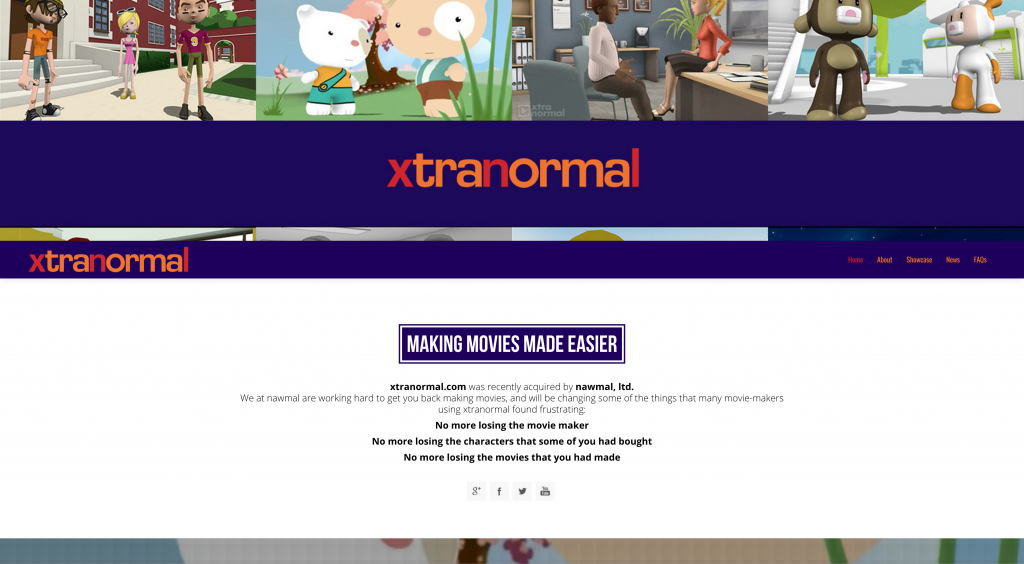
A typical example was one of my favourite online animation tools Xtranormal  I loved this app and used the free version along with thousands of other teachers, then started paying to buy more scenes and more characters and to have the option to download and save my videos!  Suddenly the company announced they were closing and loads and loads of teachers lost all their work.

This is what you can now read on their website, written by a team of people trying to resurrect the service: xtranormal

No more losing the movie maker

No more losing the characters that some of you had bought

No more losing the movies that you had made

So what are the going rates?

On the flipside of this, you have your average startup company which creates a great product or serivce and they offer a free plan for a limited range of presentations and one or two templates.

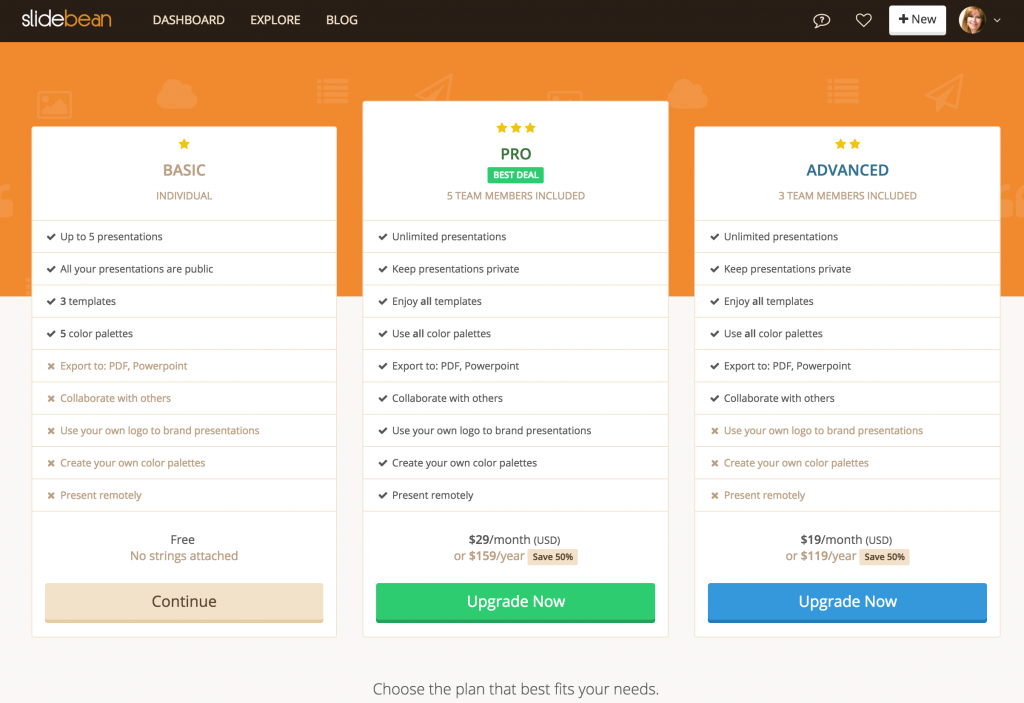
Pricing Slidebean

I believe most start ups think in terms of ‘Well, what’ 29 dollars a month? It’s not that much money!’  Or 19 dollars a month!!!

Well, I tell you that at the end of the day, if you pay for a few services like we do as a school, the bill at the end of each month is quite steep!!!!

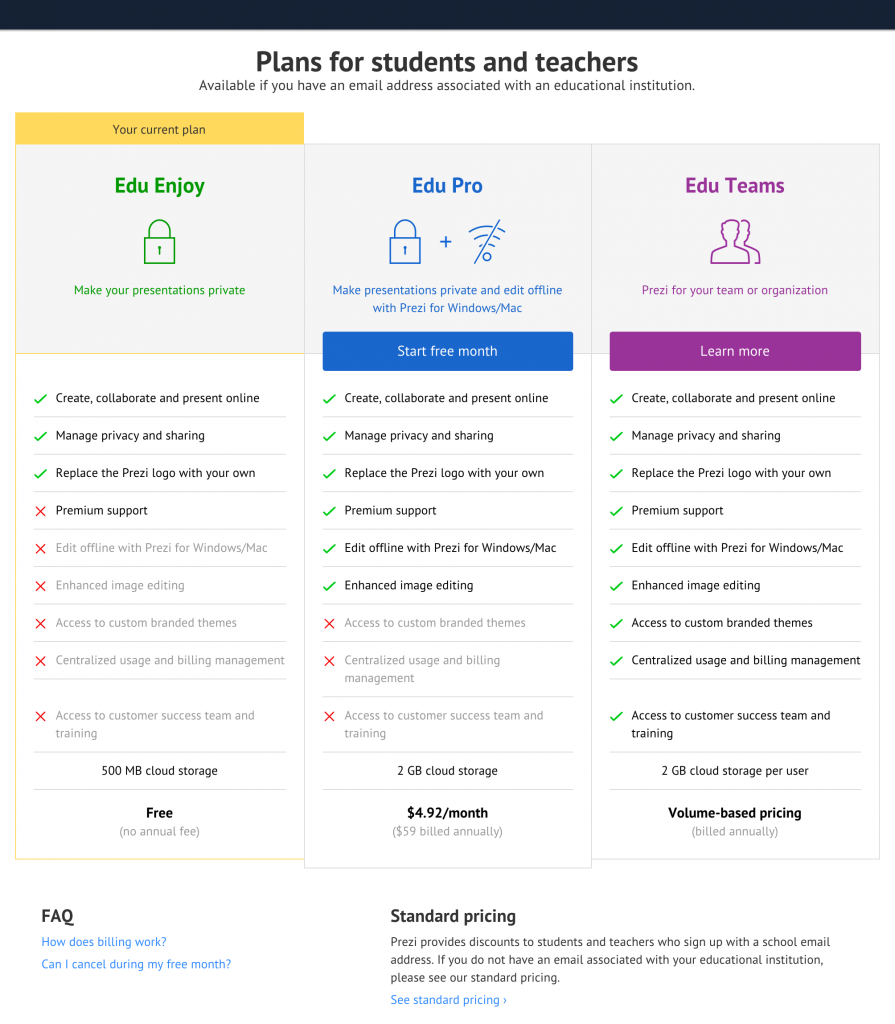
Compare this to the infinitely more versatile and original Prezi pricing plan and you will note the difference.

Of the two services, this is the one I would be more likely to pay for for this, and of course, other reasons, such as the versatility of the presentation templates, the desktop variation of a presentation which can be downloaded and played on one’s pc or laptop…

Pricing Prezi

Up to a couple of years ago, I used to pay a 29 euros per month subscription to Survey Monkey – when I calculated the cost of each survey I did using their services, it has cost me more than 300 or 400 euros!!!!

Google does it for free!!!!

One more example – my favourite screencast software – the famous Jing

TechSmith Screencast.com online video sharing Plans and PricingCompare it with my OTHER favourite screencasting software, Screen-cast-0-matic

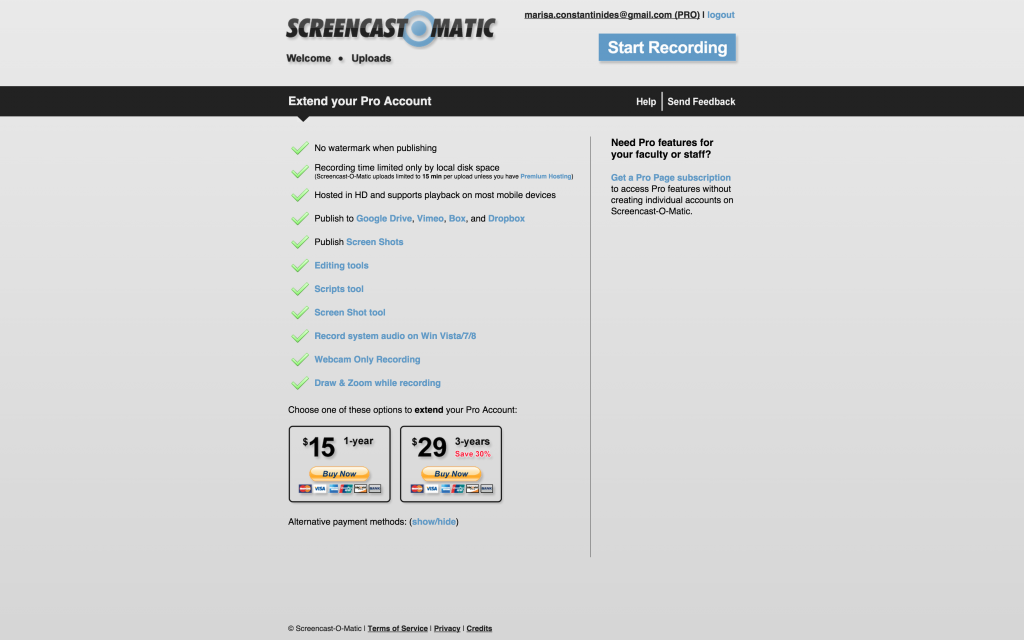
Go Pro Screencast O Matic Free online screen recorder for instant screen capture video sharing.

Compare two great screencast apps – Jing at about 100 dollars a year and Screen-cast-o-matic for 15 or under 10 if you go for the 3 year discount!

Apps

By contrast, most tablet  apps are much lower in price; for example, purchasing Microsoft Powerpoint for my iPad costs nothing, where you would have to pay almost 80 dollars US for the PC version. Keynote is now free but if you purchase an iPhone or iPad and even if you need to buy it is less than 20 dollars US – compare to powerpoint above!


Make the price right!

Make the price right, people! You can’t jump from nothing to 30 dollars a month – bring your prices down and you might get a lot more people paying!

You  let me have dropbox for free but if I want to pay, you ask me for 100 euros per month! 

Why would I pay that when Amazon asks for 70 a year for unlimited storage space!!!! Get real!!!! And OneDrive gives me 50 GB for free – Plus free online use of the latest versions of the Office Suite! 

This has happened to me time and again! I am willing to pay to keep my content safe but prices are too high – so I will keep going for the free versions for as long as I can.


P.S. Just like governments would make more money if they lowered their taxes – but greedy so and so’s that they are, they keep losing more and more money every year!!!!!

This post originally appeared on marisaconstantinides.edublogs.org, and was republished with permission.

____________________

Marisa Constantinides runs CELT Athens, a Teacher Development centre based in the capital of Greece, and is a Course Supervisor for all courses, including the DELTA Cambridge/RSA Diploma, the Institute of Linguists Diploma in Translation and off-site seminars and workshops on a variety of topics.

Pull Your Own Weight: An open letter to Michelle Obama regarding childhood obesity

**The Edvocate is pleased to publish guest posts as way to fuel important conversations surrounding P-20 education in America. The opinions contained within guest posts are those of the authors and do not necessarily reflect the official opinion of The Edvocate or Dr. Matthew Lynch.**

Changing the Default vs. Changing the Strategy

A column by Rick Osbourne

Dear Mrs. Obama,

Please allow me to start by saying that I applaud all the time and effort you’ve invested into the issue of childhood obesity prevention and rehab. Had you not done so this epidemic would still be inflicting its damage on millions of kids below the media’s radar. You’ve changed that. But as you readily confess, the job is still a long ways from finished.

That said, in my view, conventional agencies (including the US Center for Disease Control, American Medical Association, American College of Sports Medicine, American Academy of Pediatrics, Robert Wood Johnson Foundation, Let’s Move, The Alliance for a Healthier Generation, etc.) who endorse the strategy known as The Environmental Approach to Obesity, represent a systematic obstacle that continually undermines your valiant efforts.

This strategy is based on the premise that people, and especially kids, are passive reactors to their environment. It treats kids collectively (not individually), as if they are nothing more than lumps of clay being molded and shaped by their environment. But it fails to take into account that kids (who are each faced with decisions and choices to make every single day of the week) are also pro-active molders and shapers of their own lives.

To demonstrate, let me point to an exchange I had recently with a member of one of these agencies. I posed the following questions and received the following answers.
Q – By starting young, before the obesity seed takes root, and helping kids learn to physically pull their own weight (which they genuinely love to do) kids not only systematically turn the tide on childhood obesity, but the documentation would be 100% concrete and tangible as opposed to mushy surveys about what people think about whatever.

The bottom line is that this intervention works. It can be applied systematically. And there’s not a school or youth program in the nation that’s unable to afford to implement it. As I said when we spoke, I want to avoid wasting anyone’s time. So, with these considerations, I’d like to know if you think our functional intervention fulfills your criteria.


A – Thanks for providing more information on the program. Our group funds research studies and evaluations of policy and environmental change and does not fund studies focused primarily on individual behavior change. While the intervention you propose may be scaleable to schools or youth programs, it is still focused primarily on changing each child’s individual behavior and therefore, unfortunately, it doesn’t seem to fit within the scope of this CFP.


Q – Although it’s been explained to me on a number of occasions, the logic of the “environmental approach” still escapes me. It seems that regardless of how anyone addresses the obesity problem, in the end they’re still trying to impact the behavior of individual human beings. After all, the US is made up of over 300 million individual human beings, a third of whom are apparently obese. By any chance can you square that round peg for me?


A -Ultimately we do want to change individual behavior, but how we change that behavior is through environmental change. For example, if you change the school food environment so that there isn’t any junk food available to students, the students will most likely eat the healthier food that is available. In the nutrition field we call it “changing the default” to one that is healthier and promotes healthier behaviors.


Another example is changing children’s menus in restaurants so that they provide milk instead of pop and apples instead of fries. Parents can still choose to purchase the unhealthy options, but because the “default” is healthier they will likely choose it. While education is indeed very important, our program focuses on a higher level (policies and environments) so that the change can impact more people.


Q – While I agree with the “changing the default” strategy, my contention is that the changes can be increased/improved dramatically and systematically by also addressing the problem from a functional perspective. So why not combine “the passive, environmental approach” with “the active, functional approach” and save millions of kids the trials and tribulations of living their lives in a state of obesity?


Venturing Outside the Box?

For the record, I received no answer to this last question. However, as I indicated, despite the fact that the environmental approach is extremely complicated (multiple culprits), expensive (many billions) to implement, and time consuming (at least a generation to resolve), I tend to agree with its logic, with its theory? On the other hand, as Yogi Berra once pointed out, “In theory there’s no difference between theory and practice. But in practice there is.”


And in practice, the environmental approach has fallen excruciatingly short of the mark for over two decades now, while the epidemic rages on. So why not venture outside the box? Why not try something new and interesting? Why not combine the environmental approach with a strategy the American Society of Exercise Physiologists describes as “A simple, easily implanted, easily documented, and affordable solution to childhood obesity?” It works. It’s cheap. It’s systematic. You’ve got nothing to lose and everything to gain. I for one say, LET’S MOVE!!


Sincerely,

Rick Osbourne

Pull Your Own Weight Foundation

Naperville, IL


______________

Rick Osbourne is a former physical educator and a pioneer in the field of functional childhood obesity prevention. He currently serves as President of the Pull Your Own Weight Foundation which is an Illinois based, 501c3, not for profit organization whose focus is functional childhood obesity prevention. He’s written and published three books in this field, the latest of which is entitled Beating Childhood Obesity Now: A Simple Solution for Parents and Educators. He’s the Examiner’s national childhood obesity prevention correspondent. He writes an online column for The Edvocate. And you can connect with Rick via Twitter, Linkedin, or Facebook.

Using Time to Improve Student Performance

Proponents of a year-round school year suggest that a shift in the time designated for teaching and learning will help students achieve more by minimizing summer learning loss, allowing for innovation and implementation of creative programs. It also provides the time needed to assist children who may benefit from the extra help. Many school districts around the country are in fact working toward increasing both the hours in each school day and the number of days schools are in session.

Many education leaders are open to the idea of increasing the number of days per school year up to an additional month, and some support year-round school programming. Some leaders suggest an extended school day and/or school year for schools that are failing to perform well. This suggestion seems to have some foundation in research. Data shows that certain groups (including students from low socioeconomic backgrounds) are negatively impacted by the traditional summer hiatus. The proponents of year-round schooling claim that with extended time to teach, teachers will be able to help all students attain better performance results.

It is easy to understand why education reformers put so much emphasis on time spent teaching and learning. Research shows that time may be the most essential resource of the education system. However, it is important to recognize that merely increasing the amount of time students are in school is not a panacea for improving student performance. It is necessary to utilize the available time in the best possible manner. If teachers fail to convert the available time to quality teaching and learning time, the increased school hours will not improve student performance.

Parents have a stake in school hours as well. Some parents are already concerned with their children’s academic progress, and thus prefer to employ additional educational services for their children that may offer better after school educational opportunities. Still other parents prefer to spend their own time educating their children after school. In these cases, the idea of increasing school day hours may not be supported by parents of students from affluent backgrounds, and may not be necessary. Still, by increasing high-quality education time, schools can provide help for students who cannot afford learning opportunities outside of school.

While there are many positives of a longer school day or year, there are also a number of concerns. Cost, for example, is an issue that must be considered. Increasing the number of hours and days in school can prove expensive since there are personnel and facility use issues that must be taken into account. This leads some educators to believe more emphasis should be placed on increasing the utility of available school time.

Some education leaders suggest that instead of increasing the hours and days in a school calendar year, it would be better to spread out the available number of school days in such a manner that the school services may remain available for the students throughout the year. This might mean offering three short breaks rather than one long summer vacation, or simply offering various classes or tutoring programs during the summer downtime. Either way, this will add up to increased costs in facility usage and likely increased staff costs as well. Despite some perceived negatives and specific issues that would need to be addressed, the idea of year-round schools is continuously gaining support in the United States.

Understanding Parental Involvement

When we discuss parental involvement in schools, we often concentrate on ways in which parental involvement can help schools perform better and how parents can help their children excel in learning. It is a well-known fact that parental involvement can help students achieve success in school; however, it is difficult to measure how much parental involvement is required of parents in order for them to help their children to improve their learning skills and performance.

Parental actions that obstruct the learning process and other educational goals are equally immeasurable. Comprehending the impact of parental involvement requires understanding deficiencies that reduce student performance, and providing parents with tools to diminish their effects. This same principle applies to understanding the ways that schools can encourage parental involvement in low income communities. Situations like these necessitate sensitivity to ethnicity, race, religious affiliation, linguistic challenges, single parenthood, and familial characteristics.

Parents are often influenced by their ethnic background when trying to help their children improve academically. It is imperative that school personnel understand the importance of the family’s cultural characteristics in the educational process. Schools should structure parental involvement programs that take advantage of the strong qualities individual parents bring to the schooling process, as a means for promoting improved relations between parents and the school. Interactions between parents and school personnel are meant to provide information and assistance to both the school and parents.

It is important to monitor how parents act on the instructions, information, and advice offered through such programs. Due to various cultural differences, some families may succeed in obtaining the maximum possible benefit of such interactional programs, while other families may fail to utilize these opportunities. Another factor to consider is the possibility of conflicts between parent’s cultural and linguistic background, and the social, linguistic, and cultural values existing in the school.

Schools often promote common ideals of a capitalistic culture, and, in doing so, present the impoverished, minorities, the disabled, and immigrants, as inferior. The success of parental involvement programs often depends on reaching parents living within different political, economic, cultural, and social realities. In order to help parents make better use of parental involvement programs, it is necessary to attend to these differences, and incorporate ways to meet the varied needs and expectations of parents within the parental involvement program.

The success of parental education and involvement programs depends on the ways parents can make use of their social, human, and financial resources to help their children perform better at school. Parents can also help their children improve their learning skills by providing attention to their children’s studies and participating in meaningful collaboration with school personnel and authorities. Historically, schools have played a major part in improving social conditions. Collaboration between schools and parents can help alleviate the challenges facing students who are living in families that have a lower socioeconomic status.

Policy makers must realize the importance of public schools and their role in facilitating the prosperity of our nation. Federal and state agencies have initiated various programs to improve the relationship between schools, parents, and communities. In order to increase parental involvement and reduce barriers that restrict parents from participating in the education system, it is essential to offer parent education for impoverished parents or parents with disabilities, so that they may learn better ways to boost their children’s learning skills.

The value of parental involvement programs has been well established. Effective parental involvement programs are best achieved when the program originates with the study of the school community, and then proceeds to develop instruction, and provide advice and information that reflects the circumstances, needs, and potential contributions of families who are a part of the school community.

Schools must be prepared for the fact that one outcome of effective parental involvement programs will be the desire of parents to become partners in the decision-making process existing in schools. Thus, school personnel must possess a genuine belief that shared responsibility for multiple aspects of the educational enterprise will result in improved learning environments for children and youth.

The shocking truth about competency based education

**The Edvocate is pleased to publish guest posts as way to fuel important conversations surrounding P-20 education in America. The opinions contained within guest posts are those of the authors and do not necessarily reflect the official opinion of The Edvocate or Dr. Matthew Lynch.**

By Kelly Walsh

The Rise of Regionally Accredited Competency Based Education in HigherEd

I’ve been a fan of the idea of Competency Based Education since I first heard of it. It seemed like such a positive development and a step ahead in the evolution of higher education here in the US and abroad. But I figured it would be quite a while (as in years, possibly quite a few years) before the country’s regional accreditors would become comfortable with assessing and approving CBE programs.

In the U.S., colleges and universities need to be regionally accredited if they wish for students to be eligible for the federal education funds commonly referred to as Title IV aid (in the form of grants and loans). Many students simply can’t afford tuition at even the least costly colleges without some help from federal aid.

So, getting back to CBE and accreditation … I knew that Western Governors University was a pioneer in CBE and that their programs had been regionally accredited, but they were well ahead of the game and seemed to be very much the exception, at least they were when I first learned about them a couple years ago. I also knew that EDUCAUSE was exploring CBE through their Breakthrough Models Incubator program last year, and this further influenced my perception that CBE had a lot of maturing to do before it was ready to take off (or so I believed).

Creating a New Higher Education Ecosystem

In his April, 2015 article, Higher Education 2.0 and the Next Few Hundred Years; or, How to Create a New Higher Education Ecosystem, Paul LeBlanc, President of Southern New Hampshire University (SNHU) and EDUCAUSE 2015 New Business Models department author writes:

“Three important developments stand to dramatically change the way we think about degree programs and pathways:

  1. The rapid adoption of competency-based education (CBE) programs, often using industry and employer authority for guiding the creation of the competencies and thus programs
  2. An eventual move to suborganizational accreditation, with Title IV funds available for credits, courses, and microcredentials offered by new providers in new delivery models, part of the accelerating trend toward “unbundling” higher education
  3. Increasing recognition that postsecondary education will no longer be contained to the existing and traditional degree levels but will instead be consumed at various levels of granularity—less than full degree programs and continuing throughout lives and careers”

That statement about the “rapid adoption” of CBE got me curious, especially given the other statements being made here and the awareness that regional accreditation stands between several of these ideas and any sort of widespread proliferation of them. So I started searching the web for regionally accredited competency based education degree programs. I was quite surprised by what I found.

Accredited CBE Programs are Growing at a Faster Rate Than Many Would Have Anticipated. Is it Gradually Going Mainstream?

What has shocked me a bit (in a good way) has been learning that quite a few CBE programs have been accredited already, and that the regional accreditors have defined paths for CBE program accreditation.

First, I came across this regionally-accredited CBE program from the University of Wisconsin, the “UW Flexible Option“. Then I found this article explaining how a some of Washington’s 34 community and technical colleges are rolling out regionally accredited CBE degrees (with the help of advising from WGU). In this article, we learn that in addition to UW, two other “Big Ten” Universities having introduced CBE degree programs – the University of Michigan and Purdue University.

The article, Competency-Based Degree Programs On The Rise, not only confirms my perception, it also reminds us that big online players like Capella University and SNHU’s College for America have accredited CBE programs.

While I was at it, I figured I would confirm that the Middle States Commission on Higher Education (our accreditor at CW)  has a formal process for seeking accreditation for CBE programs, and learned that they do indeed (they announced the establishment of a “Direct Assessment” Approval Process in July of last year). Given this and the approved programs noted above, it seems likely that all of the regional accreditors now have a similar process!

While trolling the Web for this information, I also came across this organization and website – the “Competency Based Education Network” (http://www.cbenetwork.org/about/). “The Competency-Based Education Network is a group of regionally accredited colleges and universities working together to address shared challenges to designing, developing, and scaling competency-based degree programs.” There are dozens of colleges and universities in this group. 

CBE is becoming a meaningful part of the higher education landscape here in the U.S. much faster than I realized. Might President LeBlanc’s other “developments” also come about a lot sooner than many would think? What do you think?

(Okay, I’ll say it … sorry for the corny article title, but I’ve been wanting to use that classic headline ‘hack’ for years now and this was such a good opportunity! It really has been a bit of a shock to learn how quickly accredited CBE is evolving and changing the landscape of higher ed :)).

This post originally appeared on Emerging EdTech, and was republished with permission.

________________________

Kelly Walsh is Chief Information Officer at The College of Westchester, in White Plains, NY, where he also teaches. In 2009, Walsh founded EmergingEdTech.com. As an education and instructional technology advocate, he frequently delivers presentations on a variety of related topics at schools and conferences across the U.S. Walsh is also an author, and online educator, regularly running Flipped Class Workshops online. His eBook, the Flipped Classroom Workshop-in-a-Book is available here. Kelly also writes, records, and performs original music … stop by kwalshmusic.com and have a listen!

Getting the most out of student blogging assignments

**The Edvocate is pleased to publish guest posts as way to fuel important conversations surrounding P-20 education in America. The opinions contained within guest posts are those of the authors and do not necessarily reflect the official opinion of The Edvocate or Dr. Matthew Lynch.**

Guest Post by Elaine Hirsch

Examining Instructional Blogging Efforts and Lessons Learned.

As instructional blogging made its way into classrooms, student feedback has helped teachers structure methods to use blogs effectively, from elementary classrooms to online PhD programs. A mix of positive and negative feedback has helped illustrate how blogs are useful and how instructors can identify and improve upon challenges that might arise with their usage.

In his article, “Instructional Blogging: Promoting Interactivity, Student-Centered Learning, and Peer Input,” Stuart Glogoff relays student feedback after the use of instructional blogs in one of his classes. One student reported that reading about new subjects via the blogging format was enjoyable; she found that researching the topics to post on the class blog was helpful to her overall learning experience. The student, however, complained that, “the posts were few and far between.” She expressed further disappointment over the fact that none of her posts received comments, a complaint echoed amongst other students who took the survey

In order to make instructional blogging more effective, Glogoff gave blogging assignments that required each student to post entries and comment a certain number of times on the work of others. Afterward, students reported general increases in their sense of community. They also reported greater satisfaction with the overall blogging experience. Others said the entire blogging and peer-reviewing process not only helped them understand the course material but also provided a better avenue for helping each other learn through conversation.

Dr. John Freed, a professor at Brandman University, assigned students in his Communications 372 class the task of creating individual blogs accessible to all other participating students. Along with Dr. Freed, each student in the class subscribed to his or her classmates’ blogs. The class shared its ideas and participated in online discussions via the individual blogs. Students learned how to document and present their accomplishments, work electronically, and instantly place their achievements within a global context. In their end-of-term evaluations students reported the blogs did help them accomplish their course objectives.

According to Dr. Freed, many of his students expressed appreciation that the blogs not only helped them learn the class materials in a new way, but also they liked that the blogs made class materials more readily accessible. Some reported the blogs facilitated learning from one another, and helped them learn new electronic media skills that could be applied in other settings. The only negative feedback he received was from students previously inexperienced with blogging and who therefore had problems learning to navigate the interface, causing them to fall behind on their work.

In a study conducted by Michele D. Dickey of Miami University students who had participated in instructional blogging assignments reported a lessening sense of social isolation and an increase in social camaraderie. One student reported her interactions via blogging with other students in the class instilled the idea that she was part of a community composed of her classmates.

In the same study, one student revealed mixed feelings about assigned blogging. She reported feeling that the friendliness that took place during blog discussions wasn’t genuine. She also reported a sense of cronyism: other members of the blogging group had become exclusive friends and ignored her posts. As a result, she didn’t feel her attempts to start conversations were successful. She also expressed that the sense of community often expressed in the postings didn’t fairly represent the actual class, but instead represented the group dynamics of the online community.

Using blogging as an online educational workspace can expand the realm of learning beyond the physical constraints of the classroom. For many students, it provides a whole new method of learning. The crucial element for instructors is to listen carefully to how students express their experiences and to draw on this information to improve instructional blog use for future classes.

This post originally appeared on  the Emerging EdTech page, and was republished with permission.

Read all of our posts about EdTech and Innovation by clicking here. 

________________________

Elaine Hirsch is kind of a jack-of-all-interests, from education and history to medicine and videogames. This makes it difficult to choose just one life path, so she is currently working as a writer for various education-related sites and writing about all these things instead.

10 techniques to ensure that your lessons are as dull as dish water

**The Edvocate is pleased to publish guest posts as way to fuel important conversations surrounding P-20 education in America. The opinions contained within guest posts are those of the authors and do not necessarily reflect the official opinion of The Edvocate or Dr. Matthew Lynch.**

By Kelly Walsh

Seriously, it’s our Job to Inspire Learning?

We’ve all heard of or witnessed so many of these tired old approaches to delivering lessons. If you do happen to witness other educators sucking the will to learn out of students, please don’t just sit idly by. Weep openly, gnash your teeth, moan and shake our head, or maybe even wail loudly and pound your fists against the wall.

Here are some of the many unfortunate ways in which students everywhere are being disenchanted, disaffected, discouraged, disavowed, disarmed, disturbed, disgruntled and disingenuously served by some of our colleagues, who apparently feel that it is simply not their job to inspire learning or motivate students …

  1. Frequently lecture endlessly throughout the entire class session, expecting students to learn by scribbling notes as fast as they can.
  2. Don’t provide any activities that allow students to get up and move (a particularly heinous act for younger students).
  3. Have students read or work on problems alone in their chairs for the entire class session (as one of my elementary teachers used to say, “Read, Damn it, Read!” Good times.).
  4. Create online video lessons that basically just repeat what’s in the text book.
  5. Never give any group lessons or collaborative assignments.
  6. Create “digital lessons” in the form of narrated PowerPoint slides, reading verbatim from the text in the slides.
  7. Avoid all forms of formative assessment.
  8. Let Teacher’s Assistants give the bulk of the lectures, during which they frequently just rewrite content from the text on the board and attempt to explain it (not to mention the occasional indiscernible accent, which may not be ‘PC’ to say, but is nevertheless simply not fair to students).
  9. Rarely encourage interaction and dialogue (those *&^# students really should just sit there and listen!).
  10. Never taking a moment to recognize your students as individuals and reward them with gratitude, appreciation, and recognition of effort.

If you do come across this unfortunate situation, you might consider printing this article out and slipping it under that colleague’s door or in their mail box. Maybe, just maybe, they’ll check out some of these resources to try to change their ways (we can all dream can’t we?):

This post originally appeared on Emerging EdTech, and was republished with permission.

Read all of our posts about EdTech and Innovation by clicking here. 

________________________

Kelly Walsh is Chief Information Officer at The College of Westchester, in White Plains, NY, where he also teaches. In 2009, Walsh founded EmergingEdTech.com. As an education and instructional technology advocate, he frequently delivers presentations on a variety of related topics at schools and conferences across the U.S. Walsh is also an author, and online educator, regularly running Flipped Class Workshops online. His eBook, the Flipped Classroom Workshop-in-a-Book is available here. Kelly also writes, records, and performs original music … stop by kwalshmusic.com and have a listen!