
Uncategorized

2023 Best Women’s Colleges and Universities in America

When most people think of college, they think of a bustling coeducational campus with both men and woman being represented equally. However, for many colleges and universities, this is not the case. These schools cater almost exclusively to one gender but still may enroll members of the opposite sex.

When it comes to colleges that were historically all female, 37 of them were still active as of 2019. It is important to point out that most of these institutions are liberal arts colleges. Many of them were founded in the 1800’s as teaching seminaries. With so many to choose from, which ones are considered the cream of the crop? In this piece, we will rank the 2022 best women’s colleges and universities in America.

  1. Spelman College – Located in Atlanta, Spelman College is a small private not-for-profit institution providing a liberal arts education to women. It’s a great fit for students who are looking for a small campus and an equally small student to faculty ratio (11:1). With over 80 student organizations, there’s something for everyone and a way to get to know other students from all walks of life.
  2. Mississippi University for Women – MUW was the first public college for women in the United States, and the student population is 80% female. Nursing, business administration, and liberal arts make up the top three programs.
  3. St. Catherine University – St. Kate’s ranks eleventh in the Midwest region, and it’s also considered a best-value school. This school is known for its programs in nursing public health, and social work.
  4. Wellesley College – Known for its academic rigor, this all-female school encourages women to dream big and achieve their goals. Wellesley has cross-registration agreements with schools like MIT. Not all the schools in Massachusetts are behemoths in size, but they offer just as rigorous a curriculum as larger universities. One example of this is the
  5. University of Massachusetts-Lowell. This school offers more than 100 bachelors degrees, as well as masters and doctoral degrees, and students are encouraged to participate in community service.
  6. Agnes Scott College – is a women’s college offering top-ranked professors and an intimate 9:1 student-faculty ratio. The student population is highly diverse, and all students participate in global training through their innovative “Summit” program.
  7. Saint Mary’s College – This private, Catholic women’s college is known for a strong sense of community and a welcoming, friendly atmosphere. The supportive environment is ideal for helping young women find their unique voice in the world.

Click here to learn more about the ranking methodology that we used to compile this list.

Congratulations! If you represent a college or university that is included in this list, please collect your seal below.
2023 Best Christian Colleges and Universities in America

For some high school students, religion permeates everything that they do, and guides the decisions that they make. This was certainly true of my nephew, who decided to attend Belhaven College, a Christian university in my home state of Mississippi. He loved the idea of attending a school that married higher education with Christian values and teachings.

Belhaven is certainly one of the best Christian universities in America, but most Americans have not heard of it. To help you become acquainted with Belhaven and other Christian universities, I decided to compile a ranking of the best Christian colleges and universities in America.

  1. Liberty University – is a private, non-profit Christian university with a focus on research, located in Lynchburg, VA. Liberty is the most substantial Christian university on the planet. The university is comprised of 17 colleges, which includes a school of medicine and a school of law. Liberty offers over 290 bachelors, 315 masters, and 32 doctoral areas of study.
  2. Faulkner University – This small, private university offers a Christian-based liberal arts education for more than 70 different degrees. The school attract students from across the United States and from other countries; half of these students are minorities, and more women than men attend this school at a ratio of 2:1.
  3. College of the Ozarks – College of the Ozarks makes higher education accessible to those least able to afford it. In addition, the undergraduate teaching program is the fourth best in the nation. There is no charge for tuition; students must demonstrate an educational need to attend this school.
  4. Calvin College – A liberal arts school with a Christian focus, Calvin College focuses on helping their students find employment within nine months of their graduation date. Expectations are high, and excellence is the norm.
  5. Arizona Christian University – Ranked as one of the top regional west colleges, this accredited school integrates faith, fellowship and Christian service in a liberal arts program of study. Annual tuition is approximately $24,000/year.
  6. Abilene Christian University – Abilene Christian University is a faith-based school that make it one of the best colleges and universities to work for in 2018 because of its passion for creating a balance between work and life. Those who have worked at the Texas-based campus cite collaboration, trust and campus safety as their primary reasons for rating this school with high marks. The university culture promotes critical thinking and positivity. Reviewers report enjoying national exposure in a small-town atmosphere.
  7. Fontbonne University – With less than 1,000 students, Fontbonne provides an individualized higher education experience for students seeking a liberal arts degree or professional program in a Christian environment. The school ranks 72nd among Midwestern colleges, and it is also a best-value college opportunity.
  8. Mississippi College – This school offers liberal arts and science programs in a Christian environment. Students who are admitted to the private college have demonstrated excellence in academics and seek to integrate their faith into their studies. The college is ranked #32 in the South and is a best-value school. Expect to pay approximately $17,500 annually in tuition and fees.
  9. Belhaven University – This private college ranks #78 among southern institutions of higher learning. Belhaven offers a Christian liberal arts education that will buoy graduates throughout their lives. Tuition and fees cost approximately $24,000 a year.
  10. Williams Baptist College – This private, Christian school offers a liberal arts education that is tailored to student need and delivered in small class sizes. Students enroll predominantly in elementary education, biblical studies, psychology, and general management. Annual tuition is $17,320.
  11. Wheaton College – Illinois – With a curriculum and mission that clearly reflect conservative Christian values, this school is also very accepting of students of different beliefs. The population is diverse, and teachers and students demonstrate warmth and friendliness.
  12. Belmont University – Belmont is a private Christian school devoted to outstanding undergraduate teaching; Belmont tied for fourth place in this category, and it ranks #5 among regional universities in the south. This university is also veteran-friendly and confers degrees in music and music production. Annual tuition and fees at this private school are $32,820.
  13. Tennessee Wesleyan University – At # 15 among southern colleges, this school offers a Christian atmosphere and strong academics in teacher education, business, and nursing.  Veterans will find that this school caters to their unique needs, and the university is a best-value choice. Annual tuition and fees cost $23,800.
  14. Milligan College – Ranked at #23 among southern universities, Milligan, a Christian liberal arts school, requires that every student participates in its Spiritual Formation Program. Many Milligan graduates go on to earn advanced degrees. The annual tuition and fees are $32,500.
  15. Welch College – This small, private school has a student enrollment of 385 students and has placed #26 among southern region colleges. Formerly known as the Free Will Baptist Bible College, the campus attracts students from a variety of Christian backgrounds. It has continued some of its original traditions, including prohibiting alcohol on campus.
  16. Taylor University – is a conservative Christian school that prides itself on preparing students for ministry. There are a multitude of athletic and social events, including a popular film festival. With a supportive, home-like atmosphere, college dorms here rank #25 in the nation.
  17. Warner Pacific College – Coming in at #9 in Western colleges, Warner Pacific is a private school with a Christian liberal arts focus. The school prides itself on providing a personalized and well-rounded education. Annual tuition and fees here run $24,000.
  18. Samford University – A Christian University that is slightly larger than Faulkner, Samford is also a liberal arts school. Students experience small classes that focus on communication, culture and a Biblical focus. Tuition and fees cost approximately $30,000/year.
  19. Dordt College – is a private Christian school in rural Sioux Center. Although the focus is on ministry-related majors like worship art, the school does provide some excellent secular programs, too.
  20. The Baptist College of Florida – This small private school allows students to combine religious education with preparation for their career paths. Courses are taught from a Christian perspective.
  21. Luther College – Rated as one of the top Christian colleges in the nation, Luther is known for a beautiful campus with dorms catering to specific interests. It’s an ideal setting for students who love the outdoors.
  22. Central College – is a private Christian college which emphasizes environmental studies and international programs. Students can choose from a wide variety of study abroad programs all over the world.
  23. Northwestern College – rates high among the top colleges in the Midwest. Some of its best features include a Peer Learning Center and a strong sports program. A diverse student population and competitive financial aid make this Christian college a great choice.
  24. Southwestern Christian University – Ranked at #21 among western regional colleges, this school embraces the motto “scholarship, spirit, service” in everything it does. The small school offers traditional programs of study as well as adult and online courses. The annual tuition and fees here run approximately $13,000.
  25. Bethel University – The focus at Bethel is on Christian principles in every one of the programs of study offered at the college. Business, nursing, and education are popular majors, and students learn how to become servant leaders. Annual tuition is $36,200. Bethel is tied for 11th in the Midwest.
  26. Pepperdine University– Malibu, California: While the population of this Christian school is only at 11 percent Hispanic, the graduation rate for this group is 81.8 percent. This number is higher than the graduation rate for white students which is 78.8 percent, giving Pepperdine a negative graduation rate gap for Hispanic students at -1.9.
  27. Blue Mountain College – One of the tiniest private liberal arts schools, Blue Mountain has a total enrollment of fewer than 600 students. Academic studies include a Christian-centered focus. The college is ranked #8 in the South and is considered a best-value. Tuition and fees cost $11,760 annually.
  28. Ottawa University – Since 1865, this Christian school has provided higher education for students seeking vocational training and service to God.
  29. MidAmerica Nazarene University – This Christian-based school prepares students for critical thinking, a conservative philosophy, and a personal relationship with God. Three-fourths of the classes here have fewer than 20 students. Tuition is $17,514 annually.
  30. Toccoa Falls College – features a wooded, rural campus and a Christian-based curriculum. The school combines career preparation with spiritual development, using scenic mountains as a backdrop.
  31. Grand Canyon University – Located in Phoenix, this university is a private, non-denominational Christian School that offers degrees in broadly diverse areas of academics, including business, biology, and fine arts. Tuition and fees run $17,000/year.

Click here to learn more about the ranking methodology that we used to compile this list.

Congratulations! If you represent a college or university that is included in this list, please collect your seal below.
2023 America’s Best Urban Colleges and Universities

Growing up, I always dreamed of attending college in the big apple. Since I grew up in a rural community in Mississippi, the allure of living and existing in America’s mecca of creativity and culture was a fitting fantasy. Alas, in the end, I decided to stay in state, attending the University of Southern Mississippi, located in Hattiesburg.

Although I decided that attending college in a metropolis was not for me, many high school students choose to embrace the hustle and bustle of an urban university. As I found out during my initial college search over twenty years ago, America doesn’t have a shortage of world-class urban colleges and universities. In this piece, I will discuss the best of the best.

  1. Vanderbilt University – Located in the heart of Nashville, TN, this private university ranks highly among schools across the United States. Ten colleges make up Vanderbilt, and several of these have earned national distinction, including the prestigious Peabody College of Education and Human Development. Not surprisingly, the school has also been recognized for its undergraduate teaching. Expect to pay slightly less than $49,816 annually in tuition and fees.
  2. University of Chicago – A private school, located in the Chicago neighborhoods of Hyde Park and Woodlawn, University of Chicago gives students a beautiful urban setting only seven miles south of downtown Chicago. The University of Chicago is the third most expensive school in the country, with a combined total cost of $73,356. Tuition is $57,006, and room and board costs $16,350. The university is well-known for its research, and it consistently ranks in the top for the best in education. This Midwestern private school boasts some of the highest graduation rates in the country, and Hispanic students are no exception. Hispanic students graduate at a rate of 92 percent while white students are just ahead at 94 percent.
  3. University of Texas – Austin – More than 50,000 students have chosen to attend the school ranked #49 in the nation. This campus is in the heart of the state’s capital, where music and technology merge to create a vibrant scene. UTA, as it is known, has 18 colleges within the system, and the school is known for business, nursing, and engineering. Students can choose from more than 900 clubs and organizations to round out their college experiences. This university has a 36% acceptance rate. The annual in-state tuition and fees are $10,606.
  4. Columbia University – Situated right in the middle of “the city that never sleeps,” Columbia’s campus is a student’s fantasy. The tuition at Columbia University is $59,430 per year. Room and board costs $14,016, bringing the total annual cost to $73,446. Most students pay an average of $14,000 a year after receiving their financial aid packages. Before you begin packing your bags, however, keep in mind that Columbia turns down 94% of their applicants.
  5. Rice University — Located in downtown Houston between eccentric neighborhoods and the medical district, Rice house eight schools and colleges, each devoted to academic rigor. The schools of architecture, music, business, and engineering are highly respected. Rice University ranks third in undergraduate teaching and is considered a best-value choice. Annual tuition and fees cost $47,350.
  6. University of Southern California – With its main campus located near the center of Los Angeles, this school is home to the famous Annenberg School for Communication and Journalism, but it is also home to other programs of distinction like the Marshall School of Business and the Gould School of Law. The tuition and fees at this private school are $56,225 annually.
  7. University of California – Los Angeles – Undergrads especially prefer UCLA, likely because of well-known schools in engineering, law, and medicine. The David Geffen School of Medicine is affiliated with the highly acclaimed Ronald Reagan School of Medicine. The competition for acceptance is fierce; UCLA turns away 84% of all applicants. In-state tuition is $13,280. Situated in the Westwood area of Los Angeles, the universities location usually closes the deal for prospective students who are on the fence.
  8. New York University – This university, with an enrollment of 51,123 students, is the largest private school in the United States, and it’s ranked 30th in the nation. Students seeking a degree in theatre and film attend the famous Tisch School of the Arts. NYU is a city school that thrives in the heart of Manhattan. Annual tuition and fees cost $51,828. Perfect for students who always dreamed of taking a bit out of the big apple.
  9. Tulane University – Tulane is tied for 44th place among universities across the nation. Located in downtown NOLA, this college is at the hub of culture and cuisine. There is also an uptown campus. This university is known for its law school as well as the School of Public Health and Tropical Medicine. The school is highly selective, and those student accepted into the university can expect to pay approximately $54,820 annually in tuition and fees.
  10. George Washington University – District of Columbia: Located just four blocks from the White House, GWU is an excellent choice for students interested in national politics or international business. The Office of Diversity is dedicated to broadening the scope of students enrolled in the school’s programming. The white-to-black graduation rate gap is just 3 – with the black student graduation rate at 78.6 percent, just behind white students at 81.4 percent.
  11. Macalester College –Located in the heart of the twin cities in Minnesota, Macalester focuses on creating a personalized experience for its students. The school mascot is the Scots, and bagpipe lessons are free. This small college has earned distinction as a top liberal arts school, a best-value, and it offers an excellent undergraduate program. Tuition and fees are $54, 348. Bigger universities in Minnesota have also achieved recognition for their academic programs.
  12. CUNY Bernard M Baruch College– CUNY (City University of New York) is the largest urban public university in the US. The most popular majors on this campus tend to lie within the realm of business. Finance, Accounting, Business/Corporate Communications, and Administration and Management are all popular and taught with a student-faculty ratio of 17:1. The college is located in New York City, and it’s one of the senior colleges in the system. That said, it’s still affordable for New York residents and out-of-state tuition still falls below $20,000 per year. However, because it is in New York City, living costs tend to be high.

Click here to learn more about the ranking methodology that we used to compile this list.

Congratulations! If you represent a college or university that is included in this list, please collect your seal below.
2023 Public and Private Colleges and Universities with the Highest Student Satisfaction Rates

Deciding on a college home is not an easy choice for high school students. There are so many factors to think about. We know that students are concerned about location, campus activities and academic programs, but what statistics or numbers should they be looking at? Some people say that they should be looking at an institutions graduation and retention states, while I don’t disagree, I think that there is another vital statistic that trumps them all. What am I referring to? Student satisfaction scores. Schools obtain these scores by surveying recent graduates to see how satisfied they were with their total college experience; academics, housing, food services, internships, campus activities, etc. The score ranges from 0 to 100, and to me is the one statistic that tells me whether or not former students believe that their financial and time investment paid off. In this piece, I will rank and discuss the private colleges and universities with the highest student satisfaction scores.

Princeton University – This university boasts a student satisfaction rate of 85%. Named the top school in the nation for 2018, Princeton was founded in 1746, making it one of the first institutions of higher education in America and home to the Woodrow Wilson School of Public and International Affairs and School of Engineering and Applied Science. Princeton also takes top honors in best value and best undergraduate teaching.

The University of Notre Dame is a private Catholic school just 100 miles away from Chicago. A strong athletic program (especially football!) are among the many things that make students’ experience here exceptional. Notre Dame boasts a student satisfaction score of 78%.

Harvard University – Founded in 1636 and one of eight Ivy League campuses, Harvard ranks second among universities nationwide. Getting accepted at this private school isn’t easy; Harvard is one of the most selective schools in the United States, but it also has a 97% retention rate among freshmen. Harvard is heaven for book lovers and home to the largest academic library in the world. It’s also a great place to network. Harvard tends to produce American presidents, Nobel laureates, and future billionaires. One of the things prospective students appreciate most about Harvard is that unlike other top schools which tend to skew towards the sciences, Harvard divides equal attention to humanities as it does to science. Harvard boasts a student success core of 76.67%.

Columbia University – Three prestigious schools make up the university undergraduate program: Columbia College, the Fu Foundation School of Engineering and Applied Sciences, and the School of General Studies. Columbia is ranked in 5th place nationwide, and the school is a best-value university. The freshman retention rate here is 99%, which indicates an immense level of satisfaction with the school. Columbia boasts a student satisfaction score of 76.33%.

Duke University – Duke is 9th in the nation among nationally-ranked universities. This private school has ten colleges and offers prestigious degrees in business, law, medicine, engineering, public policy, and nursing, to name a few. Duke is also considered a best-value school and offers outstanding undergraduate teaching, and it’s well-known for its basketball program. Duke boasts a student satisfaction score of 76%.

University of Virginia – Tied for 25th place nationally, this school was founded by Thomas Jefferson. It is well-known for its schools of engineering, business and administration, law, and medicine. UVA boasts a student satisfaction score of 76%

College of William and Mary – Ranked at 32nd in the nation, the College of William and Mary is the second oldest institution of higher education in the United States.  The College of William and Mary boasts a student satisfaction score of 69.33%

Georgia Institute of Technology-Main Campus – The Georgia Institute of Technology is a campus filled with dedicated faculty researchers who are happy to let undergraduate students in on the action. Students enjoy a 20:1 student-faculty ration across popular majors like Engineering, Computer and Information Sciences, Physical Sciences, and Biological and Biomedical Sciences. I Looking for an opportunity to get involved with contracts sponsored by the government and important industries? Look no further than the George Tech Research Institute (GTRI) in the Georgia Institute of Technology. GTRI isn’t just focused on discovery. Faculty actively seek out groundbreaking opportunities and patents them. Moreover, students can get involved in faculty research and even receive the President’s Undergraduate Research Awards as a salary. Georgia Tech boasts a student satisfaction score of 67.00%.

Clemson University – Clemson offers rigorous academics and rich co-curricular activities. Its an excellent choice for veterans and identified as a best-value choice. Clemson boasts a student satisfaction score of 66.67%
Texas A&M University – College Station – Formerly known as Texas Agricultural & Mechanical College, A&M is a public research school known for its veterinary medicine, but it also has highly respected programs in business, education, and engineering. This university boasts a student satisfaction score of 64.33%

Auburn University – Many people consider Auburn one of the best places to live in Alabama, and students at the university also enjoy the city and all it has to offer. This school focuses on research as a result of being a land, sea, and space grant institution. Freshmen live on campus, but all other students must find off-campus housing. This university boasts a student satisfaction score of 62.33

Click here to learn more about the ranking methodology that we used to compile this list.

Congratulations! If you represent a college or university that is included in this list, please collect your seal below.

2023 Best Small-Town Colleges and Universities in America

When it comes choosing a college, the size of the community surrounding the institution is a significant factor. Some students like the hustle and bustle of a metropolis, some like the happy medium of a suburban area, while others may enjoy the isolation of a small town. If you like the seclusion of a small city, you will be happy to know that America doesn’t have a shortage of amazing small town colleges and universities. In this piece, we will rank and discuss the best of them.

  1. Middlebury College – Situated in the small town of Middlebury, this college is located between the Adirondacks and the Green Mountains in the picturesque Champlain Valley. This liberal arts college in the nation offers studies in the environment, sciences, literature and international topics. The campus is home to the Bread Loaf Writer’s’ Conference, and attendance at Bread Loaf is a highly sought-after honor. Middlebury is in the top ten of best undergraduate teaching schools, and it is also a best-value choice.
  2. Virginia Military Institute – Located in rural Lewisburg, Virginia, this school is #65 among national liberal arts colleges. The cadets at this school live in military-style barracks, but their opportunities for learning are not as sparse as their living quarters; they can choose from 80 programs of study.
  3. Harding University – Another private university in Arkansas, Harding is known for its acceptance of National Merit Scholars. Located in the foothills of the Ozark Mountains, 50 miles north of Little Rock, the school devotes itself to preparing students for global success, and more than two-thirds of the student population has studied overseas at one of the school’s international campuses located in Africa, Australia, and Europe.
  4. Depauw University – Offers a close-knit community within the small, rural town of Greencastle, Indiana. Although best known for its communication and social sciences programs, Depauw also has many offerings for technology-minded students.
  5. University of Mississippi – Located in the small town of Oxford, The University of Mississippi attracts top faculty members because of its ability to engage employees in the mission and vision of the school. Faculty members report experiencing high levels of job satisfaction, excellent working relationships with department chairs, a strong focus on diversity, and attention to fostering career trajectories.
  6. Miami University – Oxford –Miami University is located the town of Oxford, Ohio, about 35 miles from Cincinnati. Downtown Oxford is comprised mostly of the university, and 50% of the student population lives here while going to school. The school holds onto to quaint traditions involving alumni who reach out to current students, and the teaching here is recognized as fifth-best in the nation.

Click here to learn more about the ranking methodology that we used to compile this list.

Congratulations! If you represent a college or university that is included in this list, please collect your seal below.

What You Need to Know About the School to Prison Pipeline

When one student is causing a classroom disruption, the traditional way to address the issue has been removal – whether the removal is for five minutes, five days or permanently. Separating the “good” students and the “bad” ones has always seemed the fair, judicious approach. On an individual level this form of discipline may seem necessary to preserve the educational experience for others.

If all children came from homes that implemented a cause-and-effect approach to discipline, this might be the right answer. Unfortunately, an increasing number of students come from broken homes, or ones where parents have not the desire or time to discipline. For these students, removal from education is simply another form of abandonment and leads to the phenomenon called the “school-to-prison pipeline.”

When if comes to the school to prison pipeline, there are a lot of myths that surround it. Because of this, I decided to pen an article that discuss everything that you need to know this phenomenon. This will help you in your efforts to close the school to prison pipeline for good.

  1. Zero tolerance does not work. The term “zero tolerance” may sound like the best way to handle all offenses in public schools, but it really does a disservice to students. Not every infraction is a black and white issue and not every misstep by a student is a result of direct defiance. Often students with legitimate learning disabilities or social impairment are labeled as “disruptions” and removed from classroom settings under the guise of preserving the learning experience for other, “better” students. I suppose there is an argument to be made for protecting straight-and-narrow students from the sins of others, but at what cost?
  2. The numbers represent a modern-day segregation. An estimated 40 percent of all students that are expelled from U.S. schools are black, making black students over three times more likely to face suspension than their white peers. When you add in Latino numbers, 70 percent of all in-school arrests are black or Latino students. If you want to see the correlation between these school-age statistics and lifetime numbers, consider this: 61 percent of the incarcerated population are black or Latino – despite the fact that these groups only represent 30 percent of the U.S. population. Nearly 68 percent of all men in federal prison never earned a high school diploma. The fact that the U.S. has the highest
  3. School resource officers exacerbate the problem. High profile instances of school violence in recent years have led to a higher presence of law enforcement officers in public schools, often politely labeled as “resource officers” or a similarly vague term. Of course the presence of guns and other immediate danger items in schools are cause for arrest, or at least temporary removal of the student, but the American Civil Liberties Union reports that children as young as 5 throwing tantrums have been removed in handcuffs by these officers. Rather than addressing the heart of the individual problems, it is easier for public schools to weed out troublesome students under the umbrella of protecting the greater good. Convenience triumphs over finding actual solutions.
  4. The school to prison pipeline costs a lot of money. People who fall outside this fringe group of perceived misfits may wonder why the school-to-prison pipeline should matter to them. Outside of caring about the quality of life for other individuals, it matters in more tangible ways. Each federal prisoner costs taxpayers $28,284 per year, which is about $77 per day. That’s a measurable cost. What isn’t measurable is the indirect impact those incarcerations have on the economy in terms of those prisoners not contributing to the work force.
  5. Children often model what they see. In cases when they grow up watching criminal behavior, the odds are stacked against them when it comes to breaking out of the family mold. While parents have an extreme influence children, so does the K-12 education experience. More and more educators are getting behind the idea that removal from classroom settings because of discipline issues is an antiquated practice and one that does more harm than good to students.
  6. The school-to-prison pipeline has a long way to go to resemble any sort of improvement. It is estimated that black K-12 students are three times more likely to face suspension from school than their white peers. When that fact is linked to the statistics listed above, it becomes clear that removal as a form of “teaching a lesson” does not actually educate anyone. Only in homes where parents hold their children accountable can a suspension actually make a positive difference.

Did we miss any? Let us know in the comments section below.

Defined STEM Releases Full Curriculum in Spanish at TCEA 2018

The project-based learning materials demonstrate the importance STEM subjects have on students’ college and career aspirations

(CHICAGO, IL) January 31, 2018 — Education technology company Defined Learning, today announced that it is releasing its Defined STEM project-based learning materials in Spanish. The web-based curriculum resource will be available in Spanish for grades K-8 by February 15, 2018.

“The feedback we have received on the English version of Defined STEM has been phenomenal,” stated Joel Jacobson, co-founder and chief operating officer of Defined Learning. “Based on feedback from our clients, we recognized the need for a Spanish version of Defined STEM. We are excited at the potential impact that our Spanish content can have for both educators and students.”

Defined STEM makes project-based learning easy for educators to implement by providing all of the essential project-design elements, including lessons, videos, and research resources for pre-K–12. Each performance task is based on a situation in a real-world STEM career and provides students the opportunity to apply their knowledge in a real-world context.

With the Spanish versions complete, Jacobson said, the company is reviewing other language opportunities. “Our goal is to impact all students by demonstrating the importance STEM subjects will have on their college and career aspirations,” said Jacobson. “We feel strongly that offering Defined STEM in Spanish will bring us closer to achieving that goal.

At the TCEA conference on February 7th and 8th, Defined Learning will discuss its Spanish resources and share its client’s success stories at the PR with Panache! Storytelling Suite. To make an appointment, please contact Susan Hanson.

About Defined Learning
Defined Learning is a K–12 educational media company that combines technology, creativity, and curriculum expertise to provide useful and relevant products to schools. Defined Learning’s flagship service, Defined STEM, is a platform that enables teachers to provide application of knowledge to students through the use of project-based learning, real-world careers, and meaningful reading and writing activities. To learn more, visit DefinedLearning.com.

Press Contact
Sue Hanson
PR with Panache!
[email protected]


Student phones become a solution rather than a problem at Del Valle High School

By Derek Newton

“Kids don’t leave their phones at home,” knows Dan Wheeler, the Instructional Technology Specialist at Del Valle High School near Austin, Texas.

And at Del Valle, kids with phones aren’t the problem.

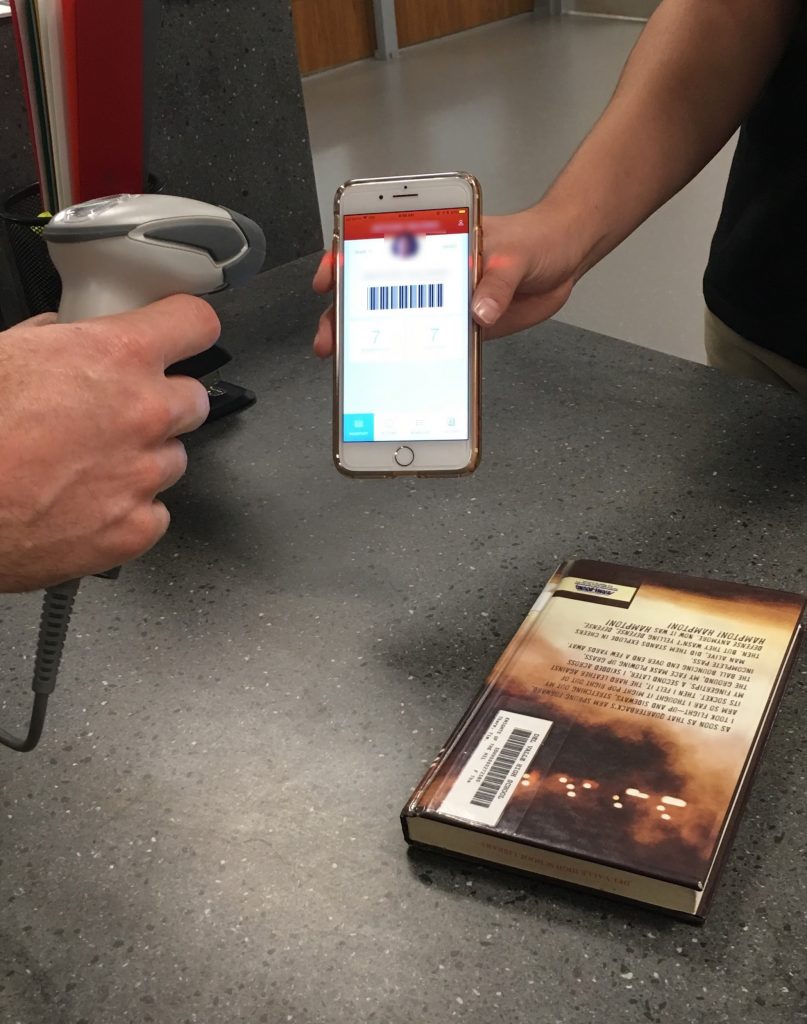
The school actually requires students to bring their phones every day because Del Valle has embraced a phone-based student ID system. Using the Hero K12 app, Del Valle switched to digital IDs, and Wheeler says it has made a significant difference for the school, students, parents, and teachers.

“We’ve saved thousands of dollars, maybe $6,000 overall, by just having to physically make fewer IDs for students,” he says. “There are significant costs of printing and delivering thousands of IDs plus continually replacing them because keeping track of IDs is, let’s face it, not really a high priority for students.”

In addition to mobile IDs, Del Valle uses the positive reinforcement tools in Hero to reward students when they are engaged in positive school actions, such as signing up for tutoring, making academic improvement, returning a lost item, or simply being a good school citizen.

“Instead of just issuing rules and handing out consequences,” Wheeler says, “with Hero, we award points for doing good, doing the things that lead to scholastic success.”

This approach came after some growing pains. When Del Valle started using Hero four years ago, Wheeler explains, “we only used it for tardiness and other negative behavior tracking because we didn’t have a full understanding of what it could be and why we should want to do more with it,” he said. “We tracked kids, ran reports but the policies skewed too negative. That was pretty unfair to the students since there was no way to earn points, only lose points. And the reports looked bad – like we had a ton of bad kids. The students hated it and the staff quickly burned out on only having a stick.”

Instructional technology specialist Dan Wheeler saved his school $6K by switching to digital ID system from Hero K12 which also ties into a behavior management system to encourage and reward positive behavior.

But now, with the new digital ID and behavior management system, administrators and teachers can debit or dispense points for a host of behavior and citizenship issues – points the students can redeem at the school store for school supplies, school t-shirts, tickets to events, or other items.

And rewarding the positive – instead of just tracking the negative – has made a big impact. “Once we changed our methods and limited the negative  behaviors we tracked and gave kids easy ways to earn back points, we started seeing a big shift,” Wheeler said. “One freshman English teacher who had a tough class, for example, relied heavily on Hero to incentivize things like being on time and having materials out. She said it was a godsend for changing her class dynamics. It’s really cool to hear those stories,” he said.

Now that they have the hang of it, Wheeler says, Del Valle uses the integrated student ID and behavior platform to do other things too. Teachers can assign academic interventions and tutoring through the system and award points to the students who attend. Students use their new mobile IDs to scan out their lunches, and parents can access the system to get reports on their children’s progress and then provide further reinforcement around the behaviors the school is highlighting.

A further benefit of collecting and being able to analyze student conduct, both good and bad, is that administrators have a more complete and accurate view of the school environment. The reports aren’t singularly focused on infractions any longer. And with those detailed reports, administrators can now focus on the people and places where their resources will do the most good.

Students are never without their cell phones. A student ID is scanned from their phone. Del Valle High School in Austin Texas eliminated printed ID badges.

“We can see the five to ten percent of kids that can really benefit from our intervention,” Wheeler said. “The vast majority have good behavior and Hero has helped us not waste resources on the kids who don’t need them.”

Even with all the added benefits of this new system, shifting to a digital student ID and citizenship philosophy has required planning and consistency. According to Wheeler, “We work with freshman parents as part of our Freshman Academy, and then with students for a week straight through our homeroom teachers. We walk students through how-to videos, we verify the app is downloaded on each phone and that it’s working,” he said. “And we’re clear with our students – this is the ID you need to get lunch so you do need it.”

Del Valle is now averaging more than 14,000 tracked student activities and actions every four weeks. Time and financial savings are significant, as is the change that has happened with the school’s culture. With such a rich volume of student information now available to policy makers, administrators, teachers, and parents – all tied to something that students never neglect, their phones – it’s easy to see how the Hero integration at Del Valle could be a model for other schools.


About the Author

Derek Newton is a writer based in New York City who’s written about education for The Atlantic, Huffington Post and other publications. He attended Columbia University and served as Vice-President of the progressive think tank, The Century Foundation.  


6 Habits of Tech Savvy Students

To survive in the digital age, students must be digitally literate. This begs the question, what does it mean to be tech savvy? What are the characteristics of tech savvy students? Keep reading to find out. In this piece, we will discuss the 6 habits of tech savvy students.

  1. They know how to code. Parents and educators across the country understand the importance of teaching kids how to code. Not only can it help them learn valuable skills that they can use into their technology-driver future, but it also helps them learn to approach problems differently. Instead of trying to force information in the minds of children, let’s explore everything games have to offer when used properly. Not only will kids become tech savvy and learn new skills, but they’ll enjoy themselves while doing it. And, ultimately, that might help keep curiosity alive as they progress through school, into college, and into the working world.
  2. They recognize their digital footprints. One of the most important things to teach students is the concept of a digital footprint. Students need to understand that whatever they put online will stay there; therefore, they must be mindful about the material they post on social media about themselves or others. As Common Sense Education explains, “Our digital world is permanent, and with each post, students are building a digital footprint. By encouraging students to self-reflect before they self-reveal, they will consider how what they share online can impact themselves and others. Awareness about one’s own digital footprint can also help to support digital literacy.” Tech savvy students know this.
  3. They understand the importance of giving credit. With the culture of online sharing, plagiarism is now running rampant. If you want your students to become tech savvy, they must learn the importance of giving credit to the author or creator of online content. ISTE’s Citizenship in the Digital Age infographic highlights the issue of stealing digital work and explains how good digital citizenship includes recognizing copyright laws and giving credit to the creator. Students often copy and paste materials or download content without paying because they do not realize this is wrong. By explaining the value of one’s work and how not giving credit is a type of theft, students will gain an understanding of their responsibility to credit their sources.
  4. They have excellent information literacy skills. With statistics showing students struggle to differentiate between real news and fake news online, it is important for teachers to work on improving students’ information literacy skills. Common Sense Education suggests, “Information literacy includes the ability to identify, find, evaluate, and use information effectively.” Teaching students to evaluate content for reliability is an essential skill they will carry with them outside of the classroom. Teachers should also focus on helping students learn to use the right keywords in their searches, as well as how to recognize credible websites and authors. Information literacy is necessary in a world with rampant online content that is misleading and false. But not to tech savvy students.
  5. They have digital marketing skills. Yes, tech savvy students should have digital marking skills. Digital Marketing deals with the promotion and sale of services and products through digital means. It is the wave of the future and businesses that are not tapping into this global market are really missing out. Teaching students in this field is different from in the past. The new students are “tech savvy.” They grew up using technology, so when it comes to teaching digital marketing, it is a good idea to use the tools of the trade to teach them about the internet and how to make campaigns that work well with it.
  6. They are digital leaders. Tech savvy students are digital leaders who do more than consume information. They synthesize learning and use it in collaborative environments. Digital leaders are dynamic change agents who transform the status quo, facilitate better communication and understanding, and integrate a variety of technology tools in their lives. Also, digital leaders improve technology experiences not just for themselves, but for others as well. They look out for the greater good.

That’s our list. Can you think of any additional habits of tech savvy students?


If You Feel Frustrated with Edtech, Let Someone Help You

I was blessed enough to spend 14 years in K-12 and higher education as a teacher/professor. As an educator, I always prided myself on being an innovator when it came to edtech. I spent hours researching the latest teaching and learning technologies and how to implement them into my classroom. However, I had a lot of colleagues who were resistant to using edtech in their classrooms. Not because they were opposed to it, but cause edtech scared them.

My how things have changed

They were trained during an era when overhead projectors were the most high-tech gadget in the classroom. It was easy to use. All you had to do was turn it on and place the transparent visual on top of the device, and it was magically projected on the screen. After use, you needed to remember to turn it off, so you wouldn’t burn the light bulb out. I know I am talking Greek now, but my old school readers understand what I am talking about.

Nowadays, we have interactive surfaces, like Smart Boards and other touch-screen tools, which have become popular in education over the past decade or so. The rise in popularity of these interactive surfaces shows no signs of slowing down, as more and more schools are replacing overhead projectors with interactive options.

Right now, there’s a big push to get teachers to incorporate technology into their lessons. For some teachers, this is no problem—it comes naturally. But for many teachers, bringing technology into the classroom is difficult. Teachers who have been in the profession the longest often struggle the most with incorporating technology. It can be hard to break old habits and try new things when you’ve been doing it the same way for decades. But even the most stubborn, stuck-in-their-ways teachers can learn to use technology.

Don’t be afraid to ask for help

Change is hard, which is why I decided to write this short piece to let my frustrated low-tech teachers know that there is hope. Rather than feeling embarrassed because you don’t understand something, ask for help. Educators like to help others learn. When I was in the classroom, I was always willing to conduct a professional development training on the latest edtech gadget. If a colleague needed more one on one tutoring, I was still happy to oblige.

Try to get the right kind of help by finding that person on your campus who can explain it the way you will understand it. Who is the person who thinks and learns like you? I know this may be a hard question to answer, but you can do it. It may be a fellow teacher or professor that explains it best. It may be an administrator or a subordinate that describes it best. It may be a student who demonstrates it best. Be okay with that and put your ego in check.

Remember, the most intelligent people continuously ask questions, because obtaining knowledge is more important than prideful ignorance. It’s not about you. It’s about the students who in your charge. They are digital natives, which means their entire life revolves around technology. To reach them, you must meet them where they are, which is in front of a piece of technology.

What did I miss? What advice would you give to teachers that are frustrated with edtech?