Uncategorized

How Colleges Can Maintain Diversity in a Trump-Led America

The shock of the Presidential election results is still sinking in across America, for both Trump supporters and anti-Trump voters. The thing that seemed outlandish and completely impossible just a year ago has now become the reality for Americans. The truth remains, however, that come January 20 the nation’s highest office will be helmed by Republican Donald Trump.

Based on his campaign rhetoric there is a lot of understandable fear regarding the state of diversity in the nation and what it all means for marginalized groups like minorities, LGBTQ+ individuals, and even women. What happens in the next four years remains to be seen but colleges, our nation’s hotbeds for diversity progress, can take some actions to ensure that they are just as inclusive and progressive in four years as they are today.

Here’s how to keep college and university campuses moving forward for diversity in a Trump-led America:

Talk about the issues.

Trump’s platform rose to popularity on issues like illegal immigration, tax-funded health insurance, and abortion rights. Facilitate conversations at the college-wide level about these issues, looking at the best outcomes for a more diverse America while truly examining the opposing views. This can take place in classrooms but should also happen at a college-wide level at forums or other university-hosted events. Don’t just dismiss xenophobia or white privilege as “bad” – talk about why people put their faith in those things and how to turn the tide from fear to understanding. Allow students to learn from each other in an organic way that doesn’t hand down a black-or-white decree on the issues. Colleges must lead the discussions on these issues so the next generation of educated graduates has a broader world view and deeper awareness.

Prepare for less student aid.

Under the Obama administration, plans for two years of free community college for all students who maintained the right course load and grade-point average were under way. It’s reasonable to assume that Secretary Clinton would have furthered that plan and also reasonable to assume that Mr. Trump will not. Things like Pell grants and federally-funded aid are likely to tank or at the very least, remain stagnant. Colleges and universities that want to keep increasing the diversity on their campuses must put actionable plans in place to make that happen. This includes more private scholarships, along with more reasonable costs for students and spending plans for attendance. Early high school recruiting will becomes more important than ever so colleges and universities can target a diverse population and get those students prepped for college costs and financial aid programs.

Prepare for funding cuts.

One of Vice President-elect Mike Pence’s claimed successes in his home state of Indiana was a fiscally stronger state (at least on paper). The reality of that was cuts to education, specifically public education, and the juvenile criminal justice system (among other areas). Public colleges and universities should expect to see less funding across the board in an attempt to “repair” national spending. Private colleges could feel the sting too when it comes to federal funds for student aid and other eligible campus spending. Every college campus has different needs but thinking ahead, right now, about ways to salvage diversity programs and support programs for disadvantaged students is vital to keeping those services afloat and thriving. How can your school continue to support the students that need diversity programs the most?

Tap alumni giving.

Most colleges and universities already have a robust alumni giving program in place but the urgency now for outside funds is greater than it was before this election. If there are programs that will see funding cuts, let alumni know the specifics. Share information about what funding is going down and how they can help boost it back up. If graduates know about the specific need they are more likely to give. Alumni who appreciate what a diverse campus and student support services did in their own lives will be more likely to give if they know a program is going to be cut or eliminated completely. Alumni are usually passionate about the place they earned their higher education, and will help to keep it successful if they can.

Fear is understandable – but preparation is smart. Trying to control what we can right now when it comes to protecting diversity on college campuses can make the difference in what we see regarding it when these four years are up.

What Professor Esolen Gets Right about Diversity, Faith

History professor Anthony Esolen recently came under fire when he penned an article for Crisis magazine that questioned the push for diversity at his workplace, Catholic institution Providence College. The piece “Ideology is the Enemy of True Faith” criticizes Providence College and the entire Catholic community when it comes to enthusiasm for the rights of the LGBTQ+ community and more.

Among other accusations, Esolen said that the college is on the diversity bandwagon (to paraphrase) and that the popular views its taking run directly against Catholic doctrine. Specifically, Esolen mentions the need to uphold traditional heterosexual marriage because that is truly what moves diversity forward through reproduction.

Needless to say, Esolen’s words have triggered a firestorm of criticism, launched a petition against him from the Black Studies department at Providence, and even incited a public rebuke from the college president. In interviews with other news sources, Esolen has defended his position, saying that those who disagree aren’t really Catholics anyway (another paraphrase).

Esolen’s position certainly rings of prejudice when first read and of course, he won’t be leading any diversity workshops anywhere any time soon. His bold statements though may do more to advance diversity on college settings than harm it. Here’s what his stance, and the response against it, can teach us about our own campus diversity programs:

Diversity IS a buzz word.

Without action, diversity is just a pointless word that is slapped on college promotional materials for appearances. A college or university that uses diversity for shallow reasons or out of obligation is not one that is doing its part to really further the opportunities for all students. Esolen says that promotion of diversity of certain groups of students run afoul to Catholic ideology and he’s right. Can Catholic colleges, then, truly claim that they provide diverse options for all students if certain ones – like those in the LGBTQ+ community – are marginalized in the basic doctrine of the church that sponsors the school? Schools cannot gloss over the facts when it comes to diversity. If you foster a spirit of acceptance and believe in opportunities for all, spell it out specifically in your mission statement. If those college beliefs don’t match the sponsoring institution (a church for example) then clearly outline how you are separate from that set of convictions.

Professors should hold opposing views.

At least some of them. Higher education institutions are the premiere spots for advanced thought in our nation. It’s why so much innovation comes from these campuses and why students who enter as young, naïve adults leave as educated and aware ones. A professor who doesn’t agree with campus policy has the right to dispute it. Does Esolen deserve the criticism coming his way from his colleagues and students at the college? Absolutely and he likely expected it. Does he deserve to lose his job over it? I’d argue no, he does not.

If we start taking away peoples’ livelihoods because they question things, then what sort of precedent are we setting? I think a university can denounce the words of a professor like Esolen but still keep him employed. As long as he is teaching the subject at hand (Western Civilization and Renaissance English Literature, in his case) and following the benchmarks of his job then he’s fulfilling those duties. We cannot silence or punish every person who says things we don’t like. Learning to dig in more deeply with our own beliefs, however, is a valuable lesson that lasts well beyond college years.

Religion can fuel discrimination.

While the church community, particularly in America, does much to benefit the lives of citizens worldwide, it’s important to acknowledge the parts of different doctrines that do not align with diversity. The role that religion (of all kinds) plays in world view of its members matters on college settings. Even public institutions must face the ramifications of this learning that is embedded over nearly two decades before students strike out on their own as adults. Religion plays a role in how students view their peers – and how professors view their students. Colleges must be aware of that fact and work to unite students, faculty and the greater community beyond religious lines.

Sometimes something unexpected brings out the best in people – which I think will be the case ultimately with Esolen’s article. His views have already called to action people who disagree and brought about an important conversation about diversity at Providence College and throughout the nation. What we do with that conversation determines its positive impact, despite the negativity associated with the original words.


Michelle Obama’s “Let’s Move” Campaign and the Benefits of Play-Therapy

Throughout the Obama administration, Barack Obama and first lady Michelle Obama have made great strides in helping young people. From young children and school-aged adolescents to college-aged young adults looking to find their place in the world, the Obamas maintained a strong commitment to helping children and families. During the Obama administration, one of the most influential changes was

Michelle Obama’s “Let’s Move” campaign. This campaign encouraged mandatory school recess times and healthy living tips for children and families.

Though the obvious aspects of health and wellness were addressed by this campaign, there were many additional benefits for allowing plenty of recess for young people in kindergarten through elementary school. Among the less discussed but widely recognized reasons for the need to play is the therapeutic nature of play itself.

What is Play Therapy?

The concept of “play therapy” refers to the use of play games in psychological/therapeutic scenarios. Play therapy is presented as a way to understand children and help them grow developmentally, emotionally and physically. In the classroom, students are forced to adhere to a strict guidebook for behavior and outcomes. Students will learn, complete assignments, complete exams and receive grades. There is little room for originality or thought exploration. Through playing, children are more able to express their conscious feelings and thoughts through the play activities than by words alone. Teachers may strive to help young students communicate their thoughts and feelings. However, it often becomes the job of instructors to reach out to children on their level. Through games, more can be communicated than can be said.

Play Therapy as an Evaluation Tool

During play therapy evaluation in the classroom, teachers symbolically interact with children and learn to observe patterns of behavior. The assessment of children through play interaction is a necessary tool to compile reports in potential cases of abuse or neglect. Michelle Obama took a stand during the “Let’s Move” campaign not only for physical wellness but also for the emotional well-being of children and families. Interaction through play is key to cogitative development as well as trauma assessment and recovery.

Play activities serve a vital role in mental and emotional development. These activities also serve as a means of communication between child and caregiver when a child’s communication skills are lacking. The positive use of play therapy to interact with children and understand a child’s perspective is a concept often taught to parents through various schools, day care agencies and safe houses for at-risk children. Working in partnership with teachers and families, more children can get the help they need.

The Role of Symbol Interaction

Symbolic interaction occurs through play by conveying messages children are unable or unwilling to say. Less harmful behaviors like ‘acting out’ or refusing to take part in activities are met with small-scale steps to help a child feel in control.

However, symbolic language is certainly not limited to childhood. Unspoken messages through artwork, theater, behaviors, interactions or other means of symbolic communication exist everywhere. Symbolic thought, for children, often manifests itself in metaphorical artwork and role-play games. For these reasons, it is important for educators to understand the necessity of devoting time to such activities during school hours and recesses. It is equally important for government policies to fully represent the interests of young children who may be struggling.

The Popularity of Play Therapy

Play therapy for children is a broadly used and encouraged psychological and developmental tool. The use of play therapy as a tool to evaluate children in therapy clinics, classrooms, daycares, parenting classes or extensions of other health and human service programs is growing. For children affected by various traumas, the symbolic interaction with peers, parents/guardians and teachers can potentially heal the grief while opening communication. Children tend to speak a similar language of interaction between one another. For adults, even as a parent, interacting can be a challenge. Thus, it often becomes the duty of schoolteachers and counselors to act as a middleman between children and families.

Cognitive development is reflected by a child’s awareness of their surroundings.  Concepts, skills, language and other learned developmental steps. In all classrooms, the staff works to engage children with basic/advanced sensory activities, dramatic play, puzzles, art, music, books, and other hands-on activities. Teachers are trained on how best to deal with an introverted (quiet, removed) child as well as extroverted (aggressive, vocal, attention-seeking) children. Play therapy is then used as a means of evaluation regarding physical and mental/emotional development. An ‘Ages and Stages Questionnaire’ (A.S.Q.) is conducted based on a child’s physical skills demonstrated through play. The Ages and Stages Questionnaire for mental/emotional development is often gauged through behavior and interaction during play.

Dramatic play activities are especially useful in understanding where a child’s thoughts lie, as they often repeat concepts and act out scenarios that mirror their lives. Trauma can manifest itself as an unexpected/unwarned reaction to something. Reactions to scenarios of surprise, arguments with peers or other play interactions are often indicative. The goal of play in context with therapeutic benefits lies in the overall retraining of any negative behaviors, and the healing of any trauma.

Conclusion

The Obamas went a long way to represent the struggles of average schoolchildren and families. School recess is not simply a privilege to be given and taken away based on governmental shifts. By teaching children how to express themselves through play, and teaching parents how to speak the language of interaction, both parents and children do not feel so frustrated. Additionally, the outcome of play therapy is to prepare children for integration into higher education, social interaction and healthier home lives.


Education Policy: A Fight for Systematic Change

By H. Davis

The world has changed in so many ways since the start of the 21st century. With the internet and mobile communication just within arm’s reach, new possibilities have opened up across the world. In this new world, education has become even more important. Although the U.S. has proven to keep up with all the technological changes, there’s one area we continue to fall behind in. Education.

This problem begins early on in the national academic system. The Council on Foreign Relations, for example, conducted a recent study in the U.S. and discovered that education reform and national security declines every year. In other words, failure in educational performance can jeopardize the U.S. national security, including the country’s ability in a high-skilled global marketplace. Educational failures, as noted by Joel I. Klein, also “puts the United States future economic prosperity, global position, and physical safety at risk” as well.

As it turns out, there’s no high-stakes exam that can account for this; but the studies released by the Southern Education Foundation show that more than half of the students enrolled in U.S. public schools live in poverty. A measurement that places the U.S. on the road to overall social decline.

The problem is so severe, that it’s even begun escalating to universities. Resulting in a hailstorm of complaints from college faculties and concerns by other officials.

College faculty also complains that first-year students are poorly prepared in:

  • Subject matter
  • Critical thinking skills
  • Mathematics skills
  • Writing and verbal abilities
  • Study skills and library skills
  • Knowledge and understanding of history, science, and literature.

Did I miss anything?

A significant amount of first-year students also don’t know anything academic and aren’t genuinely interested in anything academic. The most compelling evidence, however, is the fact that college officials graduate most of these students, even though they still lack the characteristics of an educated person.

“Why?” you ask.

I’ll give you a hint. Money!

The Problem

As I noted earlier on, the problem starts with our policies. To put it another way, it starts with the way we govern schools, measure success, and teach children. In all honestly, there are a number of teachers out there right now discussing subjects they themselves aren’t even the experts in. If a teacher isn’t invested in the subject he/she is teaching, than why would they value teaching the subject in the first place? The answer is simple, they won’t.

For this reason, college professors have begun blaming high school teachers for the student’s inability to learn. As college faculty points the finger at high schools, we must remind ourselves that the criticisms given to high schools, should also be applied to colleges and universities. We also need to remember that high school teacher’s went through college classes out here, and were granted degrees from our schools.

The Overall View

By now I’m sure we’ve all heard of the amount of budget cuts district have gone through over the past decade. But with a combination of budget cuts (resulting in overcrowded schools), poverty levels increasing, political pressure, and distractions at nearly every corner, it’s no wonder why we haven’t overcome this problem yet.

Although we have education officials advocating for systemic change in education the reality is, this is a project that will require more than a few hundred-thousand people, including parents/guardians, government officials, teachers, and everyone else invested in the child’s education. There’s a reason why mentors say, “It’s takes a village to raise a child.”

A resolution

Encourage Kids to Learn at Their Own Pace. Schools and school districts have been hot to adopt all kinds of new technologies from iPads to changing classroom structure. Some of these things have had a small effect on a child’s learning in the classroom while others, haven’t had any effect according to Laura Hamilton. Such technology-based curriculum encourages kids to learn at their own pace and set their own goals. In addition to this, it also gives teachers the opportunity to focus on smaller groups in the class that might be struggling with certain material.

In order for this to work effectively, teachers must know how to use these tools, and students must be willing to be in the time and effort. The teacher can’t learn for the student, that’s up to the young scholar.

Invest in Training Teachers – and Their Supervisors. The quality of a child’s teacher is single handedly the most important factor in a child’s success in the classroom; and there’s no question that we need to do a better job of producing properly trained teachers, principals, and other officials.

Better training for teachers is only the first step. We also need to improve the quality of our districts and education leaders, so that they have the right tools to lead teachers, districts, and most importantly, children to a path of success.

Focus Less on Test Scores. As a student in junior high school, I always felt a teacher’s primary role was to produce quality test takers. In other words, they want the classroom environment to emphasize the learning process vs. hammering away on the importance of memorization or test taking skills. At a larger level, this made me feel like the education system perpetuates a test taking culture vs. critical thinking and passion for learning.

Get Families Involved. Words cannot describe how important it is for parents to get and stay involved in their child’s life when it comes to learning. As parents, you cannot leave it up to the teacher to educate your child on everything he/she needs to know. It’s not fair to them, and it’s not fair to the child. Raising a child is a joint process, and requires everyone to get involved, and stay involved even if you feel your child will excel in a certain subject.

Get Out of the Classroom. Students desire experience and out of the classroom instruction. When I helped run an after school program, I learned that the environment is everything for a child. For instance, whenever we did rehearsals in the gymnasium, the kids were more likely to play and run around. But when I switched up the environment and did rehearsals in the hallways, or on the grass area, they were more likely to listen and focus on building a community.

Although “school is not life,” it should reflect more of it. To put it differently, I think a child should always be challenged to learn. This shouldn’t only happen in a classroom setting, but everywhere they go and every event they participate in.

“This job of keeping our children safe, and teaching them well, is something we can only do together, with the help of friends and neighbors, the help of a community, and the help of a nation.”

-Barack Obama


Kids Discover Online Announces Winners of Cross-Curricular Lesson-Building Contest

Educators win site licenses and other prizes by creating their own interdisciplinary lessons using Kids Discover Online content for free during contest

(NEW YORK, NY) November 14, 2016 – Kids Discover, a leading provider of dynamic, engaging online science and social studies curriculum, is excited to announce the winners of its Cross-Curricular Lesson-Building Contest. The contest, identified by the hashtag #XCurricular, was aimed at rewarding educators who create and share engaging lessons for their classrooms.

To be eligible for the contest, educators were required to merge two or more disciplines in a meaningful way, be appropriate for grades 3–8, and include at least one Kids Discover resource. A panel of three educational thought leaders judged contestants on the clarity, creativity, practicality, and originality of each section in their lesson plan outline.

“Our goal with the Cross-Curricular Lesson-Building Contest was to embolden teachers to bring interdisciplinary teaching into their classrooms,” said Ted Levine, the president and CEO of Kids Discover. “Cross-curricular learning empowers students to take their learning into their own hands and make their own connections between subjects. When students are inspired to pursue their innate curiosity, they turn into lifelong learners.”

The winner of the contest was Mary Lynn Espinosa from River’s Edge Montessori in Ohio. Her lesson asked students to examine how the Wright Brothers used their own bodies as a human interface to replicate the twisting motion of a bird’s body in flight in the operation of their gliders.

“Integrating problem-based learning into my lesson-planning requires cross-curricular lessons,” said Espinosa. “These lessons immerse students in the content. This leads to an increased level of engagement.” Espinosa was awarded a Site License to Kids Discover Online for her entire school.

Second place went to Amy Cramer of South Park Elementary School in Pennsylvania. Cramer’s lesson, involving students using engineering skills to build a monument for a person they admire, won her three educator subscriptions to Kids Discover Online, plus the Kids Discover print collection.

“Cross-curricular lessons create a flexible framework for learning that enables students to focus on the big ideas and essential questions and to consequently use multiple skill sets to solve problems instead of being boxed in by preconceived notions that one content area will provide the best solutions,” Cramer said.

Third place winner Kelly Grant Horrocks from DeWitt Middle School in New York was awarded a $300 credit towards Kids Discover print and digital products. Horrocks’s lesson plan explored how government, economy, and social structures developed differently across cultures according to their environment. Horrocks not only implements cross-curricular lessons in her classroom, but also collaborates with other teachers.

“I work with an ELA, science, and math teacher who all see the benefit of having a theme running through all our classes that is transparent to the students,” she said. “We decide on similar languages and approaches and focus on the same theme in these integrated units. It is by far the best and most effective teaching method I know.”

All three winning lessons are now available for other teachers on the Kids Discover website.

About Kids Discover
For more than 25 years, Kids Discover has been creating beautifully crafted nonfiction products for kids. With a specialty in science and social studies, the team of talented writers, award-winning designers and illustrators, and subject experts from leading institutions is committed to a single mission: to get children excited about reading and learning. For information, please visit KidsDiscover.com.

Press Contact:
Jacob Hanson
PR with Panache!
[email protected]
(970) 560-0856

What causes mind blanks during exams?

This article was written by  Jared Cooney Horvath and Jason M Lodge

In our five-part series, Making Sense of Exams, we’ll discuss the purpose of exams, whether they can be done online, overcoming exam anxiety, and effective revision techniques.


It’s a pattern many of us have likely experienced in the past.

You prep for an exam and all the information seems coherent and simple. Then you sit for an exam and suddenly all the information you learned is gone. You struggle to pull something up – anything – but the harder you fight, the further away the information feels. The dreaded mind blank.

So what is going on?

To understand what’s happening during a mind blank, there are three brain regions we have to become familiar with.

The first is the hypothalamus. For all intents and purposes, we can conceive of the hypothalamus as the bridge between your emotions and your physical sensations. In short, this part of the brain has strong connections to the endocrine system, which, in turn, is responsible for the type and amount of hormones flowing throughout your body.

The second is the hippocampus. A subcortical structure, the hippocampus plays an incredibly important role in both the learning and retrieval of facts and concepts. We can conceive of the hippocampus as a sort of memory door through which all information must pass in order to enter and exit the brain.

The third is the prefrontal cortex (PFC). Located behind your eyes, this is the calm, cool, rational part of your brain. All the things that suggest you, as a human being, are in control are largely mediated here: things like working memory (the ability to hold and manipulate information in your mind), impulse control (the ability to dampen unwanted behavioural responses), decision making (the ability to select a proper response between competing possibilities), etc.

How a mind blank happens

When you are preparing for an exam in a setting that is predictable and relatively low-stakes, you are able to engage in cold cognition. This is the term given to logical and rational thinking processes.

In our particular instance, when you are studying at home, seated in your comfortable bed, listening to your favourite music, the hypothalamus slows down the production and release of key stress hormones (outlined below) while the PFC and hippocampus are confidently chugging along unimpeded.

However, when you enter a somewhat unpredictable and high-stakes exam situation, you enter the realm of hot cognition. This is the term given to non-logical and emotionally driven thinking processes. Hot cognition is typically triggered in response to a clear threat or otherwise highly stressful situation.

So an exam can serve to trigger a cascade of unique thoughts – for instance,

If I fail this exam I may not get into a good university or graduate program. Then I may not get a good job. Then I may perish alone and penniless.

With this type of loaded thinking, it’s no wonder that those taking tests sometimes perceive an exam as a threat.

When a threat is detected, the hypothalamus stimulates the generation of several key stress hormones, including norepinephrine and cortisol.

Large levels of norepinephrine enter the PFC and serve to dampen neuronal firing and impair effective communication. This impairment essentially clears out your working memory (whatever you were thinking about is now gone) and stops the rational, logical PFC from influencing other brain regions.

At the same time, large levels of cortisol enter the hippocampus and not only disrupt activation patterns there, but also (with prolonged exposure) kill hippocampal neurons. This serves to impede the ability to access old memories and skews the perception and storage of new memories.

In short, when an exam is interpreted as a threat and a stress response is triggered, working memory is wiped clean, recall mechanisms are disrupted, and emotionally laden hot cognition driven by the hypothalamus (and other subcortical regions) overrides the normally rational cold cognition driven by the PFC.

Taken together, this process leads to a mind blank, making logical cognitive activity difficult to undertake.

Is there any way to avoid this?

The good news – there are some things you can do to stave off mind blanks.

The first concerns de-stressing. Through concerted practice and application of cognitive-behavioural and/or relaxation techniques aimed at reframing any perceived threat during an exam situation, those taking tests can potentially abate the stress response and re-enter a more rational thinking process.

Another concerns preparation. The reason the armed forces train new recruits in stressful situations that simulate active combat scenarios is to ensure cold cognition during future engagements.

The more a person experiences a particular situation, the less likely he or she is to perceive such a situation as threatening.

So when preparing for an exam, try not to do so in a highly relaxed soothing environment – rather, try to push yourself in ways that will mimic the final testing scenario you are preparing for.

• Read more from the series.

The Conversation

Jared Cooney Horvath, Postdoctoral fellow, University of Melbourne and Jason M Lodge, Senior Lecturer, Melbourne Centre for the Study of Higher Education & ARC-SRI Science of Learning Research Centre, University of Melbourne

This article was originally published on The Conversation. Read the original article.

Listening Is the Start of Everything

A student shares how moving away from the competitive speech of debate and towards Generation Global’s philosophy of dialogue has helped him in the classroom and in life.

By Scott Lee Chua

When I was still in middle school, I was involved in debate. Debate was all about winning, about saying something so others are unable to respond. Then in my freshman year, I found Generation Global, an online community that supports dialogue among students all over the world. As I went through the training modules and learned more about the power of dialogue, I decided that this was not something I wanted to do as an extracurricular activity—this was a guiding principle that I wanted to incorporate into my whole educational journey.

I stuck with Generation Global for all four years of high school at Xavier School in the Philippines. In my senior year, I became president of the club that participated in Generation Global. I went from the competitive speech of debate to an approach based more on learning. What I discovered was that listening is the start of everything. When you truly listen to someone else, you open yourself up to different ideas and learn from them. It’s about respect: listening doesn’t compel you to agree on a political stance or like what the person is saying, it only asks that you be empathetic.

By listening to people who have different ideas than I do and integrating their experiences with mine, I learned that even the most contentious topics can be approached from different perspectives. You both still “win” when you share and respect each other.

In connecting with other students the world over, I learned to navigate differences not just in the classroom but in my personal life. The listening and speaking skills I learned helped me get over some tough times with friends. I was so sold on dialogue that I made it a point to bring the experience to other people who had never participated in Generation Global.

As one step in that direction, my friends and I organized “Sounds of September: Poetry for Peace,” an event where we invited around 200 students from different schools and a wide variety of economic brackets to share their poetry—and to listen to each other.

Adjusting to Differences

After I graduated, I moved to Singapore to continue my studies at Yale-NUS. There’s so much diversity here: 40 nationalities living in the same square mile. So many of my assumptions have been uprooted—even things as basic as what food is considered tasty and what food is not. I have a Filipino palate that craves salt, but I quickly learned that not everyone shares my tastes. The definition of “yummy” is different for everyone!

I live with four other roommates, and we constantly have to negotiate things like how loud someone’s music should be, who sweeps the floor, what time to wake each other up. The trick is that you can never open a dialogue aggressively. You have to give other people the benefit of the doubt and start from the assumption that everyone has good intentions. With that mindset, you can listen, and you can learn. When someone else says something that doesn’t sit well, the worst thing you can do is think that they’re out to get you and immediately take offense.

Creating Opportunities for Dialogue

I don’t just practice my dialogue skills with my roommates. I have also become a moderator for Generation Global. I have gone from participating in dialogue to creating opportunities for other to take part in it. My difficult but worthwhile goal is to create an environment where open dialogue is accepted, where people can learn to speak with sensitivity and listen with sincerity.

So far in my work as a moderator, I’ve seen that some people tend to clam up when they know someone like myself is watching. Others are quite adept at relating their social experiences or religious beliefs, but still shy away from reflecting on why they act and think that way. Because I don’t want to “police” them but rather push them to learn more, I ask them to share what aspects of their culture or identity makes them unique, and go from there. The aim is to foster genuine personal conversations, not debates.

I believe this is important work because, in a world where so many students live much of their life online, the opportunities for dialogue are rare. On social networks like Facebook and Twitter, students can “dialogue” with others, but thanks to overly intelligent algorithms, the Internet often shows you what you want to see. Digital life can be an echo chamber unless you try to break out of it. Real dialogue gives everyone who embraces it an opportunity to break out of the shell and truly connect with another human being. All you have to do is listen.

Scott Lee Chua is a freshman at Yale-NUS College, Singapore, and an alumnus of Xavier School Philippines. He is a Generation Global moderator, magazine columnist, and escape room designer, but still does not know how to open those plastic bags for fruits and vegetables at the supermarket. Email him at [email protected].

On Wednesday, November 16, at 3 p.m. ET, you can hear more about Scott’s experiences with Generation Global on the webinar Effective Student Dialogue: Critical Thinking and Active Listening, presented by Dr. Ian Jamison, the Head of Education at Generation Global.

NEO Learning Management System: The World’s First Comprehensive LMS

By John Cork

When it comes to Learning Management Systems (LMS) educators and learning institutions, have many choices available to them. With many years as both an Educational Technology Coordinator and educator, I’ve worked with learning management systems like Moodle, Blackboard, Canvas and Google Classroom.  I’ve found that it’s extremely difficult to find and implement an LMS that excels and satisfies the diverse needs of educators, students, and information technology staff.  NEO from CYPHER LEARNING is the answer as it excels on all levels.

When I evaluate a Learning Management Systems, I look carefully at design, usability options, assessment capabilities, I.T. infrastructure requirements and price. NEO LMS goes beyond as it successfully integrates gamification, proficiencies and third party systems better than any LMS currently available. Additionally, it features one of the most attractive user interfaces I’ve encountered! Below I highlight the many features of NEO LMS and where the cloud-based platform excels.

Graphical User Interface/Navigation

At first glance, I was immediately impressed with NEO’s attractive and modern user interface. The UI meets modern web-design standards and doesn’t need significant customization like many other learning management systems. Also, NEO looks great on any operating system or mobile device.

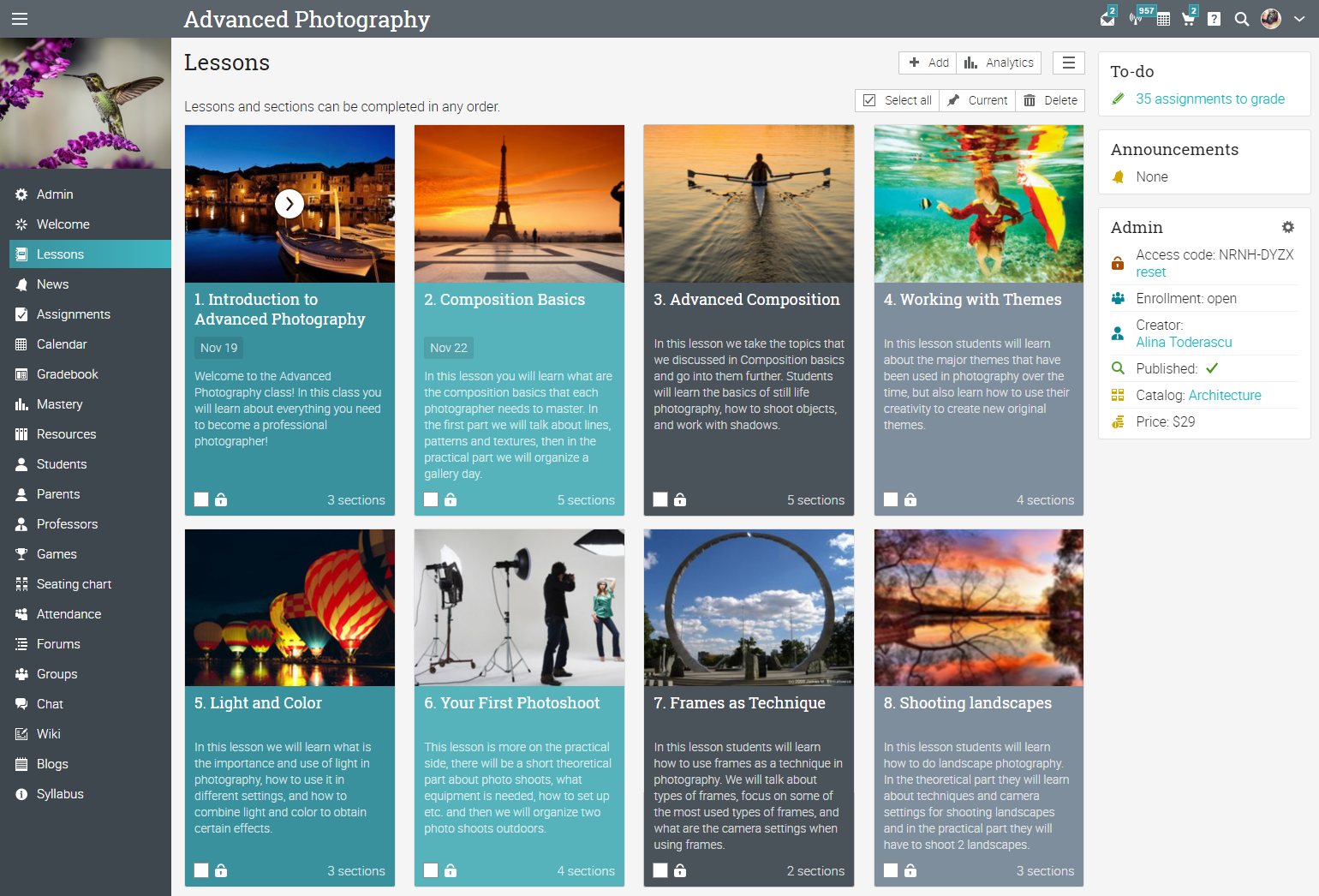
screencapture-adp-neolms-teacher_lessons-list-374982-1479223465628

Navigating NEO takes some getting used too, however, this is mainly due to the impressive number of features and options available.  Not too worry, after spending 30 minutes exploring under the hood, I found NEO’s menu to be logically organized and easy to use.

Schools and teachers will love NEO’s highly customizable features which allow you to personalize the LMS with logos, images, color schemes, fonts, and links.  Additionally, you can easily create a custom portal with news, a class catalog and a calendar.

Usability and Key Features

As both a teacher and an Educational Technology Coordinator NEO LMS has all the features I require and then some more. Lessons, undoubtedly an essential part of any LMS, are nicely laid out with links to resources represented by colorful icons that make navigating easy.

neo-3

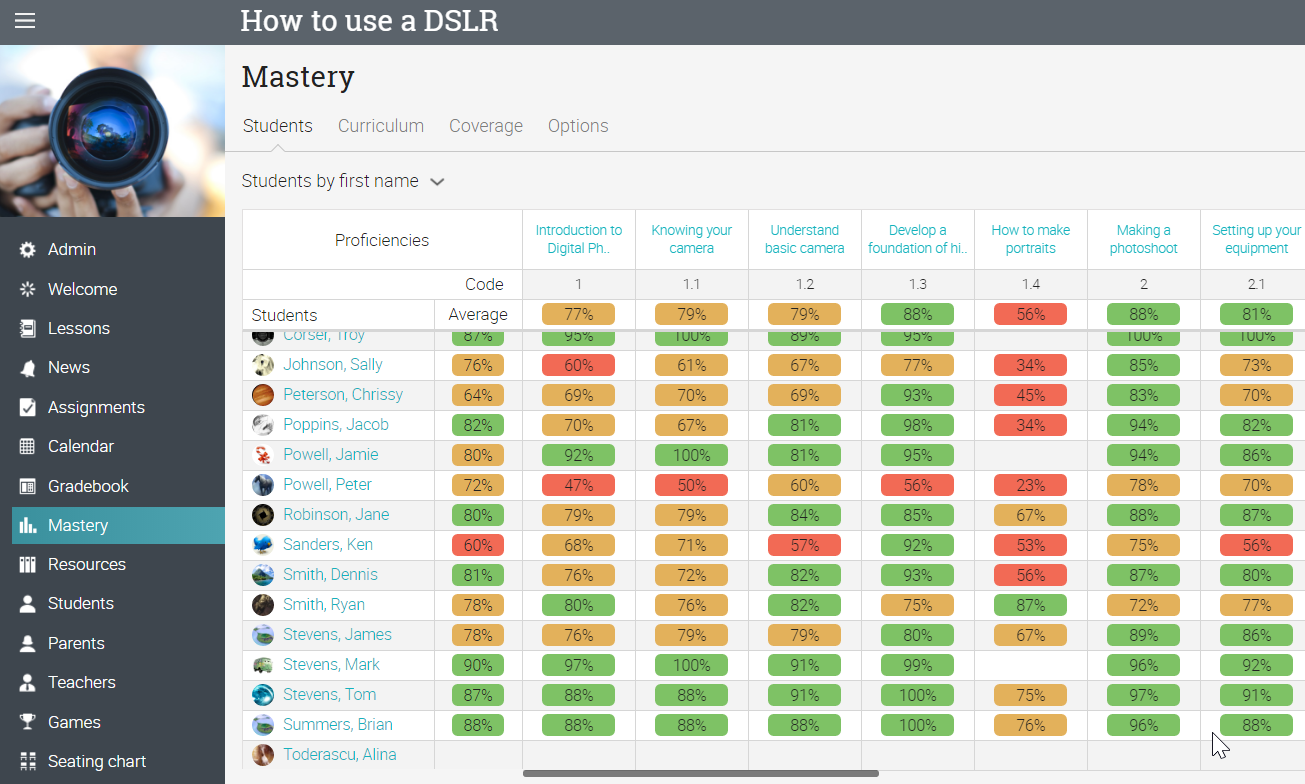
You’ll also find features that go beyond like “mastery” and “gamification” which make NEO LMS truly impressive.  Today, learning isn’t just about earning grades but rather demonstrating “mastery” of different skills.  NEO features a “mastery” section that allows an educator to add proficiencies and track students’ progress. For example, a teacher can easily integrate U.S. Common Core standards into their course and track progress as students complete assignments.

The game engine allows an educator to include points, leaderboards, and badges which can be easily aligned with assignments and lessons.  As students progress down a learning path, they gain points and badges while unlocking further lessons.

Assessment and Grading

neo-5

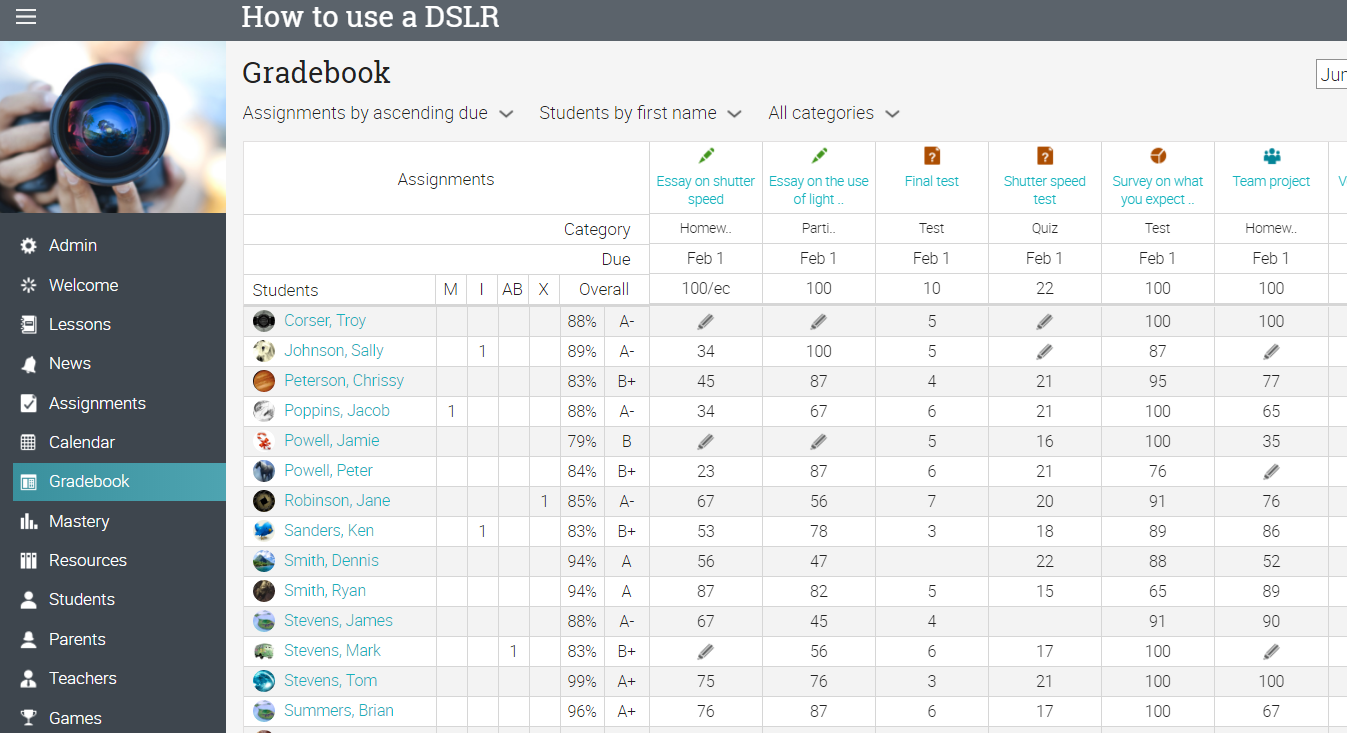
Any good LMS must contain a robust grade book that can handle different grading weighting schemes and have the ability to import/export grades with ease.  NEO LMS meets these requirements with search features, analytics and configuration options.

NEO LMS supports over 12 different assignment types, which includes quizzes, essays, discussions and even debates. Quizzes support a wide range of configuration options with seven different question types, instant feedback, and analytics.  Also supported are timed quizzes, question banks, and rubrics!

The grade book is equally impressive as it allows generous customization options and “pop-up” analytics to make grading less of a task. Attendance allows teachers to track students with five categories including On Time, Arrived late, Left Early, Absent, and Excused.

NEO also features a “rubric builder” that allows teachers to create “custom criteria and ratings.”  Teachers can then use the rubric to easily grade an assignment with a simple point-and-click of the mouse!

Integrations

14352076_1420693737946066_4394314099827130518_o


Also impressive is NEO’s ability to integrate a wide range of third-party apps and systems allowing the user to extend the default LMS functionality.  There are too many to list here, but they include G Suite (Google Apps), Office 365, web conferencing, SCORM, Turnitin.  Additionally, the NEO team is very proactive when it comes to teacher feedback and regularly adds new integrations!  NEO even allows developers to access their API to create their custom integrations.

Other Mentions

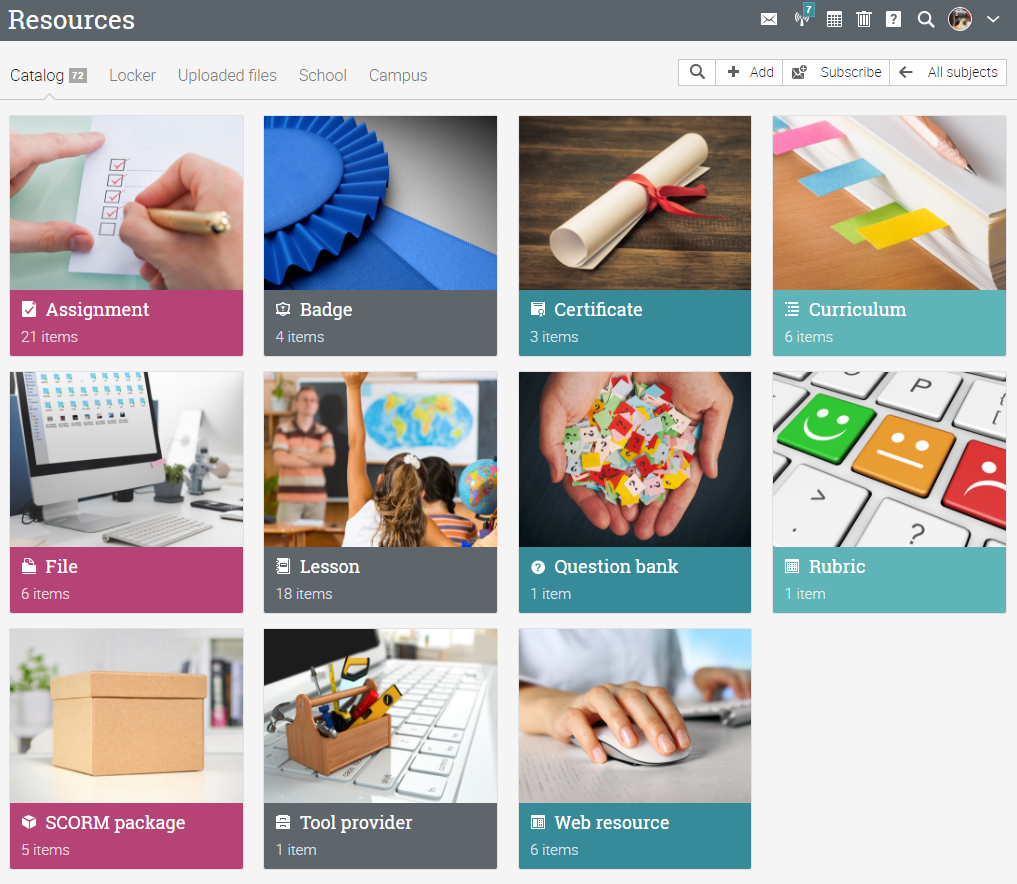
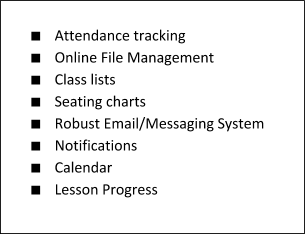
NEO includes many other key tools that allows a teacher to create beautiful classes without any technical knowledge. Some of the many other key features include the following:

neo-7

I’m constantly discovering new features and ways to effectively integrate this robust learning management system into my teaching practice.  If I am in need of assistance a quick visit to the help section of the LMS results in a quick response from the NEO team!

Information Technology Requirements and Cost

Adequately predicting IT infrastructure is one area that many schools and districts overlook. Many educational institutions immediately gravitate toward a low-cost or open source option like Moodle and soon discover large overhead costs due to investment in hardware requirements to get up and running.  In recent years, for instance, I found myself requiring expensive servers and equipment with complex database and server configurations to accommodate more than a few dozen Moodle users. NEO is highly scalable as it runs in the cloud and won’t require time from your information technology support staff.

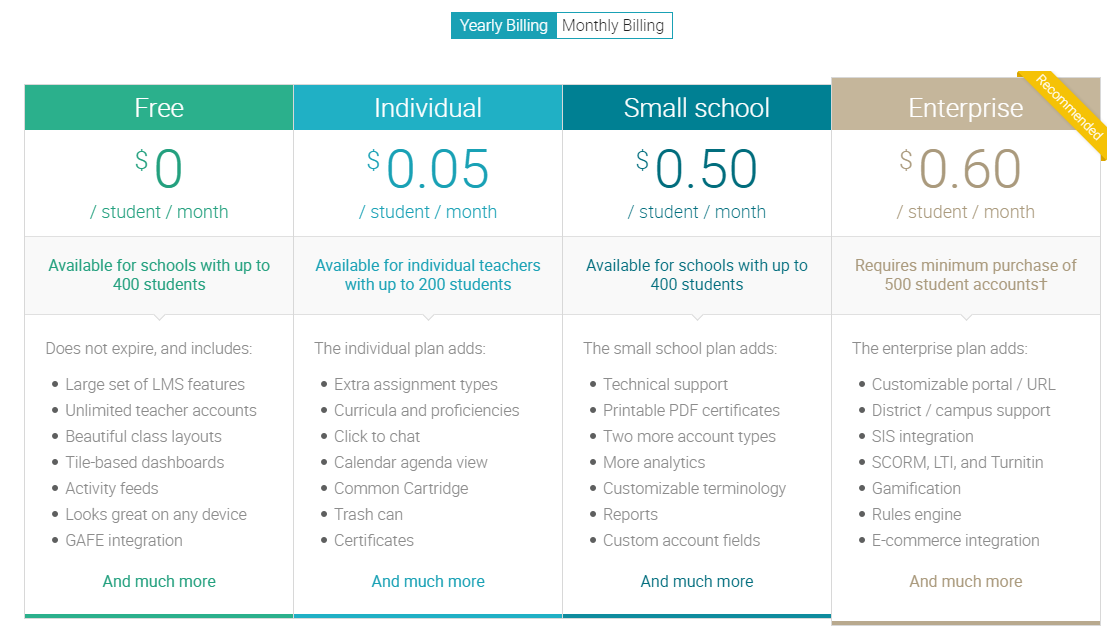
Most importantly NEO LMS is a great value when considering the robustness and features of the platform.  Here is their pricing structure:

neo-9

  • Free – for schools with up to 400 students
  • Individual – for individual teachers with up to 200 students: .60 per student per year
  • Small school – for schools with up to 400 students: $6,00 per student per year
  • Enterprise – 500 or more students: $7.20 per student per year

I have experience with many different learning management systems and while some excel in certain areas they fail to impress in other areas.  For example, Moodle is a free, open source solution, however, if you have more than a few users you’ll find yourself spending a small fortune on servers and hiring system admins.  Blackboard hits the sweet spot however it is cost prohibitive for many schools and districts.  Also, Google Classroom is not a viable solution due to its lack of features normally found in a modern LMS.

In summary, if you’re considering an LMS for your school NEO deserves serious consideration as it more than satisfies on all levels at an affordable cost per user.  I encourage you to head over to NEO’s informative website at https://www.neolms.com and find out more about their LMS.


How to Market to College Students with Smart Data

I tried ReachBright – and here’s what I learned. 

Today’s college students have more options for higher education than ever. Vying for the attention of potential students in such a crowded marketplace can seem nearly impossible and the same is true for when they graduate. When the right combination of informed data and marketing blend, though, it’s possible to cut through the noise to reach the right potential, current and former students with customized messaging.

rb-logo

I recently had the chance to demo ReachBright, a data and automated marketing platform tailored to colleges and universities. ReachBright has three separate systems based on which college marketing task is at hand. Those three are:

Enrollment management – It tracks website visitors and their specific areas of interest. From there, targeted emails based on interests are sent with the intent to start an admissions conversation. The platform works in conjunction with any major enrollment management software.

Campus engagement – This system designates campus “cheerleaders” who can up the motivation of disengaged students. It also asks students for feedback on a variety of topics that inform and improve their college experience. Social media is leveraged to boost the image of the college or university through student-generated social content.

Alumni development – Colleges can connect to alumni on the places they are already using – like Facebook. Alumni can then be matched to specific interests to increase the chances of giving. The platform is also great for targeted alumni communications with no donation ask that keep them engaged with their alma mater.

Where Data and Marketing Combine

ReachBright users can see the data related to their campaigns sliced and diced in many different ways. The email function works much in the way other popular email systems like Constant Contact and MailChimp work – by showing who is opening, clicking and otherwise engaging. This better informs future messaging to the individual recipients.

reachbright-screenshot-daily-summary


ReachBright users also have the opportunity to see the browsing history of website visitors to know how to best target them with messaging. This is especially effective for prospective students because knowing where they are spending time on the site can inform specific messaging from the college. There is even a “missed opportunities” option where the college can see what communication weaknesses exist and how they can be strengthened. ReachBright keeps all employees in different departments in the know on what communications have happened with which potential, current or past students so the marketing game plan can be unified.


reachbright-screenshot-report


The data itself is also impressive. ReachBright is built on the Google backbone, tapping the extremely powerful and effective data mastered by the search engine giant. Equipped with Google expertise, the data retrieval process is already tried and tested. The insights that ReachBright provides make marketing targeting plans more accurate and customized.


reachbright-screenshot-monthly-insight


ReachBright: Specializing in Higher Ed

The thing I really found unique about ReachBright is that it is built solely for higher education institutions. Since the college and university landscape is so nuanced when it comes to what types of marketing work for specific goals, other generic data/marketing platforms aren’t a perfect fit. Instead of trying to make those broader systems work for a college settings, ReachBright is already tailored to the task. ReachBright works specifically in the higher education industry and can therefore bring more detailed and accurate offerings to clients.

This is just a small sampling of all the features of ReachBright. Request your free demo now by visiting the ReachBright site.

The Diversity Responsibility Colleges Face Following the 2016 Election

The Presidential race between Hillary Clinton and Donald Trump will go down as one of the most unpredictable, and contentious, of American history. The candidates’ personalities, paired with the 24-7 news cycle and social media, made an already inundated time for political messaging completely saturated. It pushed people to their breaking points, revealing the worst in some and the true colors in many.

The end result is a country that will truly never be the same. Whether it’s neighbors with opposing yard signs who can no longer see eye to eye, or family members disinvited to Thanksgiving celebrations, the very real impact of this election season will linger for long after the votes were cast.

Things have changed for colleges and universities too. It’s too soon to know exactly what to expect in the way of legislation, funding and federal support for the higher education landscape over the next four years, but there are some intangible effects that are already evident. The most basic of these lessons is this: We aren’t as far along as a diverse nation as we thought.

And it isn’t just set-in-their-ways adults either. The night of Trump’s victory, a black baby doll with a noose around its neck was found in an elevator at predominantly white Canisius College in Buffalo, New York. This is just one example that proves that the nation’s youngest adults are not all enlightened when it comes to diversity and equality; there is still a lot of work to be done and much of it should happen on college campuses. Yet, on the higher education scene students are still being marginalized – whether that discrimination is direct or a result of policy.

So where do we go from here? As a collective college and university system, how do we piece together our latest revelations about our nation and apply it to building a more diverse ecosystem?

Colleges must recognize the new normal.

It starts by colleges acknowledging that we truly aren’t as progressive (as a nation) as we thought. Of course, those of us who have made diversity our life’s work have long been aware of the holes in the equality spectrum. But now we have an entire nation who is seeing it, some for the first time, too. Whether they choose to acknowledge it or not, a deeper awareness of the plight of many marginalized Americans was revealed during election season. It will impact the way we treat each other and it will impact the atmosphere of college campuses. People just know more. That knowledge ups the responsibility of what colleges teach and how they interact with student bodies.

Colleges must acknowledge everyday injustices.

Discrimination isn’t always outright. It doesn’t always manifest in hate crimes or racial slurs. Many times it is subtly ingrained in our societal fabric – penetrating our psyche to the point that we don’t even notice it anymore. This is especially true for the traditionally privileged of society – the white, middle-class males (if we are going for a stereotype). The unfair things these Americans have faced pale in comparison to minority groups, and even women. When you’ve never been exposed to the type of establishment racism and division that are common to disadvantaged populations, it feels like that type of existence is far-fetched – maybe even made up. It takes movements like Black Lives Matter, or …., or even the obvious xenophobia and racism that arose during the election season to really wake a person up.

Colleges must step up when it comes to eliminating inequality across the board with a more proactive approach. Instead of having a crisis team on call, universities must work consistently to give all students the opportunities they deserve. They must also call on the workforce beyond the college years to do the same. Where there is a student at a disadvantage, questions must be asked as to what led to that point – and how it can be fixed.

There is no easy fix for where we are as a nation when it comes to diversity. Colleges and universities have the responsibility to spearhead positive change, though. The next generation of adults deserves better opportunity and higher education is the starting place.