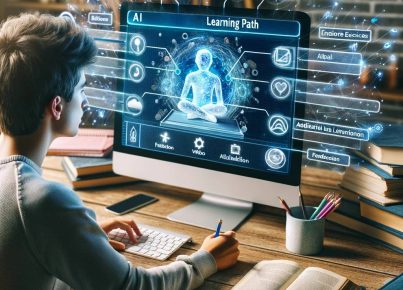
In today’s digital age, computational thinking and coding skills are becoming increasingly essential across all STEM disciplines. As a result, there’s a growing trend to integrate these skills into STEM curricula from an early age.
Computational thinking involves breaking down complex problems into smaller, manageable parts, recognizing patterns, and developing step-by-step solutions. These skills are not only fundamental to computer science but are also highly valuable in other STEM fields and beyond. By teaching computational thinking, educators are equipping students with a powerful problem-solving framework that can be applied across disciplines.
Coding, once considered a niche skill for computer scientists, is now recognized as a new form of literacy. Many schools are introducing coding lessons as early as elementary school, using kid-friendly platforms like Scratch or Code.org. These tools allow students to create interactive stories, games, and animations while learning fundamental programming concepts.
As students progress, they move on to more advanced programming languages and tackle more complex projects. High schools are offering courses in data science, artificial intelligence, and robotics, often integrating coding with other STEM subjects. For instance, students might use Python to analyze scientific data in their biology class or program Arduino boards for physics experiments.
The emphasis on coding is not just about creating future programmers. It’s about developing logical thinking, creativity, and persistence. Coding projects often involve trial and error, encouraging students to learn from their mistakes and persevere through challenges – skills that are valuable in all areas of life.
Moreover, as more industries become reliant on technology, having a basic understanding of coding is becoming increasingly important for career readiness. From healthcare to finance to environmental science, professionals who can work with and understand code have a significant advantage.
As this trend continues, we can expect to see more integration of computational thinking and coding across all STEM subjects, as well as increased collaboration between computer science departments and other STEM disciplines in schools and universities.