

“`html
In the ever-evolving landscape of education, the terms formative assessment and summative assessment frequently arise in discussions about teaching strategies and student evaluation. But what do these terms really mean, and why should you care? This article aims to explore the nuanced differences between these two types of assessments, their purposes, and how they can be effectively implemented in educational settings.
1. Defining Formative Assessment
Formative assessment is a type of evaluation used by educators to monitor student learning and provide ongoing feedback. Its primary goal is to improve student understanding and skills during the learning process, rather than just to evaluate what students have learned at the end of a unit. Often, formative assessments are informal and can include quizzes, discussions, peer reviews, or even observations made during lessons.
The essence of formative assessments lies in their immediacy and adaptability. For instance, a teacher might give a quick quiz at the end of a class to gauge understanding. Based on the results, the teacher can adjust the following lessons to address areas of confusion, ensuring that all students can grasp the content before moving on.
2. Defining Summative Assessment
In contrast, summative assessments are designed to evaluate student learning, typically at the conclusion of an instructional unit or course. These assessments are often high-stakes, meaning they carry significant weight in determining a student’s overall grade or understanding of the subject matter. Examples of summative assessments include final exams, standardized tests, and end-of-term projects.
The purpose of summative assessments is to measure the extent to which students have achieved learning objectives. For instance, a final exam might cover everything learned over the semester, providing a comprehensive snapshot of student performance. This type of assessment serves as a summary of what students have learned, rather than a tool for enhancing their learning.
3. Key Differences Between Formative and Summative Assessment
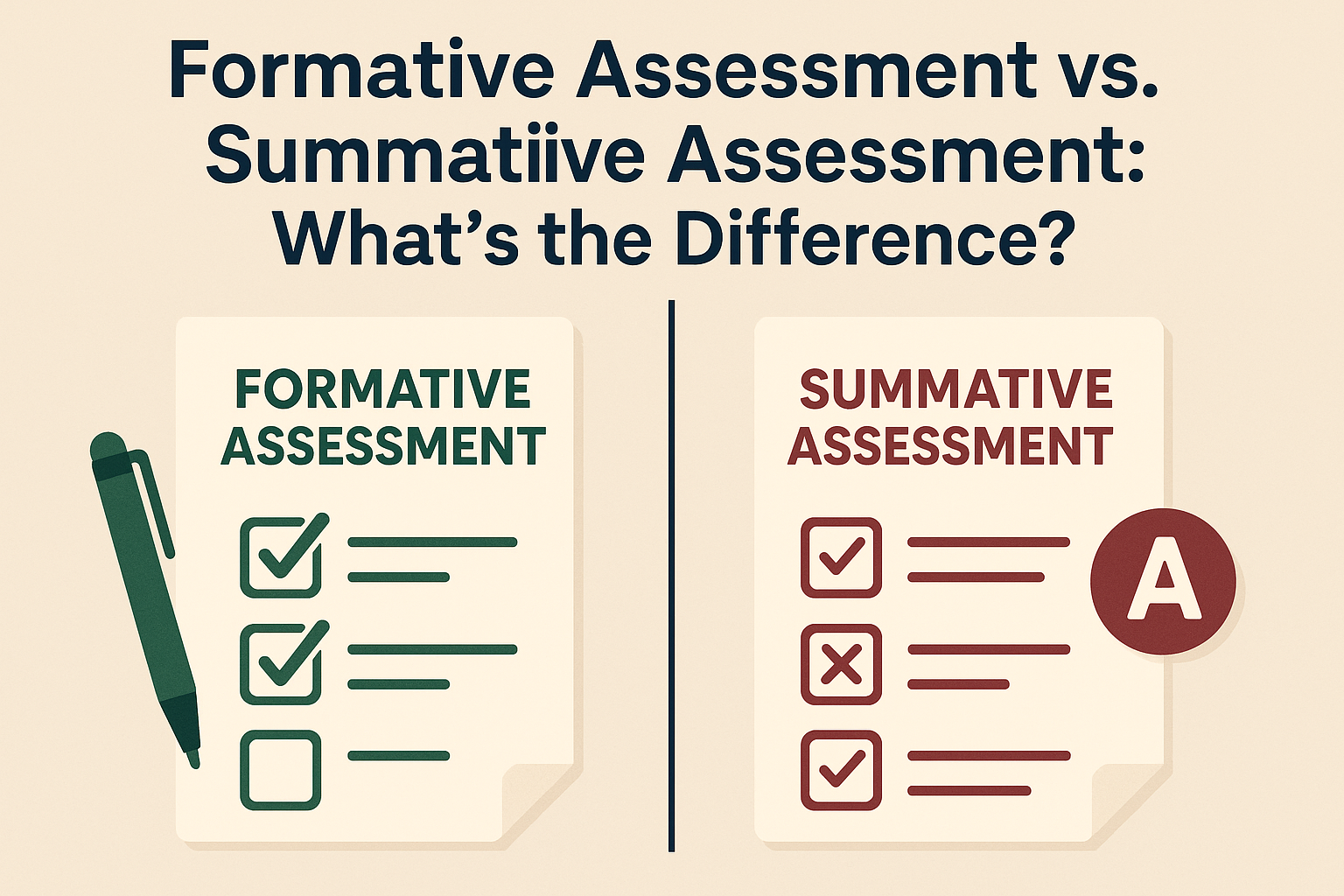
While both formative and summative assessments aim to evaluate student learning, they serve distinct purposes and are implemented differently. Here are some key differences:
- Purpose: Formative assessments are aimed at improving and guiding student learning, while summative assessments are intended to measure and evaluate that learning.
- Timing: Formative assessments are conducted throughout the learning process, whereas summative assessments occur at the end of a unit or course.
- Feedback: Feedback from formative assessments is immediate and used to inform future instruction, whereas summative assessments typically provide feedback only after a significant amount of learning is complete.
- Impact on Grades: Formative assessments often do not contribute significantly to a student’s final grade, while summative assessments generally have a substantial impact on overall performance.
4. Examples of Formative Assessments
Formative assessments can take many forms, and creativity is key when designing these evaluative tools. Here are a few effective examples: (engaging formative assessment options)
- Quizzes: Short, ungraded quizzes can be conducted during or after lessons to check for understanding.
- Classroom Polls: Using technology, teachers can quickly gauge student opinions or understanding in real-time.
- Exit Tickets: At the end of a lesson, students can write down one concept they learned and one question they still have, giving teachers immediate insight into student comprehension.
- Peer Teaching: Students can explain concepts to one another, reinforcing their knowledge and providing the teacher with insight into individual understanding.
These examples highlight the flexible nature of formative assessments. They can be tailored to suit different learning environments and objectives, allowing teachers to cater to their students’ needs. (See: Understanding different types of assessments.)
5. Examples of Summative Assessments
Summative assessments typically represent a culmination of learning. Here are some common types:
- Final Exams: Comprehensive tests that cover all material taught during a course.
- Standardized Tests: Assessments administered across various schools to measure student performance against national or state benchmarks.
- Term Projects: Larger assignments that require students to apply what they’ve learned to real-world scenarios.
- Presentations: Students can present their findings on a topic, demonstrating their understanding and ability to communicate effectively.
Summative assessments, while necessary, can often induce anxiety in students due to their weight in grading. However, they also provide valuable information on curriculum effectiveness and areas needing improvement.
6. The Role of Feedback
Feedback is a critical component of both formative and summative assessment processes, but its function differs significantly. In formative assessments, feedback is immediate and actionable; it helps students understand their areas of weakness while they still have the opportunity to improve. For example, if a student struggles with a specific math concept during a formative quiz, the teacher can provide targeted support right away.
On the other hand, feedback from summative assessments often comes after a learning period has concluded. While this feedback can highlight strengths and weaknesses, it does not provide students with the chance to apply the insights before moving on to new content. Therefore, it’s essential for educators to integrate both types of assessments for a holistic approach to student learning.
7. Importance of Balancing Both Assessments
Achieving a balance between formative and summative assessments is crucial for fostering an effective learning environment. Formative assessments guide daily instruction, allowing teachers to identify and address student needs in real time. Summative assessments, meanwhile, evaluate the overall success of educational programs and curricula.
To create a successful learning ecosystem, educators should aim to incorporate both types of assessments. For instance, a teacher may use formative assessments to adjust teaching strategies based on student feedback, then follow up with a summative assessment to evaluate the cumulative understanding of the material. This ensures that students not only learn but also demonstrate their knowledge effectively.
8. Current Trends in Assessment Practices
As education continues to evolve, so do assessment practices. The increasing emphasis on student-centered learning has sparked new methods of evaluating student performance. Many educators are now integrating technology into assessments, employing online quizzes, and digital portfolios where students can showcase their work and progress continuously.
Moreover, there is a growing recognition of the importance of formative assessments in promoting a growth mindset. By focusing on the learning process rather than just the end result, teachers can encourage students to embrace challenges, learn from mistakes, and view learning as a journey rather than a destination. (See: Importance of assessment in education.)
9. Challenges in Implementing Assessments
While formative and summative assessments have their benefits, implementing them effectively can pose challenges. Time constraints often make it difficult for teachers to conduct frequent formative assessments. Additionally, the pressure of summative assessments can lead to teaching to the test, where educators focus solely on preparing students for exams rather than fostering a deeper understanding of the material.
Moreover, discrepancies in how assessments are graded can create a sense of unfairness among students. Clear and consistent grading rubrics are essential for maintaining transparency and ensuring students understand what is expected of them.
10. The Future of Formative and Summative Assessment
Looking ahead, the future of formative vs summative assessment will likely continue to evolve alongside technological advancements and educational philosophies. The use of artificial intelligence to analyze student performance data and provide tailored assessments could revolutionize how educators approach evaluation.
Furthermore, as more emphasis is placed on social and emotional learning, assessments may begin to incorporate these elements. Educators may increasingly recognize that a student’s ability to collaborate, communicate, and be resilient is as valuable as their academic performance.
In conclusion, understanding the differences and applications of formative and summative assessments is vital for educators aiming to create effective learning environments. By harnessing both, teachers can not only gauge student understanding but also foster a culture of continuous improvement and growth.
11. Best Practices for Implementing Formative Assessment
Implementing formative assessments effectively requires thoughtful planning and execution. Here are some best practices:
- Set Clear Objectives: Before conducting any formative assessment, define what you want to measure. Clear learning objectives help guide the assessment process and ensure that you’re focusing on the most critical areas of student learning.
- Incorporate Variety: Use different types of formative assessments to engage students. This might involve mixing traditional quizzes with interactive activities like group discussions or digital tools that facilitate real-time feedback.
- Encourage Self-Reflection: Allow students to reflect on their learning after formative assessments. Self-assessment gives learners ownership of their progress and helps them identify their strengths and weaknesses.
- Analyze Data Responsively: Use the data collected from formative assessments to inform immediate instructional changes. If a significant number of students struggle with a particular concept, be ready to revisit that content promptly.
- Promote a Safe Environment: Create a classroom culture where students feel safe to express their uncertainties. When students know that it’s okay to ask questions and make mistakes, they’re more likely to engage in formative assessments seriously.
12. Best Practices for Implementing Summative Assessment
When it comes to summative assessments, a few best practices can enhance their effectiveness: (See: Research on formative and summative assessments.)
- Align with Learning Outcomes: Ensure that summative assessments align closely with the learning outcomes of your course or unit. This ensures that you’re measuring what students are actually expected to learn.
- Use Diverse Formats: Similar to formative assessments, summative assessments should also utilize diverse formats. This might include a mix of multiple-choice questions, essays, projects, and presentations to cater to different student strengths.
- Provide Clear Instructions: Make sure that students understand the assessment format and expectations. Clear guidelines reduce anxiety and help students focus on demonstrating their knowledge.
- Offer Review Opportunities: Allow students to review materials and practice before the summative assessment. This could be in the form of study guides, review sessions, or practice tests.
- Facilitate an Inclusive Environment: Be mindful of the diverse needs of your students. Ensure that summative assessments are accessible and fair to all learners, providing accommodations where necessary.
13. FAQs about Formative vs Summative Assessment
Q1: Can you provide specific examples of how formative assessments can improve student learning?
A1: Absolutely! Formative assessments like quick polls can reveal which topics need further clarification. If many students are struggling with a concept, the teacher can revisit it immediately, allowing for timely intervention. Additionally, using tools like Kahoot for quizzes can engage students and provide instant feedback.
Q2: How do schools balance formative and summative assessments?
A2: Schools often incorporate a structured framework for assessments, allowing for a blend of both types. Many educators use a 70/30 approach, where formative assessments make up around 30% of the grading while summative assessments account for 70%. This encourages ongoing learning while still assessing overall performance.
Q3: Are there any drawbacks to relying too heavily on formative assessments?
A3: While formative assessments are valuable, over-reliance can lead to an overwhelming amount of data that may not always inform instruction well. It’s essential to prioritize key formative assessments that directly impact learning rather than conducting them for the sake of quantity.
Q4: How can teachers ensure that their summative assessments are fair?
A4: Teachers can ensure fairness by using clear rubrics, providing practice assessments, and offering a variety of assessment types that cater to different learning styles. Soliciting feedback from students about their assessment experiences can also provide insight into how to improve fairness.
Q5: What role does technology play in modern assessment practices?
A5: Technology has revolutionized both formative and summative assessments by providing tools for instant feedback, data analysis, and more engaging assessment formats. Platforms like Google Forms for quizzes and educational apps for interactive assessments are becoming increasingly popular, enhancing assessment efficiency and effectiveness.
“` See also must-have assessment apps.
Trending Now
Frequently Asked Questions
What is the main difference between formative and summative assessments?
The main difference lies in their purpose and timing. Formative assessments are ongoing evaluations aimed at monitoring student learning and providing feedback during the learning process, while summative assessments evaluate student learning at the end of an instructional unit or course.
What are examples of formative assessments?
Examples of formative assessments include quizzes, class discussions, peer reviews, and observations made during lessons. These assessments help educators gauge understanding and adjust teaching strategies accordingly.
What are summative assessments used for?
Summative assessments are used to evaluate student learning at the conclusion of a unit or course. They measure the extent to which students have achieved learning objectives and often include final exams, standardized tests, and end-of-term projects.
How can formative assessments improve student learning?
Formative assessments improve student learning by providing immediate feedback, allowing teachers to identify areas of confusion and adjust their teaching strategies. This ongoing evaluation helps ensure that students grasp the content before moving on.
Are formative assessments high-stakes?
No, formative assessments are typically low-stakes and informal, focusing on ongoing feedback rather than final evaluations. In contrast, summative assessments are high-stakes, significantly impacting students' overall grades.
Have you experienced this yourself? We’d love to hear your story in the comments.



