

“`html
When you think about conflict resolution, what usually comes to mind? You might envision verbal negotiations, careful argumentation, or perhaps even mediation sessions. But what if I told you that a significant portion of how we communicate during conflicts happens without words? Welcome to the world of nonverbal communication in conflict resolution, a crucial yet often overlooked component that can either make or break a negotiation.
Understanding Nonverbal Communication
Nonverbal communication encompasses a variety of signals we send and receive without using spoken language. This includes body language, facial expressions, tone of voice, posture, and even the physical distance between individuals. According to research by Albert Mehrabian, a professor of psychology, as much as 93% of communication effectiveness is determined by nonverbal cues. This staggering statistic emphasizes that what you don’t say can often convey more than the words you choose.
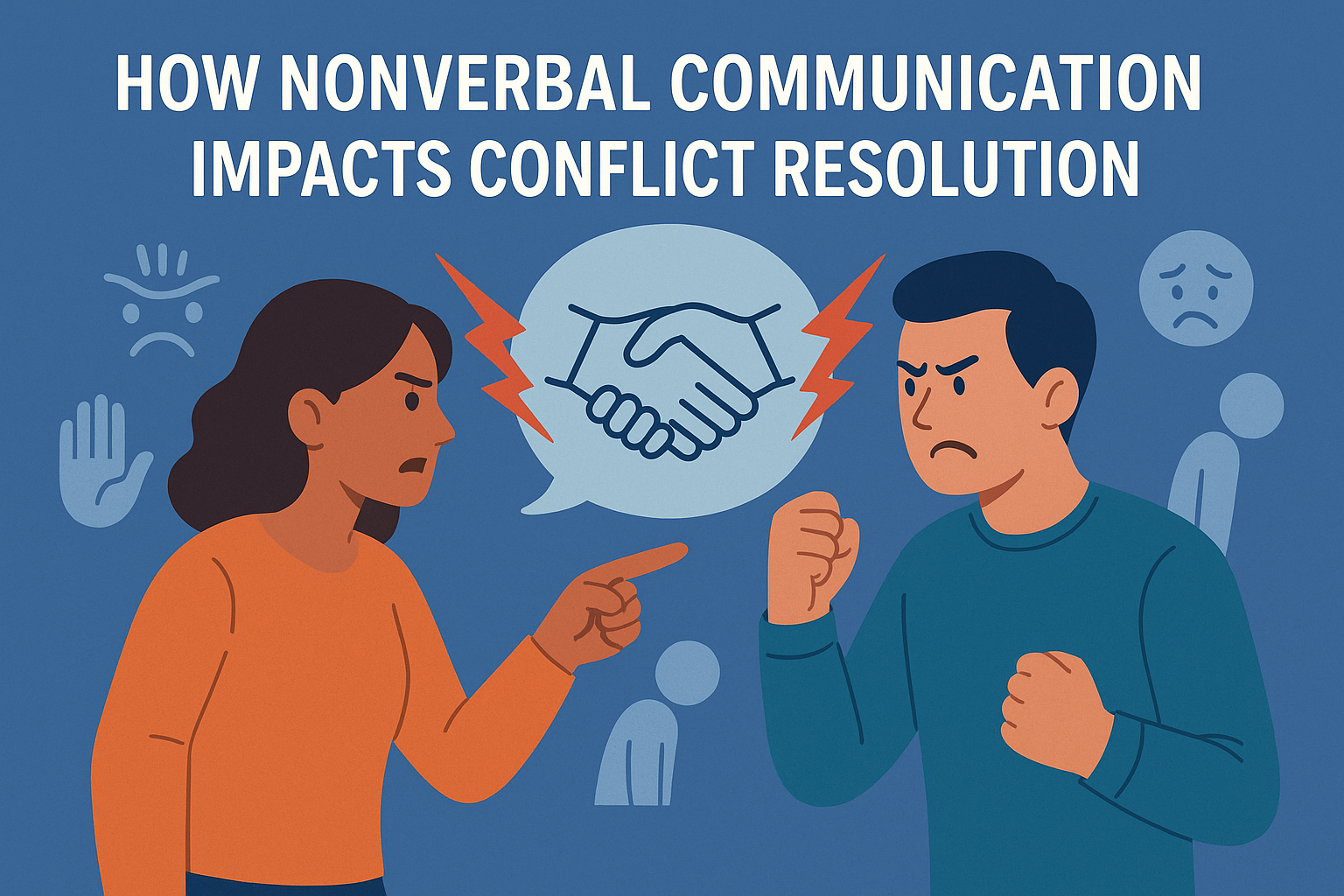
In the context of conflict resolution, nonverbal signals play a pivotal role. They can express emotions such as anger, frustration, or empathy—often more powerfully than spoken words can. For instance, crossing arms may indicate defensiveness, while maintaining open body language could signal a willingness to listen and engage. Understanding these cues can provide insights into the underlying emotions and intentions of the parties involved.
The Role of Body Language in Conflict Situations
Body language is a significant aspect of nonverbal communication. In high-stakes situations where emotions run high, individuals often rely on body language to express their feelings. For example, in a heated discussion, you might notice someone leaning away from the conversation, a nonverbal cue that suggests discomfort or disagreement. Conversely, nodding and leaning slightly forward can indicate engagement and understanding.
Research indicates that the way individuals position themselves can affect the outcome of a conflict. A study conducted by the University of California found that negotiators who adopted open and expansive postures were more likely to reach a resolution than those who displayed closed postures. This suggests that being aware of your own body language—and that of others—can be a vital tool in navigating conflict.
Facial Expressions: The Unspoken Words
Facial expressions serve as a powerful form of nonverbal communication. They can instantly convey a wide array of emotions, from happiness to sadness to anger. During conflict resolution, these expressions can provide critical context. If one party reacts to a proposal with a frown or a scowl, it may indicate disapproval or skepticism, even if they verbally agree to it.
Studies have shown that people often mirror the facial expressions of those they are interacting with, a phenomenon known as emotional contagion. This can either escalate conflicts or help de-escalate tensions. A smile can foster a collaborative atmosphere, while a furrowed brow may heighten the conflict. Understanding how to read and respond to these cues can be essential for effective conflict management.
Paralanguage and Its Impact
Paralanguage refers to the elements of speech other than the words themselves, including tone, pitch, volume, and speaking rate. It can dramatically influence how a message is perceived. For example, a calm tone can diffuse tension, while a loud, aggressive tone can escalate a situation. When negotiating, it’s crucial to be mindful of your paralanguage. (See: The role of nonverbal communication.)
Additionally, the way in which something is said can often contradict the message itself. A negotiator might say all the right things but deliver them in a sarcastic or condescending tone, undermining their credibility and leading to mistrust. This highlights the importance of aligning verbal and nonverbal cues to create a coherent communication strategy.
Culture and Nonverbal Communication
Nonverbal communication is heavily influenced by cultural norms, which can make conflict resolution across different cultures particularly challenging. For instance, in some cultures, maintaining direct eye contact is seen as a sign of confidence, while in others, it may be interpreted as disrespect. Similarly, personal space varies widely; what might be acceptable in one culture could be intrusive in another.
When engaging in conflict resolution with individuals from diverse backgrounds, it’s crucial to be aware of these cultural differences in nonverbal communication. Misinterpretations can exacerbate tensions, making it vital to approach such situations with cultural sensitivity. Training in intercultural communication can offer valuable insights and strategies for resolving conflicts effectively across cultures.
Strategies for Effective Nonverbal Communication in Conflict Resolution
So how can you harness the power of nonverbal communication in conflict resolution? Here are some actionable strategies:
- Be Aware of Your Body Language: Pay attention to how your posture, gestures, and overall demeanor may be perceived during negotiations. Strive for open body language to signal your willingness to engage.
- Read the Room: Observe the nonverbal cues of others. Are they leaning in or crossing their arms? This can provide insight into their emotional state and help you tailor your approach accordingly.
- Mind Your Tone: Consider how your tone of voice may affect the message you are conveying. A calm, steady tone can help de-escalate tensions, while a harsh tone may provoke defensiveness.
- Mirror and Match: Subtly mirroring the body language and tone of the other party can create rapport and make them feel more at ease, which can facilitate better communication.
- Be Culturally Sensitive: When communicating across cultures, take the time to research and understand the nonverbal norms of the other party to avoid misunderstandings.
- Practice Active Listening: Show that you are engaged by nodding, maintaining eye contact, and adopting a posture that indicates attentiveness. This not only helps you understand the other party better but also fosters a collaborative environment.
Current Relevance: Navigating Conflicts in a Digital Age
As our world becomes increasingly digital, the dynamics of nonverbal communication are evolving. Video conferencing has become the norm for many discussions, especially since the COVID-19 pandemic. While it offers a platform for face-to-face interaction, it also presents new challenges for nonverbal cues.
In a virtual setting, for example, body language can be more difficult to interpret due to screen limitations. Participants may appear distracted or disengaged, and subtle facial expressions can be lost. This challenges the effectiveness of nonverbal communication in conflict resolution.
To adapt, consider utilizing tools that enhance engagement during virtual meetings, such as asking participants to turn on their cameras, using polls for real-time feedback, or employing breakout rooms for smaller group discussions. These strategies can help preserve the essence of nonverbal communication, even in a digital context.
Expert Perspectives on Nonverbal Communication in Conflict Resolution
Experts in communication and conflict resolution emphasize the significance of understanding nonverbal cues. Dr. Mark G. Frank, a prominent researcher in nonverbal communication, highlights the importance of recognizing that nonverbal signals can betray one’s true feelings. “People often say one thing, but their body language says another,” he states. This discrepancy can lead to misunderstandings in conflicts, making it imperative to pay attention to both spoken and unspoken messages. (See: Understanding non-verbal communication.)
Another expert, Dr. Paul Ekman, known for his work on facial expressions, demonstrates that micro-expressions—brief, involuntary facial expressions—can reveal concealed emotions, providing critical insights during negotiations. Learning to spot these fleeting expressions can equip you with the tools needed to handle conflicts more effectively.
Comparisons: Nonverbal Communication in Different Settings
It’s interesting to note how nonverbal communication plays out differently in various settings. In a corporate environment, for instance, professionals may adopt a more formal posture and minimize gestures, aligning with corporate culture. Here, subtle cues like a firm handshake or a confident stance can communicate authority and decisiveness.
Conversely, in personal relationships, the same cues may take on different meanings. A relaxed posture and casual gestures can foster intimacy and openness, promoting a collaborative atmosphere. Understanding the context can help you interpret these nonverbal cues accurately, leading to more effective conflict resolution.
Common Nonverbal Miscommunications
Despite the power of nonverbal communication, misunderstandings can easily arise. One common miscommunication occurs with personal space. In some cultures, standing too close may indicate warmth and openness, while in others, it may be perceived as intrusive. This can lead to discomfort and escalated tensions during conflict resolution.
Another potential pitfall is the misinterpretation of facial expressions. A neutral expression can be misread as disinterest, while a smile might be seen as insincere. Always be cautious about jumping to conclusions based on these signals alone.
FAQ About Nonverbal Communication in Conflict Resolution
What is nonverbal communication?
Nonverbal communication refers to the transmission of messages or signals without the use of words. This includes body language, facial expressions, gestures, posture, and tone of voice.
Why is nonverbal communication important in conflict resolution?
Nonverbal communication can reveal underlying emotions and intentions that might not be articulated verbally. In conflict situations, these signals can significantly impact the outcome of negotiations and resolutions.
How can I improve my nonverbal communication skills?
You can improve your nonverbal communication skills by practicing awareness of your body language, observing others, and seeking feedback. Engaging in role-playing exercises or using video recordings for self-assessment can also be beneficial.
How does culture affect nonverbal communication?
Cultural norms influence how nonverbal cues are interpreted. For example, different cultures have varying standards for personal space, eye contact, and gestures. Being culturally aware can help prevent misunderstandings during conflict resolution.
Can nonverbal communication be learned?
Yes, nonverbal communication can be developed and refined through practice and observation. Training programs in communication and conflict resolution often include components focused on nonverbal skills.
What are some examples of nonverbal cues to watch for during conflict?
Some common nonverbal cues include:
- Posture: Open postures may indicate receptiveness, while closed postures can suggest defensiveness.
- Facial Expressions: Frowns, smiles, and eye rolls can all convey immediate emotional responses.
- Gestures: Hand movements can both emphasize points and signal emotional states.
- Eye Contact: Too little can imply disinterest, while too much can seem aggressive.
- Physical Distance: The space maintained between individuals can indicate comfort or tension.
The Essential Role of Nonverbal Communication in Conflict Resolution
Understanding the intricate ways nonverbal communication impacts conflict resolution is essential for anyone looking to enhance their negotiation skills. From body language and facial expressions to tone and cultural nuances, the nonverbal cues we send and receive shape the trajectory of conflicts and their resolutions.
By honing your awareness and adaptability regarding nonverbal signals, you’ll be better equipped to navigate conflicts effectively, paving the way for more productive and harmonious interactions. In a world where communication is often fraught with tension, mastering the unspoken language may be your most powerful tool.
“`
Trending Now
Frequently Asked Questions
What is nonverbal communication in conflict resolution?
Nonverbal communication in conflict resolution refers to the signals we send and receive without using spoken language, including body language, facial expressions, and tone of voice. These cues can convey emotions and intentions more powerfully than words, playing a crucial role in effectively resolving conflicts.
How does body language affect conflict resolution?
Body language significantly impacts conflict resolution by conveying emotions and attitudes. For instance, open body language can indicate a willingness to engage, while crossed arms may suggest defensiveness. Understanding these nonverbal cues helps individuals navigate conflicts more effectively.
Why is nonverbal communication important in negotiations?
Nonverbal communication is essential in negotiations because it can account for up to 93% of communication effectiveness. It helps express emotions and intentions, allowing parties to gauge each other's feelings, which can influence the negotiation's outcome. (cultural nuances in communication)
What are some examples of nonverbal cues in conflict?
Examples of nonverbal cues in conflict include facial expressions, posture, and physical distance. For instance, a furrowed brow may indicate anger, while leaning forward can show engagement. Recognizing these cues helps understand the underlying emotions in a conflict.
How can understanding nonverbal communication improve conflict resolution?
Understanding nonverbal communication can improve conflict resolution by providing insights into the emotions and intentions of those involved. By being aware of body language and other nonverbal signals, individuals can respond more effectively and foster a more constructive dialogue.
What’s your take on this? Share your thoughts in the comments below — we read every one.


