
“`html
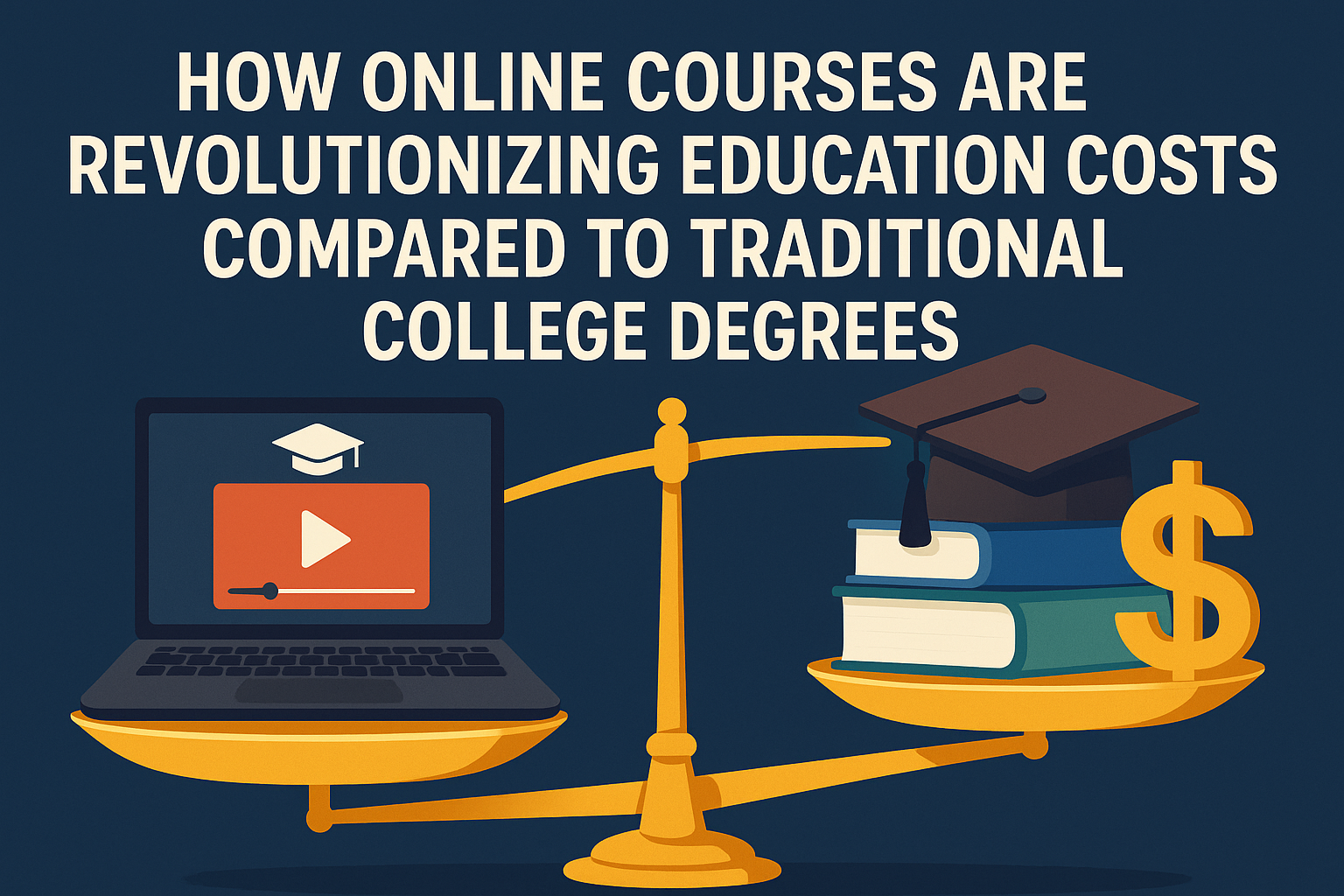
When it comes to pursuing higher education, one of the most pressing concerns for students and families alike is the cost. With tuition rates soaring over the past few decades, many are now weighing their options between online courses and traditional college degrees. This online courses vs traditional college cost comparison will help you understand the financial implications of each path, allowing you to make a more informed decision about your educational investment.
1. The Rising Costs of Traditional College
Over the past few decades, the cost of obtaining a traditional college degree has skyrocketed. For instance, in the 1980s, the average annual tuition for a public four-year institution was around $2,000. By 2021, that number had ballooned to approximately $10,000. Similarly, private colleges have seen their average tuition climb from about $15,000 to over $36,000 annually.
These rising costs are often accompanied by additional fees. Students might encounter registration fees, lab fees, student activity fees, and more. On average, students can expect to pay an additional $1,500 to $2,000 per year in fees. This adds substantial financial pressure, especially considering that most students graduate with student loan debt averaging around $30,000.
2. Affordable Alternatives: The Appeal of Online Courses
As traditional college costs continue to rise, the appeal of online courses grows stronger. Many reputable institutions offer online degree programs or standalone courses at a fraction of the price of traditional tuition. For example, an online degree can cost anywhere from $4,000 to $15,000 per year, depending on the institution and program.
Moreover, online courses often allow for more flexible payment options. Some platforms offer pay-per-course models, making higher education more accessible to those who may not have the funds to pay for an entire year upfront. This financial flexibility can make a significant difference for many prospective students.
3. Tuition: Breaking Down the Numbers
When diving deeper into the costs associated with online courses vs traditional college, tuition fees remain a primary focus. While traditional universities charge by credit hour, online programs can often include additional resources that enhance learning, such as access to digital libraries, virtual mentoring, and interactive coursework.
For context, a typical credit hour in a traditional college can range from $300 to $1,500, depending on the institution’s prestige and location. In contrast, online courses can range from $200 to $500 per credit hour. This substantial difference in tuition rates makes online education a highly attractive option for budget-conscious students.
4. The Hidden Costs of College
It’s easy to overlook the hidden costs that accompany traditional college education. In addition to tuition and fees, students need to consider housing, food, transportation, and textbooks. According to the College Board, students can expect to pay an average of $16,500 per year for room and board alone.
On the other hand, online courses eliminate many of these expenses. Since students typically learn from home, they save on commuting costs and housing fees. Some online programs even include digital textbooks and resources, further reducing overall expenses. This aspect of online learning is often a game-changer for many students.
5. Return on Investment: Evaluating Long-Term Benefits
Investing in education is not just about upfront costs; it’s crucial to consider long-term benefits and potential return on investment (ROI). Studies have shown that bachelor’s degree holders earn, on average, 66% more than those with only a high school diploma over their lifetime. However, it’s essential to compare the ROI of online degrees versus traditional ones.
According to a report from the Georgetown University Center on Education and the Workforce, online graduates have similar job prospects and earning potential as their on-campus counterparts. The key takeaway? While both paths can lead to lucrative careers, students must weigh the cost of their education against their expected income to determine the best option. (See: CDC Youth Risk Behavior Survey.)
6. The Impact of Student Loan Debt
One of the most daunting aspects of pursuing higher education today is the looming specter of student loan debt. As previously mentioned, the average student loan debt for graduates is around $30,000, causing many to rethink their educational options.
Online courses, with their generally lower costs, allow students to minimize debt accumulation. Many online programs provide financial aid options, scholarships, and even income-share agreements that can help ease the burden on students. These options can significantly reduce the pressure associated with repaying loans after graduation.
7. Cultural Perceptions and Job Market Trends
While cost is a significant factor in the online courses vs traditional college cost comparison, societal perceptions also play a role in students’ decisions. Traditional degrees have long been seen as the gold standard for employment, which has led to skepticism about online education. However, this perception is shifting.
As the job market evolves, many employers now value skills and experience over the method of education. As a result, a growing number of organizations are embracing candidates who hold online degrees, especially from well-known institutions. This shift not only legitimizes online education but also underscores the importance of skills acquired during the learning process.
8. Making the Right Choice for You
Ultimately, the decision between pursuing traditional college or online courses comes down to individual circumstances and goals. Reflect on your financial situation, career aspirations, and personal learning style to choose the path that aligns best with your future objectives.
Before committing to a decision, it’s wise to research various programs, consider the long-term ROI, and explore financial aid options. Many students find that a hybrid approach, incorporating both online and traditional courses, provides the best of both worlds – an affordable education with the personal touch of in-person learning.
9. Online Courses’ Varied Formats and Offerings
One aspect that differentiates online courses from traditional colleges is the variety of formats available. Online education can take many forms, including self-paced courses, live virtual classes, and massive open online courses (MOOCs). Self-paced courses allow students to learn at their own speed, which can be particularly beneficial for those who are juggling jobs or family responsibilities. Live classes, on the other hand, provide real-time interaction with instructors and peers, mimicking the classroom experience. MOOCs, such as those offered by platforms like Coursera and edX, provide access to courses from prestigious universities often for free or at a low cost, democratizing education further.
10. Statistics on Enrollment Trends
To further understand the shift towards online learning, it’s important to look at enrollment statistics. According to the National Center for Education Statistics, enrollment in degree-granting postsecondary institutions dropped by about 2.5% from 2020 to 2021, while enrollment in online programs saw a significant increase, with over 40% of all college students taking at least one online course by 2023. This trend illustrates not just a growing acceptance of online education, but a necessity for many students who seek flexibility in their learning environments.
11. Employer Perspectives on Online Education
Employers’ perceptions of online degrees have evolved over the years. Research conducted by the Strada Education Network found that 80% of employers believe that the value of a degree is tied to the skills a candidate possesses rather than the mode of education. As a result, many employers are increasingly supportive of online education, especially from accredited institutions. The perception is shifting from skepticism to acceptance, emphasizing the importance of practical skills and knowledge over traditional degrees.
12. Common Myths About Online Learning
Despite the growing acceptance of online courses, several myths still persist. One common myth is that online courses are easier than traditional ones. In reality, the rigor of an online course can match that of a face-to-face course, often requiring self-motivation and discipline to keep up with deadlines and coursework. Another myth is that online students miss out on networking opportunities. In fact, many online programs actively facilitate networking through virtual meetups, discussion boards, and group projects that connect students from diverse backgrounds. Recognizing these myths can help students make more informed choices about their educational paths. (See: New York Times on online education costs.)
13. Frequently Asked Questions (FAQ)
What is the average cost of online courses compared to traditional college?
The average cost of online courses generally ranges from $4,000 to $15,000 per year, while traditional colleges can charge between $10,000 to $36,000 annually, depending on the type of institution.
Do employers prefer traditional degrees over online degrees?
While some employers may have historically preferred traditional degrees, many now value skills and experience over the mode of education. A degree from a reputable online program can be just as valuable as a traditional degree.
What are the additional fees associated with traditional colleges?
In addition to tuition, traditional colleges may charge registration fees, lab fees, and various student activity fees, which can add an additional $1,500 to $2,000 per year.
Are online courses as rigorous as traditional college courses?
Yes, many online courses are designed to match the rigor of traditional courses. They often require the same level of commitment and discipline to complete successfully.
Can I get financial aid for online courses?
Yes, many online programs offer financial aid, scholarships, and payment plans, similar to traditional colleges. It’s worth researching available options before enrolling.
Are there specific fields where online degrees are more accepted?
Online degrees are increasingly accepted across various fields, particularly in technology, business, and healthcare. Many employers prioritize practical skills and experience over the education format, especially for roles that require digital proficiency. (See: Harvard University education resources.)
How do I choose a reputable online program?
When selecting an online program, consider accreditation, faculty qualifications, student reviews, and program outcomes. Researching these factors can help ensure that you’re choosing a reputable institution that meets your educational goals.
14. Final Thoughts on Your Educational Journey
In this landscape, understanding the online courses vs traditional college cost comparison is more critical than ever. As you weigh your options, remember that the best decision is one that not only fits your budget but also propels you toward your career goals. Whether you choose online education or a traditional college, aligning your educational path with your personal and professional aspirations is key to unlocking future opportunities.
15. Comparing the Flexibility of Online and Traditional Education
One of the most significant advantages of online courses is their flexibility. Students have the freedom to learn at their own pace, which is particularly beneficial for those balancing work and family responsibilities. Traditional colleges, while offering structured schedules and in-person interactions, often require students to adhere to fixed class times that may not align with their personal commitments. For instance, if you’re working a full-time job, attending lectures and seminars might pose a challenge. In contrast, online platforms allow students to access lecture materials, discussions, and assignments whenever it suits them. This can make a world of difference in maintaining a healthy work-life balance.
16. Future Trends in Education: The Hybrid Model
As technology continues to advance, the future of education seems to be leaning toward a hybrid model that blends both online and traditional learning. Many colleges are now offering hybrid programs that combine in-person classes with online learning components. This approach caters to diverse learning styles and preferences while also addressing the cost concerns associated with traditional education. Students can benefit from the interaction and networking opportunities of in-person classes while enjoying the flexibility of online coursework. This model could very well be the answer to the challenges that both students and educational institutions face today.
“`
Trending Now
Frequently Asked Questions
How much does a traditional college degree cost?
The cost of a traditional college degree has significantly increased over the years. For example, in 2021, the average annual tuition for public colleges was around $10,000, while private colleges averaged over $36,000. Additional fees can add $1,500 to $2,000 annually, leading many students to graduate with an average debt of about $30,000.
What are the benefits of online courses compared to traditional degrees?
Online courses often provide a more affordable alternative to traditional college degrees, with annual costs ranging from $4,000 to $15,000. They also offer flexible payment options, allowing students to pay per course. This accessibility can reduce financial stress and make higher education attainable for more people.
Are online courses worth the investment?
Yes, online courses can be a worthwhile investment, especially given their lower costs and flexibility compared to traditional degrees. They allow students to pursue education without the burden of high tuition fees and additional costs associated with on-campus living, making education more accessible.
Why are college tuition fees rising?
College tuition fees have risen due to various factors, including inflation, increased demand for higher education, and the costs of maintaining facilities and faculty. As a result, students face significant financial pressures, often leading to substantial student loan debt upon graduation.
What factors should I consider when choosing between online courses and traditional college?
When choosing between online courses and traditional college, consider the total cost (including tuition and fees), the flexibility of the program, your learning style, and the reputation of the institution. Evaluate how each option aligns with your financial situation and career goals.
What did we miss? Let us know in the comments and join the conversation.