
Introduction:
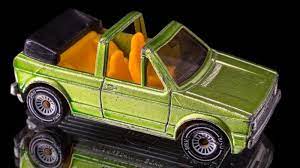
Matchbox cars provide a fun and engaging way for children to learn math and science concepts. By using these small toy vehicles, you can create hands-on learning activities that keep children interested and make learning enjoyable. In this article, we’ll explore how to teach math and science with Matchbox cars.
1. Measuring distance:
A simple activity you can do with Matchbox cars is measuring distance traveled. Place two lines of tape on the floor or table, creating a track for the cars. Then, ask your child to push the car from one line to the other and measure the distance it travels with a ruler.
You can use this activity to teach units of measurement, such as inches or centimeters, or ask your child to compare the distances traveled by different cars. This activity will help develop their understanding of distance and enhance their problem-solving skills.
2. Counting and sorting:
Using Matchbox cars can also be an excellent tool for teaching counting and sorting skills. Encourage your child to put their toy cars into groups according to various characteristics, such as color, size, or type (race cars, trucks, etc.). They can count the number of cars in each group or arrange them from biggest to smallest.
By doing this activity, children will practice their counting skills and learn how to categorize objects based on specific properties.
3. Exploring force and motion:
Another approach in using Matchbox cars for teaching science is by exploring force and motion concepts. You can demonstrate how different forces affect car movement by asking your child to push a car down a ramp of various heights or angles.
Through these experiments, children will learn about gravity, friction, acceleration, and other forces while observing how they impact the motion of their toy car.
4. Teaching basic physics principles:
You can use Matchbox cars for teaching key principles in physics such as speed, velocity, and acceleration. Construct a simple racetrack with straight sections and curves. Compare how fast cars travel on different parts of the track or compete with each other to make physics lessons more engaging.
For an additional challenge, create a DIY scale using common household items and determine the weight of the cars in grams or ounces. These hands-on experiences will reinforce important physics concepts.
5. Creating graphs and charts:
As your child engages in these various activities, you can also introduce graphs and charts to visualize data collected from their Matchbox car experiments. For instance, after measuring the distance different cars travel, you can help your child create a bar graph comparing the results.
This way, children will learn how to interpret data and analyze information from their hands-on experiences with Matchbox cars.
Conclusion:
Using Matchbox cars as teaching tools for math and science is a fun way to make these subjects more interesting while creating memories that last a lifetime. By participating in these engaging activities, children are likely to develop a strong foundation in key math and science concepts that will help them excel in their future academic endeavors.