
Immersive technologies are transforming the education landscape, offering new ways to engage students and enhance learning outcomes. Virtual Reality (VR), Augmented Reality (AR), and Mixed Reality (MR) are being integrated into curricula across various educational levels, from elementary schools to universities.
One of the most significant advantages of immersive tech in education is its ability to provide experiential learning. Students can visit historical sites in VR, walk through ancient Rome, or witness key historical events as if they were there. In science education, learners can dive into the human body, explore the solar system, or interact with complex molecular structures in 3D space.
Language learning is another area benefiting from immersive technology. VR applications can transport students to countries where the target language is spoken, allowing them to practice in simulated real-world scenarios. This immersive approach can significantly enhance language acquisition and cultural understanding.
In vocational training, VR and AR are providing safe, cost-effective ways to practice skills. Medical students can perform virtual surgeries, mechanics can practice on virtual engines, and firefighters can train in simulated hazardous environments without real-world risks.
Collaborative learning is also being enhanced through immersive technologies. Virtual classrooms allow students from different parts of the world to come together in a shared space, fostering global connections and diverse perspectives. AR applications enable students to work together on 3D projects in real-time, even when physically apart.
For students with special needs, immersive technologies offer new possibilities. VR can provide a safe space for students with autism to practice social skills, while AR can offer real-time visual aids for students with hearing impairments.
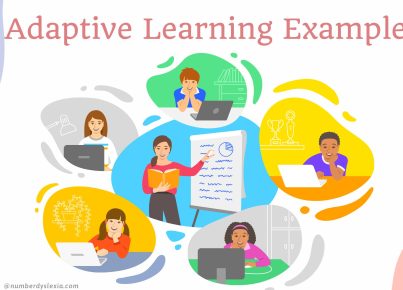
As the technology continues to evolve, we can expect to see more personalized and adaptive learning experiences. AI-powered immersive systems could tailor content and difficulty levels to individual students’ needs, providing a truly customized education. The integration of haptic feedback and more advanced display technologies will likely make these virtual learning experiences even more engaging and effective.
While challenges remain, including the cost of equipment and the need for tailored educational content, the potential of immersive technology to revolutionize education is immense. As these technologies become more accessible and refined, they are set to play an increasingly central role in shaping the future of learning.