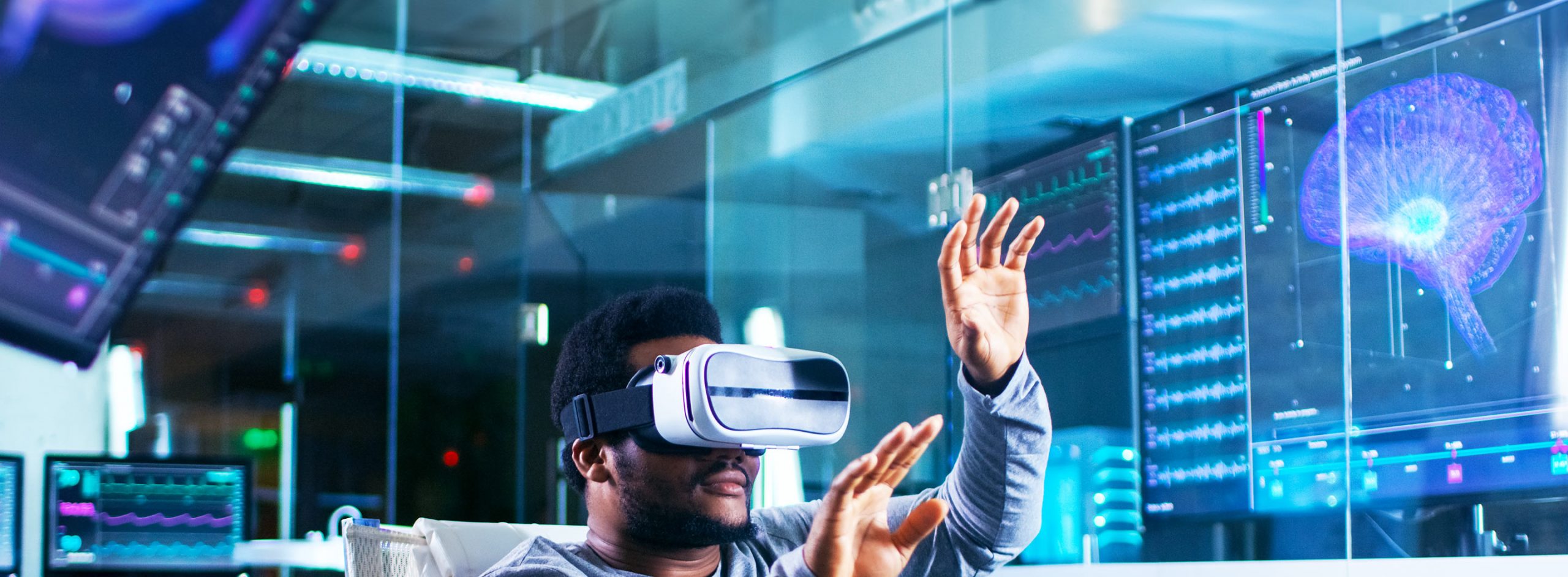

The integration of learning analytics with immersive and extended reality (XR) environments, including virtual reality (VR), augmented reality (AR), and mixed reality (MR), represents a cutting-edge trend in educational technology. This convergence is opening up new frontiers in how we understand and enhance learning experiences in these highly interactive and immersive digital spaces.
At its core, this trend involves collecting and analyzing data from learners’ interactions within XR environments. This can include a wide range of data points, such as movement patterns, gaze direction, interaction with virtual objects, completion times for tasks, and even physiological responses like heart rate or skin conductance.
One of the primary benefits of applying learning analytics in XR environments is the ability to gain unprecedented insights into the learning process. These immersive technologies allow for the creation of highly realistic and interactive scenarios, from virtual science labs to historical recreations. By analyzing how learners interact with these environments, educators can gain a deeper understanding of cognitive processes, problem-solving strategies, and skill acquisition in ways that were not possible in traditional learning settings.
For learners, the combination of XR and learning analytics can lead to highly personalized and adaptive learning experiences. Based on the data collected, XR environments can adjust in real-time to match the learner’s pace, preferences, and performance. For example, a virtual chemistry lab might adjust the difficulty of experiments based on the learner’s previous interactions, or a historical simulation might focus on areas where the learner shows the most interest or needs more practice.
This trend also offers exciting possibilities for assessment. Instead of relying solely on traditional quizzes or exams, educators can use data from XR interactions to assess practical skills, decision-making abilities, and even soft skills like communication or teamwork in simulated environments. This can lead to more authentic and comprehensive evaluations of learner competencies.
Moreover, learning analytics in XR can provide valuable feedback for the design and improvement of these immersive learning experiences. By analyzing user data, developers can identify areas where learners struggle, optimize the user interface, and enhance the overall effectiveness of the virtual or augmented environments.
The application of this trend extends beyond traditional educational settings. In professional training scenarios, particularly in fields like medicine, engineering, or emergency response, XR combined with learning analytics can provide safe, repeatable training experiences with detailed feedback on performance.
However, the implementation of learning analytics in XR environments comes with significant challenges. One major hurdle is the complexity of data collection and interpretation in these multifaceted, immersive spaces. Developing meaningful metrics and translating complex 3D interactions into actionable insights requires sophisticated analytics tools and frameworks.
There are also important ethical and privacy considerations. The immersive nature of XR means that the data collected can be highly personal and detailed. Ensuring user privacy and obtaining informed consent for data collection in these environments is crucial.
Another challenge lies in the technical requirements for implementing these systems. XR technologies often require significant computational resources, and adding real-time analytics capabilities can further increase these demands. This can pose challenges for widespread adoption, particularly in resource-constrained educational settings.
As this trend continues to evolve, we can expect to see more sophisticated integration of AI and machine learning algorithms to process and interpret the complex data generated in XR environments. We might also see the development of standardized frameworks for collecting and analyzing learning data in XR, which could facilitate broader adoption and interoperability across different platforms and institutions.