
Introduction:
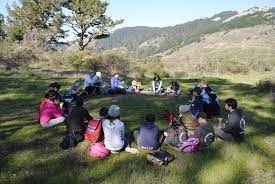
Education is not limited to the four walls of a classroom. In recent years, there’s been an increasing appreciation for learning outside the confines of a traditional academic setting. School grounds, with their diverse range of natural and built environments, offer a myriad of learning opportunities for students and educators. This article explores some benefits of learning outside the classroom and illustrates how examining the school grounds fosters holistic education.
1. Encouragement of Experiential Learning:
Experiential learning emphasizes the importance of firsthand experiences in building new knowledge and developing skills. When students explore their school grounds, they engage in observational and tactile learning, leading to deeper understanding and long-lasting memories. For instance, a biology class observing an ecosystem on campus will help students appreciate the interdependence among living organisms more effectively than just reading about it in a textbook.
2. Integration of Environmental Education:
Examining the school grounds allows students to acquire knowledge about local ecosystems, climate change, waste management, energy conservation, and more. By incorporating environmental education into everyday curriculums, schools foster responsible stewardship among learners and inspire them to develop sustainable solutions for challenges faced by our planet.
3. Promoting Physical Activity and Well-being:
Learning outdoors encourages children to be physically active while conducting educational activities. The physical health benefits include improved cardiovascular fitness, enhanced motor skills development and increased exposure to sunlight which is essential for producing Vitamin D. Moreover, research indicates that outdoor learning positively affects mental well-being by reducing stress levels and boosting concentration.
4. Development of Problem-Solving Skills:
When students are presented with authentic real-world problems in their school environment such as water conservation due to a drought or planning for seasonal planting, they learn to solve complex issues through critical thinking, team collaboration and communication. Developing these skills prepares them for future workplace challenges.
5. Cultivating Creativity and Curiosity:
Outdoor settings provide students with the chance to engage with natural elements, explore textures and colors, and notice intricate details in their surroundings. This fosters creativity while encouraging curiosity about the natural world. They learn to ask questions, make connections, and form hypotheses about their environment which is the foundation of scientific inquiry.
6. Opportunities for Cross-Disciplinary Learning:
School grounds can be an excellent platform to interconnect different subjects and create a cross-disciplinary learning experience. For instance, a math class can relate geometry concepts to architecture on campus or a history lesson can involve examining the timeline of school events by studying landmarks or commemorations present on school grounds.
Conclusion:
Exploring and learning from the school grounds offers numerous benefits that transcend traditional classroom education. Teachers and schools should consider incorporating outdoor education into their curriculums to foster experiential, holistic learning – ultimately shaping well-rounded, environmentally-conscious, and innovative future leaders.