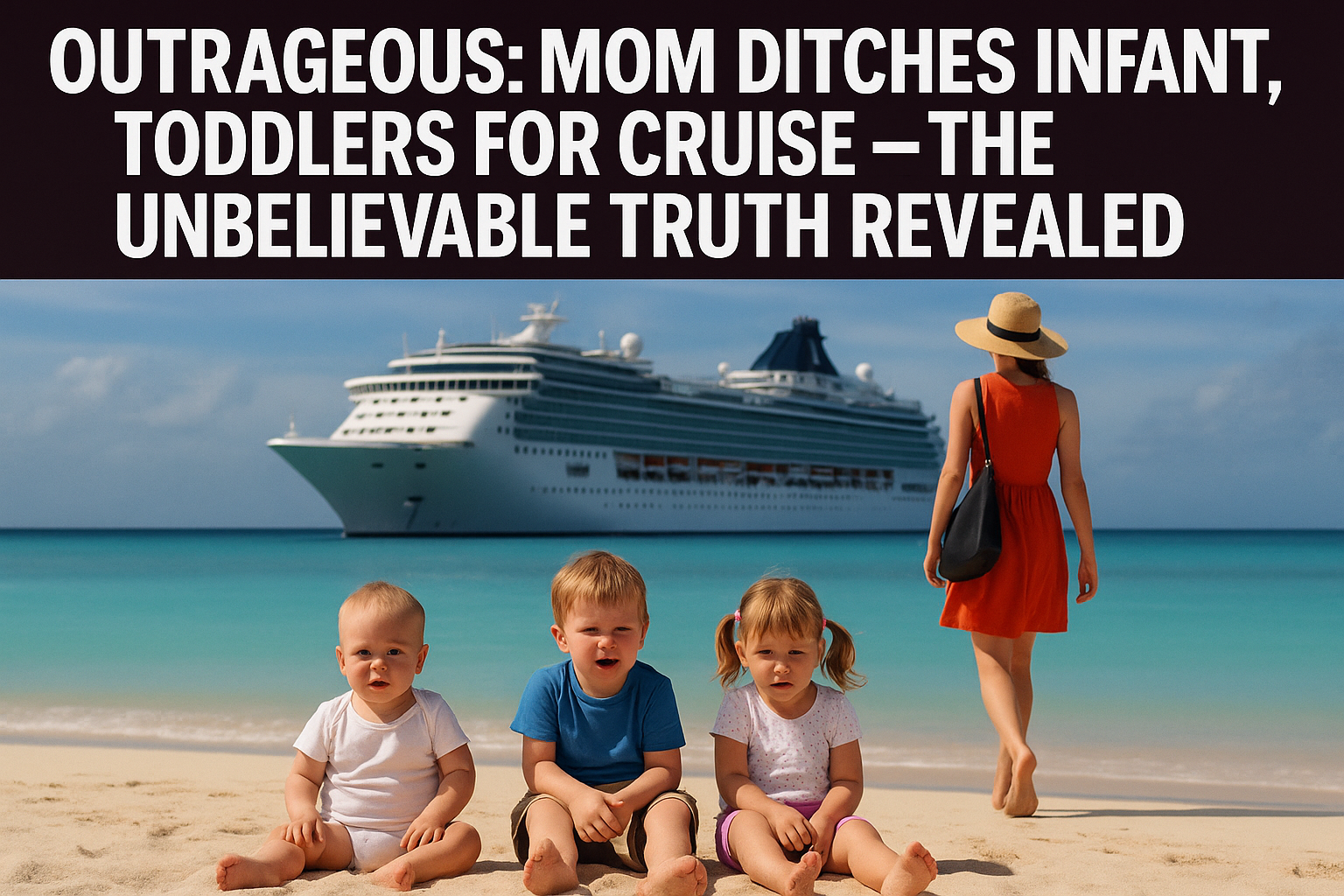

It’s a scenario that chills you to the bone, isn’t it? The kind of story that makes you pause and wonder what on earth could possess a parent to make such a choice. We’re talking about a situation so egregious, so far outside the bounds of what most of us consider acceptable parenting, that it sparked a firestorm of disbelief across social media. Imagine, if you will, four young children, including a helpless 2-month-old infant and a curious 2-year-old, left completely unsupervised in a home while their mother sails off on a three-night Carnival cruise to the Bahamas. This isn’t a fictional drama; it’s the disturbing reality that unfolded recently in South Florida, putting a harsh spotlight on the profound implications when a mother leaves children home alone.
The individual at the center of this controversy is Nathalie Belizaire, a 29-year-old North Miami Beach resident. She’s now facing a quartet of child neglect charges, each one a stark reminder of the responsibilities that come with parenthood. The alleged abandonment took place between September 26th and September 29th, 2026. For three agonizing days, these vulnerable children were, by all accounts, left to fend for themselves. It’s a narrative that raises so many questions about child safety, parental accountability, and the broader societal safety nets that are supposed to protect our youngest and most defenseless citizens. How could this happen? What were the children enduring during those days? And what can we, as a community, learn from such a tragic breakdown of care?
The Alarming Discovery: A Father’s Call and a Police Raid
The unraveling of this appalling situation began not with a neighbor’s tip or a social worker’s check-in, but with the keen concern of the 2-month-old infant’s father. It’s a testament to the instinctual bond parents share, even when relationships are strained or separated. He, presumably, had reason to believe something was amiss, a gut feeling that something wasn’t right at Nathalie Belizaire’s residence. His decision to contact authorities proved to be absolutely critical, a lifeline for children who were in an increasingly perilous situation. Without his intervention, one shudders to think how much longer the children might have remained in that unsupervised state, or what further dangers they might have faced.
When the police arrived at the North Miami Beach home, they were met with silence. The doors were locked, and there was no immediate answer. This lack of response, coupled with the father’s urgent claims, certainly escalated the situation. Officers, understanding the potential gravity of the situation, made the difficult but necessary decision to force entry into the residence. What they found inside was heartbreaking: four young children, clearly frightened and likely disoriented, hiding together in a bathroom. Can you imagine their fear? A 2-month-old, a 2-year-old, and two other young siblings, alone, perhaps hungry, certainly confused, and seeking refuge in the only place they felt safe. This discovery solidified the charges against Belizaire, making it horrifyingly clear that a mother leaves children home alone in circumstances that were nothing short of negligent.
The immediate priority for the police, once the children were found, was their safety and well-being. Child Protective Services would have been immediately notified, and the children would have been taken into protective custody. This isn’t just about punishing a parent; it’s about safeguarding children who have been placed in harm’s way. The physical and emotional impact of such an experience on young children, particularly an infant and a toddler, can be profound and long-lasting. They may not fully comprehend the situation, but the feeling of abandonment, the lack of a familiar caregiver, and the fear they experienced can leave deep psychological scars. It’s a stark reminder that children need consistent, present care, not just occasional supervision.
The Legal Ramifications: Charges and Previous Encounters with the Law
Nathalie Belizaire now faces four counts of child neglect, a serious felony in Florida that carries significant penalties. Child neglect charges are not taken lightly by the legal system, especially when involving multiple young children and an infant. These charges reflect a failure to provide the necessary care, supervision, and protection for children, thereby endangering their physical or mental health. The fact that the alleged neglect occurred over several days, while Belizaire was vacationing, will undoubtedly be a central point in the prosecution’s case. It speaks to a deliberate choice, not an accidental oversight. (See: CDC on children's mental health.)
But this isn’t Belizaire’s first run-in with the law. The incident in question, while shocking, isn’t an isolated glimpse into her record. Just a year prior, in January 2025, she was arrested for aggravated battery. The accusation then was that she pepper-sprayed a neighbor. While distinct from child neglect, this previous arrest paints a picture of someone who has, at times, struggled with impulse control or managing conflict. Such a history, while not directly related to the current charges, can sometimes be considered by the courts during sentencing or when evaluating a parent’s overall stability and fitness. It might suggest a pattern of behavior that raises concerns about her judgment and ability to handle stressful situations responsibly. When a mother leaves children home alone under such extreme circumstances, any prior legal issues often become part of the public and legal narrative.
The legal process will now involve investigations, interviews, and court appearances. Belizaire will have the opportunity to present her defense, but the evidence, as reported, seems compelling. The outcome of this case will send a strong message about parental responsibility and the consequences of severe child neglect. Beyond the immediate legal penalties, the long-term impact on her relationship with her children and her ability to regain custody will be significant and complex. The court’s primary concern will always be the best interests of the children, and proving parental fitness after such an incident is an uphill battle.
The Broader Context: When a Mother Leaves Children Home Alone
The question of when it’s appropriate to leave children home alone is a complex one, with varying legal guidelines and societal norms. However, virtually every jurisdiction and child welfare expert agrees that leaving an infant and a toddler unsupervised for any length of time is unequivocally dangerous and constitutes neglect. Children of these ages require constant supervision for their basic safety, feeding, diapering, and emotional needs. They cannot care for themselves, respond to emergencies, or even articulate their needs effectively.
In Florida, like many states, there isn’t a specific age mandated for leaving a child home alone, but the law does emphasize that children must not be left without adult supervision if doing so would expose them to a significant risk of harm. A 2-month-old, a 2-year-old, and other young children certainly fall into this category. The incident involving Nathalie Belizaire dramatically illustrates the extreme end of this spectrum. It’s not about a teenager watching younger siblings for an hour; it’s about a complete and utter abandonment of parental duty, risking the lives and well-being of extremely vulnerable individuals for personal leisure. This is why the case has resonated so widely and generated such strong reactions.
Think about the everyday hazards in a typical home: cleaning supplies, accessible outlets, stairs, open windows, even simply falling down. For an infant, just being left in a crib without regular checks for feeding or changing can quickly become a medical emergency. For a toddler, every corner, every cupboard, every piece of furniture presents a potential danger they’re too young to recognize or avoid. The absence of a responsible adult in such a scenario isn’t just neglect; it’s an active endangerment. This situation underscores why the legal system, and society at large, takes such a dim view when a mother leaves children home alone under such egregious circumstances.
The Public’s Reaction: Outrage and Disbelief on Social Media
It didn’t take long for the news of Belizaire’s alleged actions to spread like wildfire across social media platforms. The reaction, as you might expect, was immediate and overwhelmingly negative. Hashtags related to child neglect and parental responsibility began trending, filled with comments expressing everything from profound sadness to outright fury. People struggled to comprehend how a parent could make such a choice, especially given the tender ages of the children involved. (See: NIH on child neglect.)
Many comments focused on the sheer irresponsibility of the act, questioning Belizaire’s judgment and empathy. Others highlighted the plight of the children, expressing deep concern for their emotional and physical well-being. There was a strong current of disbelief – how could someone prioritize a vacation over the safety of their own offspring? This collective outrage serves as a powerful reminder of the fundamental values we hold as a society regarding the protection of children. When a mother leaves children home alone in such a brazen manner, it violates a deeply ingrained sense of right and wrong.
This public outcry, while sometimes harsh, also reflects a collective societal anxiety about child safety. It often prompts discussions about mental health resources for parents, the pressures single parents might face, and the importance of community support systems. While no excuse for neglect, these conversations can sometimes lead to greater awareness and a push for better resources to prevent similar situations from occurring. However, in this specific case, the dominant sentiment was one of shock and condemnation, a visceral reaction to what many saw as an unforgivable act of abandonment.
The Long-Term Impact on Children and Family Systems
Beyond the immediate legal consequences for Nathalie Belizaire, the most profound and lasting impact of this incident will undoubtedly be on her children. Imagine the confusion, fear, and potential trauma of being left alone for days, especially at such young, impressionable ages. Infants and toddlers rely entirely on their caregivers for a sense of security, love, and basic survival. When that trust is shattered, or when the caregiver is simply absent, it can have significant developmental repercussions.
Children who experience neglect often struggle with attachment issues, trust problems, and emotional regulation later in life. They might develop anxiety, depression, or behavioral problems. For the 2-month-old, the lack of consistent feeding and changing could have led to serious health issues, not to mention the basic human need for comfort and touch. For the 2-year-old, the memory, however fragmented, of being alone and scared could contribute to a sense of abandonment and insecurity that takes years, if not a lifetime, to process. Even the older children, who might have been trying to care for their younger siblings, would have experienced immense stress and a premature burden of responsibility.
The family system itself will be irrevocably altered. The children are now in protective custody, and their future is uncertain. They may be placed with other family members, or, if no suitable relatives are found, in foster care. This disruption, regardless of how necessary, adds another layer of trauma to their young lives. Rebuilding trust and stability for these children will require immense support from social workers, therapists, and any future caregivers. It’s a long and arduous journey for children who were simply victims of a parent’s incomprehensible decision to leave children home alone. (See: Associated Press news coverage.)
Preventing Such Incidents: Community Responsibility and Support
This case, as heartbreaking as it is, serves as a stark reminder that child neglect is a real and present danger, even in communities that seem outwardly stable. It forces us to ask: what role do we, as a society, play in preventing such tragedies? It’s easy to point fingers, but true prevention requires a multi-faceted approach involving individual responsibility, community vigilance, and robust support systems.
Firstly, the importance of being a vigilant neighbor cannot be overstated. If something seems off, if you notice children left unattended for unusually long periods, or if you hear persistent cries, it’s always better to err on the side of caution and report your concerns to Child Protective Services or local law enforcement. While we don’t want to foster a culture of unfounded suspicion, ignoring genuine red flags can have devastating consequences. The father’s actions in this case were paramount, demonstrating the critical role individuals can play.
Secondly, we need to ensure that struggling parents have access to the resources they need. Parenting is incredibly challenging, and sometimes individuals are overwhelmed by financial strain, mental health issues, or a lack of support. While none of this excuses neglect, accessible mental health services, parenting classes, childcare assistance, and community support groups can make a world of difference. Creating a culture where parents feel safe asking for help, rather than fearing judgment or punitive action, is crucial. Organizations that provide respite care or emergency childcare services can also be vital safety nets for parents nearing their breaking point.
Ultimately, the story of Nathalie Belizaire and her children is a sobering one. It underscores the profound responsibility that comes with parenthood and the devastating impact when that responsibility is abdicated. It’s a call to action for communities to be more aware, more supportive, and more proactive in safeguarding the well-being of our most vulnerable citizens. Because when a mother leaves children home alone, especially those so young, the entire community bears a responsibility to respond and protect.
Trending Now
- this guide on this one factor may hurt your child’s brain more than poverty or premature birth
- our breakdown of baffling: ai ‘godfathers’ reveal how close we are to an intelligence explosion
- our breakdown of dramatic title ix changes just dropped — here’s what it means for your campus
- our breakdown of gpt-6.1 astra: the terrifying reason openai just hit pause
Frequently Asked Questions
What happened to the children left alone while their mother went on a cruise?
The children, including a 2-month-old infant and a 2-year-old toddler, were left unsupervised for three days while their mother, Nathalie Belizaire, went on a Carnival cruise. This alarming neglect led to her facing multiple child neglect charges.
Why did the mother leave her children home alone?
The article does not provide specific reasons for Nathalie Belizaire's decision to leave her children home alone. However, the situation highlights severe neglect and raises questions about parental accountability and the responsibilities of parenthood.
What charges is the mother facing for leaving her children alone?
Nathalie Belizaire is facing four counts of child neglect due to the alleged abandonment of her four young children while she was away on a cruise. This situation has triggered significant public outrage and concern.
How did authorities become aware of the children's neglect?
Authorities were alerted to the situation not by neighbors or social workers, but by the concerned father of the 2-month-old infant. His instinctual concern prompted a police investigation that revealed the children's dire circumstances.
What are the implications of this case for child safety?
This disturbing case underscores the critical importance of child safety and parental responsibility. It raises important discussions about societal safety nets and the need for vigilance in protecting vulnerable children from neglect.
What did we miss? Let us know in the comments and join the conversation.