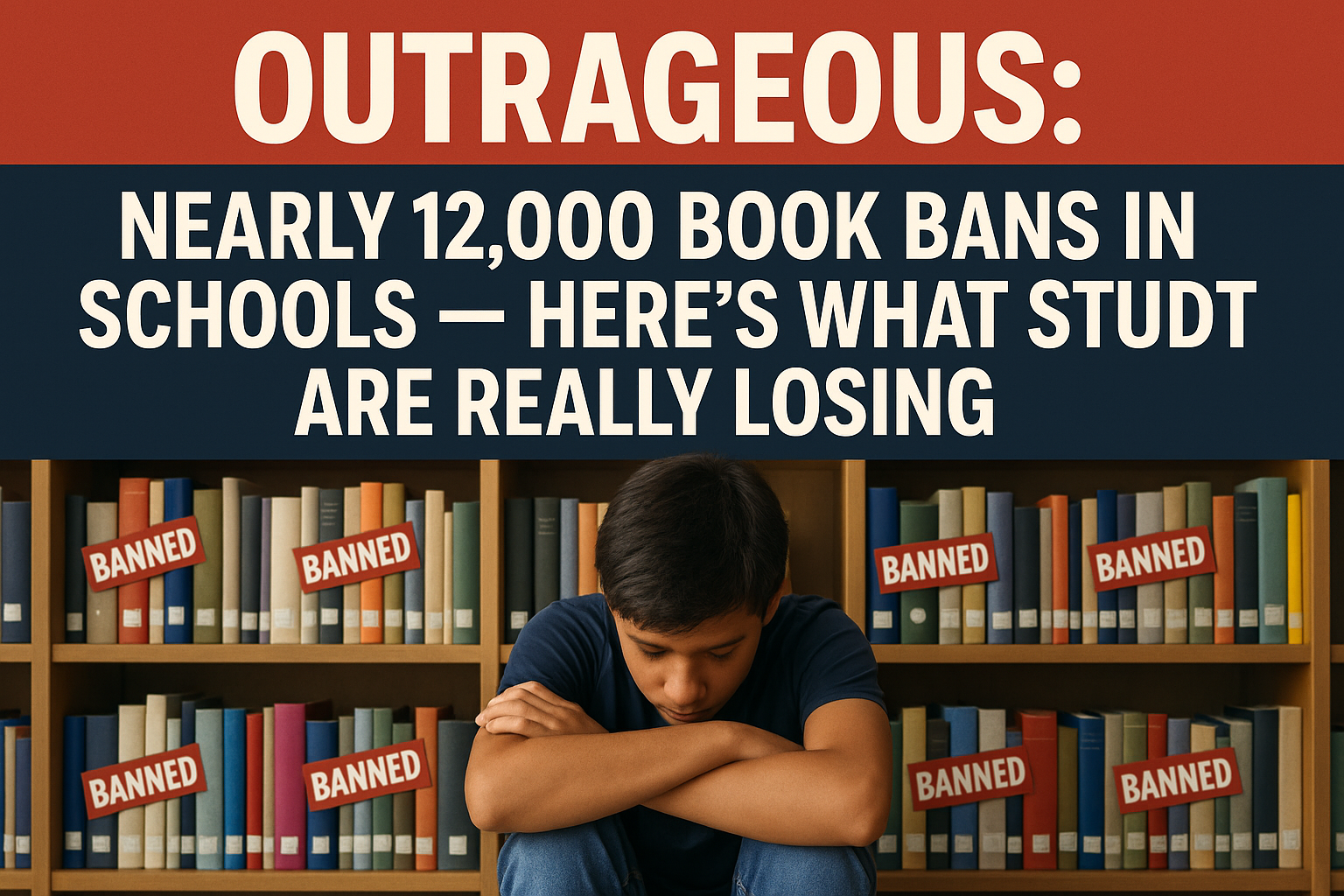

Imagine walking into your school library, a place you’ve always seen as a gateway to knowledge, and finding entire shelves empty, or certain sections cordoned off. This isn’t some dystopian novel; it’s the stark reality facing an increasing number of students across the United States. A recent, frankly alarming, report has pulled back the curtain on a record-shattering 11,982 book-ban cases in US public schools during the 2025-26 academic year. We’re talking about 7,370 unique titles suddenly deemed inappropriate, impacting the work of over 4,000 creators. This isn’t just a handful of books here and there; it’s a systemic removal of educational materials on a scale we haven’t seen before, fundamentally altering what students can read and learn. The sheer volume of these book bans in schools is a critical issue that deserves our full attention.
It’s easy to get lost in the numbers, but let’s be clear: each one of those banned books represents a story untold, a perspective silenced, a piece of knowledge withheld. When we dig into the specifics, a pattern emerges that is both predictable and deeply troubling. The vast majority of these challenged books address themes of race, racism, LGBTQ+ identities, experiences of people of color, sexuality, and sexual violence. This isn’t about protecting children from truly harmful content; it’s about curating a specific, often whitewashed and conservative, worldview in our educational institutions. What message does this send to students who see their own lives and identities reflected in these very books?
The Unprecedented Scale of Book Bans in Schools
The 2025-26 academic year stands out as a watershed moment in the ongoing debate around censorship in education. To have nearly 12,000 instances of book bans in schools in a single year is not just an increase; it’s an explosion. This figure eclipses previous records, demonstrating a concerted, and often organized, effort to remove books from classrooms and libraries. It’s a significant leap from even the preceding year, signaling an acceleration of a trend that many educators, librarians, and civil liberties advocates find deeply concerning.
To put this in perspective, imagine almost 12,000 individual decisions, each one pulling a book from a shelf, denying a student access to its contents. This isn’t a spontaneous movement driven by individual parental complaints alone. While parental concerns are often cited, the scale suggests a more coordinated campaign, frequently fueled by political agendas and well-resourced advocacy groups. The impact isn’t just on the specific titles removed, but on the chilling effect it creates. Teachers become more cautious about what they assign, librarians more hesitant about what they order, and ultimately, students are left with a narrower, less diverse educational experience.
The Concentration of Bans: A Geographic Snapshot
While book bans are a national issue, certain states are clearly leading the charge. Texas and Florida, for instance, accounted for the lion’s share of these bans. This isn’t surprising to anyone who has been following the political landscape in these states, where legislation and rhetoric have increasingly targeted discussions around race, gender, and sexuality in schools. These states have become ground zero for the culture wars playing out in our education system, and the library is often the frontline.
The concentration of these bans in specific regions highlights that this isn’t a uniformly distributed phenomenon. Instead, it reflects localized political climates and legislative efforts that empower individuals and groups to challenge materials more aggressively. When state-level policies encourage or even mandate the review of books based on broad criteria, it creates an environment ripe for mass challenges. This geographic focus underscores the idea that these aren’t random occurrences but rather symptoms of larger, ideologically driven movements. (See: recent AP News on book bans.)
Who and What Is Being Targeted?
It’s crucial to understand the characteristics of the books being targeted. The report makes it abundantly clear: books dealing with race, racism, LGBTQ+ themes, stories by and about people of color, and discussions of sexuality and sexual violence are overwhelmingly represented among the banned titles. This isn’t about obscenity; it’s about identity and perspective. These are often the very books that help students from marginalized communities feel seen, understood, and represented in their learning environments. For other students, these books offer vital windows into experiences different from their own, fostering empathy and a more nuanced understanding of the world.
When books by authors like Toni Morrison, Maia Kobabe, or George M. Johnson are removed, it sends a clear message: certain lives, certain histories, certain experiences are deemed too uncomfortable or inappropriate for young people to encounter. This isn’t protecting innocence; it’s stifling understanding. It suggests that difficult conversations, complex emotions, and diverse realities have no place in a child’s education, which is a dangerous precedent.
The Shocking Rise of Nonfiction Bans
Perhaps one of the most concerning revelations from the report is the increasing targeting of nonfiction. In the 2024-25 period, a staggering 29% of banned titles were nonfiction, including history books and reference materials. Let that sink in for a moment. We’re not just talking about novels with mature themes; we’re talking about the foundational texts that help students understand history, civics, and the world around them.
When history books are banned, what version of history are we teaching? When reference books are pulled, how do students access factual information on sensitive topics? This move goes beyond protecting children from ‘inappropriate’ fiction; it actively attempts to control the narrative of reality. Educators express legitimate concern that this trend severely limits students’ ability to develop a comprehensive, critical understanding of the world. How can students truly engage with complex societal issues if the very resources that provide context and diverse perspectives are systematically removed?
The Broader Implications for Education and Democracy
The debate over book bans in schools isn’t just about what’s on a library shelf; it’s about the very nature of education and the future of a democratic society. Education, at its best, should be about expanding horizons, challenging assumptions, and fostering critical thinking. When books are systematically removed, it narrows those horizons, reinforces existing biases, and stunts intellectual growth. Students are denied the opportunity to grapple with diverse ideas, develop empathy for others, and understand complex social issues.
Think about it: how can young people learn to navigate a diverse and often challenging world if their access to information and different viewpoints is restricted from an early age? These bans cultivate an environment of intellectual conformity rather than curiosity. They prepare students for a world that doesn’t exist – one where uncomfortable truths or diverse experiences can simply be wished away or erased. This approach fundamentally undermines the goal of education, which is to equip students with the tools to think for themselves, not just to absorb pre-approved narratives. (See: CDC resources on education and youth.)
The Chilling Effect on Educators and Librarians
Beyond the immediate removal of books, these widespread bans create a palpable chilling effect within schools. Educators and librarians, who are professionals dedicated to fostering learning and literacy, find themselves walking on eggshells. They face the constant threat of backlash, accusations, and even job loss for simply doing their jobs – which includes providing a wide range of materials that reflect the diversity of human experience and thought. This isn’t just hypothetical; librarians have been threatened with legal action, and teachers have been disciplined for assigning books that later become targets.
This atmosphere of fear discourages innovation, self-censorship becomes rampant, and the quality of education inevitably suffers. Why would a teacher introduce a potentially controversial but valuable text if they know it could lead to an administrative headache, public outcry, or worse? The irony is that the very people tasked with expanding young minds are being pressured to constrict them, to play it safe, and to avoid any material that might spark a challenge. This erosion of professional autonomy and trust is a significant casualty of the book-banning movement.
The Emotional Toll on Students and Communities
While we often discuss book bans in terms of policy and statistics, it’s vital not to lose sight of the profound emotional impact these actions have on students. For LGBTQ+ students, students of color, and those from other marginalized groups, seeing books that reflect their identities and experiences removed from libraries can feel like a direct rejection. It sends a message that their lives, their stories, and their very existence are not valued or are even deemed inappropriate within their own school communities. This can be deeply isolating and damaging to self-esteem, especially during formative years.
Moreover, these bans often ignite fierce debates within communities, pitting parents against educators, and neighbor against neighbor. This creates a divisive and often hostile environment, detracting from the primary goal of schools: to educate and nurture children. Students, caught in the middle, witness these contentious battles unfold, which can breed cynicism and distrust in the very institutions meant to support them. It’s a heartbreaking situation when the battle over books overshadows the joy of reading and discovery.
The Erosion of Intellectual Freedom
At its core, the surge in book bans in schools represents a profound assault on intellectual freedom. Intellectual freedom is the right of every individual to seek and receive information from all points of view without restriction. It is a fundamental principle in a democratic society, essential for informed decision-making and the robust exchange of ideas. When schools, which are meant to be bastions of learning and inquiry, become sites of censorship, this freedom is directly threatened. (See: New York Times coverage of book bans.)
The argument that these bans are solely about ‘age appropriateness’ or ‘parental rights’ often masks a deeper agenda: the desire to control narratives and limit exposure to ideas that challenge a particular worldview. True intellectual freedom means trusting students, with appropriate guidance, to engage with a wide range of ideas, even those that are complex or uncomfortable. It means equipping them to think critically about different perspectives, not shielding them from anything deemed ‘problematic’ by a select few. When we undermine this freedom, we undermine the very foundations of a well-informed citizenry.
What Can Be Done? Standing Up Against Book Bans
Given the alarming trend of book bans in schools, what can be done to push back? First, it’s imperative for parents, students, and community members to get informed. Understand your school district’s policies on challenged materials, know which books are being targeted, and why. Often, the motivations behind these challenges are vague or misrepresent the content of the books themselves. Attending school board meetings and speaking up can make a real difference. Your voice, especially when combined with others, carries weight.
Supporting librarians and teachers is also crucial. These professionals are often on the front lines, facing immense pressure. Showing solidarity, offering public support, and advocating for their professional autonomy can help them resist calls for censorship. Joining or forming local groups dedicated to defending intellectual freedom and supporting diverse literature can amplify efforts. Organizations like the American Library Association (ALA) and PEN America track these bans and offer resources and guidance for combating them. Remember, this isn’t just about ‘books’; it’s about the kind of education we want for our children and the kind of society we want to live in.
The record-breaking number of book bans in US schools is more than just a statistic; it’s a symptom of a deeper struggle over who controls information, what stories are deemed acceptable, and ultimately, what kind of citizens we are preparing for the future. Allowing nearly 12,000 books to be pulled from shelves without a fight would be a disservice to our students, our educators, and the very principles of open inquiry and intellectual freedom that underpin a healthy society. It’s time to stand up for libraries as places of exploration, not exclusion.
Trending Now
- our breakdown of 10 mejores exchanges de criptomonedas 2026
- this guide on social and collaborative learning platforms
- Five Nannies for Four Kids? The Astonishing Truth About Billionaires and Parenting
- This One Group Wants AI Robocalls Unleashed Before Elections — And It’s Infuriating
- read the full story
Frequently Asked Questions
What are the reasons for book bans in schools?
Book bans in schools are often motivated by concerns over content that addresses themes of race, LGBTQ+ identities, sexuality, and sexual violence. These bans reflect a desire to curate a more conservative worldview, leading to the removal of diverse perspectives and stories from educational materials.
How many books were banned in US schools in 2025-26?
During the 2025-26 academic year, there were nearly 12,000 book bans reported in US public schools, affecting 7,370 unique titles. This unprecedented scale of censorship highlights a systemic removal of educational materials.
What impact do book bans have on students?
Book bans significantly limit students' access to diverse stories and perspectives, which can affect their understanding of themselves and the world. When students see their identities and experiences represented in books, it fosters inclusion and empathy; bans deny them this critical opportunity.
Are book bans increasing in the US?
Yes, book bans are increasing dramatically in the US. The 2025-26 academic year saw a record number of nearly 12,000 instances, indicating a disturbing trend of censorship in educational settings that has escalated in recent years.
What themes are commonly targeted in book bans?
Commonly targeted themes in book bans include race, racism, LGBTQ+ identities, and issues related to sexuality and sexual violence. These themes are often deemed inappropriate by those advocating for the bans, reflecting broader societal tensions around these topics.
Have you experienced this yourself? We'd love to hear your story in the comments.