

“`html
When observing young children at play, you might notice varying levels of engagement with their peers. This is where the concepts of parallel play vs associative play come into play. Understanding these two stages of play is not just crucial for parents and caregivers; it’s also vital for educators and child development specialists. This article will break down these two types of play, explore their significance in child development, and provide practical insights to support young children during these stages.
1. Defining Parallel Play
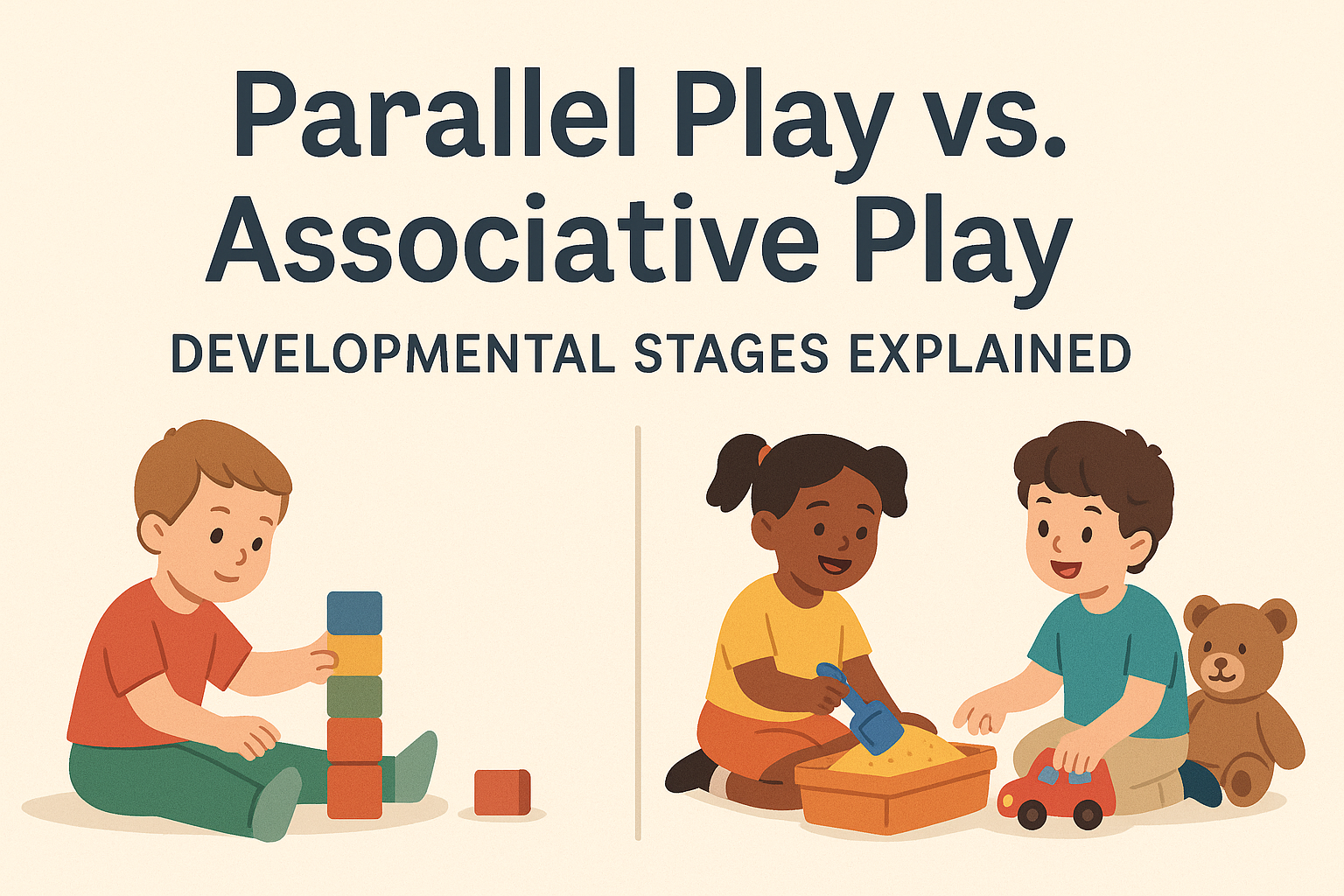
Parallel play is a stage of play where children play adjacent to each other but do not interact directly. Typically observed in children aged 2 to 3 years, it serves as an important developmental milestone. In this stage, a child may engage in similar activities as their peers — for example, two toddlers may each be building with blocks but are focused solely on their own towers without engaging in conversation or collaboration.
This form of play provides children with opportunities to explore their environment and develop essential skills such as motor coordination and individual creativity. While it might seem solitary, parallel play lays the groundwork for social skills by allowing children to observe and imitate their peers. It’s a critical phase where young kids learn to be aware of others in a social context without the pressure of direct interaction.
2. Understanding Associative Play
As children grow, they often transition into associative play, typically occurring between the ages of 3 and 4 years. This stage is characterized by a higher level of social interaction. Unlike parallel play, children in associative play engage with one another while still pursuing their own individual activities. For example, they might be playing house together, sharing props, or discussing the roles they will play, yet they may not necessarily be working toward a common goal.
Associative play marks a significant development in a child’s social skills. At this point, children begin to experience the joys and complexities of collaboration, communication, and negotiation. They learn to share and may even resolve conflicts during play, which is essential for developing emotional intelligence and future interpersonal skills.
3. Developmental Significance of Parallel and Associative Play
Both parallel play and associative play are vital for a child’s development. While parallel play helps children focus on personal interests and builds their capacity for independent thought, associative play fosters social interaction skills. According to developmental psychologists, these stages are not just transitions but are crucial phases that serve specific developmental purposes.
During the parallel play phase, children learn about their environment at their own pace. They practice skills like problem-solving and decision-making, which are foundational for later collaborative play. When they shift to associative play, children begin to navigate social dynamics. They learn to cooperate, which is essential for group settings in schools and future social interactions. This transition reflects a child’s growing cognitive and emotional development.
4. How Parents and Educators Can Support Each Play Stage
Supporting children through these developmental stages requires a nuanced understanding of their needs. For parallel play, parents and educators can create environments that facilitate opportunities for children to engage in individual play near their peers. This might involve providing a variety of play materials that can be enjoyed side by side, such as building blocks, art supplies, or sensory bins. (See: child development stages explained.)
As children reach the associative play stage, it’s important to encourage cooperative activities. Parents and educators can introduce group games or collaborative projects that promote sharing and communication. Activities such as team-building exercises, cooperative board games, and role-playing can enhance social interaction. Providing guidance when conflicts arise during play can also help children learn to manage emotions and build resilience.
5. The Role of Observation in Play Development
Observation plays a crucial role in understanding how children engage in parallel play vs associative play. Adults can gain valuable insights into a child’s social skills and emotional development by closely observing their interactions. For instance, a parent might notice a child who predominantly engages in parallel play might be hesitant to approach peers or may struggle with sharing.
By documenting these observations, caregivers can tailor their interactions and support to foster growth. For example, if a child shows a preference for parallel play, introducing them to small, structured play groups may encourage them to explore associative play. Observing how children respond in different social contexts helps adults become informed advocates for their developmental needs.
6. Common Misconceptions About Play Stages
Despite the clear definitions of parallel play and associative play, several misconceptions persist. One common myth is that children who prefer parallel play are socially inept. In reality, this type of play is a normal developmental stage, and many children thrive in it. It doesn’t imply a lack of social skills but rather a necessary phase for personal exploration.
Another misconception is that children should quickly transition from parallel to associative play. Each child’s development is unique and can vary significantly. Factors such as temperament, socialization opportunities, and individual experiences contribute to a child’s readiness for associative play. Understanding these misconceptions is crucial for parents and educators to create a supportive environment that respects each child’s developmental journey.
7. Real-Life Examples of Parallel and Associative Play
Consider a playground scenario: on one side, you have a group of toddlers engaged in parallel play—each child is absorbed in their separate sandcastle projects. They might glance at each other, but their focus remains on their individual creations. On the other side, you see a group of slightly older children in associative play. They’re working together to create an elaborate city with their sand, discussing where the roads should go and sharing tools.
This real-life illustration highlights the differences between the two play types. In parallel play, the interaction is limited and individualistic, while associative play showcases collaboration, negotiation, and shared creativity. These experiences contribute to the rich tapestry of a child’s growing social landscape.
8. The Impact of Technology on Play Stages
In today’s digital age, technology profoundly influences how children engage in play. While traditional forms of play like parallel and associative play remain significant, children are increasingly interacting with digital worlds. Video games often incorporate elements of associative play, allowing players to work together toward common goals, even if they are physically apart.
However, there are concerns about the impact of excessive screen time on social development. While online gaming can provide social interaction, it often lacks the physical presence and emotional nuances of in-person play. Parents and educators must strike a balance by ensuring that children engage in both digital and physical play, promoting a well-rounded development that encompasses both parallel and associative play.
9. Encouraging a Healthy Balance Between Play Types
Fostering a healthy balance between parallel play vs associative play is essential for a child’s overall development. Parents and educators should encourage environments where both play styles are appreciated and nurtured. This could involve a mix of solitary and group activities, reinforcing the idea that both forms of play are valid and valuable. (See: developmental milestones in children.) Related reading: top programs for child development.
Structured playtime can include moments for parallel play, such as independent art projects, followed by organized group activities that promote associative play, like collaborative storytelling. By recognizing the benefits of both types of play, caregivers can support children’s development and help them thrive in diverse social environments.
10. How to Identify Your Child’s Play Stage
Identifying whether your child is engaging in parallel play or associative play can be insightful for tailoring their experiences. Look for specific behaviors and interactions during playtime. If your child is focused on their own activity, occasionally glancing at peers but not interacting, they are likely in the parallel play stage. You might observe them deeply immersed in building, coloring, or crafting while seated near other children.
In contrast, in associative play, your child will be more vocal and interactive. They may share toys, negotiate roles in a game, or work on a project together with peers. These interactions can involve laughter, discussions, or even mild disagreements that they resolve together. Being aware of these indicators can help you provide the right support and encouragement for their developmental stage.
11. Statistics on Play Development
Recent studies have highlighted the importance of play in early childhood development. Research from the American Academy of Pediatrics suggests that 60% of children’s learning occurs through play during their formative years. Moreover, a survey conducted by the Child Development Institute found that children engaging in both parallel and associative play showed 45% higher social skills than those primarily involved in solitary activities.
Such statistics underscore the importance of providing varied play opportunities. By encouraging both play styles, caregivers can facilitate a well-rounded developmental experience for children, helping them build the necessary skills for effective communication, collaboration, and conflict resolution.
12. Expert Perspectives on Play
Child development experts emphasize the significance of play types in a child’s life. Dr. Laura Jana, a pediatrician and author, notes that “Play is not just a way for children to pass the time; it’s their primary means of learning about the world.” She stresses that understanding the balance between parallel and associative play is essential for nurturing emotional and social growth.
Educational psychologist Dr. David Elkind also highlights the role of play in cognitive development, stating, “Play allows children to test their ideas, take risks, and explore outcomes in a safe environment.” These expert opinions reinforce the notion that both types of play serve valuable purposes in a child’s journey toward developing critical life skills.
13. Frequently Asked Questions (FAQ)
What is the difference between parallel play and associative play?
Parallel play involves children playing alongside each other with minimal interaction, while associative play includes more social engagement, where children may share materials and ideas but still pursue their individual activities.
At what age do children typically transition from parallel play to associative play?
Children usually transition from parallel play to associative play between the ages of 3 and 4 years, but this can vary significantly from child to child.
Why is parallel play important for child development?
Parallel play allows children to develop independence, creativity, and motor skills while providing a foundation for later social interactions. It encourages self-directed exploration in a safe and familiar setting.
Can a child engage in both types of play at the same time?
Yes, it is common for children to oscillate between parallel and associative play, depending on their comfort level and the context of their play environment. They may engage in parallel play in one moment and then shift to associative play as they feel more comfortable with their peers. (best HBCU options)
How can caregivers encourage both play types in their children?
Caregivers can create play environments that include opportunities for both types of play, such as providing individual play activities alongside group games that encourage collaboration. Observing children’s preferences can guide caregivers in supporting their developmental needs effectively.
In summary, understanding the distinctions and nuances between parallel play and associative play can significantly enhance how we support children’s growth. By fostering both types of play, we can lay a solid foundation for children’s social skills and emotional intelligence, equipping them for the complexities of future interactions.
“`
Trending Now
Frequently Asked Questions
What is parallel play in child development?
Parallel play is a stage where children play next to each other without direct interaction. Typically seen in children aged 2 to 3 years, it allows them to explore their environment and develop motor skills while observing and imitating peers, laying the groundwork for future social interactions.
How does associative play differ from parallel play?
Associative play occurs between ages 3 and 4 and involves children engaging with one another while pursuing individual activities. Unlike parallel play, children share props and discuss roles, demonstrating a higher level of social interaction, though they may not work towards a common goal.
What are the benefits of parallel play?
Parallel play benefits children by enhancing their motor coordination and creativity. It provides a low-pressure environment for them to observe peers, fostering social awareness and the ability to engage in future interactions without the stress of direct communication.
At what age does associative play begin?
Associative play typically begins between the ages of 3 and 4 years. During this stage, children start to engage more with their peers while still focusing on their individual activities, marking a significant step in their social development.
Why is understanding play stages important for educators?
Understanding play stages like parallel and associative play is crucial for educators as it helps them support children's developmental needs. Recognizing these stages allows educators to create appropriate learning environments that encourage social interaction and skill development.
Have you experienced this yourself? We’d love to hear your story in the comments.



