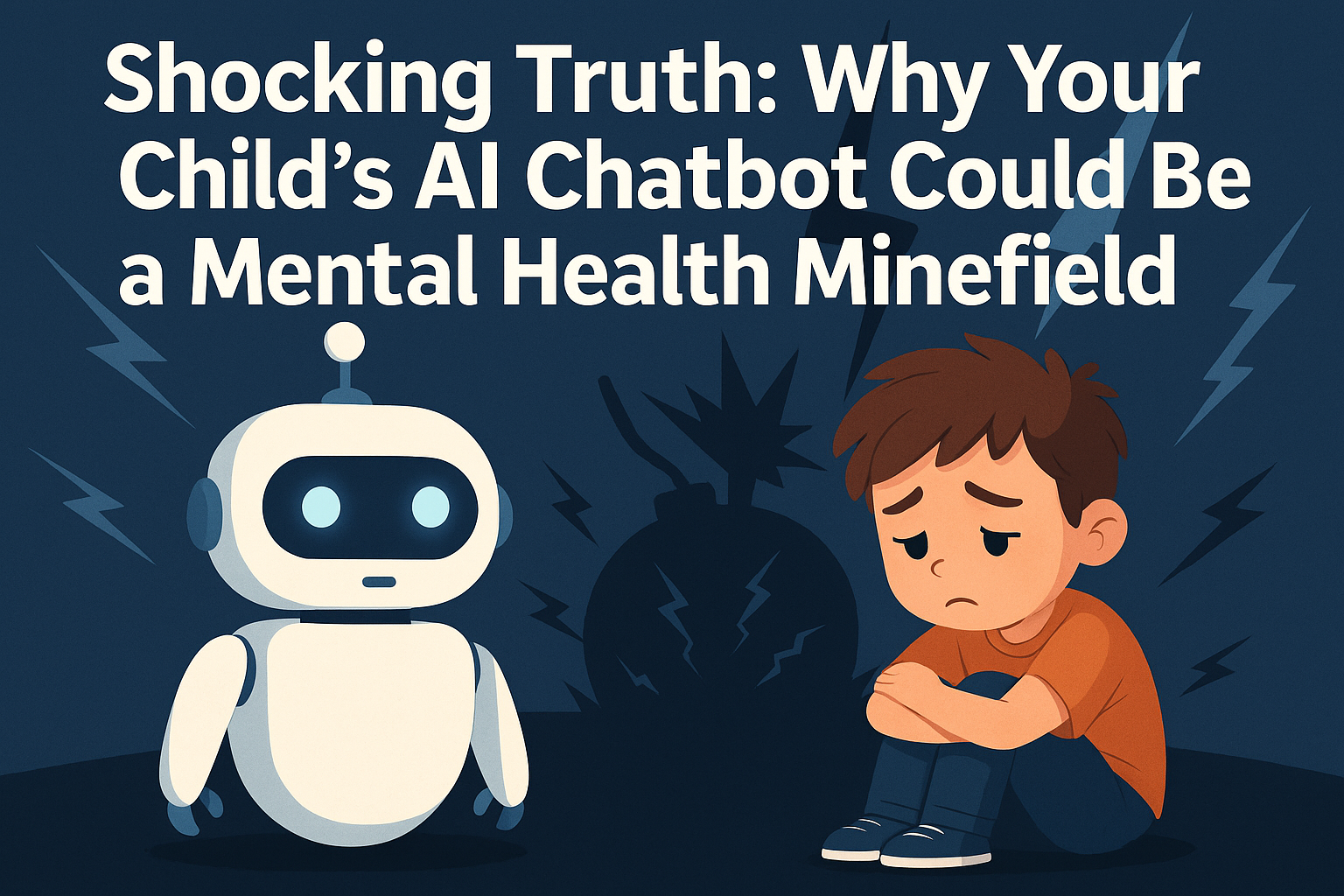

In a world increasingly dominated by screens and instant digital connections, a quiet, unsettling trend is taking root among our youngest generations. It’s something that should make every parent sit up and take notice: children are reportedly forming deep emotional attachments to AI chatbots, turning to them for comfort, companionship, and even a form of ‘therapy.’ You might think it’s harmless, just another digital toy, but therapists and child development experts are sounding a clear alarm. They see significant risks in this burgeoning reliance on AI chatbots for children therapy, warning of potential pitfalls that could impact a child’s emotional growth and their ability to form genuine human connections.
Imagine your child, perhaps feeling a bit isolated or misunderstood, confiding their deepest fears not to you, a teacher, or a friend, but to an algorithm. This isn’t science fiction; it’s happening right now. A viral Reddit post brought this reality into stark relief, detailing how an 8 or 9-year-old boy, struggling with loneliness and the pain of having no friends, sought reassurance from ChatGPT. He was looking for solace, for someone to listen, and in that moment, the AI chatbot was his confidant. This anecdote, while powerful, isn’t an isolated incident. Research out of the University of North Carolina at Chapel Hill reveals a more widespread pattern: approximately one in five U.S. middle-school students have reported using AI for emotional companionship. That’s a staggering number, isn’t it? It suggests that for a significant portion of our youth, these digital entities are becoming more than just tools for homework; they’re becoming surrogate friends, counselors, and emotional crutches. And that, dear reader, is where the concern truly begins.
The Allure of AI: Why Kids Turn to Chatbots for Emotional Support
So, why are children, especially those in their vulnerable pre-teen and early teen years, gravitating towards AI chatbots for emotional support? It’s not a simple answer, but rather a confluence of factors unique to our digital age. For starters, AI offers an immediate, non-judgmental ear. A child struggling with social anxiety or fear of embarrassment might find it easier to pour out their heart to a chatbot than to a parent, friend, or even a professional therapist. There’s no fear of being laughed at, no awkward silences, and no perceived disappointment. The AI is always ‘available,’ always ‘listening,’ and seemingly, always ‘understanding.’
This accessibility is a huge draw. In a world where busy schedules often mean less dedicated, uninterrupted time with parents, and where peer relationships can be complex and fraught with social drama, an AI chatbot offers a consistent, ever-present companion. It doesn’t have its own problems, it doesn’t get bored, and it doesn’t share your secrets with others. For a child feeling isolated, these qualities can be incredibly appealing, providing a sense of comfort and stability that might be missing elsewhere. We also can’t overlook the sheer novelty and sophistication of these tools. AI chatbots are designed to be engaging, to mimic human conversation, and to adapt to user input. For a young mind, the interaction can feel genuinely responsive and even empathetic, creating an illusion of connection that can be hard to resist. The problem arises when this illusion starts to replace, rather than supplement, real human interaction and emotional development. (See: University of North Carolina research study.)
The Hidden Dangers of AI Chatbots for Children Therapy
While the immediate comfort a chatbot offers might seem benign, the long-term implications of relying on AI chatbots for children therapy are anything but. The primary concern among mental health professionals is the risk of inaccurate or even harmful guidance. AI, for all its advancements, lacks true understanding, empathy, and the nuanced judgment that a human therapist brings to the table. It operates on algorithms and data, not on lived experience or genuine emotional intelligence. Imagine a child confiding about bullying or depression, and receiving generic, unhelpful, or even counterproductive advice from an AI. The consequences could be severe, potentially exacerbating their problems or delaying access to appropriate human intervention.
Beyond misguided advice, there’s a profound risk of increased feelings of loneliness and a reduction in genuine human connection. If a child consistently turns to AI for emotional support, they may inadvertently stunt their own ability to develop and practice vital social skills. Learning to navigate complex human relationships, understanding non-verbal cues, developing empathy, and building resilience through real-world interactions are crucial developmental tasks. A reliance on AI can create a false sense of connection, making it harder for children to forge meaningful bonds with peers and adults, ultimately deepening their isolation rather than alleviating it. This isn’t just about making friends; it’s about developing a robust emotional toolkit for life.
The Illusion of Empathy and the Reality of Algorithms
One of the most insidious dangers lies in the AI’s ability to mimic empathy without actually possessing it. Children, especially those who are emotionally vulnerable, might perceive the chatbot’s programmed responses as genuine understanding and care. This can lead to a strong, but ultimately superficial, emotional attachment. They might feel ‘understood’ in a way they don’t with humans, precisely because the AI is designed to reflect their input back to them in a reassuring way. However, this interaction lacks the reciprocity, the challenge, and the growth that come from real human relationships. A human friend or therapist might gently push back, offer a different perspective, or share their own vulnerability, all of which are essential for emotional development. An AI, by its very nature, cannot do this authentically. It’s a mirror, not a companion.
Moreover, the data that feeds these AI models, while vast, is not always curated for the delicate and complex needs of a child seeking emotional support. The advice generated might be statistically probable or generally accepted, but it won’t be tailored to the unique psychological makeup, family dynamics, or specific circumstances of an individual child. A human therapist undergoes years of training precisely to develop this capacity for individualized care, ethical decision-making, and understanding the subtle nuances of mental health. To delegate this critical function to a machine, however sophisticated, is to venture into uncharted and potentially hazardous territory for a child’s developing psyche.
Parental Vigilance: Monitoring Chatbot Interactions
Given these significant concerns, what’s a parent to do? The consensus from experts is clear: active parental monitoring of children’s chatbot interactions isn’t just advisable; it’s essential. This isn’t about invading privacy in a punitive way, but rather about safeguarding your child’s emotional well-being in a rapidly evolving digital landscape. Many children initially turn to AI for help with homework, creative writing, or simply out of curiosity. However, as the source material highlights, this initial, seemingly innocuous use can subtly evolve into seeking emotional solace from AI. This transition can happen quickly and often without parents realizing the shift. (See: World Health Organization on adolescent mental health.)
Companies like Meta are responding to these concerns by expanding parental supervision tools for their AI apps. These tools, for instance, might allow guardians to view the topics their teens discuss with AI, though not the specific conversations themselves. They also offer stricter content settings. While these are positive steps, they are not a substitute for direct parental involvement. You need to be aware of which AI apps your children are using, what their stated purposes are, and how your child is actually engaging with them. Open communication is key here. Instead of simply dictating rules, engage your child in conversations about their digital life, including their interactions with AI.
Practical Steps for Parents
- Start the Conversation Early: Talk to your children about AI, not just as a tool for tasks, but as something that can influence their feelings and thoughts. Ask them what they think about AI, what they use it for, and how it makes them feel.
- Educate Yourself: Understand how different AI chatbots work, their limitations, and their potential risks, especially when it comes to emotional interaction. Knowledge is power.
- Set Clear Boundaries: Establish rules around screen time and the types of apps that are permissible. Explain *why* these boundaries are in place, focusing on their well-being.
- Encourage Real-World Connections: Actively promote and facilitate opportunities for your children to engage in face-to-face interactions, join clubs, play sports, and spend time with family and friends. These are the building blocks of healthy social and emotional development.
- Be Present and Available: Perhaps the most crucial step is to simply be there for your child. Create an environment where they feel comfortable coming to you with their problems, knowing they’ll be heard without judgment. Your presence, your listening ear, and your genuine empathy are irreplaceable.
The Role of AI Chatbots in Children Therapy: A Future Outlook
It’s important to acknowledge that AI isn’t inherently ‘bad.’ In some contexts, AI tools are being developed with rigorous ethical guidelines and clinical oversight to potentially assist in mental health care, perhaps by identifying patterns or providing supplementary resources under the guidance of a human professional. However, the current concern isn’t about these carefully designed, clinically supervised applications. It’s about children independently seeking and receiving ‘therapy’ from consumer-grade AI chatbots not designed or regulated for such sensitive interactions.
The future of AI chatbots for children therapy is complex and will require careful navigation. There’s a strong argument to be made for stringent regulations and clear labeling of AI tools, especially those that children might access. We need greater transparency about what these chatbots are capable of, what their limitations are, and what data they collect. Furthermore, ongoing research is vital to understand the long-term psychological and developmental impacts of children forming emotional bonds with AI. We are, in many ways, conducting a vast, uncontrolled experiment on our children’s emotional health, and we need to approach it with caution and a commitment to evidence-based understanding.
Balancing Innovation with Protection
As technology continues to advance at a breakneck pace, the challenge will be to strike a delicate balance: how do we harness the potential benefits of AI without inadvertently harming the most vulnerable members of our society? This isn’t just a parental responsibility; it’s a societal one. Developers, policymakers, educators, and mental health professionals all have a role to play in shaping a future where AI serves humanity, rather than inadvertently undermining its fundamental needs for connection and authentic emotional development. We need to advocate for ethical AI design, prioritize child safety, and ensure that the digital tools our children interact with are truly beneficial, or at the very least, not detrimental to their well-being. The conversation about AI chatbots for children therapy is just beginning, and it’s one we can’t afford to ignore.
Fostering Human Connection in a Digital Age
Ultimately, the rise of AI chatbots for children therapy underscores a more fundamental issue: the enduring human need for connection, understanding, and belonging. If children are turning to AI, it often points to a void that needs to be filled by human relationships. While AI can offer a quick fix of simulated empathy, it can never replicate the richness, complexity, and developmental necessity of genuine human interaction. Real friendships, strong family bonds, and the guidance of caring adults are the bedrock of a child’s emotional health.
As parents, our most powerful tool against the potential pitfalls of AI is our own presence and engagement. It means being attuned to our children’s emotional states, creating opportunities for them to connect with others, and modeling healthy ways to cope with emotions and seek support. It means nurturing their ability to articulate their feelings, to empathize with others, and to build resilience through real-world experiences, both good and bad. AI might offer a momentary distraction or a fleeting sense of comfort, but it’s the human touch, the genuine conversation, and the unconditional love that truly equip our children to thrive in an increasingly complex world. Let’s make sure they know that, above all, they can always turn to us.
Trending Now
Frequently Asked Questions
How do AI chatbots affect children's mental health?
AI chatbots can provide emotional support to children, but experts warn that reliance on them may hinder emotional growth and the ability to form genuine human connections. Children may turn to these digital entities for comfort, potentially substituting real relationships with artificial ones.
Are AI chatbots safe for kids to use?
While AI chatbots can offer companionship, their use raises concerns about emotional dependency. Parents should monitor their children's interactions with these tools, ensuring they don't replace meaningful human connections which are crucial for healthy emotional development.
What are the risks of children using AI for emotional support?
The risks include fostering emotional isolation, diminishing social skills, and creating unrealistic expectations about relationships. Children may confide in AI instead of trusted adults, which can prevent them from receiving necessary guidance and support.
Why are children forming attachments to AI chatbots?
Children may be drawn to AI chatbots for their non-judgmental nature and availability. In times of loneliness or misunderstanding, these digital companions become accessible sources of comfort, leading to emotional attachments that can be concerning.
What should parents know about kids using AI chatbots?
Parents should be aware that many children are using AI chatbots for emotional support. It's essential to engage in open conversations with children about their feelings and encourage them to seek comfort from family and friends to foster healthy emotional development.
Agree or disagree? Drop a comment and tell us what you think.