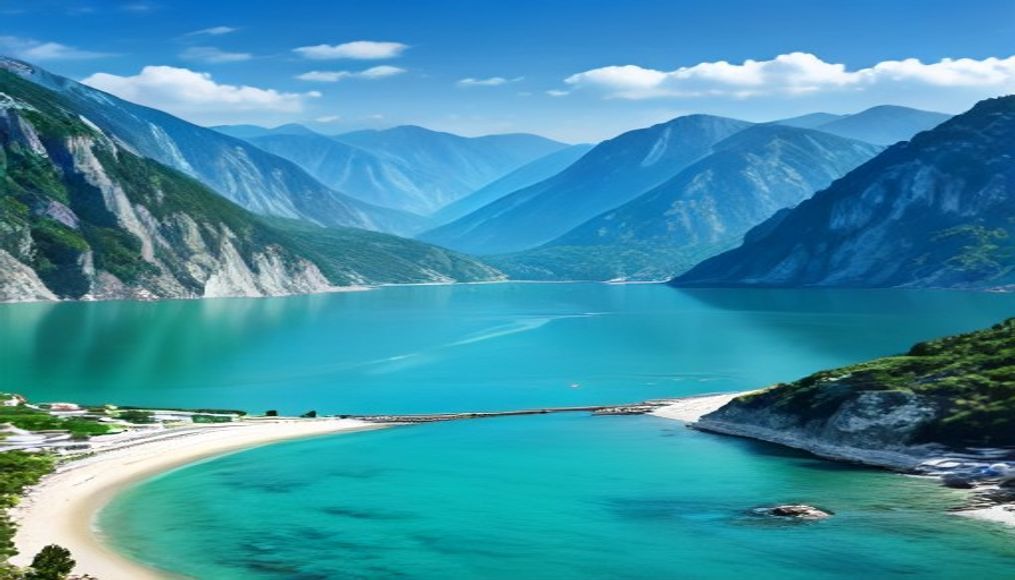

Imagine a pristine coastline, where flamingos paint the lagoons pink against a backdrop of ancient olive groves and the untouched Adriatic Sea. This isn’t just a postcard fantasy; it’s a living, breathing ecosystem in Albania, specifically around the Vjosa-Narta Protected Landscape. But this delicate balance, a magnet for those seeking authentic Albania travel, is now at the heart of a furious international debate, all thanks to a controversial $1.4 billion luxury resort development. It’s a story that intertwines high-stakes investment, environmental activism, and the very soul of a nation.
At the center of this storm is a project backed by Jared Kushner’s investment firm, Affinity Partners, proposing a sprawling resort on Sazan Island and in the vicinity of the Vjosa-Narta area. The grand vision promises economic revitalization through tourism and foreign investment, a narrative often lauded in developing nations. Yet, for many, this isn’t progress; it’s an existential threat. This isn’t just about a few hotels; it’s about the future of Albania’s natural heritage, its commitment to environmental protection, and even its aspirations to join the European Union. The ‘Flamingo Revolution,’ as it’s been dubbed, is rising, and it’s a powerful testament to the passion people have for their land. For more on this, see AI in the workplace.
The Flamingo Revolution: A Nation’s Cry for Preservation
The name itself, the ‘Flamingo Revolution,’ speaks volumes, doesn’t it? It instantly conjures images of the very creatures whose habitat is under threat. The Vjosa-Narta Protected Landscape is a wetland of international importance, a designated Ramsar site, and a crucial stopover for migratory birds, including thousands of flamingos. It’s a biodiversity hotspot, supporting a stunning array of plant and animal life that makes Albania travel so uniquely appealing to eco-tourists and nature lovers. To consider building a luxury development right on its doorstep, or even within sight of it, feels like a direct assault on this natural treasure.
This isn’t a new phenomenon, of course. Across the globe, the allure of tourism dollars often clashes with the imperative of environmental conservation. But in Albania, the stakes feel particularly high. After decades of isolation, the country has only recently opened up to the world, revealing its stunning, often untouched beauty. Many fear that rapid, unregulated development could quickly erase the very qualities that make Albania so special. The protests aren’t just about a specific piece of land; they’re about defining what kind of future Albania wants for itself: one of sustainable growth that respects its natural endowment, or one that prioritizes quick profits at potentially irreversible environmental cost.
The opposition isn’t a fringe movement either. It’s a broad coalition of local environmental groups, international NGOs, and, significantly, the Albanian diaspora. They argue that the project directly contravenes national and international environmental protection laws, including commitments Albania has made as part of its EU accession process. This isn’t just a local squabble; it has global implications, drawing attention from the European Commission itself, which has issued warnings about the project potentially jeopardizing Albania’s path to EU membership. That’s a serious red flag, suggesting that the environmental concerns are not just valid but carry significant geopolitical weight.
Diaspora’s Return: The Italian-Albanian Flotilla
Perhaps one of the most compelling aspects of this movement is the involvement of the Albanian diaspora, particularly those in Italy. They represent a powerful, emotional connection to their homeland, a deep-seated desire to protect the country they left behind, but still hold dear. On August 20, 2026, a planned flotilla from Italy to Albania is set to become a symbolic and very real manifestation of this connection. Imagine dozens of boats, carrying activists, former residents, and supporters, sailing across the Adriatic, not for a holiday, but to stand in solidarity with those on the ground fighting for their land. It’s a powerful image, a modern-day call to action that harks back to historical movements of solidarity. (See: Environmental impact of resorts.)
This isn’t just about nostalgia; it’s about a concrete commitment. Many Italian-Albanians have maintained strong ties, often owning property or having family roots in the very regions now targeted for development. Their perspective adds another layer of complexity to the debate: a concern not just for the environment, but for the potential displacement of communities, the alteration of traditional ways of life, and the further privatization of public resources. They bring not only their passion but also international visibility and a different kind of leverage, appealing to European sensibilities and regulations.
Their involvement highlights a crucial point: the impact of such large-scale projects extends far beyond the immediate construction site. It touches upon national identity, the rights of communities, and the very fabric of society. For the diaspora, protecting Albania’s natural beauty isn’t just an environmental cause; it’s a way of preserving their cultural heritage and ensuring that future generations, both at home and abroad, can experience the authentic Albania travel they cherish. The flotilla, while still some time away, is already generating buzz, serving as a powerful focal point for organizing and raising awareness.
Sazan Island and Vjosa-Narta: A Jewel in Peril
Let’s talk specifics. Sazan Island, a former military base, has long been shrouded in mystery, an isolated outpost off Albania’s coast. Its rugged beauty, dramatic cliffs, and untouched waters offer incredible potential for responsible tourism, perhaps even a national park status. The idea of transforming it into a luxury resort raises eyebrows not just for its environmental impact, but for its historical significance and the potential loss of a truly unique wild space. Similarly, the Vjosa-Narta Protected Landscape is not just any wetland. It’s one of the last wild rivers in Europe, a truly exceptional ecological site. Its designation as a protected area isn’t arbitrary; it’s a recognition of its immense value.
The proposed development in these sensitive areas, critics argue, poses multiple threats. Firstly, habitat destruction: large-scale construction, increased human activity, and associated infrastructure (roads, sewage, waste management) can irrevocably damage fragile ecosystems. For the flamingos and other migratory birds, disturbances during nesting or feeding seasons can be catastrophic. Secondly, pollution: luxury resorts, despite their claims of sustainability, often come with a significant ecological footprint. Increased wastewater, plastic waste, and light pollution can all degrade the surrounding environment, impacting marine life and coastal ecosystems.
Then there’s the issue of precedent. If such a significant development is allowed in a protected area, what message does that send about Albania’s commitment to environmental laws? It could open the floodgates for similar projects, gradually chipping away at the country’s most valuable natural assets. For those passionate about sustainable Albania travel, this is a terrifying prospect. The unique charm of Albania often lies in its wild, untamed spaces. Losing them to generic luxury resorts would be a profound tragedy, stripping the country of its distinctive appeal.
Kushner’s Vision vs. EU Concerns: A High-Stakes Game
The involvement of Jared Kushner’s Affinity Partners adds a significant layer of international scrutiny and controversy to this entire saga. Kushner, a high-profile figure from the previous US administration, brings with him a certain level of visibility – and baggage – that ensures this project won’t fly under the radar. His firm’s proposed investment, a staggering $1.4 billion, is certainly appealing to a government eager for foreign capital and job creation. The promise of economic benefits, new infrastructure, and an elevated profile on the international tourism map is a powerful lure for any developing nation. (See: Urban planning and health impacts.)
However, this vision is colliding directly with the European Union’s environmental standards and Albania’s own commitments as an EU candidate country. The European Commission has been unequivocal: projects that threaten protected environmental areas could jeopardize Albania’s EU accession process. This isn’t just a polite suggestion; it’s a fundamental requirement. Membership in the EU demands adherence to a robust framework of environmental laws and protections. If Albania is seen to be flouting these principles for the sake of a luxury development, it could face significant setbacks in its long-held ambition to join the bloc.
This creates a fascinating, high-stakes geopolitical game. On one side, the promise of significant investment and economic growth. On the other, the non-negotiable demands of environmental protection and the allure of EU membership. For Albania, navigating this path requires careful consideration of its long-term goals and values. Is short-term economic gain worth potentially sacrificing its environmental integrity and its European future? That’s the core question at the heart of this entire debate, and it’s one that resonates far beyond the shores of the Adriatic.
Economic Benefits vs. Environmental Costs: A False Dichotomy?
The proponents of the luxury resort development often frame the discussion as a stark choice: economic prosperity or environmental protection. They argue that the $1.4 billion investment will create jobs, boost local economies, and put Albania on the map as a high-end travel destination. And it’s true, tourism can be a powerful engine for growth. But critics contend that this is a false dichotomy, suggesting that sustainable development offers a better, more enduring path to prosperity. They argue that destroying natural assets for short-term gains ultimately undermines the very foundation of long-term, high-quality Albania travel. This builds on wildfire impact on nature.
Consider the alternatives. Albania’s burgeoning reputation as an eco-tourism destination, with its stunning mountains, pristine rivers, and untouched coastlines, attracts a different kind of visitor – one who values authenticity, nature, and cultural immersion. These tourists often stay longer, spend money directly with local businesses, and seek experiences that are environmentally responsible. A luxury resort, by contrast, often operates as a self-contained bubble, with many of the economic benefits flowing to foreign investors and large corporations, rather than truly enriching local communities.
Furthermore, the true economic costs of environmental degradation are often underestimated. Loss of biodiversity, disruption of ecosystem services (like clean water and air), and the erosion of natural defenses against climate change can have profound and lasting negative impacts on local populations and the national economy. The debate isn’t just about whether to develop, but how to develop responsibly, ensuring that any investment genuinely benefits the country and its people without irrevocably damaging its most precious assets. Many believe that preserving places like Vjosa-Narta and Sazan Island offers a far more sustainable and authentic vision for Albania travel than a generic luxury complex. (See: Albania's environment and tourism issues.)
The Future of Albania Travel: Sustainable or Sacrificed?
This controversy forces us to confront fundamental questions about the future of Albania travel. Will it follow the path of some Mediterranean neighbors, where overdevelopment has led to crowded beaches, environmental degradation, and a loss of unique character? Or will it carve out a different identity, one built on its natural beauty, rich culture, and a commitment to sustainable tourism? The choices made now will undoubtedly shape the country’s trajectory for decades to come.
The global tourism landscape is shifting. Travelers are increasingly seeking authentic, responsible, and environmentally conscious experiences. Albania, with its relatively untouched landscapes and vibrant cultural heritage, is perfectly positioned to cater to this demand. However, if iconic and protected areas are sacrificed for large-scale, potentially unsustainable developments, that unique selling proposition could be irrevocably lost. The ‘Flamingo Revolution’ isn’t just a protest; it’s a powerful statement about national identity and a vision for a future where economic growth doesn’t come at the expense of environmental integrity.
For anyone considering Albania travel, this ongoing debate is incredibly relevant. It highlights the passion of its people, the beauty of its natural wonders, and the critical decisions facing the nation. It reminds us that the places we visit are living ecosystems and communities, and that responsible tourism means supporting efforts to preserve them. The world is watching to see if Albania will choose to protect its flamingos, its wild rivers, and its unique charm, or if it will allow a billion-dollar resort to redefine its natural legacy.
The August 2026 flotilla from Italy isn’t just a political statement; it’s a beacon of hope and a call for global attention. It underscores that the fight for Albania’s natural heritage is far from over, and that the ‘right to stay’ – for both its people and its wildlife – is a cause worth sailing for.
Trending Now
Frequently Asked Questions
What is the controversy surrounding the luxury resort in Albania?
The controversy centers on a proposed $1.4 billion luxury resort backed by Jared Kushner's Affinity Partners, located near the Vjosa-Narta Protected Landscape. Critics argue it poses an existential threat to Albania's natural heritage and biodiversity, particularly affecting the habitat of migratory birds like flamingos.
What is the Flamingo Revolution in Albania?
The Flamingo Revolution is a grassroots movement in Albania advocating for the preservation of the Vjosa-Narta Protected Landscape. It symbolizes the local population's passion for protecting their natural environment against the proposed luxury resort development, which they view as a threat to their land and biodiversity.
How will the resort impact Albania's environment?
The luxury resort is expected to disrupt the delicate ecosystem of the Vjosa-Narta area, which is a Ramsar site and crucial for migratory birds. Environmental activists fear that construction will lead to habitat destruction and threaten the region's biodiversity, ultimately harming eco-tourism.
What are the economic arguments for the resort in Albania?
Proponents argue that the luxury resort will stimulate economic growth through tourism and foreign investment, providing jobs and revitalizing the local economy. However, many locals and activists believe this narrative overlooks the long-term environmental costs.
Why is the Vjosa-Narta area important for biodiversity?
The Vjosa-Narta Protected Landscape is vital for biodiversity, serving as a wetland of international importance and a Ramsar site. It supports a wide variety of plant and animal life, making it a significant habitat for migratory birds, including flamingos, which attract eco-tourists.
Agree or disagree? Drop a comment and tell us what you think.