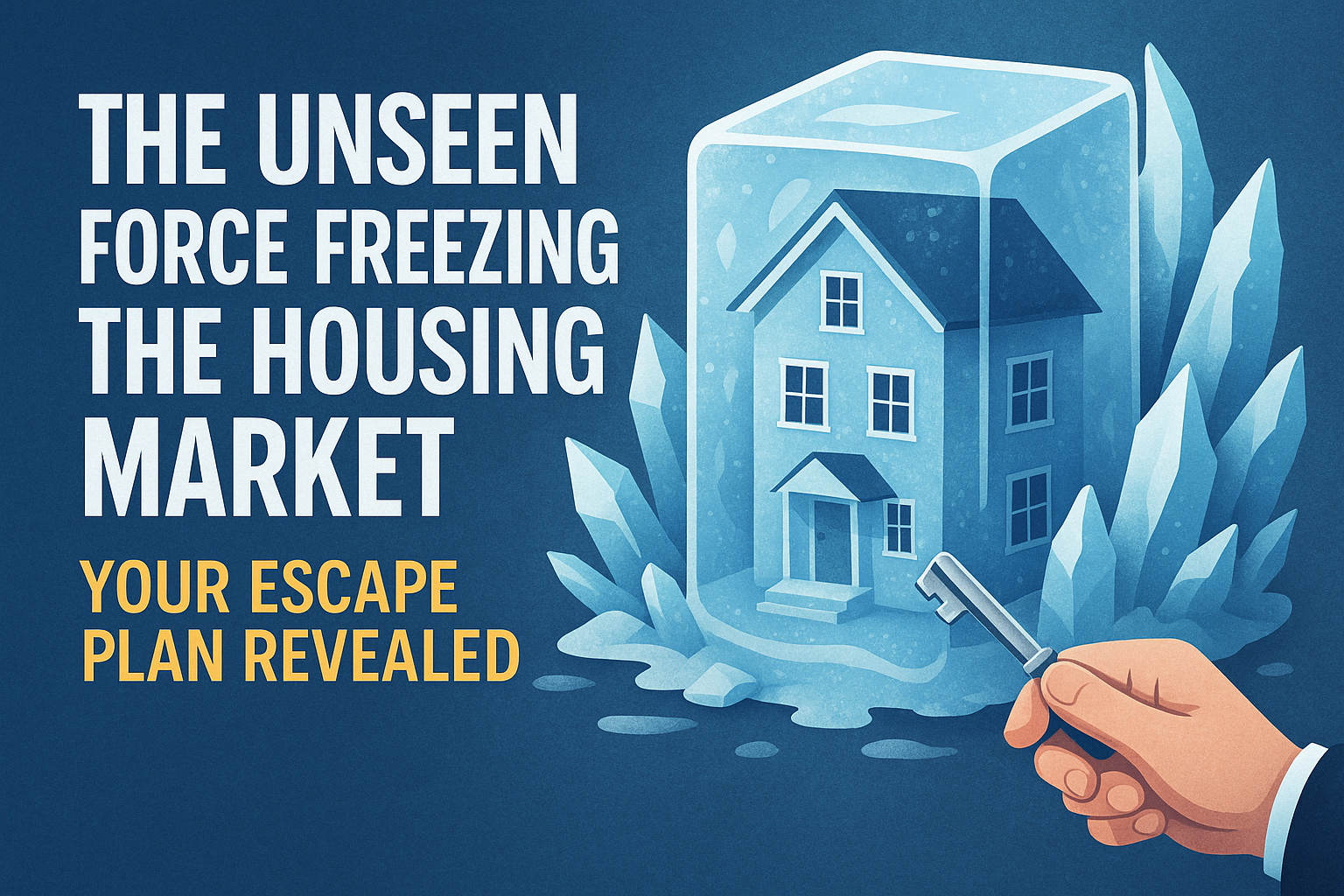

It’s August 2026, and if you own a home, you’re probably feeling it. That nagging sense of being stuck. You love your house, or maybe you don’t, but the thought of moving sends shivers down your spine. Why? Because you’re likely one of the millions of homeowners enjoying an ultra-low mortgage rate from the golden era of 2020-2021. Back then, rates were practically a gift from the financial gods. Now? They’re hovering near 6.7%, and that chasm between your current rate and today’s rates is what we’re calling the “mortgage lock-in effect.” It’s a real conundrum, isn’t it?
This isn’t just a personal headache; it’s a seismic shift in the housing market. Homeowners with those sweet, sub-3% rates are understandably reluctant to sell. Who wants to trade a monthly payment they love for one that feels like a punch to the gut? This reluctance is starving the market of inventory, keeping home prices stubbornly high even as higher borrowing costs try to cool demand. It’s a paradox: high rates suppress both buying and selling, creating a “frozen” market where sales are subdued, but prices remain resilient. If you’re caught in this bind, you’re likely searching for the best mortgage strategies for homeowners to navigate this tricky landscape. Good news: there are options, and understanding them is your first step to regaining control. Related reading: impact of mortgage rates.
1. The Cash-Out Refinance Conundrum: When to Break Free (or Not)
A cash-out refinance allows you to tap into your home’s equity, converting a portion of it into cash while simultaneously replacing your existing mortgage with a new one. On the surface, it sounds appealing. Need money for a renovation, debt consolidation, or an investment? Your home is sitting there, brimming with equity, especially if you bought pre-pandemic or watched your property value soar in recent years.
However, the lock-in effect makes this a particularly thorny strategy right now. If your current mortgage rate is, say, 2.8%, and today’s rates are 6.7%, refinancing means swapping that incredible rate for a significantly higher one. Your monthly payment will almost certainly jump, potentially by hundreds of dollars, even if you’re pulling cash out. This isn’t just about the extra cash; it’s about the long-term cost. You need to weigh the immediate benefit of the cash against the ongoing expense of a higher interest rate for the life of the loan. Is that kitchen remodel worth an extra $500 a month for the next 30 years? For some, the answer is a resounding yes, especially if the cash is used for a high-ROI investment or to eliminate even higher-interest debt. For many others, it’s a hard pass, and for good reason.
2. Home Equity Line of Credit (HELOC) or Home Equity Loan (HEL): Tapping Equity Without Losing Your Rate
This is where things get interesting for homeowners trapped by the lock-in effect. Unlike a cash-out refinance, a Home Equity Line of Credit (HELOC) or a Home Equity Loan (HEL) allows you to borrow against your home’s equity without touching your primary mortgage. This means you get to keep that fantastic, low interest rate on your first lien – a huge advantage in today’s market. (See: Homeownership statistics and trends.)
A Home Equity Loan provides a lump sum of cash with a fixed interest rate and a predictable monthly payment. It’s ideal if you know exactly how much money you need for a specific project, like adding an extension or paying for a child’s college tuition. A HELOC, on the other hand, functions more like a credit card. You get a revolving line of credit up to a certain limit, allowing you to draw funds as needed, repay them, and draw again. HELOCs often come with variable interest rates, which means your payments can fluctuate, but they offer unparalleled flexibility. Both options allow you to access your home’s value without sacrificing your primary mortgage’s low rate, making them some of the best mortgage strategies for homeowners looking for liquidity while preserving their financial advantage.
3. Second Mortgages for Debt Consolidation or Investment: Strategic Borrowing
Similar to HELs and HELOCs, a second mortgage is another loan secured by your home, separate from your primary mortgage. These can be particularly useful for homeowners looking to consolidate high-interest debt, like credit card balances that might be accruing interest at 18-25%. By consolidating into a second mortgage, even if that mortgage rate is 8-9%, you’re still making a significant saving on interest costs. This frees up cash flow and accelerates your debt repayment, making it a powerful tool for financial reorganization.
Beyond debt consolidation, a second mortgage can also fund strategic investments. Perhaps you see an opportunity to invest in a business, purchase a rental property, or even make substantial improvements to your current home that will significantly increase its value. If the return on investment (ROI) from these ventures is projected to be higher than the interest rate on your second mortgage, it can be a savvy financial move. The key here is careful calculation and a clear understanding of the risks involved. Don’t just borrow because you can; borrow because there’s a well-defined plan for how that money will generate a greater return or save you more in the long run. See also silent housing market pressure.
4. Seller Financing or Assumable Mortgages: Creative Selling in a Tight Market
If you absolutely *must* move, selling your home right now while retaining your low mortgage rate seems like an impossible dream, doesn’t it? But what if you could transfer that fantastic rate to a new buyer? This is where assumable mortgages come into play. Some government-backed loans, like FHA and VA loans, are assumable, meaning a qualified buyer can take over your existing mortgage, including its original interest rate and terms. This is a massive selling point in a high-rate environment, potentially making your home far more attractive than others on the market.
Another creative approach is seller financing, also known as owner financing. In this scenario, you, the seller, act as the bank, providing a loan to the buyer. This allows the buyer to avoid current high mortgage rates and potentially qualify more easily, and it can provide you with a steady stream of income and potentially a higher sale price. Of course, both options come with their own complexities and risks. You’ll need to vet buyers thoroughly, ensure legal compliance, and understand the implications for your own financial situation. But for homeowners feeling truly trapped, these innovative strategies offer a potential lifeline to move on without completely abandoning their low-rate advantage.
5. Mortgage Recasting or Reamortization: Lowering Payments Without Refinancing
What if you have a lump sum of cash – maybe from a bonus, an inheritance, or the sale of an investment – and you want to lower your monthly mortgage payments without refinancing and giving up your low rate? This is where mortgage recasting, or reamortization, becomes one of the best mortgage strategies for homeowners. Recasting isn’t available with all loan types or lenders, but it’s worth investigating. (See: Current mortgage rate information.)
With recasting, you make a significant principal payment on your existing mortgage. The lender then recalculates your remaining payments based on the new, lower principal balance, but keeps your original interest rate and remaining loan term. Your monthly payment decreases, but you don’t incur the closing costs associated with a full refinance, and crucially, you keep your incredibly low interest rate. It’s a fantastic way to reduce your financial burden if you have extra cash available, making your existing mortgage even more affordable without resetting your terms or losing your current rate advantage.
6. Aggressive Principal Payments: Shortening Your Loan, Saving a Fortune
If you’re one of the fortunate homeowners with a sub-3% mortgage rate, you effectively have access to incredibly cheap money. While you might be tempted to invest extra cash elsewhere, making aggressive principal payments on your mortgage can be an incredibly powerful, albeit less flashy, strategy. Think about it: every extra dollar you put towards principal directly reduces the amount of interest you’ll pay over the life of the loan. With a 30-year mortgage at 2.8%, even an extra $100 or $200 a month can shave years off your loan term and save you tens of thousands in interest.
This strategy isn’t about lowering your monthly payment right now (unless you combine it with recasting), but about building equity faster and gaining financial freedom sooner. It essentially locks in a guaranteed return equal to your mortgage interest rate, which, at 2.8%, isn’t as high as some market returns, but it’s *guaranteed* and tax-free in terms of savings. This is a particularly strong play for those who are highly risk-averse or who simply want to eliminate mortgage debt as quickly as possible. It’s a quiet but profoundly impactful way to leverage your current low rate to your long-term advantage.
7. Rethinking Your Real Estate Goals: Is Selling Truly Necessary?
Sometimes, the best mortgage strategies for homeowners aren’t about the mortgage itself, but about re-evaluating your life plans. The mortgage lock-in effect often forces us to confront whether our desire to move is truly a necessity or a ‘want’ that can be deferred. Are you moving for a job, for more space for a growing family, or simply because you’re tired of your current neighborhood? For more on this, see force shaping luxury real estate.
If your reasons aren’t strictly urgent, consider adapting your current home. Could a renovation or addition solve your space issues? Could you fall back in love with your neighborhood by exploring new local amenities? Many homeowners are finding creative ways to make their current homes work, effectively riding out the high-rate environment until conditions improve. This might mean delaying your dream home purchase for a few years, but it also means preserving your current financial stability and avoiding a potentially much higher monthly payment. Sometimes, the best move is no move at all, at least for now. (See: Analysis of the housing market.)
8. Strategic Renting Out Your Current Home: Becoming a Landlord
For those who absolutely must move – perhaps for a new job in a different city, or a family expansion that genuinely can’t be accommodated – there’s another powerful strategy: turning your current home into an income property. If your current mortgage rate is incredibly low, the monthly rent you can command in today’s market might significantly exceed your mortgage payment, generating positive cash flow. This allows you to purchase a new home (albeit with a higher interest rate on the new property) while retaining your advantageous mortgage on the first property.
Becoming a landlord isn’t for everyone; it requires time, effort, and a willingness to handle tenant issues. However, if done correctly, it can be an excellent long-term wealth-building strategy. You benefit from rental income, potential appreciation on your original property, and the tax advantages of owning a rental. Before jumping in, research local rental markets, understand landlord-tenant laws, and crunch the numbers thoroughly to ensure it will be a profitable venture. This strategy offers a way to escape the lock-in effect without selling, transforming a perceived burden into a significant financial asset.
The mortgage lock-in effect is a unique challenge in today’s housing market, making many homeowners feel trapped. But as you can see, there are numerous strategies available, from tapping into equity without touching your primary rate to creative selling options and even rethinking your long-term goals. The key is to understand your specific financial situation, your risk tolerance, and your objectives. Don’t let the market dictate your next move; empower yourself with knowledge and choose the path that best serves your financial future.
Trending Now
Frequently Asked Questions
What is the mortgage lock-in effect?
The mortgage lock-in effect refers to the reluctance of homeowners to sell their homes due to having ultra-low mortgage rates from previous years. As current rates hover around 6.7%, many homeowners feel 'stuck' as they weigh the cost of moving against their favorable existing rates.
How does the mortgage lock-in effect impact the housing market?
The mortgage lock-in effect contributes to a 'frozen' housing market where homeowners with low rates are hesitant to sell. This results in limited inventory, keeping home prices high despite increased borrowing costs, as both buying and selling activity slows down.
What are the best mortgage strategies for homeowners now?
Homeowners can consider various strategies such as cash-out refinancing to access home equity for renovations or debt consolidation. However, it's crucial to evaluate the implications of current mortgage rates and the potential benefits against the lock-in effect.
Is cash-out refinancing a good option in a high-interest rate environment?
Cash-out refinancing can be appealing for accessing equity, but in a high-interest rate environment, it may not be the best choice. Homeowners should carefully assess their current mortgage rate versus new rates to determine if the benefits outweigh the costs.
Why are home prices still high despite rising interest rates?
Home prices remain high due to the mortgage lock-in effect, where homeowners with low rates are unwilling to sell, leading to a shortage of inventory. This limited supply keeps prices resilient even as higher interest rates dampen buyer demand.
What did we miss? Let us know in the comments and join the conversation.