

“`html
Google has taken a significant leap forward in enhancing multitasking on its Pixel devices with the introduction of floating app bubbles in the June 2026 Pixel Drop. This feature is not just a slick visual upgrade; it’s a genuine productivity booster that can revolutionize how you interact with your phone. If you’re curious about how to use floating app bubbles in Google Pixel Drop, you’re in the right place. Here’s a detailed guide on enabling, customizing, and effectively utilizing this feature.
1. What Are Floating App Bubbles?
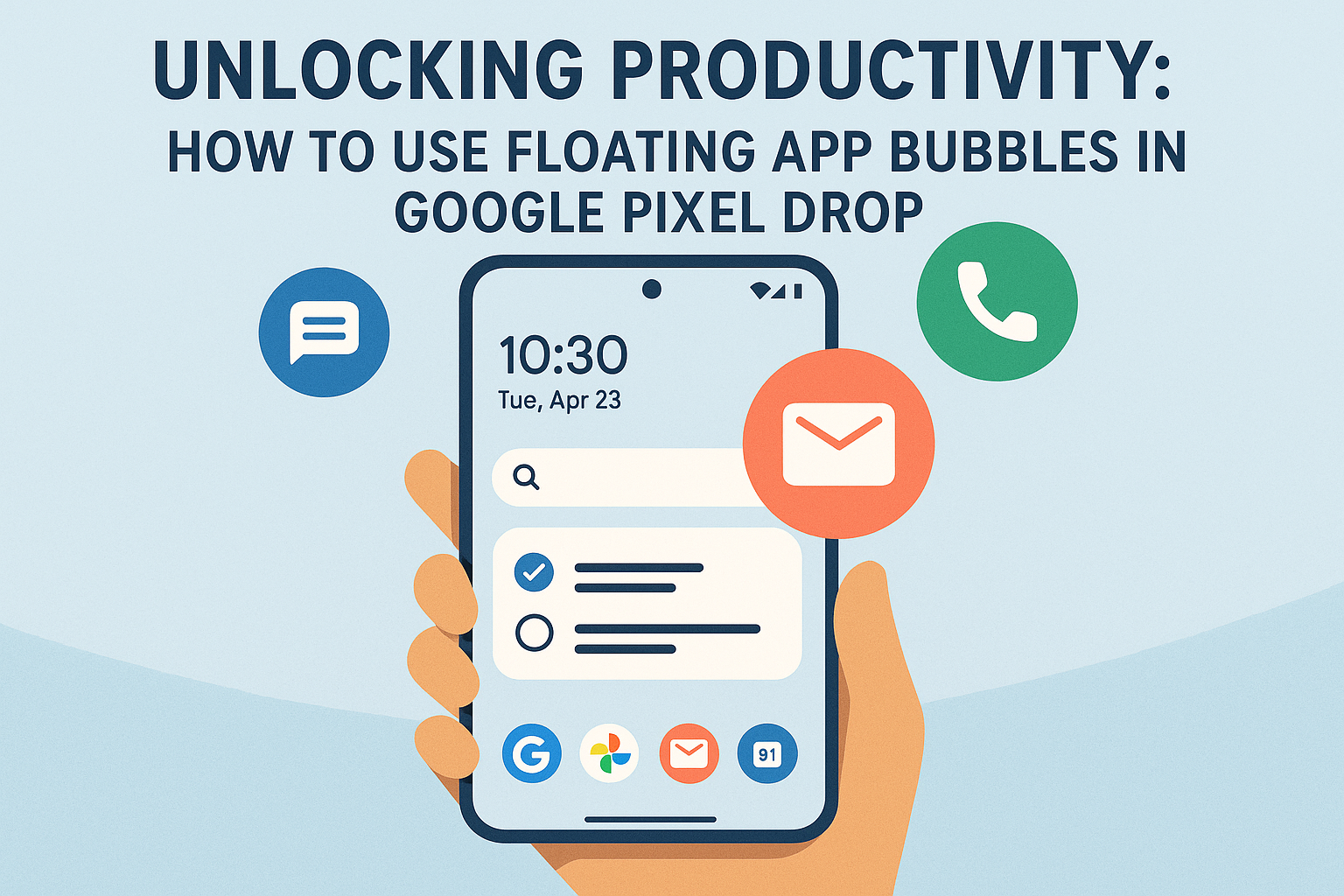
Floating app bubbles are small, resizable overlays that provide quick access to your favorite applications, allowing you to multitask seamlessly without losing focus on your current task. Imagine a small circular icon that hovers over your screen, which you can tap to access an app instantly. This innovative feature is similar to Facebook Messenger’s chat heads but extends its functionality across various applications, making it a versatile tool for anyone looking to enhance their productivity on a Pixel device.
With the new Pixel Drop, Google has made it easier to manage multiple tasks efficiently. Instead of constantly switching back and forth between apps, you can have conversations, check notifications, or even view videos while working on something entirely different. Floating app bubbles can significantly streamline your workflow, whether you’re a busy professional or someone who juggles multiple tasks daily.
2. How to Enable Floating App Bubbles
Getting started with floating app bubbles is straightforward. First, make sure your Google Pixel device is updated to the latest version that includes the June 2026 Pixel Drop. To enable floating app bubbles, follow these simple steps:
- Open the **Settings** app on your Pixel device.
- Scroll down and select **Apps & notifications**.
- Tap on **Advanced** and then choose **Special app access**.
- Select **Display over other apps** and find the apps you want to allow to use floating bubbles.
- Toggle the option to **Allow display over other apps** for your desired applications.
Once enabled, you’ll notice that supported apps will generate floating bubbles when they are active. It’s crucial to ensure that only the apps you want can create these bubbles to maintain a clutter-free experience.
3. Customizing Your Floating App Bubbles
Customization is a vital part of making the floating app bubbles suit your workflow. After you’ve enabled the feature, you can personalize how these bubbles appear on your screen. Here’s how:
- Open any app that supports floating bubbles.
- Tap the floating bubble to reveal options for resizing or moving it around the screen.
- Many apps also allow you to change the size of the bubble by dragging its edges.
- For further customization, check in the app’s settings for any specific options related to bubbles.
This flexibility allows you to position the bubbles where they’re most convenient, whether you prefer them on the left or right side of the screen. Additionally, you can choose to minimize or dismiss bubbles when they’re not in use, keeping your screen organized.
4. Using Floating App Bubbles Effectively
Now that you know how to enable and customize floating app bubbles, let’s explore some practical strategies for using them effectively. A great way to leverage these bubbles is by keeping your communication apps handy. For instance, you can use a messaging app bubble alongside a web browser. This means you can reply to messages without switching away from the website you’re viewing. (See: Understanding multitasking in technology.)
Another effective use case is with productivity tools. If you’re working on a document and receive a notification from a task management app, the bubble feature allows you to check the notification instantly and respond if necessary, all without disrupting your flow. This fluidity is particularly beneficial for those who work from their devices frequently and need to manage their time efficiently.
5. Multitasking with Screen Reactions
Alongside floating app bubbles, the June Pixel Drop also introduced **Screen Reactions**, enabling users to overlay a selfie feed during screen recordings. This feature is perfect for content creators looking to add a personal touch to their videos. Imagine recording a tutorial or gameplay while your reactions are displayed on the screen—a great way to engage viewers.
To utilize Screen Reactions effectively, simply start a screen recording and position your selfie feed bubble where it won’t obstruct the action you’re recording. Combine this with floating app bubbles to interact with your audience in real-time through comments or messages, making your content more interactive and engaging.
6. Integrating AI Tools with Floating App Bubbles
In addition to the multitasking features, the Pixel Drop brings exciting AI tools like **Gemini Omni** for video generation and **Lyria 3** for music creation. These tools can be used alongside floating app bubbles for an enhanced creative workflow. For instance, while brainstorming ideas in a note-taking app, you can have a Gemini Omni bubble open, generating video content based on your notes.
This integration not only improves productivity but also sparks creativity by allowing seamless transitions between tasks. The AI assistance lets you focus on ideation while the tools handle the more tedious aspects of content creation, such as editing or compiling scenes, which can be done through floating app bubbles.
7. Voice Translate and Call Management
With the Pixel Drop update, Google has expanded its **Voice Translate** capabilities to make real-time communication more accessible. Imagine having a conversation with someone speaking a different language while using a floating app bubble to translate their speech on the fly. This feature is especially useful for travelers or those working in multicultural environments.
Additionally, the **Manual Call Screen** feature, now available in India, allows users to manage calls effectively. While you’re on a call, you can use a floating bubble to screen other incoming calls, ensuring you only take the important ones. This ability to manage calls without getting sidetracked is crucial for maintaining focus and productivity throughout your day.
8. Safety Features and Emergency Sharing
Safety is a priority for Google, which is why the Pixel Drop includes new emergency-sharing integration with Pixel Watch. While using floating bubbles, you can quickly access emergency contacts or share your location during critical situations. This feature can be life-saving, allowing you to send alerts or notifications without navigating through several menus.
Being able to initiate emergency actions through a bubble interface means you’re never more than a tap away from help, which adds an essential layer of security when you’re out and about. This integration of safety features with multitasking capabilities demonstrates how Google is prioritizing user experience in everyday situations.
9. Tips for Maximizing Productivity with Floating App Bubbles
To get the most out of floating app bubbles, consider creating a workflow that incorporates multiple apps. For example, if you’re a student studying for exams, you could have a note-taking app bubble open while you watch lecture videos. This way, you can jot down important points without losing focus on the video content. You might also consider using productivity timers like Pomodoro techniques in tandem with your floating bubbles to keep you on task. (See: Ergonomics and productivity tools.)
Another great tip is to utilize the **Do Not Disturb** feature when working on critical tasks. This way, only the floating app bubbles from the apps you deem essential will appear, reducing distractions and interruptions. Additionally, making a habit of periodically checking in on your floating app bubbles can help you manage your time more effectively, ensuring you stay updated on messages or notifications without constantly switching apps.
10. Common Issues and Troubleshooting Floating App Bubbles
As with any new feature, users may encounter some challenges while using floating app bubbles. Here are a few common issues and their potential solutions:
- Bubbles Not Appearing: If you’ve enabled floating app bubbles but they’re not showing up, check to see if the apps are updated to their latest versions. Sometimes, bugs in older versions can prevent floating bubbles from functioning.
- Performance Issues: If you notice your device lagging when using floating bubbles, try clearing the cache of the affected apps or restarting your Pixel device. This can help refresh the system and improve performance.
- Managing Bubble Clutter: If you find the screen too cluttered, revisit the **Display over other apps** settings and disable bubbles for apps that you don’t use frequently.
11. FAQ About Floating App Bubbles
Here are some frequently asked questions regarding how to use floating app bubbles in Google Pixel Drop:
Q1: Can I use floating app bubbles with any application?
A: Not all applications support floating app bubbles. Check the list of compatible apps in the **Display over other apps** section of settings.
Q2: Can I resize the floating app bubbles?
A: Yes! You can resize the bubbles by dragging their edges once they are active on your screen.
Q3: How do I dismiss a floating app bubble?
A: You can simply swipe the bubble off the screen to dismiss it, or tap on it and select the option to minimize it.
Q4: Is there a limit to how many floating app bubbles I can have open at once?
A: There’s no strict limit, but too many bubbles can lead to clutter and may affect performance, so it’s best to use them judiciously. (See: Research on multitasking in computing.)
Q5: Can I customize which notifications appear in floating bubbles?
A: Yes, you can manage notifications in the app settings of each supporting app, allowing you to choose which notifications trigger floating bubbles.
12. Advanced Uses of Floating App Bubbles
Beyond the basics, floating app bubbles can be utilized in advanced ways to further enhance your productivity. For instance, if you’re a developer, you can use a code editor in a floating bubble while simultaneously testing your application in another app. This allows for real-time debugging and enhances workflow efficiency.
Another advanced application is using floating bubbles for social media management. If you’re running a business or managing social accounts, you can have your social media management tool open in a bubble while checking notifications or responding to comments on your main screen. This makes it easy to stay engaged with your audience while managing your content.
Lastly, consider creating a digital workspace using floating app bubbles. For example, you can have a note-taking app, a calendar, and a project management tool all open simultaneously in bubbles, allowing for a comprehensive view of your tasks and meetings without needing to switch apps frequently. This kind of setup is perfect for remote workers or anyone who manages multiple responsibilities throughout the day.
13. Final Thoughts on Floating App Bubbles
As we’ve explored, learning how to use floating app bubbles in Google Pixel Drop is more than just a tech upgrade; it’s a transformation in how we approach multitasking on mobile devices. The combination of practical utility and innovative features like Screen Reactions and AI tools makes it an exciting time for Pixel users. By enabling and customizing floating bubbles, you can significantly boost your productivity and creativity.
Whether you’re a content creator, a busy professional, or someone who enjoys staying connected, the floating app bubbles can help streamline your daily tasks. With continuous updates and improvements, Google is clearly committed to equipping users with the tools they need for an efficient and enjoyable mobile experience.
“`
Trending Now
Frequently Asked Questions
What are floating app bubbles in Google Pixel Drop?
Floating app bubbles are small, resizable overlays that allow quick access to your favorite applications on Google Pixel devices. This feature enhances multitasking by enabling users to interact with multiple apps simultaneously without losing focus on their current task.
How do I enable floating app bubbles on my Pixel device?
To enable floating app bubbles, ensure your Google Pixel device is updated to the latest June 2026 Pixel Drop. Open the Settings app, navigate to Apps & notifications, select Advanced, tap on Special app access, choose Display over other apps, and enable the desired apps.
Can I customize floating app bubbles on my Pixel phone?
Yes, you can customize floating app bubbles on your Pixel phone. After enabling the feature, you can adjust the size and position of the bubbles, as well as choose which apps you want to have floating bubbles for, enhancing your multitasking experience.
What are the benefits of using floating app bubbles?
Using floating app bubbles allows for seamless multitasking, letting you access apps like messaging or video streaming while working on other tasks. This feature helps streamline your workflow, making it ideal for busy professionals or anyone managing multiple activities simultaneously.
Are floating app bubbles similar to Facebook Messenger chat heads?
Yes, floating app bubbles are similar to Facebook Messenger chat heads in that they provide quick access to apps via small circular icons that hover over your screen. However, floating app bubbles extend this functionality to various applications, enhancing overall productivity on Pixel devices.
What’s your take on this? Share your thoughts in the comments below — we read every one.



