
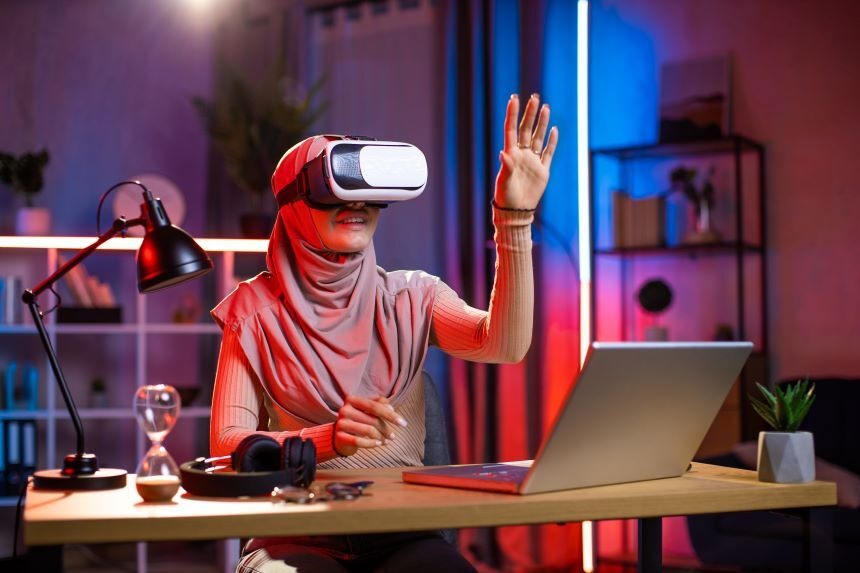

Virtual Reality (VR) technology has made significant strides in athletic coaching by 2025. Coaches are utilizing VR simulations to create immersive training environments that allow athletes to practice skills and strategies in a safe, controlled setting.
For team sports, VR enables coaches to run complex play simulations, allowing players to experience and learn from various game scenarios without the physical toll of full-contact practice. Individual sport athletes use VR to visualize and practice techniques, with the technology providing instant feedback on form and execution.
Coaches also use VR for tactical analysis, immersing themselves in 360-degree replays of games or performances to gain new perspectives on strategy and opponent behavior. This technology is particularly valuable for preparing for away games, as it allows teams to virtually experience the environment of unfamiliar venues.
The integration of haptic feedback in VR systems has further enhanced its effectiveness, allowing athletes to feel simulated physical contact or resistance, making the virtual experience even more realistic.
While VR is a powerful tool, coaches in 2025 face the challenge of balancing virtual training with real-world practice to ensure athletes can effectively transfer skills from the virtual to the physical realm.


