

“`html
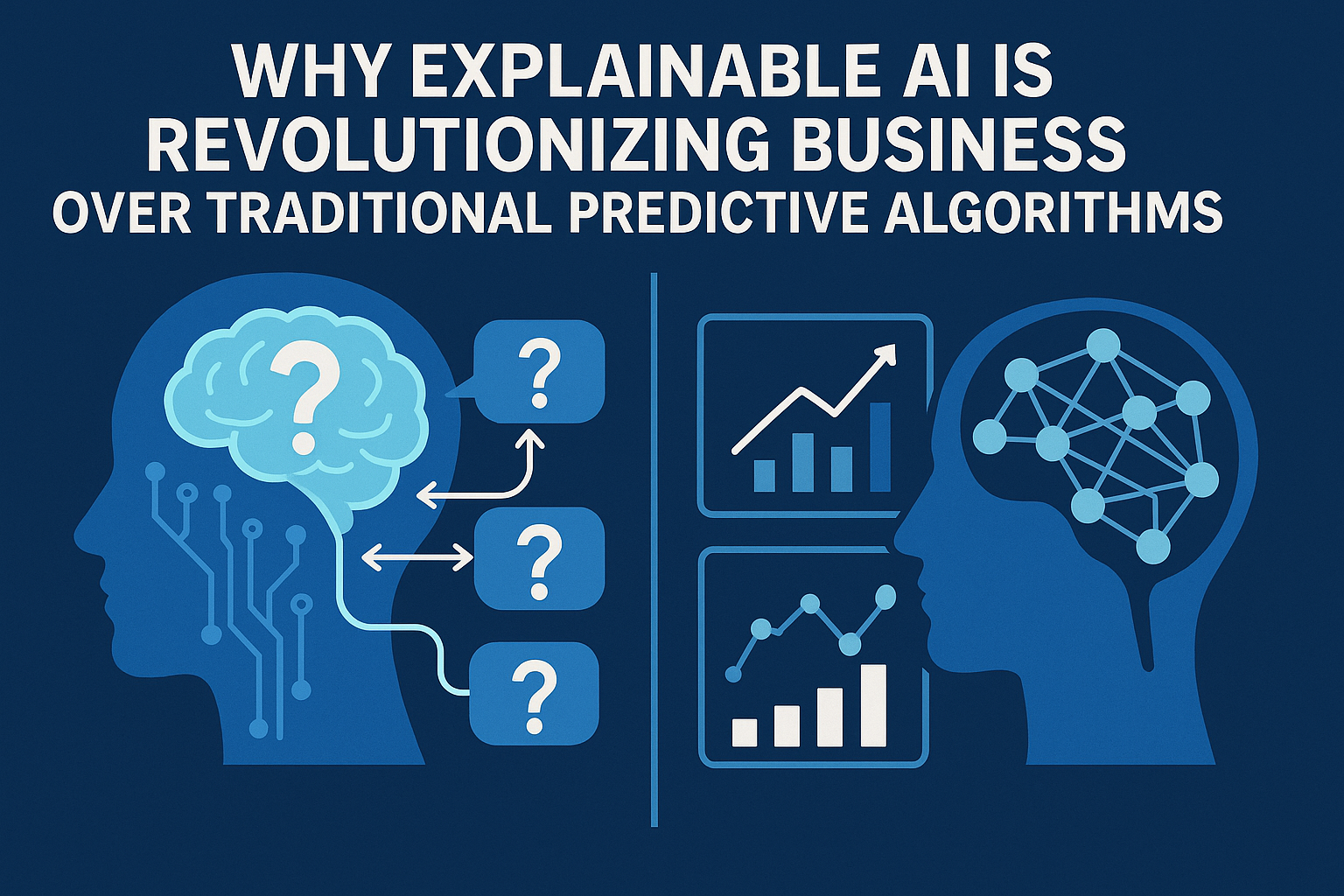
As enterprises delve deeper into the world of artificial intelligence, the debate between explainable AI vs traditional predictive algorithms is gaining traction. In a recent study by Hailin Li, Hufeng Li, and Wenkai Shi, the researchers uncovered some astonishing insights that reveal just how critical explainability has become in enhancing enterprise efficiency. Their findings indicate that explainable AI can boost business efficiency by up to 47% compared to the often opaque traditional predictive algorithms. This discovery isn’t just a statistic; it marks a pivotal shift in how organizations approach AI integration into their processes.
The growing concerns surrounding AI transparency, accountability, and the notorious ‘black box’ problem have sparked intense reactions from business leaders and tech enthusiasts alike. With the ability to transform opaque predictions into clear, actionable insights, explainable AI addresses many of the fears that have become prevalent in recent discussions across social media platforms like LinkedIn and Twitter. Let’s explore nine critical aspects of this emerging technology, comparing explainable AI vs traditional predictive algorithms to understand which better aligns with modern business needs. For more on this, see transparency in AI tools.
1. The Black Box Problem
One of the primary critiques leveled against traditional predictive algorithms is their lack of transparency. Many machine learning models, especially deep learning techniques, operate as ‘black boxes.’ This means that while they can produce accurate predictions, it’s often unclear how these conclusions were reached. For businesses relying on these predictions to make decisions, this uncertainty can be daunting.
Explainable AI, on the other hand, aims to mitigate this issue. By providing insights into how decisions are made, XAI enables users to understand the underlying processes behind predictions. This transparency not only fosters trust but also allows organizations to comply with regulatory requirements that demand accountability and explainability in AI decisions.
2. Efficiency Gains
The study conducted by Li and colleagues presents a compelling argument for adopting explainable AI: a potential 47% increase in enterprise efficiency. The mechanism through which XAI achieves this efficiency is rooted in its ability to provide clearer insights and promote better decision-making. When businesses understand the reasoning behind AI predictions, they can act more swiftly and strategically.
In contrast, traditional predictive algorithms often lead to longer decision-making processes due to the need for additional verification or clarification of the AI’s outputs. This inefficiency can hinder businesses, especially in fast-paced environments where timely decisions are crucial. By leveraging the insights from explainable AI, enterprises can streamline their operations and enhance their overall agility.
3. Trust and Adoption Rates
Trust is a critical factor when it comes to AI adoption. As businesses increasingly integrate AI solutions, the willingness of stakeholders to rely on AI-generated insights hinges on their understanding of these systems. A lack of transparency fosters skepticism, leading to slower adoption rates. Research indicates that organizations are more likely to trust and utilize AI systems when they can comprehend the decision-making process.
Explainable AI addresses this trust gap by elucidating the rationale behind decisions. This fosters a sense of collaboration between humans and machines, encouraging broader acceptance of AI technologies. With traditional predictive algorithms, however, the opaque nature can breed distrust and reluctance to engage fully with AI tools.
4. The Regulatory Landscape
The regulatory environment surrounding AI technologies is evolving rapidly, with many governments increasingly demanding transparency and explainability from AI systems. As regulations become stricter, organizations using traditional predictive algorithms may find themselves at a disadvantage. The inability to explain predictions can lead to non-compliance, resulting in both reputational damage and financial penalties. (See: Explainable artificial intelligence.)
In contrast, explainable AI provides a pathway for compliance with emerging regulations. By ensuring that AI systems can articulate their decision-making processes, organizations can mitigate the risk associated with regulatory scrutiny. This proactive approach not only protects businesses but also positions them as responsible leaders in the AI space.
5. Applications Across Industries
The versatility of explainable AI has made it applicable across various industries, from healthcare to finance to marketing. For instance, in healthcare, XAI can provide clear rationales for diagnosis predictions, thereby enhancing physician trust in AI-assisted decisions. In finance, explainable algorithms can clarify credit scoring decisions, ensuring fairness and transparency.
Conversely, traditional predictive algorithms may struggle to gain traction in these sectors due to their lack of transparency. Industries that face heightened scrutiny—like healthcare and finance—are particularly sensitive to the implications of opaque AI systems. As a result, explainable AI is on the rise, demonstrating its adaptability and relevance across different contexts.
6. Data Privacy and Security
Data privacy is a growing concern in today’s digital landscape, especially with the increasing reliance on AI to process sensitive information. Traditional predictive algorithms often lack the necessary transparency to assure users that their data is handled appropriately. This can lead to apprehensions regarding data exploitation or misuse, making organizations hesitant to deploy such systems.
Explainable AI addresses these privacy concerns by making the data handling process more transparent. With XAI, organizations can provide clear justifications for how data is used, which enhances user trust and confidence. This transparency can be a significant competitive advantage in industries where data security is paramount.
7. Enhancing Human-Machine Collaboration
One of the most exciting aspects of explainable AI is its potential to enhance human-machine collaboration. By providing insights into the reasons behind AI predictions, XAI can empower users to make informed decisions rather than act on blind trust. This collaborative dynamic encourages professionals to engage actively with AI technologies, ultimately leading to better outcomes.
In contrast, traditional predictive algorithms can create a divide between human users and AI systems. When users cannot understand how decisions are made, they may feel disconnected from the technology. In contrast, explainable AI fosters a partnership where both humans and machines work together synergistically, leveraging each other’s strengths.
8. Addressing Ethical Concerns
Ethical considerations in AI deployment are critical, especially as algorithms increasingly influence various aspects of life. Traditional predictive algorithms have faced criticism for perpetuating biases, as their opaque nature often masks the underlying data issues. Without clear explanations, it becomes challenging to identify and rectify these biases.
Explainable AI offers a pathway to address ethical issues by providing insights into the decision-making process. When organizations can see how biases potentially influence predictions, they can take proactive measures to correct them. This commitment to ethical AI not only enhances corporate responsibility but also builds consumer trust in AI systems. (See: Nature article on AI transparency.)
9. The Future of AI in Business
As businesses strive to integrate AI into their operations, the momentum behind explainable AI is undeniable. The study by Li and his colleagues highlights the potential for XAI to not only enhance business efficiency but also address pressing concerns regarding transparency and accountability. The shift towards explainable AI could redefine how organizations leverage technology to gain competitive advantages.
With the landscape of AI continuously evolving, organizations that embrace explainable AI will likely be better positioned to navigate both regulatory challenges and public scrutiny. As the conversation around explainable AI vs traditional predictive algorithms continues to unfold, it’s clear that organizations must adapt to these changes to remain relevant and competitive in the modern business environment.
10. Real-World Examples of Explainable AI
Several organizations have successfully adopted explainable AI, showcasing its benefits in practice. For instance, IBM Watson has been instrumental in the healthcare sector, providing explanations for its diagnostic recommendations. A notable case involved a hospital system that used Watson to assist in cancer treatment decisions. Physicians were able to see not just the recommended treatment but also the rationale behind each suggestion, leading to more informed discussions with patients.
In finance, companies like Zest AI leverage explainable AI for credit underwriting. They utilize machine learning models that offer insights into credit decisions, ensuring that applicants understand why they were denied or approved for loans. This transparency not only builds trust but also allows for corrective measures when biases are detected in decision-making.
11. Statistical Insights into Adoption Rates
Recent surveys indicate that organizations prioritizing explainable AI see a marked increase in AI adoption. A report from Deloitte found that companies implementing XAI experienced a 30% higher rate of AI project success compared to those relying solely on traditional predictive algorithms. This success can be attributed to the trust and confidence built through transparency, leading to broader implementation across departments.
Moreover, 82% of businesses that have adopted explainable AI report improved employee engagement when using AI tools, a significant increase from the 56% engagement reported by those using traditional methods. These statistics highlight the growing recognition of the importance of transparency in technology deployment.
12. Expert Perspectives
Industry experts are increasingly vocal about the advantages of explainable AI. Andrew Ng, a prominent AI thought leader, emphasizes that “the future of AI will be built on explainability.” Experts argue that the ability to demystify AI processes is vital for its acceptance in sensitive fields such as healthcare and finance. By enabling stakeholders to grasp AI decisions, organizations can foster a culture of data-driven decision-making.
AI ethicist Kate Crawford has also pointed out that “without explainability, we risk creating systems that reinforce existing biases.” Her advocacy for explainable AI underlines the moral imperative of ensuring that AI technologies are transparent and accountable. It’s clear that the future of AI depends on making these systems understandable to users across all sectors. (See: CDC report on AI and transparency.)
13. Frequently Asked Questions (FAQ)
What is explainable AI?
Explainable AI refers to methods and techniques that make the outcomes of AI systems understandable to humans. Its goal is to provide insights into how and why decisions are made, fostering transparency and trust. There’s a fuller look at California's landmark AI law.
How does explainable AI differ from traditional algorithms?
Traditional predictive algorithms often operate as ‘black boxes,’ meaning their decision-making processes are unclear. Explainable AI, in contrast, offers clarity and rationale behind its predictions, which helps users understand the reasoning involved.
Why is explainability important in AI?
Explainability in AI is crucial for trust, regulatory compliance, ethical considerations, and effective human-machine collaboration. It helps mitigate risks associated with opaque decision-making processes while promoting transparency and accountability.
Can explainable AI improve decision-making?
Yes, many organizations have reported enhanced decision-making capabilities when using explainable AI. By understanding the reasoning behind AI predictions, businesses can make more informed and strategic decisions.
What industries benefit the most from explainable AI?
Industries such as healthcare, finance, and insurance benefit significantly from explainable AI due to the high stakes involved in decision-making processes. Transparency is vital in these sectors to build trust and ensure fairness.
Is explainable AI more expensive to implement than traditional algorithms?
While the initial investment in explainable AI may be higher due to the complexity of developing transparent models, the long-term benefits—such as improved trust, efficiency, and compliance—often outweigh these costs, making it a worthwhile investment.
“`
Trending Now
- this guide on unlock your potential with workada: a rewarding opportunity in data labeling services
- this guide on unlock your potential with data labeling training: join workada as a data labeling specialist
- this guide on top 10 true colors activities for students to try
- the complete explanation
Frequently Asked Questions
What is explainable AI and how does it differ from traditional predictive algorithms?
Explainable AI (XAI) refers to AI systems designed to provide clear insights into their decision-making processes, unlike traditional predictive algorithms that often operate as 'black boxes.' XAI enhances transparency, allowing users to understand how predictions are made, which builds trust and facilitates compliance with regulations.
Why is explainability important in artificial intelligence?
Explainability in AI is crucial because it addresses concerns about transparency and accountability. By making AI decisions understandable, organizations can ensure trust among stakeholders, mitigate risks associated with opaque predictions, and enhance the overall effectiveness of AI integration in business processes.
How can explainable AI improve business efficiency?
Research indicates that explainable AI can boost business efficiency by up to 47% compared to traditional predictive algorithms. This improvement stems from the clarity and actionable insights provided by XAI, enabling organizations to make better-informed decisions based on transparent and reliable predictions.
What are the challenges of traditional predictive algorithms?
Traditional predictive algorithms face significant challenges, primarily their lack of transparency, commonly referred to as the 'black box' problem. This opacity can lead to uncertainty in decision-making for businesses, as stakeholders may not understand how predictions are derived, making it difficult to trust the outcomes.
How does explainable AI address the black box problem?
Explainable AI tackles the black box problem by offering insights into the decision-making processes of AI models. Unlike traditional predictive algorithms, XAI provides clear explanations of how conclusions are reached, thus enhancing transparency and allowing organizations to build trust in AI-driven decisions.
Agree or disagree? Drop a comment and tell us what you think.






