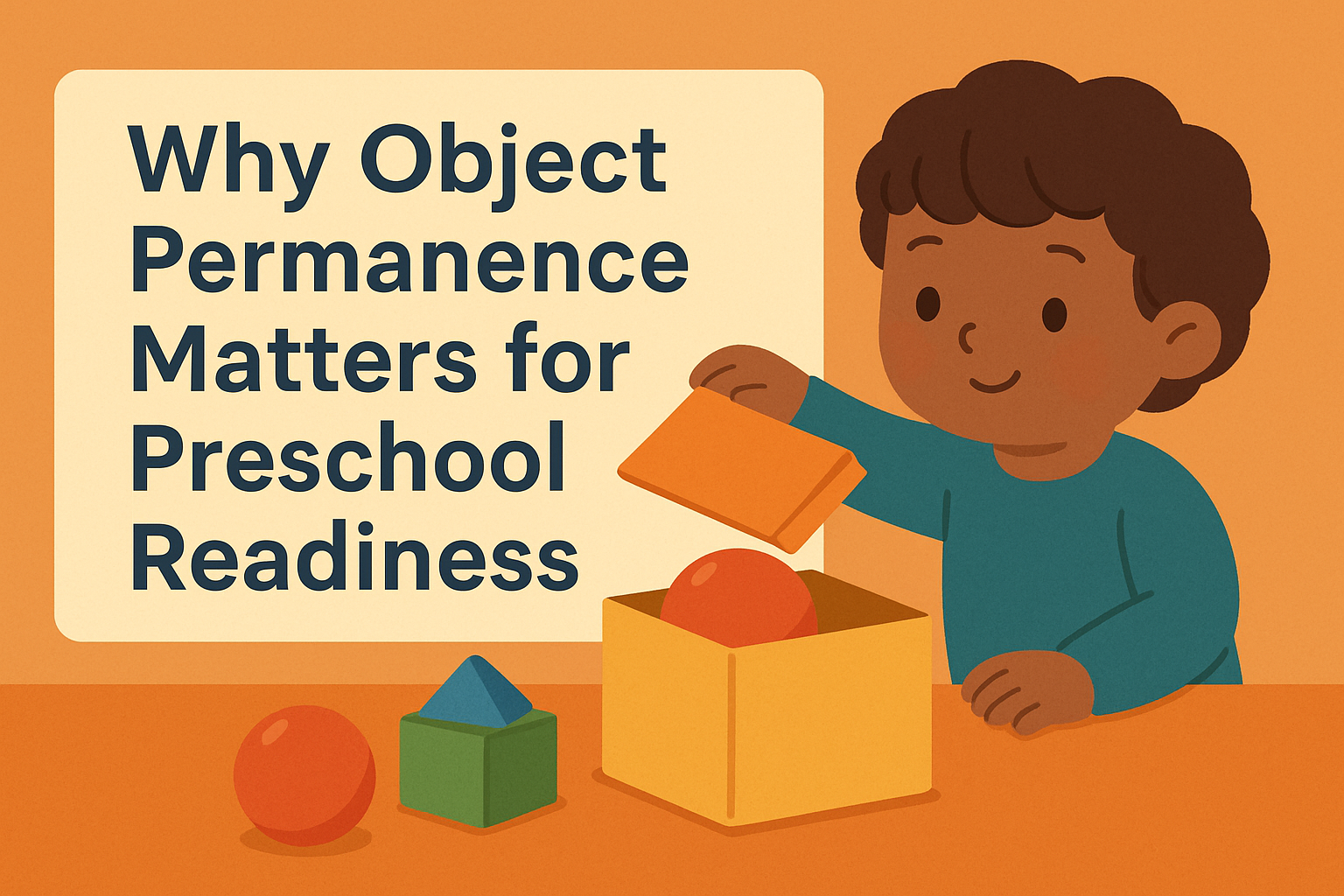

When preparing a child for preschool, there’s a lot to consider. Parents often focus on social skills, language development, and basic academic knowledge. However, a fundamental aspect that shouldn’t be overlooked is the concept of object permanence. This cognitive milestone is crucial for preschool readiness and can significantly affect a child’s overall ability to learn and interact in a classroom environment. Understanding why object permanence matters can help parents better prepare their children for the challenges of preschool.
What is Object Permanence?
Object permanence is a cognitive development milestone that typically emerges in infants around 4 to 7 months of age. It refers to the understanding that objects continue to exist even when they cannot be seen, heard, or touched. This capability reflects a child’s growing awareness of the world around them and is a foundational aspect of their cognitive development. Jean Piaget, a Swiss psychologist known for his work in child development, was the first to describe this concept. He argued that object permanence is crucial for developing memory and problem-solving skills.
Why Object Permanence is Critical for Learning
Understanding object permanence is vital for several reasons that directly relate to a child’s readiness for preschool. For starters, it lays the groundwork for more complex cognitive functions, such as understanding cause and effect. For example, once a child comprehends that an object continues to exist even when hidden, they can start to grasp that their actions can lead to predictable outcomes. This is particularly important in a classroom setting where children are expected to follow instructions and engage in activities that require attention to detail.
Additionally, mastery of object permanence enhances a child’s ability to engage in imaginative play. When children understand that objects still exist out of sight, they can create elaborate scenarios involving toys or other items, fostering creativity and social interaction. These skills are essential for preschool environments, where collaborative play is a significant part of learning. A child who grasps the concept of object permanence is more likely to engage with peers and participate actively in group activities.
Developmental Stages of Object Permanence
While the basic understanding of object permanence begins to develop in infancy, it progresses through various stages as children grow. Understanding these stages can help parents assess their child’s readiness for preschool:
- Stage 1 (0-4 months): In the earliest months, infants show little to no awareness of object permanence. If an object is removed from their sight, they will not search for it.
- Stage 2 (4-8 months): At this stage, infants may look for objects that are partially hidden. They show a developing awareness that objects exist when they can grasp part of them.
- Stage 3 (8-12 months): Babies actively search for objects that are completely hidden, indicating a stronger understanding of object permanence. This leads to more interactive play, such as peek-a-boo.
- Stage 4 (12-18 months): Children can now use objects in different contexts and understand that they can be moved or hidden. They may also begin to anticipate where objects will appear next.
- Stage 5 (18-24 months): At this stage, toddlers display flexibility in their thinking and can use objects symbolically. They understand that objects exist in a larger context, which is critical for imaginative play.
As children enter preschool, they should ideally be reaching or have surpassed the final stage. A firm grasp of object permanence correlates with greater social and emotional skills, as well as readiness to learn in a structured environment.
How to Foster Object Permanence in Young Children
As a parent or caregiver, you play a critical role in helping your child develop object permanence. Here are some engaging activities you can incorporate into daily routines: (See: Wikipedia article on object permanence.)
- Peek-a-Boo: This classic game is not just fun; it’s a fantastic way to teach object permanence. By hiding your face and then revealing it, you reinforce the idea that you still exist even when they can’t see you.
- Hide-and-Seek with Toys: Hide a favorite toy under a blanket or behind a cushion and encourage your child to find it. This promotes active searching and reinforces the idea of hidden objects still being present.
- Cover and Reveal: Use a scarf or cloth to cover an object, then reveal it. This simple action teaches children that objects remain even when they are out of sight.
- Books and Stories: Select picture books that encourage guessing games or scenarios where objects are hidden and revealed. Reading together can build both language and cognitive skills.
Incorporating these activities into your child’s daily routine can make the learning process both enjoyable and effective. The more opportunities children have to practice and understand object permanence, the more prepared they will be for preschool.
Object Permanence and Emotional Development
The concept of object permanence is not only crucial for cognitive development but also plays a significant role in a child’s emotional growth. When children understand that objects—and people—exist even when they are not visible, they gain a sense of security and trust. This understanding helps mitigate separation anxiety, which is common among young children.
In a preschool setting, children who have a firm grasp of object permanence are often more comfortable with transitions, such as moving from home to school. They are likely to develop stronger bonds with their teachers and peers because they trust that these relationships will persist, regardless of the immediate situation. This emotional stability can significantly enhance a child’s social interactions and overall learning experience.
Current Relevance: Preschool Readiness in Today’s Context
As society continues to evolve, the landscape of preschool readiness has changed. The emphasis on early childhood education has grown, prompting parents to prioritize various developmental milestones, including object permanence. Studies have shown that early cognitive skills are strong predictors of later academic success. Research published in the journal Developmental Psychology highlights that children who demonstrate advanced object permanence skills tend to excel in problem-solving tasks in later years. This makes understanding and nurturing this skill more relevant than ever.
Furthermore, the rise of digital learning tools and media presents its own set of challenges and opportunities. While technology can offer interactive experiences that support the development of object permanence, excessive screen time can hinder it. Parents must find a balance, ensuring that children engage in both digital and tangible play. Providing a diverse range of experiences will support their learning and development.
Expert Perspectives on Object Permanence and Preschool Readiness
Experts in child development emphasize the significance of object permanence in fostering resilience and adaptability in young children. Dr. Elizabeth A. McNaughton, a child psychologist, asserts that “Understanding that loved ones are still there, even when out of sight, helps children cultivate a secure attachment style, which is foundational for learning.” This illustrates how cognitive milestones intertwine with emotional readiness, creating a strong basis for future social relationships.
Additionally, Dr. Sara L. Thompson, an early childhood educator, notes, “Children who struggle with object permanence may face challenges in social settings. They might have difficulty understanding that their peers also have thoughts and feelings, leading to social missteps.” By focusing on developing object permanence, parents can help children build a healthier social framework, essential for their upcoming educational experiences. (See: NIH article on cognitive development.)
Statistics on Preschool Readiness
Research provides clear evidence of the importance of cognitive milestones like object permanence in preschool readiness. A study in the Journal of Applied Developmental Psychology found that children who exhibit a strong understanding of object permanence by the age of two are 40% more likely to engage positively in structured learning environments. Furthermore, 75% of educators report that children who grasp object permanence display better problem-solving skills and adaptability in group settings.
These statistics highlight the broad impact that mastering object permanence has on a child’s ability to succeed in preschool and beyond.
Comparisons to Other Cognitive Milestones
While object permanence is crucial, it’s important to recognize that it’s just one of many cognitive skills that contribute to preschool readiness. Other milestones include fine motor skills, language development, and social-emotional skills. For example, while object permanence lays the foundation for understanding that people and objects exist beyond one’s immediate field of view, fine motor skills are essential for tasks such as holding a pencil or cutting with scissors.
Language development complements object permanence, as children with strong verbal skills can better express their thoughts and feelings about hidden objects or people. Social-emotional skills, on the other hand, allow children to navigate their relationships with others, providing the social context necessary for preschool interactions. Each area of development is interconnected, highlighting the importance of a holistic approach to preschool readiness.
FAQ: Object Permanence and Preschool Readiness
What age do children typically develop object permanence?
Most children start to show signs of object permanence between 4 to 7 months, with significant understanding developing by 12 months.
How can I tell if my child understands object permanence?
Watch for their ability to search for hidden objects, react positively during peek-a-boo games, and show anticipation for items that are concealed and then revealed.
Can I help my child develop object permanence with digital tools?
Yes, but it’s essential to limit screen time. Certain apps and games designed for toddlers can reinforce object permanence concepts, but they should be combined with physical play and interaction.
How does object permanence relate to emotional security?
Understanding object permanence helps children feel secure about relationships. They learn that caregivers and loved ones exist even when they are out of sight, which builds trust and reduces anxiety.
Are there long-term benefits to developing object permanence?
Absolutely! Mastery of object permanence is linked to enhanced cognitive abilities, better social skills, and an overall smoother transition to structured learning environments like preschool.
Additional Tips for Encouraging Object Permanence
Encouraging object permanence in children can be a fun and rewarding experience. Here are some additional strategies you can try:
- Interactive Games: Engage in interactive games that require children to find hidden objects around the house. This can be as simple as asking them to locate a toy you’ve hidden or turning everyday activities into games.
- Use Everyday Situations: Make use of daily routines to reinforce object permanence. For instance, when leaving a room, remind your child that you’ll return, helping them understand that even when you’re not visible, you still exist.
- Encourage Exploration: Allow children to explore their surroundings freely. As they discover spaces and items on their own, they gradually learn that objects are not just confined to their immediate view.
- Talk About Objects: Use descriptive language when interacting with objects. For example, when playing with toys, describe what you’re doing or where the toy is, reinforcing the idea that it exists even when not in sight.
Conclusion: Empowering Preschool Readiness Through Object Permanence
As you prepare your child for preschool, don’t underestimate the significance of object permanence. This cognitive milestone is a building block for numerous skills essential for success in a structured learning environment. By engaging in simple yet effective activities, you can enhance your child’s understanding of this concept, ultimately empowering them for their educational journey ahead. Remember, fostering cognitive and emotional readiness is a partnership between you and your child, and nurturing these skills will pave the way for countless learning opportunities in the future.
Trending Now
Frequently Asked Questions
What is object permanence in child development?
Object permanence is a cognitive milestone typically developing in infants between 4 to 7 months. It refers to the understanding that objects continue to exist even when they cannot be seen, heard, or touched. This concept is crucial for a child's cognitive growth and lays the foundation for memory and problem-solving skills.
Why is object permanence important for preschool readiness?
Object permanence is essential for preschool readiness as it enhances a child's understanding of cause and effect, which is vital for following instructions and engaging in classroom activities. It also fosters imaginative play, allowing children to create complex scenarios, which further supports their cognitive and social development.
How does object permanence affect learning in preschoolers?
Understanding object permanence helps preschoolers grasp that their actions can have predictable outcomes, which is crucial for learning. It encourages them to pay attention to details and engage in activities that require comprehension of hidden objects, thus enhancing their overall learning experience in the classroom.
At what age does a child develop object permanence?
Object permanence typically emerges in infants around 4 to 7 months of age. This milestone indicates a child's growing awareness of their environment and is a fundamental component of cognitive development, influencing their ability to learn and interact with others.
How can parents support the development of object permanence?
Parents can support the development of object permanence by engaging in games like peek-a-boo or hiding toys and encouraging children to find them. Such activities help reinforce the understanding that objects continue to exist even when out of sight, promoting cognitive growth and readiness for preschool.
What’s your take on this? Share your thoughts in the comments below — we read every one.