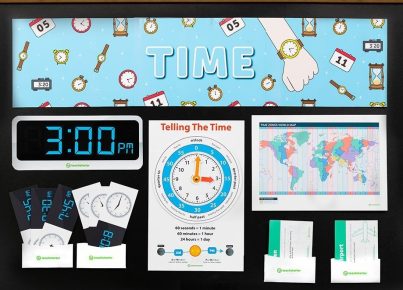
1. Countdown timer: Have a countdown timer on the board to give students a set amount of time to transition between activities.
2. Bell signals: Use various bell signals to indicate when it’s time to transition from one activity to another.
3. Classroom jobs: Assign students classroom jobs to help with transitions, such as turning off the lights, passing out materials, or cleaning up.
4. Sing-along songs: Choose a specific song that students can sing during transitions, so they know when it’s time to switch activities.
5. Visual cues: Use visual cues like posters or pictures on the board to indicate where students should be during transitions.
6. Thematic chants: Teach students quick chants or rhymes related to the subject or task at hand to use during transitions.
7. Hand-clapping patterns: Create and practice different hand-clapping patterns for students to follow when transitioning between activities.
8. Freeze game: Play music during transitions and have students dance or move until the music stops. When it stops, they freeze and then transition quietly to their next activity.
9. Buddy system: Pair students together and assign each pair a specific area of the classroom to maintain during transitions.
10. Role play: Incorporate role-playing into your class environment by having students pretend to be certain characters while moving between activities.
11. Secret code words: Teach your class a secret code word that indicates it’s time to transition between tasks or activities.
12. Color codes: Assign designated colors for each activity, so students know which station or group they should go based on color codes displayed in the classroom.
13. Yoga stretches: Incorporate simple yoga stretches during transitions as a way for students to refocus their energy on the next task at hand.
14. Positive reinforcement: Offer praise or small rewards such as stickers for those who successfully transition quickly and quietly between tasks.
15. Class cheers: Develop and use a class cheer that students recite during transitions.
16. Estimation games: Engage students in quick estimation games to make transitions more fun and interactive.
17. Alphabetical order: Have students line up or move based on the letter of their first name, last name, or other criteria.
18. Number order: Give each student a number and call them in order for transitions.
19. Alternating patterns: Use left-to-right, front-to-back, or other alternating patterns when calling on students to transition between activities.
20. Two-minute tasks: Assign simple two-minute tasks that students can do during transitions, such as completing a math problem on the board or answering a question related to the topic.
21. Picture puzzles: Create picture puzzles related to the subject matter for students to complete during transitions between tasks or activities.
22. Music themes: Play specific music or sound effects that relate to the current lesson as a signal for transitioning between activities.
23. Movement exercises: Utilize short and simple movement exercises to help students refocus and relax during transitions.
24. Nature sounds: Use calming nature sounds like ocean waves or rainforest ambiance during transitions between activities to create a peaceful environment.
25. Silent speed challenges: Encourage students to silently race against the clock to complete their transitions before a designated time runs out, promoting efficiency and focus.