
Artificial Intelligence (AI) is revolutionizing immersive technologies, creating more responsive, adaptive, and personalized experiences. The integration of AI with Virtual Reality (VR), Augmented Reality (AR), and Mixed Reality (MR) is opening up new possibilities across various sectors.
In gaming and entertainment, AI is enabling the creation of more realistic and interactive virtual worlds. Non-player characters (NPCs) in VR games can now exhibit more human-like behaviors, adapting their responses based on player actions and creating more engaging narratives. AI algorithms are also being used to generate vast, detailed virtual environments procedurally, reducing development time and costs while offering unique experiences with each playthrough.
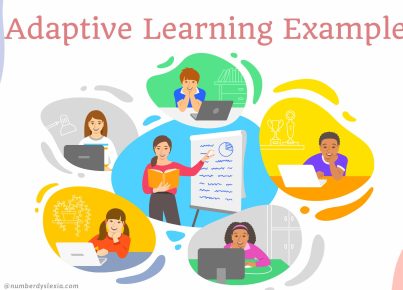
The education sector is leveraging AI-powered immersive experiences to create adaptive learning environments. VR simulations can adjust their difficulty based on a student’s performance, providing personalized learning paths. AI tutors in virtual environments can offer real-time feedback and guidance, enhancing the learning experience.
In healthcare, AI is enhancing immersive therapies. VR exposure therapy for phobias and PTSD can be tailored to each patient’s reactions, with AI algorithms adjusting the intensity of the virtual scenarios in real-time. AI is also being used to create more realistic virtual patients for medical training, mimicking complex symptoms and responses.
The retail industry is using AI to power AR shopping experiences. Virtual try-on solutions use AI to accurately map clothing or makeup onto a customer’s image, while AI algorithms can make personalized product recommendations based on user preferences and behavior.
In industrial applications, AI is enhancing AR-assisted maintenance and repair. AI systems can recognize equipment components through AR interfaces, providing context-aware instructions and predicting potential issues before they occur.
As AI continues to advance, we can expect even more sophisticated integration with immersive technologies. Future developments may include AI systems that can generate entire virtual worlds based on verbal descriptions, or AR assistants that can understand and respond to complex real-world contexts. The combination of AI and immersive tech holds the potential to create experiences that are not just interactive, but truly intelligent and adaptive.