
“`html
For many parents, seeing their child struggle with organization during middle school can be a source of frustration and concern. When a child has ADHD (Attention Deficit Hyperactivity Disorder), this struggle is often tied to the challenges of executive function. Understanding this connection can help you support your middle schooler in navigating these difficulties.
Understanding ADHD and Executive Function
ADHD is a neurodevelopmental disorder that affects about 5% of children worldwide. Its symptoms can vary widely, encompassing inattention, hyperactivity, and impulsivity. Among these symptoms, executive function issues play a significant role in how children manage their daily lives.
Executive function refers to a set of cognitive processes that help individuals plan, focus attention, remember instructions, and juggle multiple tasks. For middle schoolers with ADHD, these processes may not work as efficiently as they do for their peers, leading to organizational challenges.
The Role of Executive Function in Middle School
During middle school, students face increased academic demands, shifting from concrete learning to more abstract reasoning. This transition often requires greater self-organization and time management skills. For children with ADHD, the very nature of their condition can complicate these tasks.
Students must manage multiple classes, assignments with varying deadlines, extracurricular activities, and social engagements. For those with ADHD, keeping track of homework, projects, and tests can feel overwhelming. For instance, a study from the Journal of Abnormal Child Psychology found that children with ADHD are more likely to struggle with time management and working memory, both of which are critical components of executive function.
Why Organization is Particularly Challenging
ADHD affects the brain’s prefrontal cortex, the area responsible for executive function. This part of the brain helps with planning, decision-making, and impulse control. Students with ADHD may find it hard to prioritize tasks, follow through on assignments, or even remember what they need to do each day.
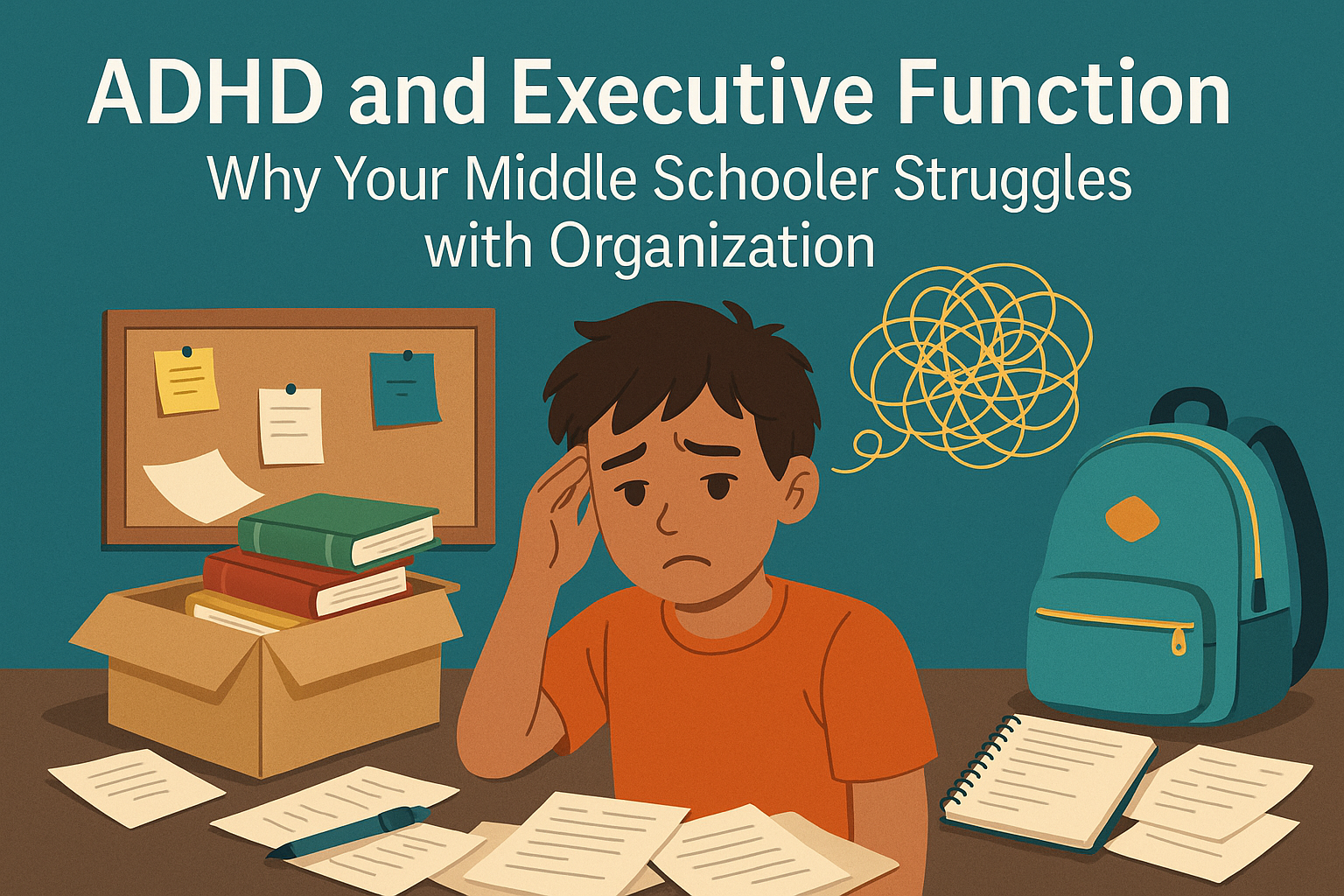
For example, a middle schooler might forget to turn in a critical assignment simply because they lost track of it in a cluttered backpack. Or, they may start a project only to become distracted and leave it incomplete, thus impacting their grades and self-esteem. This pattern isn’t due to laziness or lack of intelligence; rather, it reflects a genuine struggle with executive function.
Real-World Impacts of Poor Organization
The implications of poor organizational skills in middle school can be profound. Poor grades and academic performance can lead to feelings of inadequacy and low self-esteem. Additionally, social relationships may suffer as children with ADHD often hit roadblocks in maintaining friendships due to misunderstandings or missed commitments. (See: CDC ADHD guidelines and resources.)
Research published in the journal Learning and Individual Differences emphasizes the long-term effects of these struggles. Children with ADHD who do not receive adequate support in developing organizational skills often experience academic and behavioral difficulties into high school and beyond.
Strategies for Improving Organizational Skills
Fortunately, there are effective strategies that can help middle school students with ADHD improve their organizational skills. Here are several approaches that you can implement:
- Structured Routines: Establishing a consistent daily routine can help your child know what to expect each day. Routines reduce decision fatigue, making it easier for them to focus on tasks.
- Visual Aids: Use visual schedules, color-coded folders, or planners to help your child keep track of assignments and deadlines. Visual reminders are often more effective for children with ADHD than verbal instructions alone.
- Break Tasks into Smaller Steps: Large assignments can feel daunting. Encourage your child to break tasks into smaller, manageable steps, making it easier to complete them without feeling overwhelmed.
- Set Up a Dedicated Study Space: A clutter-free, quiet environment can help your child focus better. Designate a specific area in your home that is only for studying, free from distractions.
- Use Technology Wisely: Apps designed for task management and reminders can be game-changers for students with ADHD. Tools like Todoist, Google Keep, or Trello can help them manage their assignments and schedules effectively.
- Encourage Self-Reflection: Help your child reflect on what organizational strategies work best for them. Encourage them to identify when they feel most productive or what distractions they need to avoid.
Collaboration with Teachers and Schools
Collaboration with teachers is vital. Schools often have resources available to help students with ADHD. Consider discussing your child’s needs with their teachers and exploring options such as Individualized Education Programs (IEPs) or 504 Plans, which provide tailored support.
Teachers can be instrumental in implementing accommodations that promote better organization, such as providing extended time for assignments or breaking down complex projects into smaller components. Moreover, open communication between parents and teachers can foster a more supportive learning environment.
The Importance of Patience and Understanding
As a parent of a middle schooler with ADHD, it’s crucial to practice patience and understanding. Your child’s struggles with organization are not a reflection of their intelligence or worth. Instead, they are manifestations of a condition that requires unique approaches to problem-solving.
Encouraging a growth mindset can help your child view challenges as opportunities for growth rather than insurmountable obstacles. Celebrate their small victories, and remind them that everyone has different strengths and weaknesses.
Current Relevance and Future Implications
As ADHD awareness grows, more resources are becoming available to support students and their families. Schools are increasingly recognizing the need for tailored strategies to tackle executive function challenges. In today’s educational landscape, understanding ADHD executive function middle school is more important than ever. With proper support and resources, students can develop the skills they need to thrive academically and socially.
Building a Support Network
Creating a robust support network is crucial for middle schoolers with ADHD. This network can include family, teachers, counselors, and even peer support groups. Engaging with other parents who have children with ADHD can provide valuable insights and shared experiences. Schools sometimes host events or workshops that focus on ADHD and executive function challenges, offering a great way for parents to connect and access resources. (See: NIH information on ADHD.)
Expert Perspectives on ADHD and Executive Function
Experts in ADHD often emphasize the importance of early intervention. Dr. John Ratey, a well-known psychiatrist and ADHD specialist, points out that addressing executive function challenges early can significantly impact a child’s academic journey. He suggests that strategies like cognitive-behavioral therapy (CBT) can be particularly helpful in teaching children skills to manage their time and responsibilities better.
Research by Dr. Russell Barkley, another prominent figure in ADHD studies, highlights the importance of teaching children self-regulation skills. According to his findings, children who learn to monitor their behavior and set personal goals tend to perform better in school and have improved social interactions.
Statistics on ADHD and Academic Performance
Understanding the scope of ADHD’s impact on academic performance is vital. A 2022 study reported that students with ADHD are twice as likely to be held back a grade compared to their peers without ADHD. Furthermore, 60% of students with ADHD experience academic failure at some point in their education. These statistics underscore the need for proactive strategies to support these students.
Frequently Asked Questions
What is executive function, and how does it relate to ADHD?
Executive function encompasses skills such as planning, organization, time management, and self-control. Children with ADHD often have difficulties in these areas, which can impact their ability to succeed in school.
How can I help my child with ADHD stay organized?
Implementing structured routines, using visual aids, breaking tasks into smaller steps, and encouraging self-reflection can significantly help your child stay organized and manage their responsibilities effectively.
Are there specific tools that can assist children with ADHD?
Yes! There are various apps and tools designed specifically for ADHD management, such as task management apps, digital planners, and timers to help keep your child on track with their assignments.
What role does medication play in managing ADHD symptoms?
Medication can be a helpful part of a comprehensive treatment plan for ADHD. It can help improve attention and focus, making it easier for children to develop organizational skills and cope with their symptoms. However, it’s essential to consult with a healthcare provider to determine the best approach for your child.
How can schools better support students with ADHD?
Schools can provide accommodations such as extended time on tests, modified assignments, and access to counseling services. Collaboration between teachers, parents, and the student can create a supportive environment that fosters success.
What are some common misconceptions about ADHD?
One common misconception about ADHD is that it only affects boys. In reality, girls can also have ADHD, but their symptoms may present differently, often leading to underdiagnosis. Another misconception is that ADHD is simply a lack of discipline. In truth, it’s a neurodevelopmental disorder that affects brain functioning.
How can I communicate effectively with my child about their ADHD?
Open communication is key. Encourage your child to express their feelings about their ADHD and how it affects their daily life. Use age-appropriate language, and validate their experiences. Let them know that their challenges do not define them and that seeking help is a sign of strength.
Are there benefits to having ADHD?
Interestingly, some individuals with ADHD possess strengths such as creativity, hyper-focus on interests, and high energy levels. These traits can be harnessed positively in specific environments, especially in creative endeavors or entrepreneurial ventures. Understanding this duality can help parents and children appreciate the unique aspects of ADHD.
In summary, while ADHD presents unique challenges, particularly in the realm of organization for middle schoolers, there are effective strategies and support systems that can help. By fostering an understanding environment and utilizing practical tools, you can empower your child to navigate their educational journey with confidence.
“`
Trending Now
- Join Nooro as an iOS Developer: A Unique Opportunity to Shape Senior Wellness
- the complete explanation
- 7 Essential Emotional Intelligence Skills Every High School Student Needs Before College
- the complete explanation
- our breakdown of 7 effective emotional intelligence activities for kindergarten kids that really work
Frequently Asked Questions
How does ADHD affect executive function in middle schoolers?
ADHD impacts executive function by impairing cognitive processes like planning, attention, and memory. This can lead to difficulties in organization, making it challenging for middle schoolers to manage their academic and social responsibilities effectively.
What are the signs of executive function issues in children with ADHD?
Signs of executive function issues in children with ADHD include trouble organizing tasks, managing time, following instructions, and juggling multiple responsibilities. These challenges can lead to frustration in school and at home.
Why is organization difficult for kids with ADHD?
Organization is difficult for kids with ADHD due to the disorder's effects on the prefrontal cortex, which is responsible for executive function. This can hinder their ability to plan, prioritize tasks, and remember deadlines.
What strategies can help middle schoolers with ADHD improve organization?
Strategies to help middle schoolers with ADHD include using planners, setting reminders, breaking tasks into smaller steps, and establishing routines. Supporting them with visual aids and consistent check-ins can also enhance their organizational skills.
How can parents support their ADHD child in middle school?
Parents can support their ADHD child by fostering a structured environment, encouraging open communication, and teaching organizational skills. Collaborating with teachers and utilizing resources can also make a significant difference in their academic success.
What’s your take on this? Share your thoughts in the comments below — we read every one.