

“`html
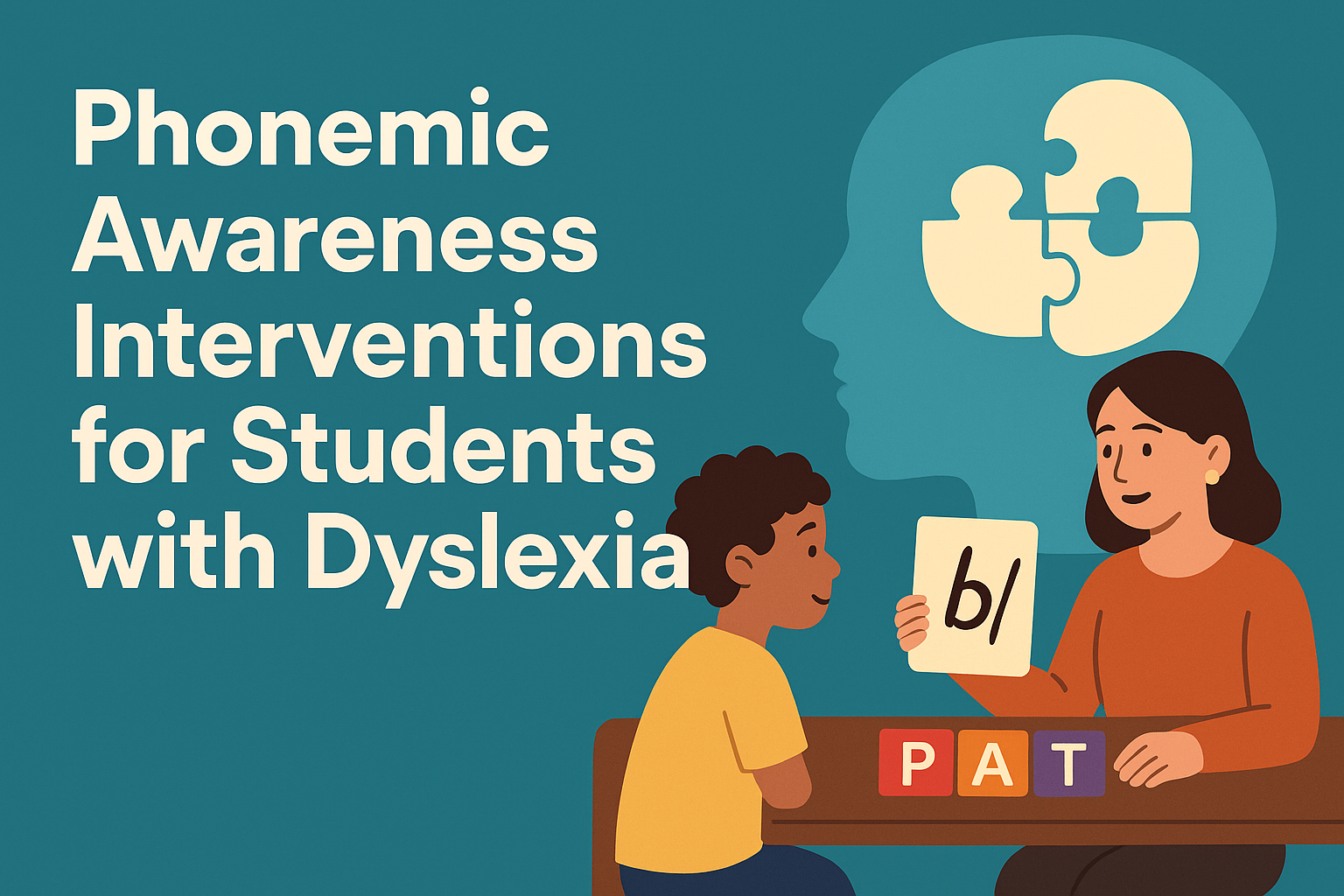
When it comes to reading, phonemic awareness is a crucial building block, especially for students with dyslexia. Dyslexia, a specific learning disability that affects reading, can often make traditional learning methods challenging. Fortunately, tailored phonemic awareness dyslexia interventions are proving to be effective in helping students overcome these hurdles. In this article, we’ll explore what phonemic awareness is, why it’s essential for reading, and delve into the most effective interventions designed to support students with dyslexia.
Understanding Phonemic Awareness
Phonemic awareness refers to the ability to hear, identify, and manipulate individual sounds—phonemes—in spoken words. This skill is not about recognizing letters or reading text; rather, it involves the auditory skills necessary for decoding and encoding written language. Phonemic awareness lays the foundation for phonics, which connects sounds to their corresponding letters.
For example, if a child can segment the word ‘cat’ into its individual sounds /k/, /æ/, and /t/, they are demonstrating phonemic awareness. This skill is vital for reading because it enables students to break words into manageable parts and blend those parts back together to read effectively.
The Connection Between Dyslexia and Phonemic Awareness
Dyslexia affects approximately 5-10% of the population, making it one of the most common learning disabilities. Students with dyslexia often struggle with phonemic awareness, which affects their ability to read fluently and comprehend text. Research indicates that deficits in phonemic awareness are a primary characteristic of dyslexia.
In many cases, students with dyslexia may have difficulty in:
- Identifying sounds in words.
- Blending sounds to form words.
- Segmenting words into individual sounds.
- Manipulating sounds within words (e.g., changing the first sound of ‘dog’ to ‘log’).
This pronounced difficulty can lead to frustration and low self-esteem. However, providing targeted phonemic awareness dyslexia interventions can help bridge the gap.
Effective Phonemic Awareness Interventions
When it comes to phonemic awareness dyslexia interventions, there are several evidence-based strategies that can make a significant difference for struggling readers. These interventions can be implemented in both classroom settings and at home.
1. Structured Literacy Programs
Structured literacy is a comprehensive approach that teaches reading through explicit instruction in phonemic awareness, phonics, vocabulary, fluency, and comprehension. Programs such as Orton-Gillingham, Wilson Reading System, and Barton Reading & Spelling System are designed specifically for students with dyslexia. They emphasize systematic, sequential instruction that builds on previously learned skills.
For example, in the Orton-Gillingham approach, students are first taught to perceive and manipulate sounds before correlating them with letters. This method not only addresses phonemic awareness but also integrates phonics, making it a holistic intervention.
2. Phonemic Awareness Activities
Engaging students in targeted phonemic awareness activities can enhance their ability to manipulate sounds. Here are a few effective exercises: (See: Reading interventions for dyslexia.)
- Sound Matching: Present students with pairs of words and ask them to identify if they share the same beginning, middle, or ending sounds.
- Sound Segmentation: Say a word slowly and have students break it into its individual sounds. For example, for the word ‘mat,’ students would say /m/, /æ/, /t/.
- Blending Sounds: Provide students with individual sounds and have them blend them together to form a word, such as /s/, /k/, /u/, /l/, which blends to ‘school.’
- Rhyming Games: Use rhyming words to help students recognize common sound patterns.
These activities can be integrated into daily learning to reinforce phonemic awareness in a fun and engaging way.
3. Technology-Based Interventions
In our tech-driven age, many software programs and apps target phonemic awareness, offering interactive and engaging ways to practice essential skills. Programs like ABCmouse, Reading Eggs, and Starfall include phonemic awareness components that are both educational and entertaining.
For example, the Reading Rockets website provides resources and activities to help students build phonemic awareness through interactive games. Additionally, many of these platforms allow for personalized learning, adapting to the student’s pace, which is vital for those with dyslexia.
4. One-on-One Tutoring
Individualized instruction can provide students with the focused attention they need to develop phonemic awareness. A well-trained tutor who specializes in dyslexia can tailor their teaching methods to meet each student’s unique learning needs. This can involve using structured literacy approaches in a one-on-one setting, allowing for targeted phonemic awareness exercises.
Studies show that students who receive personalized tutoring are more likely to make significant gains in reading skills compared to those who do not. One-on-one sessions can also help build confidence as students experience success in a supportive environment.
Current Relevance of Phonemic Awareness Interventions
As the understanding of dyslexia and its challenges evolves, so do the interventions designed to address these needs. Schools are increasingly recognizing the importance of phonemic awareness in early literacy instruction and are integrating targeted interventions into their curricula.
Many educators now receive specialized training in dyslexia and structured literacy, equipping them with the tools necessary to support students effectively. Furthermore, the increase in awareness about dyslexia has prompted a greater demand for effective interventions, leading to innovative practices and resources becoming available.
Legislation, such as the Individuals with Disabilities Education Act (IDEA), emphasizes the need for schools to provide appropriate interventions and supports for students with learning disabilities, including dyslexia. This legal framework reinforces the importance of phonemic awareness dyslexia interventions, ensuring that students receive the necessary resources to succeed.
Challenges and Considerations
Despite the progress made in phonemic awareness dyslexia interventions, challenges remain. One of the significant barriers is the need for consistent training among educators. Not all teachers receive adequate preparation in teaching phonemic awareness, leading to varied levels of effectiveness in their interventions.
Additionally, while many phonemic awareness activities are beneficial, they require time and resources to implement consistently. Schools may struggle with curriculum constraints or lack the necessary materials to provide effective instruction.
Parents also play a crucial role in supporting their children’s development of phonemic awareness. However, they often feel ill-equipped to help their children at home. Providing resources and training for parents can empower them to participate actively in their child’s learning journey. (See: CDC milestones for language development.)
Comparing Phonemic Awareness Interventions
When considering phonemic awareness dyslexia interventions, it’s essential to compare different approaches to determine which may be most effective for individual students. Below are some key differences between structured literacy programs, phonemic awareness activities, and technology-based interventions:
Structured Literacy vs. Phonemic Awareness Activities
Structured literacy programs provide a comprehensive framework that includes phonemic awareness but also incorporates phonics, vocabulary, and comprehension skills. In contrast, phonemic awareness activities often focus solely on sound manipulation without the broader context of reading skills. For students who require a holistic approach, structured literacy might be more beneficial, while those needing targeted sound practice may find phonemic activities sufficient.
Technology-Based Interventions vs. One-on-One Tutoring
Technology-based interventions offer flexibility and can be an engaging way for students to learn at their own pace. However, they may lack the personalized feedback that comes with one-on-one tutoring. Individualized instruction allows a tutor to adapt methods to the student’s specific struggles and successes, which can be especially important for students with dyslexia who may have unique learning profiles. Both methods can complement each other well, as students can practice skills independently and receive tailored guidance during tutoring sessions.
Expert Perspectives on Interventions
Experts in the field of education and dyslexia emphasize the importance of phonemic awareness interventions. Dr. Sally Shaywitz, a leading researcher on dyslexia, states, “Early intervention is critical for students with dyslexia. The earlier we can teach phonemic awareness, the better the outcomes for these students.” Her research highlights that students who receive adequate phonemic awareness instruction in early grades are significantly more likely to become proficient readers.
Additionally, Dr. Louisa Moats, an educator and author on literacy, stresses the importance of structured literacy. She notes, “It’s crucial to provide clear, direct instruction in phonemic awareness to help students break the code of language. Without this, students may struggle for years.” Her insights reinforce the idea that systematic teaching methods are vital for effective reading instruction for dyslexic students.
FAQs about Phonemic Awareness Dyslexia Interventions
What age should phonemic awareness interventions begin?
Phonemic awareness interventions can begin as early as preschool. Early exposure to sound manipulation activities can set a solid foundation for reading skills, especially for students at risk of dyslexia.
How long should phonemic awareness interventions last?
The duration of phonemic awareness interventions varies depending on individual student needs. Generally, consistent practice over several weeks or months is recommended to reinforce skills effectively.
Can phonemic awareness be taught at home?
Absolutely! Parents can engage in phonemic awareness activities with their children using simple games, such as rhyming or sound segmentation exercises. Resources are available online to guide parents in effective strategies.
Are there any signs that indicate a child may need phonemic awareness interventions?
Signs include difficulty rhyming, trouble breaking words into sounds, slow progress in learning to read, and frequent spelling errors. If these issues persist, it may be beneficial to consult with a specialist for further evaluation.
A Path Forward
As research continues to illuminate the significance of phonemic awareness in literacy development, the focus on phonemic awareness dyslexia interventions will grow. The combination of structured literacy programs, engaging activities, technology-based resources, and personalized tutoring creates a multifaceted approach to address the needs of dyslexic students. (See: World Health Organization on dyslexia.)
Parents, educators, and policymakers must work collaboratively to ensure that effective interventions are accessible and consistently applied. By prioritizing phonemic awareness in literacy instruction, we can create a more inclusive educational environment that empowers students with dyslexia to become confident readers.
In the end, phonemic awareness is not just a skill; it’s a gateway to unlocking the full potential of every student, allowing them to thrive academically and beyond.
Additional Insights on Phonemic Awareness Interventions
While we’ve covered a range of effective interventions, understanding the nuances of phonemic awareness can also enhance your approach. For instance, variations in phonemic awareness can affect how educators and parents structure their teaching. For students at different stages of literacy development, targeted phonemic awareness exercises can be adjusted to meet their specific needs.
The Role of Assessment
Assessing a child’s phonemic awareness is crucial in determining the appropriate interventions. Tools like the Dynamic Indicators of Basic Early Literacy Skills (DIBELS) can provide insights into a child’s phonemic awareness abilities. Regular assessments enable educators to adjust their instructional strategies based on a child’s progress, ensuring tailored interventions that evolve with the student’s needs.
Integrating Phonemic Awareness Across Subjects
Phonemic awareness isn’t just limited to reading and writing; it can be integrated into other subjects as well. For example, during math lessons, teachers can incorporate phonemic awareness by using counting rhymes or word problems that require sound manipulation. This cross-curricular approach reinforces the importance of phonemic skills and helps students see their applicability in various contexts.
Community Involvement
Community programs and workshops can play a vital role in supporting phonemic awareness dyslexia interventions. Local libraries or community centers may offer reading programs designed to enhance phonemic skills through storytelling sessions or group reading exercises. Collaboration with community resources can provide additional support and reinforce the learning that occurs in the classroom and at home.
Future Directions for Phonemic Awareness Research
As educational practices continue to evolve, ongoing research into phonemic awareness and dyslexia interventions will be essential. Studies exploring the effectiveness of various teaching methodologies, alongside technological advancements, will contribute to a deeper understanding of optimal practices. Additionally, research focusing on the long-term impacts of phonemic awareness interventions on overall literacy development will be invaluable in shaping future educational policies and practices.
“`
Trending Now
Frequently Asked Questions
What is phonemic awareness?
Phonemic awareness is the ability to hear, identify, and manipulate individual sounds, or phonemes, in spoken words. It is a crucial skill for reading, as it helps students break words into manageable parts and blend them back together, laying the groundwork for effective phonics instruction.
How does dyslexia affect phonemic awareness?
Dyslexia can significantly impair phonemic awareness, making it difficult for students to identify, blend, segment, and manipulate sounds in words. This difficulty often leads to challenges in reading fluently and comprehending text, as deficits in phonemic awareness are a hallmark of dyslexia.
Why is phonemic awareness important for students with dyslexia?
Phonemic awareness is vital for students with dyslexia because it underpins their ability to decode and encode written language. Improving this skill can help them overcome reading challenges, enhancing their overall literacy and comprehension abilities.
What interventions are effective for improving phonemic awareness in dyslexic students?
Effective interventions for improving phonemic awareness in students with dyslexia include targeted phonics instruction, multisensory learning approaches, and structured literacy programs that focus specifically on sound manipulation, blending, and segmentation exercises.
How can parents support phonemic awareness at home?
Parents can support phonemic awareness at home by engaging in activities such as rhyming games, sound matching, and phoneme segmentation exercises. Reading aloud and encouraging children to break down words into their sounds can also reinforce this essential skill.
Agree or disagree? Drop a comment and tell us what you think.



